
Is IK10 cover glass enough to make outdoor touch displays truly vandal-proof?
 2026-07-14
  08:49
08:49 

Public self-service terminals, ATMs and outdoor kiosks need cover glass that survives blunt impacts, metal tools and repeated abuse while remaining optically clear and touch-responsive. Properly engineered IK10 vandal-proof displays combine tempered or chemically strengthened cover glass, mechanical design, and touch controller tuning to turn a fragile interface into a robust human–machine barrier that still feels effortless to use.
Get Heavy-Duty Touch Display Modules
What is IK impact rating and how does it define vandal-proof cover glass?
An IK rating is a standardized measure of impact energy a device’s enclosure can withstand, defined in IEC 62262, with IK10 representing 20 joules of impact, typically a 5 kg mass dropped from 40 cm onto the surface. Engineers use IK ratings to match real-world threat levels—fists, kicks, hammers—so the cover glass and mechanical structure are validated against repeatable test conditions instead of guesswork.
In practice, IK testing uses a calibrated steel hammer or ball, guided fixtures and multiple impact points to ensure the display survives not just one perfect hit but off-center strikes, edge impacts and corner failures that commonly occur in the field. On the factory floor, I’ve seen IK08 designs fail at the bezel–glass interface long before the glass itself breaks, which is why IK engineering always considers frame stiffness, backing plate and fastener layout together with the cover glass specification.
For outdoor terminals, IK08–IK10 is typical: IK08 (5 joules) for moderate risk indoor kiosks and IK10 (20 joules) for exposed metro ticket machines, fuel dispensers and unattended payment terminals in vandal-prone environments. CDTech routinely validates these levels on production samples, combining lab instruments with “abuse” tests—steel bars, thrown stones, and repeated strikes—to make sure the rating is meaningful, not just a certificate.
How does tempered glass differ from chemically strengthened cover glass for impact resistance?
Tempered glass is thermally toughened by heating it above its transition temperature and rapidly quenching, which puts the surface into compressive stress and increases impact resistance and fragmentation safety compared with annealed glass. Chemically strengthened glass, by contrast, exchanges smaller sodium ions in the glass surface with larger potassium ions in a molten salt bath, creating deeper, more uniform compressive layers with excellent edge strength and scratch resistance.
On the production line, tempered glass works best for thicker cover lenses—typically 4–10 mm—where high residual stress and safety breakage (small granules instead of sharp shards) are essential. Chemically strengthened cover glass is ideal when you need thinner lenses (1–3 mm), tighter dimensional control, or complex shapes with slots and cutouts that would warp or crack during thermal tempering. For example, CDTech uses chemical strengthening for ultra-thin high-brightness outdoor modules where weight and optical stack thickness must be minimized.
The trade-off is that chemically strengthened glass may not fragment safely like fully tempered glass when it finally fails, so for high-threat locations engineers often combine moderate thickness chemical strengthening with laminated structures or secondary protective layers. I frequently specify tempered glass for IK10 ticket machines and mixed-tempered/chemical stacks for high-end outdoor signage where optical performance and edge durability are as critical as blunt impact resistance.
Why are public self-service terminals, ATMs and outdoor devices at such high risk of blunt impact damage?
Public terminals invite both authorized use and misuse: users lean on them, place bags, hit them in frustration, and sometimes actively vandalize them with fists, keys or tools. ATMs and payment kiosks are especially attractive targets because criminals try to disable cameras or force access to internal compartments, often starting by attacking the screen area which appears fragile and central.
Outdoor terminals amplify the risk: temperature swings, UV exposure, rain and dust all weaken materials and structures over time, while night-time and low-supervision periods increase opportunities for deliberate attacks. On-site, I’ve seen kiosk glass fail from a combination of cyclic thermal stress and a single heavy punch, not because the glass was “weak” but because the frame allowed micro-movements that concentrated stress at a corner. This is why CDTech’s outdoor designs always integrate mechanical reinforcement ribs behind the display and controlled compressive gasket loads around the perimeter.
From an engineering perspective, you should assume every exposed public interface will eventually receive a full-force kick or hammer blow. Designing for that worst-case, rather than gentle finger taps, shifts the focus from pure optics to structural mechanics: cover glass thickness, support, bonding method and IK rating become as important as brightness and contrast in the specification.
How should engineers select IK levels and cover glass thickness for different vandal risk scenarios?
The starting point is a threat model: what tools, forces and misuse are realistically expected for each deployment environment. Low-risk indoor kiosks in bank branches or supervised retail can often use IK07–IK08 with 4–6 mm tempered glass, optimized more for optical quality and ergonomics than extreme impact resistance. For unstaffed metro, airport or street kiosks, IK09–IK10 is more appropriate, with thicker glass and reinforced mounting.
A practical engineering rule of thumb I use is: IK08 for “frustrated user with fists and keys,” IK09 for “occasional kicks and thrown objects,” IK10 for “deliberate attacks with blunt tools.” Matching those scenarios to glass thickness, support design and bonding technique yields robust yet cost-effective solutions. CDTech’s portfolio, for instance, includes IK08-rated panels for indoor ticket counters and IK10-rated assemblies with 8–10 mm cover glass and steel backplates for outdoor payment pillars.
Where budget is constrained, you can combine moderate IK rating with smart mechanical design: recessed mounting, metal bezels that shadow the edges, and anti-tamper frames reduce the chance of direct edge hits, which are the most damaging. The key is to treat IK as a system property—glass, adhesives, frame and enclosure together—not just a glass thickness number in the BOM.
Recommended IK level and glass design by application
Which mechanical design strategies are most effective for resisting blunt impacts and malicious attacks?
Mechanical design often determines whether a vandal-proof cover glass actually survives in the field. A stiff rear backing plate and close support under the active display area prevent the glass from flexing like a drum during impacts, dramatically reducing peak tensile stress on the inner surface. In practice, I specify steel or thick aluminum backing plates with short spans and cross-bracing behind large-format screens.
Perimeter clamping must be strong yet controlled. Over-tightened screws or uneven gasket compression create pre-stress that, combined with thermal expansion, can crack glass even before a vandal touches it. CDTech uses calibrated torque specifications and controlled-thickness elastomer gaskets to maintain uniform compressive loads around the cover lens, verified by destructive testing at multiple corner and edge locations.
Finally, geometry matters: recessed bezels that sit proud of the glass plane protect edges from direct tool impact; chamfered and polished edges reduce crack initiation points; and controlled fillets around corners spread stress. I’ve seen flush-mounted glass fail under a single crowbar hit where a slightly recessed design survived dozens of similar blows—small geometric decisions have outsized impact on real-world vandal resistance.
How does the choice between air-bonded, optical-bonded and laminated cover glass affect durability?
Air-bonded designs use an air gap between cover glass and LCD, which simplifies manufacturing but allows the glass to flex independently and resonate under impact, increasing the risk of glass fracture and damage to the LCD. Optical bonding uses a solid adhesive—typically silicone or epoxy—to fill the gap, coupling the glass to the display and backing structure so loads are shared and reflections are reduced.
For vandal-resistant designs, full-surface optical bonding is my default choice because it significantly dampens impact vibrations and prevents glass “ringing” that induces local stress peaks. CDTech’s optical bonding lines are tuned for high-thickness cover lenses, ensuring uniform adhesive thickness and void-free coverage even under large panels, which is critical for consistent impact performance across the screen.
Laminated structures—glass adhered to another glass or polymer layer—add redundancy: even if the outer layer cracks, the inner layer can maintain environmental sealing and basic structural integrity. This approach is especially valuable for critical ATMs and outdoor payment systems where immediate failure could expose card readers or cash modules. The trade-off is cost and thickness, so laminated vandal-proof designs are typically reserved for high-security deployments.
What environmental factors (temperature, moisture, UV, contamination) must be considered in vandal-proof cover glass design?
Vandal-proof doesn’t exist in a vacuum; environmental stresses continuously fatigue the system. Temperature cycling expands and contracts glass, metal frames and adhesives at different rates, potentially introducing micro-cracks or loosening clamps over months of operation. For outdoor kiosks, I model temperature ranges from -20 °C to +70 °C, ensuring gasket materials and adhesive modulus remain stable across the full spectrum.
Moisture and condensation attack edges and bonding layers, particularly in coastal or high-humidity locations, where corrosion can undermine mechanical supports and create stress risers. CDTech uses sealed front assemblies with hydrophobic coatings, edge sealing and corrosion-resistant fasteners to maintain structural integrity and optical performance over long lifetimes. UV exposure likewise degrades certain adhesives and plastics, so we select UV-stable materials and verify them in accelerated aging chambers.
Contamination, from dust and sand to road salt, introduces abrasion that slowly erodes surface coatings and micro-damages glass. AG/AF (anti-glare/anti-fingerprint) coatings must be specified not only for optical properties but also for wear resistance under repeated cleaning and user contact. Done correctly, environmental design is preventive vandal resistance: the glass and frame stay strong enough that an eventual impact test or real-life attack encounters a healthy structure, not one already weakened by years of exposure.
Does vandal-proof design affect touch sensitivity, user experience and optical performance?
Robust cover glass changes the touch stack: thicker glass and reinforced structures can attenuate capacitive signals and alter the mechanical response to taps and gestures. To preserve sensitivity, touch controllers are configured with higher drive voltages, advanced noise filtering and customized firmware profiles for thick cover lenses, especially in IK10 designs with 8–10 mm glass. I often work closely with controller vendors to tune thresholds and palm-rejection behaviors for these high-thickness stacks.
User experience depends on more than raw sensitivity. Anti-glare and anti-fingerprint coatings reduce reflections and smudges, but overly aggressive matte finishes can wash out contrast or give a “milky” look under sunlight. CDTech balances AG coating levels with high-brightness backlights and precise gamma tuning so public terminals remain readable even behind thick vandal-proof glass, while still feeling smooth and responsive to fingers or gloved hands.
In the field, I’ve seen poorly tuned IK10 panels feel “dead” or laggy because the touch firmware wasn’t adapted for the increased dielectric thickness. When we retrofit such systems, a simple firmware update and gain adjustment often restore crisp, immediate response without any hardware changes, proving that vandal-proof mechanics and pleasant user interaction are not mutually exclusive if treated as an integrated design problem.
Who in the design chain is responsible for ensuring real-world vandal-proof performance, and how should OEMs collaborate with display vendors like CDTech?
True vandal-proof performance emerges from collaboration: OEM mechanical engineers, display vendors, touch controller suppliers and certification labs all share responsibility. A cover glass vendor alone cannot guarantee IK10 in the finished terminal if the enclosure flexes, mounting points are poorly placed, or internal components create stress concentrations behind the display. In every successful project I’ve led, we started with a joint design review, not just a drawing submission.
OEMs should engage display specialists early, sharing threat models, installation scenarios and maintenance expectations so the cover glass and mechanical structure can be co-designed. CDTech’s engineering team, for example, regularly attends customer design reviews and provides FEA-based suggestions on bezel shapes, gasket materials and backing plate thickness. This upstream input often prevents expensive late-stage redesigns after prototypes fail IK tests.
Certification labs play a critical role by executing standardized IK testing and documenting failure modes, providing the feedback loop that turns theoretical robustness into proven performance. In my experience, the fastest path to a reliable vandal-proof terminal is a three-way collaboration: OEM, display vendor and test lab working from a shared specification and iterating quickly on hardware until both impact tests and human use testing pass simultaneously.
CDTech Expert Views
In our IK10 outdoor projects, the glass almost never fails first—it’s the interface between glass, gasket and frame that decides whether a terminal survives repeated abuse. When we co-design that interface with customers, validating torque, compression and bonding in the lab before mass production, long-term vandal resistance becomes a predictable, repeatable outcome rather than a gamble. That’s the difference between a “thick glass” kiosk and a truly engineered vandal-proof terminal.
Why is CDTech’s approach to vandal-proof LCD and touch solutions different from typical commodity offerings?
Most commodity displays treat vandal-proofing as “add thicker glass,” leaving the OEM to solve mechanical and touch challenges alone. At CDTech, the process starts with application-specific threat analysis, then flows into integrated design of cover glass, optical bonding, mechanical support and touch controller firmware. This system-level approach yields assemblies that are not just strong on paper but proven in real deployments.
Because CDTech operates both TFT LCD and capacitive touch manufacturing with advanced 2nd Cutting technology, we can provide non-standard sizes and aspect ratios without compromising IK performance. I frequently support projects where custom glass shapes allow OEMs to recess vulnerable areas or add metal protection in strategic zones, turning vandal resistance into part of the industrial design rather than an afterthought. The result is higher uptime, lower total cost of ownership and field performance that generic catalog parts simply cannot match.
When should you specify tempered, chemically strengthened or hybrid cover glass structures for public and outdoor terminals?
Tempered glass is the default for mainstream IK08–IK10 public terminals with glass thickness above roughly 4 mm, where safety breakage and cost efficiency matter most. When an industrial design demands thinner glass, complex cutouts or tight tolerance around camera windows and sensor openings, chemically strengthened glass becomes more attractive due to its superior edge strength and dimensional stability. In practice, I evaluate maximum allowable thickness, mechanical support and aesthetic goals before recommending one or the other.
Hybrid structures—such as tempered outer glass bonded to a chemically strengthened inner layer, or glass laminated to a polymer—are best suited for high-security applications: critical ATMs, defense or law-enforcement kiosks and outdoor financial terminals where partial failure must not expose sensitive hardware. CDTech has delivered such hybrid stacks to customers needing both IK10 impact resistance and enhanced resistance to prying or drilling, integrating them with steel enclosures and tamper detection systems.
The decision is rarely purely technical; it involves trade-offs between cost, manufacturing complexity, optical quality and regulatory requirements. The most effective way to select a structure is to run a brief feasibility study with your display partner, benchmark candidate stacks under realistic impact and environmental conditions, then lock in the design that meets all requirements with comfortable margin.
Glass type selection guide for vandal-resistant terminals
Conclusion: How can OEMs systematically fortify the human–machine interface against vandalism without sacrificing usability?
Robust self-service terminals, ATMs and outdoor devices emerge from a deliberate combination of IK-rated cover glass, mechanically reinforced structures, tuned touch electronics and environmental resilience—not from any single component or buzzword. Start by defining realistic threat models, then select appropriate IK levels, glass types and bonding strategies aligned with those risks. Collaborate early with display specialists like CDTech to integrate mechanical design, optical performance and touch behavior into a coherent system, validated through standardized impact tests and real-world abuse scenarios.
Actionably, treat vandal-proofing as a design discipline: specify minimum IK ratings per application, insist on documented test results, and evaluate vendor proposals not just on thickness or price but on integrated design and field experience. When you do, the human–machine interface transforms from a fragile liability into a durable, trustworthy touchpoint that users can rely on—even in the harshest public environments.
FAQs
What IK rating is typically required for outdoor payment kiosks?
Outdoor payment kiosks exposed to public traffic and occasional vandalism usually target IK09 or IK10, providing robust resistance to kicks, blunt tools and thrown objects while maintaining safe, reliable operation over years of service.
Can chemically strengthened glass alone achieve IK10 performance?
Chemically strengthened glass can reach high impact resistance, but achieving IK10 consistently usually requires adequate thickness, strong mechanical support and full-surface bonding. The system design, not just the glass type, determines final IK performance.
Does thicker glass always mean better vandal resistance?
Thicker glass raises impact tolerance, but without proper mechanical support, edge design and bonding, even very thick glass can crack under off-center or edge impacts. Balanced structural design is more effective than simply increasing thickness.
Are IK-rated displays more difficult to maintain and clean?
Properly coated IK-rated displays are designed for regular cleaning with standard agents. AG/AF and durable surface treatments mean they can withstand frequent wiping and occasional abrasive contact without significant loss of clarity or touch performance.
Can an existing kiosk be upgraded to IK10 without redesigning the whole enclosure?
In many cases, enclosures can be upgraded by adding thicker tempered glass, improved backing plates and optical bonding. However, if the frame is too flexible or mounting points are poorly located, a partial redesign of the front assembly may be required to achieve reliable IK10 performance.
Post Search
Related Articles
-
Capacitive vs Resistive Touch Screen Car Stereo: Which Is Right for You?
-
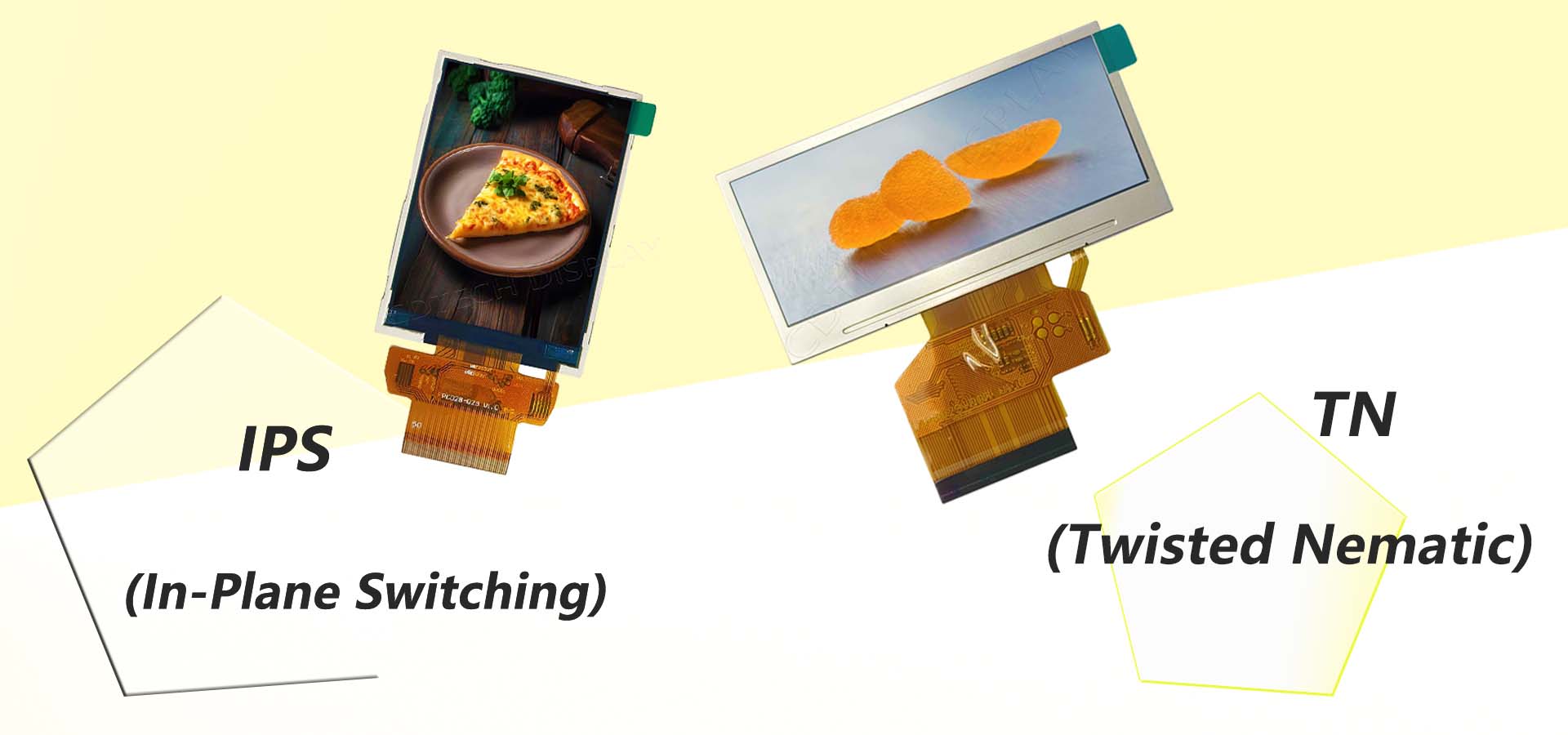
TN LCD vs IPS LCD: How to Choose the Right Display for You
-
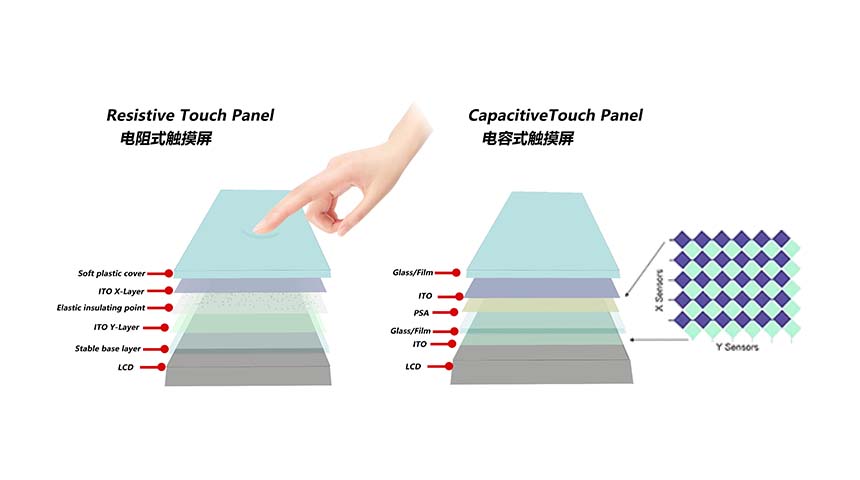
Capacitive Touch Panel or Resistive: Which Suits Your Needs?
-
Why Choose an IPS LCD Panel for Your Next Screen Purchase?
-
CDTECH to Showcase Cutting-Edge Display Solutions at SID 2025
-
Comparing Different Types of Displays in Cars: A Detailed Overview
-
White Spots on LCD Screen: Causes, Fixes & Industrial Solutions (2026 Guide)