

Is your industrial touch display truly chaos-proof?
 2026-07-10
  11:24
11:24 

Modern chaos-proof interactive displays survive water, oil, greasy smudges, and heavy gloves by combining tuned capacitive controllers, anti-noise firmware, hydrophobic/oleophobic front glass, and robust optical bonding. In factory floors, rainy outdoor kiosks, and kitchen appliances, only stacks engineered for “glove and liquid” as the default can deliver reliable, repeatable touch instead of random ghost taps or dead zones.
Touch and Display Integrated Modules
How do chaos-proof touch screens cope with gloves, water, oil, and smudges?
In real projects, I’ve seen that chaos-proof designs start with a stack built for interference, not showroom demo conditions. Engineers co-tune controller gain, sensor layout, bonding, and cover glass thickness so gloved touches remain detectable while liquids and noise are algorithmically rejected. CDTech implements this philosophy in its glove and water-resistant TFT LCD modules for industrial and outdoor terminals.
From an engineering standpoint, the problem is simple: anything between finger and sensor—glove, water film, oil smear—changes the dielectric environment and the signal-to-noise ratio. The solution is not “more sensitivity” alone, but smarter signal architecture plus materials that minimize unpredictable capacitance. That’s why experienced teams prototype with worst-case gloves and contaminants, not clean lab fingers.
What touch technologies are best for extreme industrial environments?
In harsh, dirty environments, projective capacitive (PCAP) and advanced resistive touch each have distinct trade-offs. PCAP excels at multi-touch, optical clarity, and sealed front glass; resistive wins in ultra-thick glove and conductive slurry scenarios but sacrifices gesture richness. CDTech typically recommends industrial PCAP for most chaos-proof HMI, with tailored controllers and firmware for glove and liquid immunity.
Below is a concise comparison to help you position your design stack.
Touch technology suitability table
The right choice is rarely “PCAP versus resistive” in isolation, but PCAP versus resistive under your worst contamination, EMI, and glove scenarios. Field failures almost always trace back to misaligned technology selection rather than controller bugs.
Why do standard capacitive screens fail with heavy gloves and liquids?
Consumer-grade capacitive screens are tuned for bare fingers with a narrow expected capacitance change. Thick nitrile or leather gloves add a dielectric barrier, attenuating the signal; water droplets add conductive paths that look like phantom touches. When you turn sensitivity up without redesigning the whole stack, you amplify everything—gloves and noise—causing erratic behavior.
On the line, I’ve watched operators double-tap with force just to trigger a button through insulated gloves. The controller sees a slow, smeared capacitance change, interprets it as background drift, and does nothing. Conversely, a sliding water droplet can create a sharp signature ironically more similar to a “valid touch.” Robust designs prioritize temporal and spatial filtering to separate intentional glove touches from transient liquid events.
How can firmware filtering algorithms distinguish real touch from environmental noise?
Well-tuned firmware is the hidden weapon in chaos-proof designs. Engineers use dynamic baseline tracking, temporal profiling, and spatial pattern recognition to classify touches. A gloved finger produces a specific rise time, area, and persistence; droplets and oil smears create scattered, moving, or slowly evolving patterns. The firmware continuously reshapes thresholds as conditions change, preventing drift while maintaining responsiveness.
Serious industrial controllers treat “gloved touch in rain” as the main use case, not an afterthought mode. I’ve deployed firmware that treats cover glass vibration, power-line EMI, and condensation as separate noise classes, each with tailored rejection filters. CDTech’s touch modules integrate such anti-noise filtering at the IC and firmware level, reducing the need for last-minute field hacks like forced sensitivity caps.
Which material and stack choices matter most for chaos-proof performance?
Material selection quietly decides whether your HMI survives realistic abuse. The key stack elements are:
-
Cover glass: thickness, hardness, coatings
-
Sensor: electrode pattern, pitch, and routing
-
Bonding: air-gap versus optical bonding
-
Sealing: gaskets, adhesives, and IP rating strategy
A common mistake is choosing glass purely for appearance. In practice, you tune thickness for both mechanical impact and capacitive reach-through: too thin and you risk breakage; too thick and the gloved signal collapses. CDTech’s engineering team often iterates 1.1–2.0 mm cover lenses, balancing glove reach, impact resistance, and optical performance.
What engineering trade-offs define glove-friendly touch design?
Trade-offs are brutally real: every gain increase for gloves makes the system more vulnerable to noise. Engineers balance:
-
Sensitivity vs. EMI robustness
-
Glass thickness vs. touch reach-through
-
Optical bonding vs. repairability
-
Hydrophobic coatings vs. long-term wear
In one steel-plant console, we initially chose thick 3 mm glass for impact, then found the glove signal was marginal. We reduced glass thickness to 2 mm, upgraded the controller to a higher dynamic range model, and added better grounding to preserve EMI resilience. CDTech routinely guides customers through similar multi-variable trade-offs instead of promising “one setting fits all.”
Glove design trade-off table
Design teams that document and test these trade-offs systematically ship stable devices; teams that leave them implicit tend to discover them only after the line starts rejecting units.
How can chaos-proof displays handle rain, condensation, and washing?
Rugged devices must stay operational in rain, spray cleaning, or steamy kitchens. The hardware strategy uses sealed housings, IP-rated gaskets, and carefully selected adhesives to prevent water ingress. The touch stack adds hydrophobic/oleophobic coatings so droplets bead and move predictably, minimizing large conductive films that confuse the controller.
Condensation is trickier. When warm devices enter cold environments, micro-droplets can form inside any remaining air gap. Optical bonding the LCD and cover glass removes that cavity, greatly reducing internal condensation and the associated false touches. On factory projects, we’ve routinely moved from air-gap assemblies to full bonding for outdoor terminals; the improvement in stability under misting or washdown is immediate and visible.
Why are EMI and power noise critical in glove-and-liquid scenarios?
High-gain glove tuning makes your touch sensor more sensitive to ambient electromagnetic interference (EMI). Nearby motors, inverters, and high-current lines inject noise that the controller may misinterpret as touch events. To stay chaos-proof, you must co-design grounding, shielding, and power regulation around touch, not bolt them on later.
On heavy-equipment HMIs, I’ve seen panels pass lab tests but fail in front of the actual machine because the sensor flex tail ran parallel to a noisy cable bundle. Rerouting that single cable and adding a ground plane solved weeks of “random ghost touches” complaints. CDTech’s designs pay close attention to sensor routing and backlight driver placement, avoiding coupling paths that would sabotage glove-friendly tuning in real plants.
Where do industrial environments demand glove and liquid immunity the most?
Chaos-proof displays are no longer niche; they are mandatory wherever operators cannot remove protective gear or avoid mess:
-
Heavy factory floors (steel, automotive, chemical)
-
Construction and mining vehicles
-
Outdoor ticketing and information kiosks in rain or snow
-
Commercial kitchen appliances and food processing lines
-
Medical devices exposed to disinfectants and bodily fluids
In these environments, a “tap that doesn’t register” is not a minor UX flaw—it can delay an emergency action, disrupt a batch, or trigger safety non-compliance. That’s why brands like CDTech build application-specific modules for industrial automation, appliances, and outdoor terminals rather than repurposing consumer stacks.
Does optical bonding and front-glass coating really improve usability with smudges?
Yes, but only when the bonding and coatings are chosen for your contaminants. Optical bonding removes internal reflections and air gaps, improving sunlight readability and reducing condensation risk. Hydrophobic and oleophobic coatings on the outer glass cause water and oils to bead, making smudges more manageable and less likely to form large conductive patches.
Kitchen and factory users often clean screens with improvised methods—alcohol wipes, detergents, sometimes solvents. If the coating chemistry doesn’t match this reality, it degrades quickly and leaves patchy regions with inconsistent wet behavior. In projects where we aligned coating selection with cleaning protocols, everyday smudging stopped affecting touch performance, and operators reported less “screen fighting” during shifts.
Who inside your team should own chaos-proof touch performance?
Chaos-proof performance fails when it is nobody’s explicit responsibility. Successful programs assign ownership across three roles:
-
Hardware engineer: sensor, controller, PCB, and stack design
-
Firmware engineer: filtering, modes, and tuning tools
-
Product owner: scenario definition and validation requirements
In practice, I insist that the product owner writes “glove and liquid” user stories in detail—thickness of gloves, typical contaminants, cleaning methods, worst weather. Hardware and firmware then co-design around that specification. CDTech’s solution teams work in this integrated way, which is why they can guarantee specific glove and moisture performance targets instead of vague marketing claims.
When should you involve a specialist like CDTech in your design cycle?
The earlier, the better. If you involve a specialist only after validation failures, many structural decisions—sensor geometry, glass thickness, bonding strategy—are already locked and expensive to change. Engaging CDTech or a similar expert at concept and early prototyping lets you bake chaos-proof requirements into the initial stack rather than patching them later.
I’ve joined projects six months too late, where marketing promised “heavy-glove and rain operation” but the chosen controller and housing made that nearly impossible. The cost of redesign and delay exceeded the savings from the initial generic decisions. Early consultation avoids this trap and often reduces total BOM costs because you align technology with environment instead of over-specifying blindly.
CDTech Expert Views
“When we design glove-and-liquid-friendly TFT LCD modules at CDTech, we treat water, oil, and thick gloves as the default, not the exception. The sensor layout, controller choice, grounding strategy, and firmware filters are all co-engineered around real factory, outdoor, and kitchen data. Chaos-proof performance doesn’t come from a checkbox feature; it comes from a disciplined stack design built for contaminated, noisy environments from day one.”
Can you test chaos-proof performance effectively before deployment?
Yes—if you simulate reality rather than lab ideal conditions. Effective validation includes:
-
Representative gloves: leather, nitrile, insulated industrial gloves
-
Real contaminants: cutting oil, flour dust, detergents, rain spray
-
Actual EMI: operating motors, drives, and heaters near the panel
-
Environmental cycles: hot-to-cold transitions, washdown, humidity
On multiple lines, we’ve built simple test rigs: screens mounted near production equipment, running scripted touch patterns while relays toggle motors and pumps. Logging touch events against known input reveals whether firmware correctly rejects noise and liquids. CDTech supports such scenario-based validation, providing tuning tools and test profiles instead of relying solely on generic controller datasheet limits.
Conclusion: How can you make your next interactive display truly chaos-proof?
To build chaos-proof interactive displays, treat gloves, liquids, and noise as core design inputs, not edge cases. Choose the right touch technology, co-design materials and stack, and implement intelligent firmware filtering tied to real contaminants and glove profiles. Involve specialists like CDTech early, validate under worst-case field conditions, and document your trade-offs so performance stays stable over product generations.
When you do this, operators can keep their gloves on, devices survive rain and grease, and touch becomes a reliable control surface instead of a frustrating bottleneck. The result is safer workflows, fewer unplanned maintenance stops, and an HMI that behaves consistently in real-world chaos.
FAQs
Is projective capacitive touch suitable for heavy industrial gloves?
Yes, industrial-grade PCAP is suitable when the controller, sensor pattern, and glass thickness are tuned for glove reach-through and EMI robustness. Consumer PCAP without such tuning usually fails with thick gloves and liquid contamination.
Why does my screen register ghost touches during rain or washing?
Ghost touches often occur because increased gain for glove sensitivity amplifies water-induced capacitance changes and EMI. Without proper firmware filtering and hydrophobic coatings, droplets and spray can look like valid touches to the controller.
Which is better for dirty environments, capacitive or resistive touch?
Resistive touch is mechanically robust and glove-friendly but offers lower optical quality and limited gesture support. Tuned industrial PCAP combines better readability and multi-touch with strong glove performance, making it the preferred choice for many modern HMIs.
Can firmware alone fix glove-and-liquid touch problems?
Firmware can dramatically improve discrimination between valid touches and noise, but it cannot overcome a fundamentally unsuitable hardware stack. Effective solutions combine sensor design, controller selection, glass and bonding, plus firmware filters.
How does CDTech support custom chaos-proof applications?
CDTech collaborates from concept to validation, tailoring TFT LCD, capacitive touch panels, materials, and firmware to specific glove types, contaminants, and environments. This co-design approach delivers reliable glove and liquid performance in real industrial, outdoor, and kitchen scenarios.
Post Search
Related Articles
-
Capacitive vs Resistive Touch Screen Car Stereo: Which Is Right for You?
-
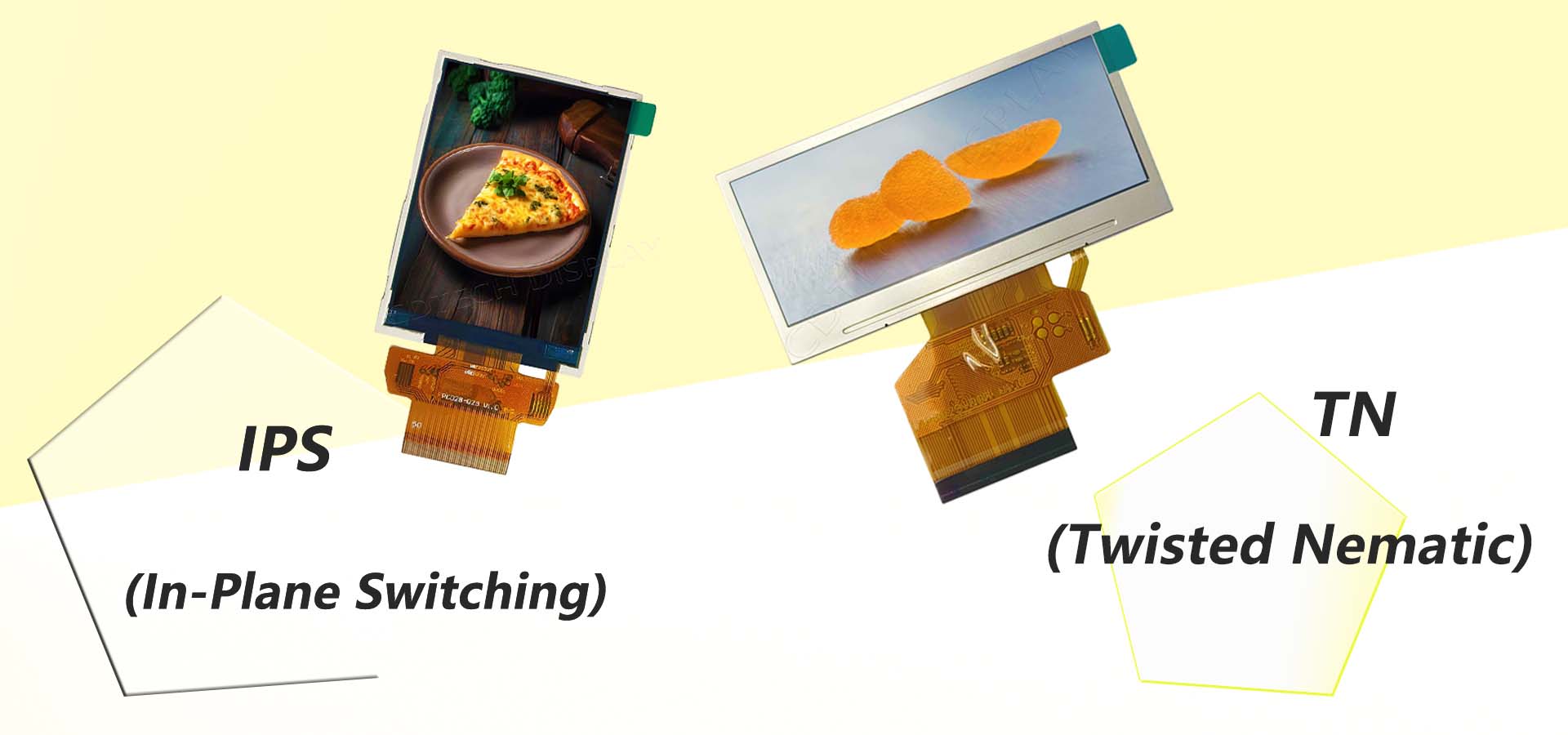
TN LCD vs IPS LCD: How to Choose the Right Display for You
-
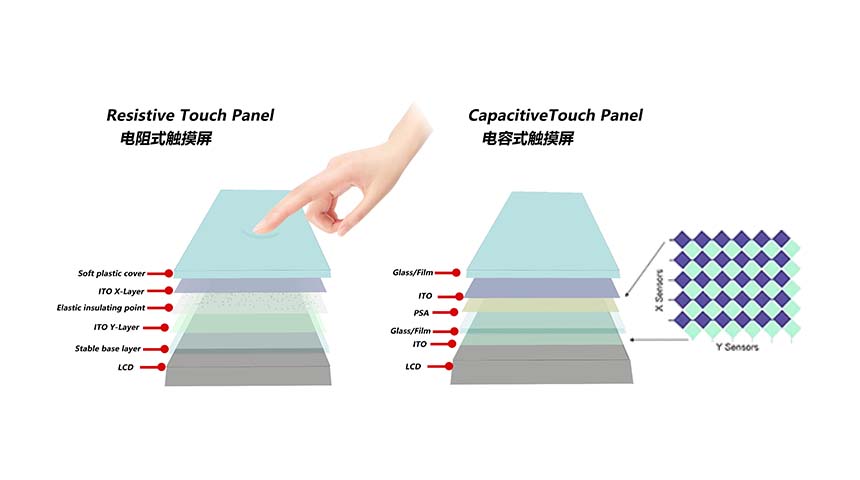
Capacitive Touch Panel or Resistive: Which Suits Your Needs?
-
Why Choose an IPS LCD Panel for Your Next Screen Purchase?
-
CDTECH to Showcase Cutting-Edge Display Solutions at SID 2025
-
Comparing Different Types of Displays in Cars: A Detailed Overview
-
White Spots on LCD Screen: Causes, Fixes & Industrial Solutions (2026 Guide)