

Is your LCD really safe from extreme cold and heat?
 2026-07-10
  02:44
02:44 

Liquid crystal displays can turn black or sluggish when the LC layer either solidifies in deep cold or becomes a clear, non‑birefringent liquid in high heat, losing its ability to twist light. Wide‑temperature LCDs solve this by using engineered LC mixtures, cell gaps, and thermal design that keep the material in the useful nematic phase from around −30 °C to +80 °C, protecting image quality and reliability.
Performance in Harsh Environments
What happens to liquid crystals at low temperatures?
At low temperatures, conventional liquid crystals become highly viscous and can even partially crystallize, so molecules cannot reorient fast enough when the TFTs apply voltage. This causes slow response, ghosting, and temporary “frozen” dark patches because domains stay in their previous alignment instead of following the drive waveform.
From a factory perspective, engineers see response times jump from a few milliseconds at room temperature to several hundred milliseconds near 0 °C, long before full freezing. Once the LC crosses its crystallization point, uneven dark stains appear and only clear after the panel warms up and the LC melts back into the nematic state.
Standard office‑grade panels are usually specified only for an operating range around 0 °C to 50 °C, with storage sometimes down to −10 °C. Below that, the LC slows dramatically and the interfaces between ITO electrodes and sealant experience differential thermal contraction, increasing long‑term failure risk.
Industrial‑grade designs choose wide‑temperature LC formulations with lower crystallization points and carefully engineered viscosity curves so the material stays fluid down to −30 °C or lower. CDTech follows this approach, combining LC mixtures with optimized drive timing and optional pre‑heating strategies to achieve cold‑start readability without relying on bulky external heaters.
Why does a standard LCD go black in high heat?
In high heat, standard LC mixtures can enter the isotropic phase, becoming an optically uniform liquid that no longer refracts and rotates polarized light. When this happens in a twisted‑nematic or VA cell, the designed light path collapses and the screen can appear uniformly dark or washed out, often described by field engineers as “solar‑induced blackening.”
The transition temperature from the ordered nematic state to the isotropic liquid is the LC clearing point, often written as TniT_{ni}. In many standard panels, TniT_{ni} sits only 10–15 °C above the nominal maximum operating temperature, leaving little margin for direct sunlight or enclosed housings; once the glass rises above this threshold, pixel‑level birefringent contrast essentially disappears.
On the production line, this shows up as a sudden global contrast collapse rather than gradual dimming: drive waveforms remain correct, but the LC no longer modulates the light as intended. Repeated excursions beyond the clearing point can also damage alignment layers and accelerate mura and “dirty screen” effects.
Wide‑temperature LCDs push TniT_{ni} higher using specialized LC formulations and co‑solvents, sometimes above 80–85 °C. CDTech combines these high‑clearing‑point fluids with heat‑spreading backlights and high‑temperature polarizer stacks, so outdoor signage or kiosks can survive strong solar loading without turning black.
How does the clearing point define wide‑temperature LCD performance?
The clearing point defines the upper limit of useful LC behavior because above it the material loses the anisotropy that drives polarization rotation. A true wide‑temperature LCD is engineered so its clearing point sits comfortably above the hottest realistic environment, with a safety margin for solar gain and internal heat sources.
In practice, many industrial panels target operating ranges like −30 °C to +80 °C, while the LC’s clearing point may sit 5–10 °C above the top of that band. That buffer ensures that even in a hot, enclosed dashboard or control cabinet, the LC stays in the nematic phase and continues to modulate light properly.
Factory engineers do not simply choose a single LC with a high clearing point; they design LC mixtures so the viscosity curve, dielectric anisotropy, and elastic constants remain manageable across the entire temperature range. An LC might technically stay nematic at 90 °C but be too thin or too leaky to hold contrast without drive and cell‑gap re‑optimization.
CDTech’s wide‑temperature modules are validated in programmable thermal chambers where panels are cycled from deep cold to high heat while contrast, response time, and optical uniformity are monitored versus temperature. That empirical feedback then feeds back into LC formulation and cell design so both clearing‑point behavior and low‑temperature performance are optimized rather than being just catalogue numbers.
What is the physics behind screen blackening in extreme temperatures?
Screen blackening is a large‑scale symptom of small‑scale phase and alignment changes in the LC layer driven by the temperature‑dependent molecular order parameter. At low temperatures, domains can freeze in non‑ideal orientations, scattering light and producing dark or patchy regions; at high temperatures, nematic order disappears and pixels lose controlled birefringence.
In twisted‑nematic cells, contrast depends on a well‑defined twist of LC molecules and precise phase retardation through the cell thickness. Temperature changes alter elastic constants and refractive indices, so the optical path deviates from its design point, reducing contrast even before a formal phase transition occurs.
When the LC becomes isotropic, the dielectric anisotropy that allows field‑induced reorientation vanishes, so the TFT drive can no longer distinguish “on” from “off” optical states. The panel effectively becomes two glass plates with a uniform liquid layer; the polarizers no longer see the engineered rotation and extinction they were designed for.
On the factory floor, engineers correlate visible blackening patterns with measured thermal gradients across the panel: regions near backlight hotspots or enclosure edges often hit the clearing point first. That is why serious wide‑temperature LCD engineering always includes thermal simulation and soak testing in addition to LC chemistry.
CDTech’s methodology combines LC physics, materials engineering, and mechanical thermal design to prevent cold‑soak and solar‑load blackening modes. This kind of factory‑level insight is exactly what separates robust wide‑temperature panels from commodity displays that only look good in datasheets.
How do standard and wide‑temperature LCDs differ in practice?
Standard LCDs are designed mainly for climate‑controlled indoor environments and use LC fluids optimized for room‑temperature performance, brightness, and cost. Wide‑temperature LCDs use specially formulated LC mixtures, backlight systems, and mechanical designs that maintain contrast, response, and color from sub‑zero cold up to high heat.
Here is a simplified comparison of typical ranges and behaviors:
In −20 °C cold‑start tests, standard panels typically show heavy smearing and trails, while wide‑temperature panels still meet specified response times. Under summer sun, standard modules often exhibit localized dark zones, whereas wide‑temperature versions remain readable and structurally stable.
CDTech’s portfolio spans automotive, outdoor signage, and industrial control applications, widely adopting wide‑temperature technology to guarantee legibility and reliability under harsh conditions. For OEMs, selecting the correct temperature class often means the difference between chronic field issues and a long‑life product.
Which engineering strategies keep LC in the safe phase range?
Engineering wide‑temperature LCDs requires a blend of LC chemistry, cell design, and thermal management that keeps the LC within a controlled nematic window. Designers tune LC mixtures, cell gaps, alignment layers, and backlight architectures to manage both low‑temperature solidification and high‑temperature clearing.
On the LC side, mixtures combine multiple mesogenic compounds to tailor clearing point, viscosity, dielectric anisotropy, and stability, sometimes using small amounts of chiral dopants to improve phase robustness. The cell gap and pre‑tilt angle are carefully selected so phase retardation and viewing behavior stay near optimal across the expected temperature span.
Thermal strategies include aluminum heat‑spreaders, optimized LED layouts, and, for extreme cold, localized heaters that prevent edge regions from freezing first. Enclosure design is equally important: venting paths, reflective rear plates, and insulation around hot components are used to reduce internal temperature gradients across the display.
From practical experience, the panels that perform best in the field are those validated in representative product mock‑ups, not only as bare modules at room temperature. When CDTech delivers a wide‑temperature solution, its engineers request enclosure drawings and use‑case details so thermal paths can be co‑designed rather than leaving temperature behavior to chance.
Why are wide‑temperature LCDs critical in harsh environments?
Wide‑temperature LCDs are critical because many modern devices—vehicles, outdoor kiosks, industrial HMIs—operate far outside comfortable indoor temperature ranges. In these environments, a black screen or unreadable display is not just inconvenient; it can lead to lost revenue, safety incidents, or mission failure.
Automotive dashboards, battery monitors, and infotainment systems see cabin temperatures that swing from deep winter lows to sun‑heated highs, often with rapid cycling. Industrial panels in cold storage or near furnaces experience similar extremes, and outdoor signage and military systems must tolerate sudden changes, strong solar loading, and vibration.
Wide‑temperature LCDs are built with extended operating ranges, reinforced mechanics, and robust optics so they maintain visibility and responsiveness under such conditions. Many designs also incorporate EMI robustness and condensation control, issues that are frequently overlooked until they cause field failures.
CDTech treats wide‑temperature displays as “requirement‑class” components for any device exposed to sub‑zero or high‑sun environments, not as optional upgrades. This ensures that thermal behavior is considered from the earliest concept stages, improving whole‑system reliability.
How can you quickly tell if a design needs wide‑temperature LCD?
You can quickly judge whether a design needs wide‑temperature LCD by assessing expected ambient ranges, enclosure thermal behavior, and real duty cycles, rather than relying only on spec sheets. If any part of the use case regularly drops below 0 °C or rises above about 50–60 °C, a standard LCD carries substantial risk.
A practical rule many engineers use is: if the product spends more than an hour per day outside the 0–50 °C band, or the display surface is routinely exposed to direct sun, wide‑temperature should be the default choice. By that rule, automotive systems, outdoor kiosks, fleet telematics, and many industrial HMIs naturally fall into the wide‑temperature category.
Simple thermocouple measurements or thermal simulations can reveal how much hotter the glass surface gets compared to ambient. With backlights and enclosures in play, it is common for panel surface temperatures to exceed ambient by 20 °C or more, enough to push office‑grade LC close to or past its clearing point.
CDTech’s application engineers routinely review customers’ use cases and mechanical models to classify temperature risk and recommend suitable wide‑temperature modules. This front‑loaded evaluation often saves OEMs from discovering the need for wide‑temperature only after field complaints.
Where do wide‑temperature LCDs deliver the most value?
Wide‑temperature LCDs deliver the most value in applications where display uptime and readability directly affect safety, revenue, or mission success. Automotive, outdoor retail, industrial automation, and energy sectors typically see the highest return on investment because failures are costly and environments are harsh.
In automotive, wide‑temperature dashboards and center displays prevent black screens during cold starts or hot parking, preserving driver information and brand perception. Outdoor signage and kiosks rely on wide‑temperature panels to keep advertising, ticketing, and wayfinding readable through seasonal extremes and strong sun.
Industrial control rooms, cold‑chain warehouses, and power infrastructure need HMIs that remain legible even near chillers or heat sources. Military and aviation instruments use rugged wide‑temperature, high‑brightness panels to maintain situational awareness in extreme climates, altitudes, and terrains.
CDTech supplies customized wide‑temperature TFT LCDs and touch modules across many of these sectors, integrating tailored brightness, optical bonding, and touch interfaces. Its advanced 2nd Cutting technology also supports non‑standard sizes, allowing designers to fit wide‑temperature displays into confined or uniquely shaped industrial spaces.
Wide‑temperature use‑case snapshot
Can CDTech’s wide‑temperature LCDs prevent black screens in extreme climates?
CDTech’s wide‑temperature LCDs are specifically engineered to prevent black screens caused by LC freezing or clearing in extreme climates. By combining tailored LC mixtures, robust backlights, and carefully managed thermal paths, they maintain contrast and response across extended operating ranges.
On real projects, CDTech works with OEM customers to map temperature profiles and select LC formulations that match actual field conditions, rather than relying only on standard ranges. This can mean extended low‑temperature capability for cold‑chain logistics or extra clearing‑point margin for sun‑exposed kiosks and signage.
CDTech’s 2nd Cutting technology allows production of non‑standard shapes and sizes while still using wide‑temperature LC stacks, a capability that many commodity suppliers lack. This gives industrial and automotive designers the freedom to optimize interface layout without sacrificing thermal robustness.
Because CDTech also manufactures capacitive touch panels and integrated display solutions, it can co‑engineer touch controllers, cover glass, sealing, and optical bonding to avoid condensation issues and touch drift across extreme temperatures. That system‑level view is essential for real‑world reliability in harsh climates.
CDTech Expert Views
“On the workshop floor, we never treat ‘wide‑temperature’ as just a line in the datasheet. Every CDTech wide‑temperature LCD is run through full thermal cycling inside a mock‑up of the customer’s enclosure, with sensors placed directly on the LC cell and polarizer layers. The moment we see any hint of contrast drift or local darkening, we trace it back to LC formulation, cell gap control, or backlight layout and adjust. By fixing those issues before shipment, we keep your products from ever suffering solar blackening or cold‑start smearing in the field.”
Conclusion: What are the key takeaways and actions for designers?
Designers should understand that low‑temperature LC solidification and high‑temperature clearing are the fundamental physical causes of black screens, motion smear, and contrast loss. Wide‑temperature LCDs tackle these problems through engineered LC mixtures and comprehensive thermal design, making them essential for outdoor, automotive, and industrial devices rather than optional extras.
Actionably, you should:
-
Map real operating and storage temperatures, including sun exposure and enclosure‑driven deltas.
-
Select LC and panel classes with appropriate wide‑temperature ranges and sufficiently high clearing points.
-
Validate prototypes in thermal chambers and realistic enclosures, not only at room temperature on the bench.
-
Collaborate early with experienced partners like CDTech who can co‑engineer LC, mechanics, backlight, and touch for robust temperature performance.
By treating temperature as a primary design constraint, you can avoid black‑screen incidents, extend product lifetime, and deliver dependable visual performance in any climate.
FAQs
Why does my outdoor LCD turn black in the sun?
Your outdoor LCD likely uses a standard LC with a clearing point close to the actual panel temperature under sun and enclosure heating. When the LC becomes isotropic, it stops twisting polarized light, and the screen appears dark or heavily washed out until the panel cools down again.
Can a standard LCD be “fixed” for cold without changing LC?
Heaters and insulation can help, but if the LC’s low‑temperature viscosity and crystallization point are inherently high, response will still be slow and patchy. True cold‑weather performance requires a wide‑temperature LC mixture plus drive‑timing adjustments and often some structural changes to manage thermal gradients.
Are wide‑temperature LCDs always more expensive?
Wide‑temperature LCDs do cost more than office‑grade panels because of LC chemistry, testing, and materials. However, for automotive, industrial, and outdoor applications, they significantly reduce field failures and warranty claims, so over the product lifetime they are usually more economical than repeated replacements.
Do I need wide‑temperature if my device is only indoors?
If your device genuinely stays between roughly 0 °C and 40–45 °C in a controlled indoor environment, standard LCDs are generally sufficient. If it spends time in unconditioned warehouses, near heaters, or in sun‑exposed window locations, a wide‑temperature panel is a safer choice to avoid unexpected blackening or lag.
Who can help me select the right wide‑temperature LCD?
Manufacturers with strong industrial and automotive experience are best positioned to guide wide‑temperature LCD selection. CDTech, as a specialist in TFT LCDs, capacitive touch panels, and integrated display solutions, can review your temperature profile, enclosure design, and interface requirements, then recommend a tailored wide‑temperature solution rather than a generic catalogue part.
Post Search
Related Articles
-
Capacitive vs Resistive Touch Screen Car Stereo: Which Is Right for You?
-
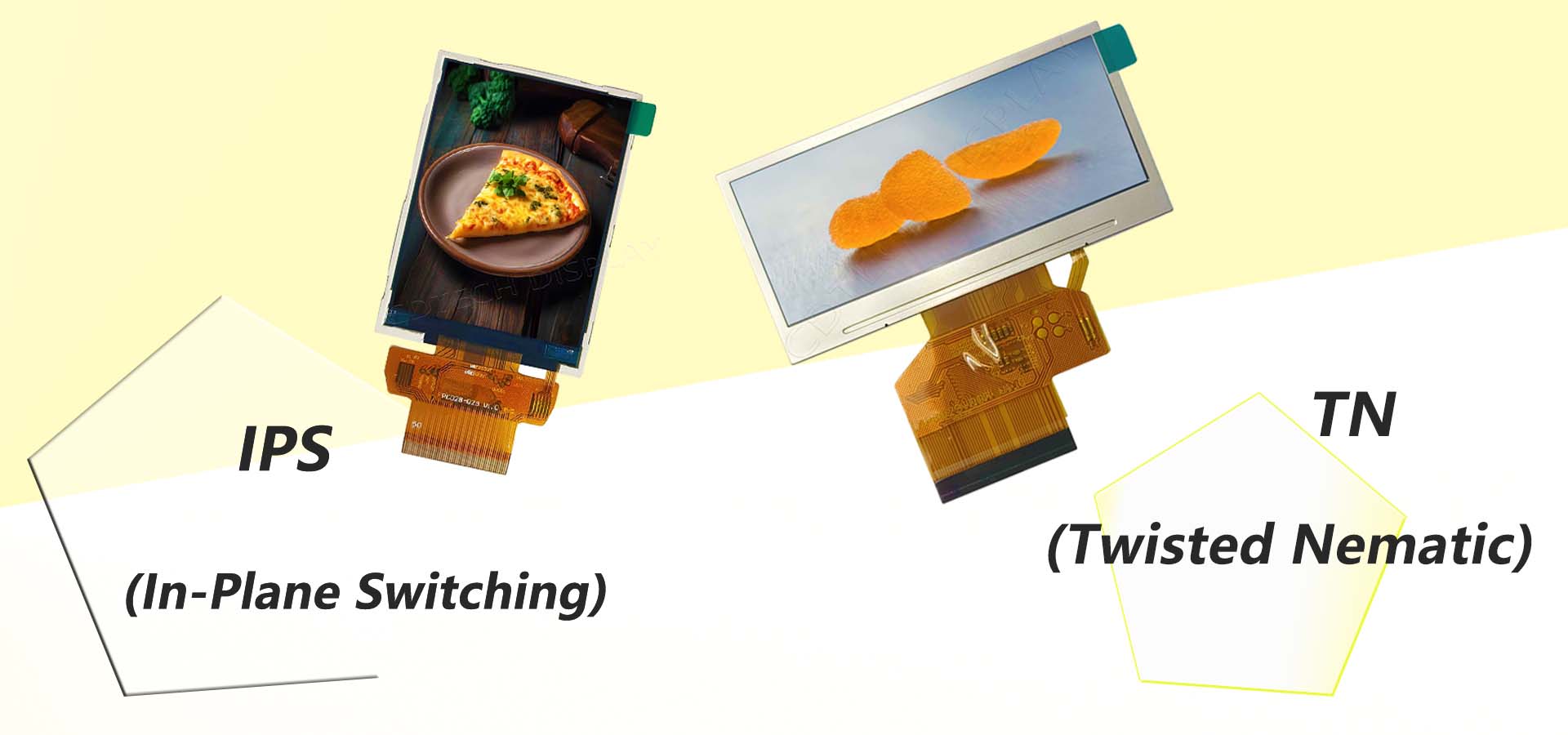
TN LCD vs IPS LCD: How to Choose the Right Display for You
-
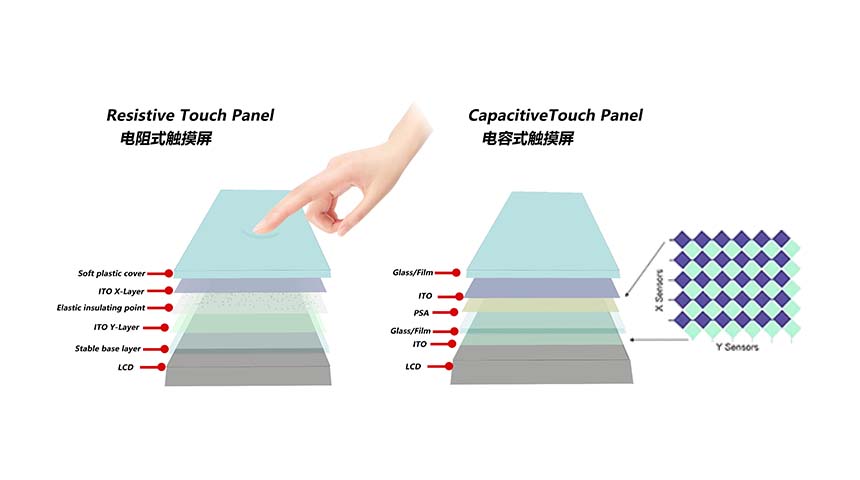
Capacitive Touch Panel or Resistive: Which Suits Your Needs?
-
Why Choose an IPS LCD Panel for Your Next Screen Purchase?
-
CDTECH to Showcase Cutting-Edge Display Solutions at SID 2025
-
Comparing Different Types of Displays in Cars: A Detailed Overview
-
White Spots on LCD Screen: Causes, Fixes & Industrial Solutions (2026 Guide)