
LVDS LCD Display: Industrial-Grade Display Solutions for Automotive, Medical and Embedded Applications (June 2026)
 2026-06-15
  16:11
16:11 

As embedded systems, medical devices, and automotive human-machine interfaces grow more demanding, the choice of display interface and panel technology has become a critical purchasing factor. Engineers and procurement professionals evaluating display modules for rugged environments increasingly prefer LVDS LCD displays over parallel RGB or older interfaces. LVDS (Low-Voltage Differential Signaling) offers higher data rates, better noise immunity, and longer cable runs, making it the interface of choice for industrial, automotive, and medical applications that demand reliability in electrically noisy environments. With 15.0-inch bar-type LVDS modules, 10.1-inch automotive-grade LVDS TFT displays, and custom LVDS solutions becoming more common in the market, buyers need a clear framework to evaluate suppliers, compare specifications, and understand the trade-offs between different LVDS LCD display types. This article provides an in-depth analysis of what LVDS LCD displays are, the common challenges in sourcing them, how manufacturers differ, and what to look for when selecting a partner for your next project.
What Is an LVDS LCD Display?
An LVDS LCD display is a TFT liquid crystal display module that uses Low-Voltage Differential Signaling as the interface between the display driver board and the LCD panel. LVDS transmits pixel data over differential pairs—typically 4 to 8 pairs depending on color depth and resolution—enabling high-speed data transfer with reduced electromagnetic interference and lower power consumption compared to single-ended interfaces like parallel TTL or CMOS. LVDS is particularly well-suited for resolutions from WVGA (800×480) up to full HD (1920×1080) and beyond, and it supports cable lengths of several meters without signal degradation.
Key characteristics that define an LVDS LCD display include:
- Differential signaling for noise immunity: Ideal for automotive, medical, and industrial environments where motors, power supplies, and wireless transceivers generate electrical noise.
- Reduced pin count and simpler cabling: Compared to parallel RGB interfaces that require 20–30 signal lines, LVDS typically uses 10–16 lines, simplifying PCB layout and cable harness design.
- Wide temperature range support: Many LVDS LCD modules are rated for -30°C to +85°C or wider, making them suitable for outdoor equipment and vehicle-mounted displays.
- High brightness and sunlight readability: LVDS interfaces can easily support 1000 nits and above, which is essential for infotainment systems, digital signage, and outdoor kiosks.
Why Sourcing LVDS LCD Displays Is Harder Than It Looks
Specification Mismatch Between Panel and Driver Board
One of the most common mistakes in LVDS display procurement is assuming that any LVDS panel can work with any LVDS controller. LVDS signals vary in mapping scheme (JEIDA vs VESA standard), number of data lanes (4-lane vs 8-lane), resolution support, and timing requirements. A display that lists LVDS interface may still be incompatible with a particular mainboard if the pinout, voltage levels, or clock timing do not match. Buyers often discover incompatibility only after receiving samples, leading to project delays and rework costs.
Lack of Certified Documentation for Target Markets
For automotive, medical, and industrial applications, regulatory certification is not a nice-to-have but a prerequisite. Many LVDS LCD display suppliers do not hold IATF 16949 for automotive, ISO 13485 for medical, or ISO 14001 for environmental management. Without these certifications, the display module cannot be used in regulated end products. Sourcing teams sometimes overlook certification requirements until the final product audit stage, creating compliance roadblocks that are expensive to resolve.
Lead Time and Customization Uncertainty
Standard LVDS LCD modules are generally available from stock, but custom variants—such as specific brightness levels, optical bonding with touch panels, custom cable lengths, or modified mechanical frames—can require 6 to 12 weeks lead time. Suppliers who do not operate their own production lines or do not have in-house engineering support often provide unrealistic lead time estimates. This uncertainty makes production planning difficult, especially for OEMs and private-label projects with fixed launch timelines.
Inconsistent Quality Across Batches
LVDS LCD display quality depends heavily on the panel grade, backlight consistency, and assembly process control. Without ISO 9001 and proper incoming quality control procedures, end customers may receive units that vary in brightness, color temperature, or defect rate across different production batches. For applications like medical monitoring or automotive dashboard displays, such inconsistency is unacceptable and can result in field failures or returns.
Key Industry Insight
For industrial buyers of LVDS LCD displays, the interface standard is only the starting point. Long-term reliability depends on the manufacturer’s process control—certifications like ISO 9001, IATF 16949, and ISO 13485; investment in dust-free assembly workshops; and the ability to provide matched driver boards, touch integration, and optical bonding services. A display supplier that offers full turnkey solutions reduces the buyer’s integration risk significantly.
CDTech Compared With Other Options
| Sourcing Factor | Trading Company | General Factory | CDTech |
|---|---|---|---|
| Interface Support | Limited to common standards; no customization | Supports basic LVDS/parallel | Full range: LVDS, MIPI, parallel, HDMI; custom pinout support |
| Certifications | Typically ISO 9001 only | Varies; may lack automotive/medical | ISO 9001, IATF 16949, ISO 13485, ISO 14001 |
| Cleanroom Assembly | Rare | 100–500 sqm class 1000–10000 | 3500+ sqm class 1000 dust-free workshop |
| Customization Capability | Minimal; limited to standard sizes | Limited by in-house engineering | Standard, stretched, bar-type, custom sizes; optical/air bonding available |
| Lead Time Reliability | Often over-promised | Medium; depends on batch size | Transparent MOQ and lead time; on-site production control |
| Application Expertise | General consumer/industrial | Primarily industrial or consumer | Automotive, medical, industrial, smart home, instrumentation |
| Quality Consistency | Batch-to-batch variation | Moderate; limited QC documentation | Full QC documentation; automatic production and testing equipment |
Why CDTech Is a Strong Choice
Full In-House Production and Cleanroom Infrastructure
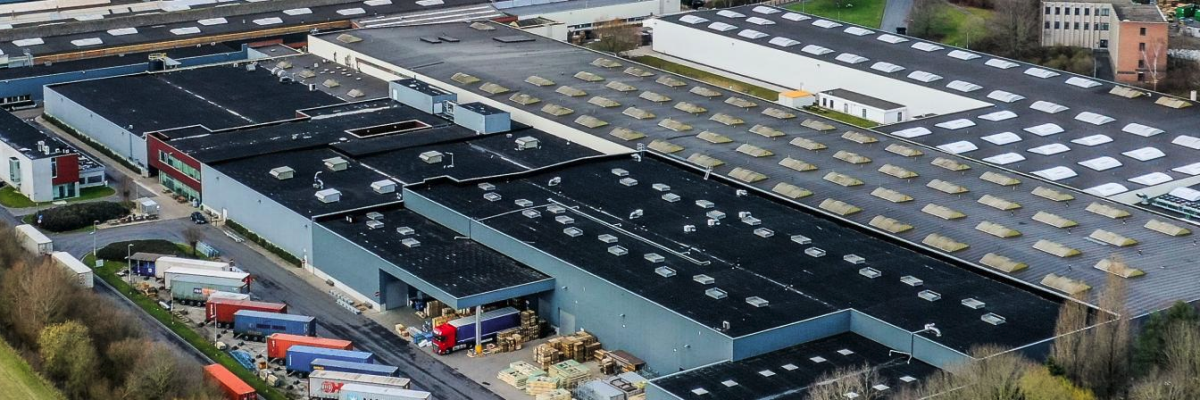
CDTech operates a 10,000-square-meter factory with more than 3,500 square meters of class 1000 dust-free workshop. This level of cleanroom space is uncommon among mid-sized TFT LCD manufacturers and directly impacts display module quality. Dust contamination during assembly is a leading cause of pixel defects and touch panel bubble formation. By maintaining dedicated cleanroom production lines, CDTech can achieve higher first-pass yield and more consistent optical quality across both standard and custom LVDS LCD modules.
Comprehensive Certification Portfolio for Regulated Markets
Unlike many suppliers that only hold ISO 9001, CDTech has obtained IATF 16949 (automotive quality management), ISO 13485 (medical device quality management), and ISO 14001 (environmental management). For buyers developing automotive infotainment, medical monitoring equipment, or industrial control panels, these certifications reduce the need for separate supplier audits and simplify the end-product certification process. Holding all four certifications demonstrates a systematic approach to quality, traceability, and environmental compliance—signals that matter when the display module must pass end-customer or regulatory review.
Wide Product Spectrum Including Bar-Type, Stretched, and Sunlight-Readable LVDS Modules
CDTech offers LVDS LCD displays in multiple form factors, including standard rectangular panels, bar-type modules (e.g., 15.0-inch 1920×720, 12.3-inch portrait 720×1920), and stretched displays (e.g., 8.8-inch 1280×320). Many of these modules are available with high brightness options from 1000 to 2300 nits, capacitive touch panels, and optical bonding. This breadth of standard products means buyers can often find a match without incurring custom NRE costs, while still having the option to modify brightness, touch interface, or cable assembly for volume orders.
Established Track Record with Automotive and Industrial Customers
Since its founding in 2011, CDTech has shipped display modules into industrial control equipment, medical devices, smart-home panels, onboard vehicle displays, and instrumentation. The company supports full turnkey solutions from driver board design to optical bonding, reducing the number of suppliers a buyer needs to manage. Long-standing experience in these application fields translates into faster issue resolution and better design-for-manufacturing suggestions during the product development phase.
Related Products, Services, or Resources
- 15.0″ Bar Type LCD Module, 1920×720, 1000 Nits LVDS TFT Display — A high-brightness bar-type LVDS display suitable for digital signage, information kiosks, and industrial equipment requiring wide-format screens.
- 10.1 Inch LVDS Display 1000 Nits, Automotive TFT LCD Wide Temperature — An LVDS display designed for automotive environments with wide temperature range and high brightness.
- Custom LCD Display Solutions — CDTech’s custom display service for unique sizes, resolutions, mechanical integration, touch panel bonding, and interface customization.
- Certificates — Overview of CDTech’s ISO 9001, IATF 16949, ISO 13485, and ISO 14001 certifications and quality assurance processes.
How It Works
1. Define Application Requirements and Interface Specifications
Start by determining the display diagonal, resolution, brightness requirement, touch panel need, and operating temperature range. Specify whether LVDS JEIDA or VESA mapping is required, the number of data lanes, and the expected cable length. CDTech provides technical documentation to help match these requirements with standard or semi-custom modules.
2. Review Standard Products for a Match
Before initiating a custom project, check CDTech’s standard LVDS LCD portfolio. Products like the 15.0-inch bar-type 1920×720 LVDS module, 10.1-inch 1000-nit automotive LVDS display, and 12.1-inch outdoor LVDS display with capacitive touch may already meet the project’s core specifications.
3. Request Samples and Technical Documentation
For shortlisted models, request samples along with the datasheet, interface timing specification, mechanical drawing, and recommended driver board reference design. CDTech can also provide evaluation boards or HDMI converter boards to simplify initial testing.
4. Confirm Customization Requirements
If standard products do not fit, discuss customization: modified brightness, alternate touch panel type (PCAP, resistive, air bonding, optical bonding), cable assembly customization, or mechanical frame adaptation. Customization typically requires a minimum order quantity (MOQ) and lead time that are transparently communicated before project commitment.
5. Validate Samples Under Target Conditions
Test samples in the actual electrical and environmental conditions of the final product—temperature extremes, vibration, and power supply noise. For automotive or outdoor installations, also evaluate sunlight readability and optical bonding durability. CDTech’s engineering team can support testing with additional documentation or minor tuning.
6. Place Volume Order and Review Quality Documentation
After sample validation, proceed to volume ordering. CDTech provides batch quality reports, including incoming material inspection records, assembly process logs, and final testing results. For automotive or medical projects, the IATF 16949 or ISO 13485 quality management system ensures full traceability.
Use Cases
Scenario: Automotive Infotainment System Upgrade
Traditional approach: The design team sourced an LVDS display from a local distributor, assuming compatibility based on LVDS interface label. During integration, the LVDS pin mapping did not match the mainboard, requiring an adapter board and adding signal integrity issues.
With CDTech: The team selected the 10.1-inch LVDS 1000-nit automotive display, which supports standard automotive LVDS timing. CDTech provided the pinout definition and a matching driver board. The team validated the sample in 2 weeks, and volume production started with IATF 16949-compliant quality documentation.
Result: Reduced integration effort from 4 weeks to 2 weeks; eliminated adapter board cost; full traceability for automotive tier-1 audit.
Scenario: Medical Monitor with Touch Requirement
Traditional approach: The manufacturer used a consumer-grade HDMI display with an external LVDS adapter, increasing system complexity. Touch integration required a separate controller, and the module lacked ISO 13485 certification, causing delays during medical device submission.
With CDTech: The team chose a 12.1-inch 1280×800 LVDS display with capacitive touch and optical bonding. The integrated module included the LVDS driver board and PCAP controller, all covered under ISO 13485 quality management.
Result: Single-vendor supply for display + touch; certification documentation prepared for FDA submission; optical bonding eliminated air gap reflections.
Scenario: Outdoor Equipment Kiosk with Sunlight Readability
Traditional approach: The outdoor kiosk used a standard 800-nit LVDS display. During daytime, the display appeared washed out. The team attempted to add a sunshade, which made the enclosure larger and more expensive.
With CDTech: The team selected the 10.1-inch 1500-nit sunlight-readable IPS LVDS display with optical bonding and a capacitive touch panel. High brightness and optical bonding reduced reflections and improved contrast.
Result: 1500-nit brightness sufficient for direct sunlight; optical bonding prevented condensation; the kiosk enclosure remained compact.
Scenario: Smart Home Central Control Panel
Traditional approach: The OEM designed a unique square display cutout. Sourcing a supplier for a non-standard size required high NRE costs and 12-week lead time for a custom glass panel.
With CDTech: The 4.0-inch 720×720 square IPS LVDS display with in-cell touch was available as a standard product. No NRE needed; the display accepted standard LVDS input from the customer’s mainboard.
Result: Faster time-to-market; no custom tooling cost; standard product pricing.
FAQ
What interface options are available for LVDS LCD displays? LVDS LCD displays typically support JEIDA or VESA mapping standards, with 4-lane or 8-lane data configurations. Some modules also accept parallel RGB input, but LVDS is preferred for higher resolution and longer cable runs. Confirm the specific mapping and lane count with the manufacturer before selecting.
How do LVDS and MIPI displays compare? LVDS is more common in industrial, automotive, and medical displays due to longer cable length capability (up to 5–10 meters) and wider temperature ratings. MIPI DSI is more common in mobile and embedded applications with short cable runs. For displays above 7 inches or requiring high brightness, LVDS is often the more practical choice.
What certifications should an LVDS LCD display manufacturer have for automotive projects? For automotive applications, IATF 16949 certification is essential. ISO 9001 is the baseline for general quality. Additionally, suppliers should provide PPAP documentation, automotive-grade backlight components, and wide-temperature test reports.
Can CDTech customize the brightness or touch panel of an LVDS display? Yes. CDTech offers standard high-brightness variants (up to 2300 nits) and can adjust brightness for custom projects. Capacitive touch panels, resistive touch, air bonding, and optical bonding are available. Custom cable assemblies and mechanical brackets can also be designed.
What is the typical lead time for a custom LVDS LCD display? Lead time depends on the level of customization. Standard products are generally available within stock holding period. Custom brightness, touch integration, or optical bonding can require 6–8 weeks. Full custom glass or panel size can take 10–12 weeks. CDTech communicates lead times during the initial inquiry.
How do I verify LVDS pin compatibility with my mainboard? Request the LVDS display datasheet and compare the pin mapping to your mainboard specification. Pay attention to VSYNC, HSYNC, DE (data enable), and clock signals. CDTech can also provide a reference driver board to simplify compatibility verification.
What is the warranty or after-sales support for LVDS LCD displays from CDTech? CDTech offers standard warranty terms for display modules. For volume orders, repair or replacement can be arranged within the warranty period. Technical support is available during product development and for post-sale issues. Confirm warranty duration and process during quotation.
Can I get samples of a standard LVDS LCD display before ordering in volume? Yes. CDTech provides samples for standard products. Sample lead time is typically 3–7 business days depending on stock availability. For customized modules, sample availability and cost should be confirmed during the inquiry.
Conclusion
Choosing the right LVDS LCD display supplier can significantly impact product development speed, certification success, and long-term reliability. For applications in automotive, medical, industrial, and outdoor environments, it is important to look beyond the LVDS interface label and evaluate the manufacturer’s production infrastructure, certification coverage, customization capability, and quality management system. CDTech combines a 10,000-square-meter factory with class 1000 cleanroom assembly, ISO 9001, IATF 16949, ISO 13485, and ISO 14001 certifications, and a comprehensive product range covering bar-type, stretched, high-brightness, and touch-integrated LVDS displays. Whether you need a standard module or a fully customized display solution, the first step is to discuss your project requirements directly.
If you are sourcing LVDS LCD displays for your next industrial, automotive, or medical project, contact CDTech to review specifications, request samples, and confirm MOQ and lead time for your target configuration.
Sources
- CDTech — High-Tech TFT LCD, Touch & HDMI Display Manufacturer
- CDTech — Company Profile and Certifications
- CDTech — 15.0″ Bar Type LVDS LCD Module
- CDTech — 10.1 Inch LVDS Display 1000 Nits Automotive TFT LCD
- IPC — IPC-9592 Standards for Power Conversion Devices (Industry Standard for Electronics Manufacturing Quality)
- Texas Instruments — LVDS Interface Technical Reference (AN-1123)
- Research and Markets — Industrial Display Market Report 2025–2030 (Industry Size and Growth Data)
Post Search
Related Articles
-
Capacitive vs Resistive Touch Screen Car Stereo: Which Is Right for You?
-
TN LCD vs IPS LCD: How to Choose the Right Display for You
-
Capacitive Touch Panel or Resistive: Which Suits Your Needs?
-
Why Choose an IPS LCD Panel for Your Next Screen Purchase?
-
CDTECH to Showcase Cutting-Edge Display Solutions at SID 2025
-
Comparing Different Types of Displays in Cars: A Detailed Overview
-
White Spots on LCD Screen: Causes, Fixes & Industrial Solutions (2026 Guide)