

Optical Bonding LCD Display: How to Ensure Sunlight Readability and Long-Term Reliability (June 2026)
 2026-06-15
  16:12
16:12 

Outdoor or high‑brightness LCD displays face a fundamental challenge: when ambient light hits the air gap between the LCD and the touch panel or cover glass, reflection and glare reduce contrast and readability. In automotive dashboards, industrial HMI terminals, point‑of‑information kiosks, and medical monitors, this loss of optical clarity can create safety risks, incorrect readings, or poor user experience. The solution that addresses these issues at the module level is optical bonding — a process in which a transparent optical adhesive fills the space between the LCD stack and the front lens, eliminating the air gap.
As demand for sunlight‑readable, rugged displays grows across industries — outdoor digital signage, smart‑home panels, and electric vehicle cockpits — the choice of an optical bonding LCD display supplier directly affects long‑term reliability, total system cost, and certification timelines. Shenzhen CDTech Electronics, a manufacturer founded in 2011 with 10,000 square meters of production space and multiple ISO and IATF certifications, offers optical bonding as an integral part of its display module portfolio. This article examines what optical bonding is, why it matters for industrial and outdoor applications, and how to evaluate a source for OEM or private‑label projects.
What Is an Optical Bonding LCD Display?
An optical bonding LCD display is a display module in which a liquid optical adhesive (LOCA) or an optically clear adhesive (OCA) is used to laminate the cover glass, touch sensor, or protective lens directly onto the LCD surface. Unlike traditional air‑bonded construction where an air gap exists between layers (typically 0.5–2 mm), optical bonding fills that gap with a material that has a refractive index close to glass, reducing internal reflections and improving light transmission.
Key characteristics of optical‑bonded LCD displays include:
- Reduced glare and improved readability under direct sunlight (up to 70‑80% reduction in surface reflection)
- Enhanced mechanical strength — the bond adds structural rigidity and helps distribute impact forces
- Suppression of condensation and dust ingress between layers
- Better touch performance on capacitive touch panels because the adhesive reduces parallax and improves signal transmission
- Wide operating temperature range and resistance to shock and vibration, important for automotive and outdoor equipment
Why Optical Bonding LCD Displays Are Harder Than It Looks
Pain Point 1: Reliable Bond Strength and Bubble Control
The optical adhesive must be applied evenly with no bubbles, dust particles, or voids. In mass production, maintaining a consistent bond line thickness and cure profile is difficult, especially for larger sizes or curved surfaces. Incomplete curing or poor adhesive selection can lead to delamination under temperature cycling or UV exposure. An inexperienced manufacturer may produce modules that look fine initially but fail after months in the field.
Pain Point 2: High‑Brightness and Full Lamination Feasibility
Optical bonding is most beneficial when paired with high‑brightness backlights (1,000 nits and above). However, the optical adhesive must withstand higher thermal load from bright LEDs. If the bonding material has poor heat dissipation, the LCD panel may develop hot spots or color shift. Suppliers without dedicated clean rooms and thermal testing capabilities may struggle to deliver consistent performance.
Pain Point 3: Certification and Cleanroom Standards
Automotive (IATF 16949), medical (ISO 13485), and industrial (ISO 9001) certifications require detailed process control for bonding. Not all LCD module manufacturers operate thousand‑level cleanrooms or have the documentation to support these certifications. For buyers targeting regulated markets, a supplier without the right certifications means months of additional validation work.
Pain Point 4: Customization vs. Standard Lead Time
Every OEM project has unique dimensional, electrical, or optical requirements. Optical bonding adds a custom lamination step that lengthens sampling and production lead time. Suppliers that treat bonding as an afterthought often quote unpredictable lead times and charge high rework fees. A supplier with dedicated bonding production lines and clear communication on MOQ and sampling policy is critical.
Key Industry Insight
For B2B buyers in the display supply chain, optical bonding is not merely a “nice‑to‑have” feature — it directly determines the reliability of an outdoor or vehicle‑mounted system. A single delamination or bubble failure under warranty can wipe out the profit margin on an entire product line. Consequently, the best optical bonding LCD suppliers invest in cleanrooms, automated dispensing equipment, and comprehensive environmental testing, rather than relying on manual hand‑lamination.
CDTech Compared With Other Options
| Sourcing Factor | Trading Company | General Factory | CDTech |
|---|---|---|---|
| Manufacturing type | Outsources to multiple factories | Owns production lines | Own factory (10,000 m²) with dedicated cleanroom (3,500 m²) |
| Optical bonding capabilities | Rarely offered; may subcontract | Partial in‑house, limited quality control | In‑house optical bonding on selected models (e.g., 7.0”, 10.1”) |
| Certifications | None or reseller copies | ISO 9001 only | ISO 9001, IATF 16949, ISO 13485, ISO 14001 |
| Cleanroom standard | Usually none | May have basic dust control | Thousand‑level dust‑free workshop (≥ 3,500 m²) |
| Customization support | Limited to catalog items | Basic size/pin changes | Standard + full custom (TFT, touch, cover glass, bonding) |
| Supplier experience | Short track record | 5–10 years typical | Founded 2011, serving industrial and automotive sectors |
Why CDTech Is a Strong Choice
Manufacturing Environment
CDTech operates a 10,000‑square‑meter facility with more than 3,500 square meters of thousand‑level cleanroom space. This environment is essential for consistent optical bonding results because airborne particles as small as 10 microns can cause visible defects in the optical adhesive layer. The dedicated cleanroom also supports high‑volume production of fully laminated displays.
Certification Coverage
The company holds ISO 9001 (quality management), IATF 16949 (automotive), ISO 13485 (medical devices), and ISO 14001 (environmental management). For buyers targeting automotive, medical, or smart‑home markets, this certification set reduces the audit burden and accelerates time‑to‑market. The certifications apply to the optical bonding process as part of the overall display module production.
Proven Optical Bonding Products
Several product listings on the CDTech website explicitly mention optical bonding: a 7.0” sunlight‑readable IPS display with 2,300 nits brightness and a capacitive touch panel that is optical bonded; a 10.1” sunlight‑readable IPS display at 1,500 nits with optical bonding; and additional 10.1” models at 1,000 nits. These examples show that the company integrates bonding as a standard option rather than a one‑off experiment.
Long‑Standing Industry Experience
Established in 2011, CDTech has spent more than 15 years in the TFT LCD and touch display business. The company’s knowledge base covers LCD pressure damage, white spot causes, serial/parallel communication, and MIPI interfaces, indicating a deep technical foundation that supports design‑in partnerships with OEMs.
Related Products, Services, or Resources
A high‑brightness display with optical bonding, ideal for outdoor POS terminals and vehicle dashboards that demand extreme readability.
A 10.1‑inch bonded module suited for portable medical devices and industrial HMI panels.
Although not listed as optical bonded, this outdoor model demonstrates the company’s capability to produce high‑brightness displays that can be upgraded with bonding on request.
How It Works
1. Requirement Analysis and Specification The buyer sends target parameters: display size, resolution, brightness, touch type, operating temperature range, and whether optical bonding is needed. CDTech’s engineering team reviews feasibility against existing standard products or custom options.
2. Design and BOM Confirmation For a custom optical bonding project, the LCD, touch panel, cover glass, and optical adhesive are selected. CDTech provides a proposed bill of materials and a dimensional drawing for approval.
3. Sample Production and Optical Lamination Samples are built in the cleanroom using automated dispensing and curing equipment. Optical bonding is applied under controlled temperature and humidity. Sample lead time and sample fee are confirmed before production begins.
4. Environmental and Optical Testing Bonded modules undergo temperature cycling (usually –20°C to +80°C or wider), humidity exposure, UV aging, and mechanical shock tests. Optical performance (reflectance, luminance, contrast) is measured.
5. Mass Production and Quality Control Once samples are approved, production runs follow the same process with in‑line inspection. Each module is visually inspected for bubbles and particles. A final functional and cosmetic test is performed.
6. Packaging and Shipment Bonded display modules are packed in anti‑static trays with edge protection. Export documentation (packing list, commercial invoice, certificates) is prepared.
Use Cases
Scenario: Outdoor EV Charging Station Terminal Traditional approach: Off‑the‑shelf air‑bonded LCD with 500 nits brightness – unreadable under direct sun. With CDTech: 10.1” IPS display with 1,500 nits, optical bonded capacitive touch. Result: Clear graphics even in midday sunlight; no dust or moisture ingress over outdoor lifecycle.
Scenario: Medical Patient Monitor Traditional approach: Use a standard industrial LCD and add an external anti‑glare film – parallax errors when staff touch the screen. With CDTech: 7.0” optical bonded module with medical‑grade cover glass. Result: Accurate touch response, reduced reflection for low‑light reading, and compliance with ISO 13485.
Scenario: Industrial HMI in Factory Automation Traditional approach: Air‑bonded module that collects condensation between layers in humid environments. With CDTech: 12.1” outdoor LCD with optional optical bonding (custom project). Result: No internal fogging, reliable operation 24/7, fewer field returns.
Scenario: Smart Home Wall Panel Traditional approach: Low‑brightness TN display with touch overlay – weak readability near windows; ghost touches from air gap. With CDTech: 4.0” square IPS in‑cell touch display (air‑bond or custom optical bonding). Result: Crisp text and icons; consistent touch sensitivity.
Scenario: Private‑Label Kiosk for Digital Signage Traditional approach: Source display from a trading company – inconsistent bonding quality, no direct factory support. With CDTech: Custom‑sized bar‑type display (e.g., 15.0” 1920×720) with optical bonding and LVDS interface. Result: Single‑source accountability, short communication chain, certification documentation included.
FAQ
Q1: What is the main benefit of optical bonding for outdoor displays? Optical bonding eliminates the air gap, reducing surface reflections by up to 80% and dramatically improving sunlight readability. It also provides mechanical reinforcement and prevents condensation and dust ingress.
Q2: Does CDTech offer optical bonding on all its displays? CDTech lists optical bonding as a feature on several high‑brightness IPS displays (7.0”, 10.1” models). For other standard or custom products, buyers should inquire whether optical bonding is available and what the MOQ and lead time would be.
Q3: What certifications does CDTech hold that are relevant to optical bonding? CDTech is certified to ISO 9001, IATF 16949, ISO 13485, and ISO 14001. These quality and environmental management certifications cover the manufacturing process, including optical bonding.
Q4: What is the typical MOQ for an optical bonding LCD display? CDTech does not publicly state a fixed MOQ. Buyers should contact the sales team with product specifications to confirm minimum order quantities and whether sample fees apply.
Q5: How long does the optical bonding process add to lead time? Lead time depends on the custom design and current production capacity. In general, optical bonding adds 1–2 weeks to the sampling phase compared to standard air‑bonded modules. Exact timings should be confirmed with CDTech.
Q6: Can optical bonding be applied to curved or bar‑type displays? Yes, CDTech has experience with bar‑type displays (e.g., 8.8”, 12.3”, 15.0”) and has products listed as “air bonded” or “optical bonded.” Feasibility for specific curvature and bonding material should be reviewed with the engineering team.
Q7: What environmental tests are performed on optical bonded modules? CDTech conducts temperature cycling, humidity exposure, UV aging, and mechanical shock tests as part of its quality control. Specific test conditions can be documented per project requirements.
Q8: How does CDTech ensure bubble‑free lamination in mass production? The company operates a thousand‑level dust‑free workshop (≥ 3,500 m²) and uses automated dispensing and curing equipment. Regular visual inspection and in‑line optical checks help maintain a low cosmetic defect rate.
Conclusion
Optical bonding has become a decisive factor in the success of outdoor, automotive, and medical display products. By eliminating the air gap, it improves readability, durability, and user experience in environments where reliability cannot be compromised. CDTech combines a cleanroom‑based manufacturing facility, multiple management‑system certifications, and a growing portfolio of optical‑bonded high‑brightness displays to serve OEMs, distributors, and private‑label projects. For buyers evaluating an optical bonding LCD display, the next step is to share your display specifications with the CDTech sales team to confirm MOQ, lead time, and sampling policy.
Sources
- CDTech — Home Page (Company Overview, Certifications, Product Categories)
- CDTech — 7.0” Sunlight Readable IPS Display, Optical Bonded (Product Page)
- CDTech — About Us (Factory Size, Cleanroom, Certifications)
- CDTech — Certificates (ISO 9001, IATF 16949, ISO 13485, ISO 14001)
- Grand View Research — Outdoor Display Market Size & Trends, 2023–2030
- Engineering360 (GlobalSpec) — Optical Bonding for LCDs: Process, Advantages, and Applications
- SID (Society for Information Display) — Advances in Display Ruggedization Through Optical Lamination
Post Search
Related Articles
-
Capacitive vs Resistive Touch Screen Car Stereo: Which Is Right for You?
-
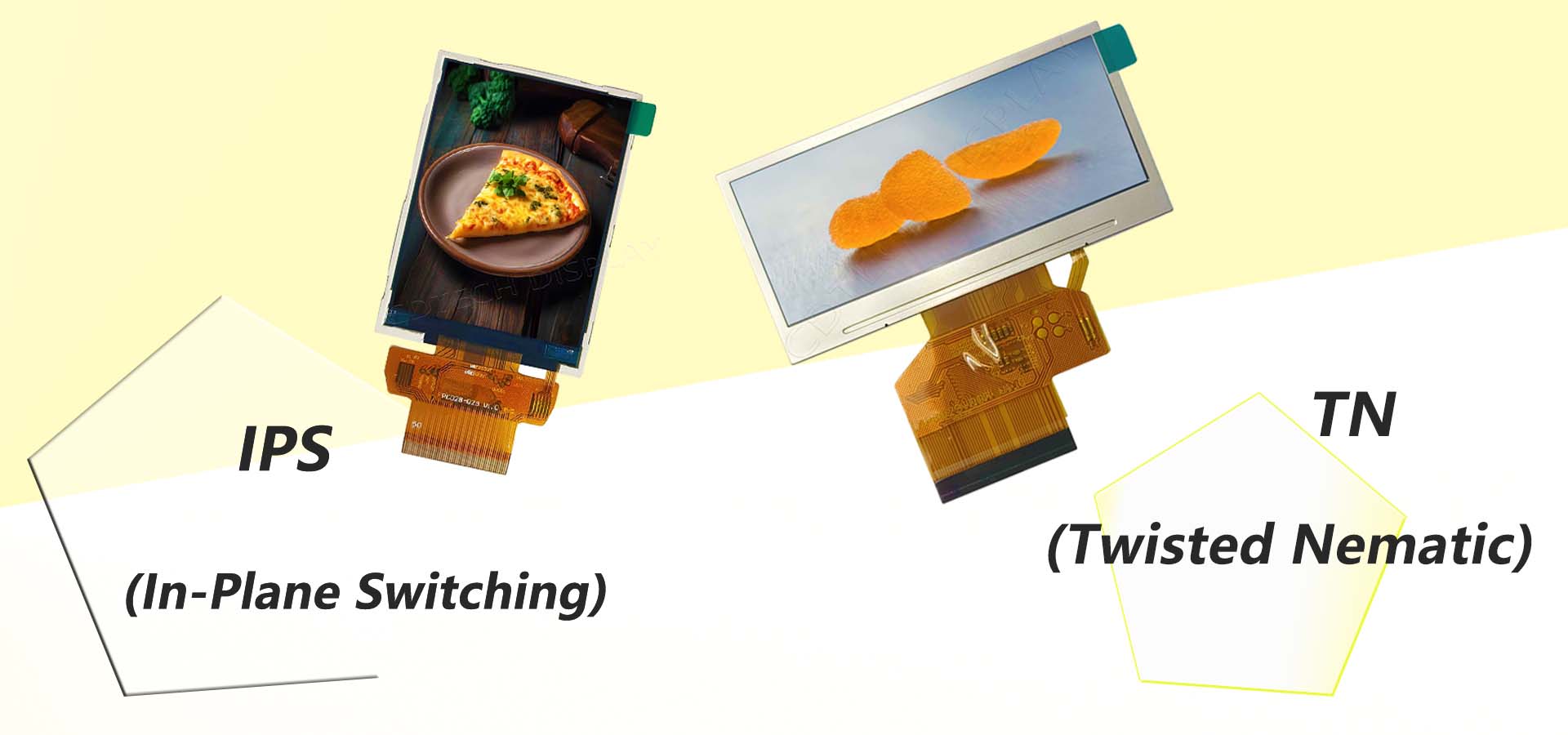
TN LCD vs IPS LCD: How to Choose the Right Display for You
-
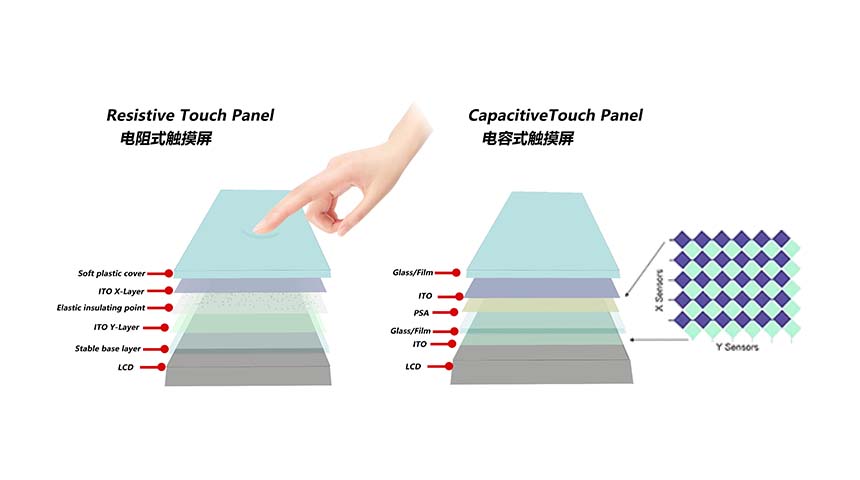
Capacitive Touch Panel or Resistive: Which Suits Your Needs?
-
Why Choose an IPS LCD Panel for Your Next Screen Purchase?
-
CDTECH to Showcase Cutting-Edge Display Solutions at SID 2025
-
Comparing Different Types of Displays in Cars: A Detailed Overview
-
White Spots on LCD Screen: Causes, Fixes & Industrial Solutions (2026 Guide)