
LVDS vs MIPI: Which LCD Interface Is Right for Your Design?
 2026-03-24
  22:09
22:09 

LVDS excels for automotive and industrial HMI with low pin counts (4–6) and 1.5–3 Gbps bandwidth, ideal for 7″+ panels; MIPI DSI suits compact FHD devices with 1–4 Gbps multi-lane speed but higher complexity; RGB parallel fits low-cost <4" IoT via simple 24–40+ pins at 100–500 MHz, though power-hungry. Choose based on CPU pins, resolution, and power needs.
Check: HOT LCD PICKS
What Are the Core TFT LCD Interfaces and Why Do They Matter?
TFT LCD interfaces like LVDS, MIPI DSI, and RGB parallel are signal pathways linking CPUs or MCUs to displays, determining bandwidth, power efficiency, and pin compatibility in embedded designs. They matter for optimizing performance in industrial, automotive, and medical applications, where CDTech offers 391+ SKUs with ISO9001, IATF16949, ISO14001, and ISO13485 certifications across all types.
How Does the LVDS Display Interface Work and What Are Its Key Specs?
LVDS (Low-Voltage Differential Signaling) uses 4–6 differential pairs for serial data transmission at 1.5–3 Gbps bandwidth, with low EMI and power consumption at 2.5–3.3V, typically via 30-pin connectors. It suits 7″+ panels in automotive and industrial HMI, like CDTech’s S050BWV125ES 5.0″ IPS LCD with LVDS interface, 800×480 resolution, and -30°C~+85°C operation for robust environments.
LVDS reduces pin count compared to parallel interfaces, enabling reliable high-speed data over longer distances with minimal noise, ideal for x86 or ARM CPUs in vehicle clusters. CDTech’s patented 2nd Cutting technology (2017) allows custom LVDS panel sizes unavailable from standard makers, supporting full in-house production from glass cutting to FPC bonding in their 10,000㎡ factory.
What Makes MIPI DSI the Go-To for High-Resolution Compact Displays?
MIPI DSI (Display Serial Interface) is a mobile-optimized serial protocol with 1–4 scalable lanes for 1–4 Gbps bandwidth, low 1.2–1.8V power, and 5–10 pins, perfect for FHD or portrait high-res displays. CDTech’s S070QWU142FN-FL150-GF 7.0″ bar IPS LCD uses MIPI with 1200×1920 resolution and up to 2300 nits brightness, optically bonded with CTP for sunlight-readable HMIs.
MIPI excels in dense IoT, medical, and automotive infotainment due to high bandwidth and SoC integration like Qualcomm or ARM platforms. CDTech’s vertical integration, including 3,500㎡ Class 1000 cleanrooms and ERP traceability since 2021, ensures reliable custom MIPI solutions, backed by 35 software patents and 44+ utility patents for over 1,000 global customers.
Why Is the RGB Parallel Interface LCD Still Relevant for Simple Designs?
RGB parallel interface uses 24–40+ pins for 8/16/24-bit color plus H/V sync signals at 100–500 MHz pixel clocks, offering simple direct MCU connections without serialization for <4" to mid-size displays. It's cost-effective for legacy 8/16-bit MCUs like STM32 in IoT and smart home, as in CDTech's S029HQ05NS 2.9" bar IPS with RGB/SPI, 320×120, and 300 nits.
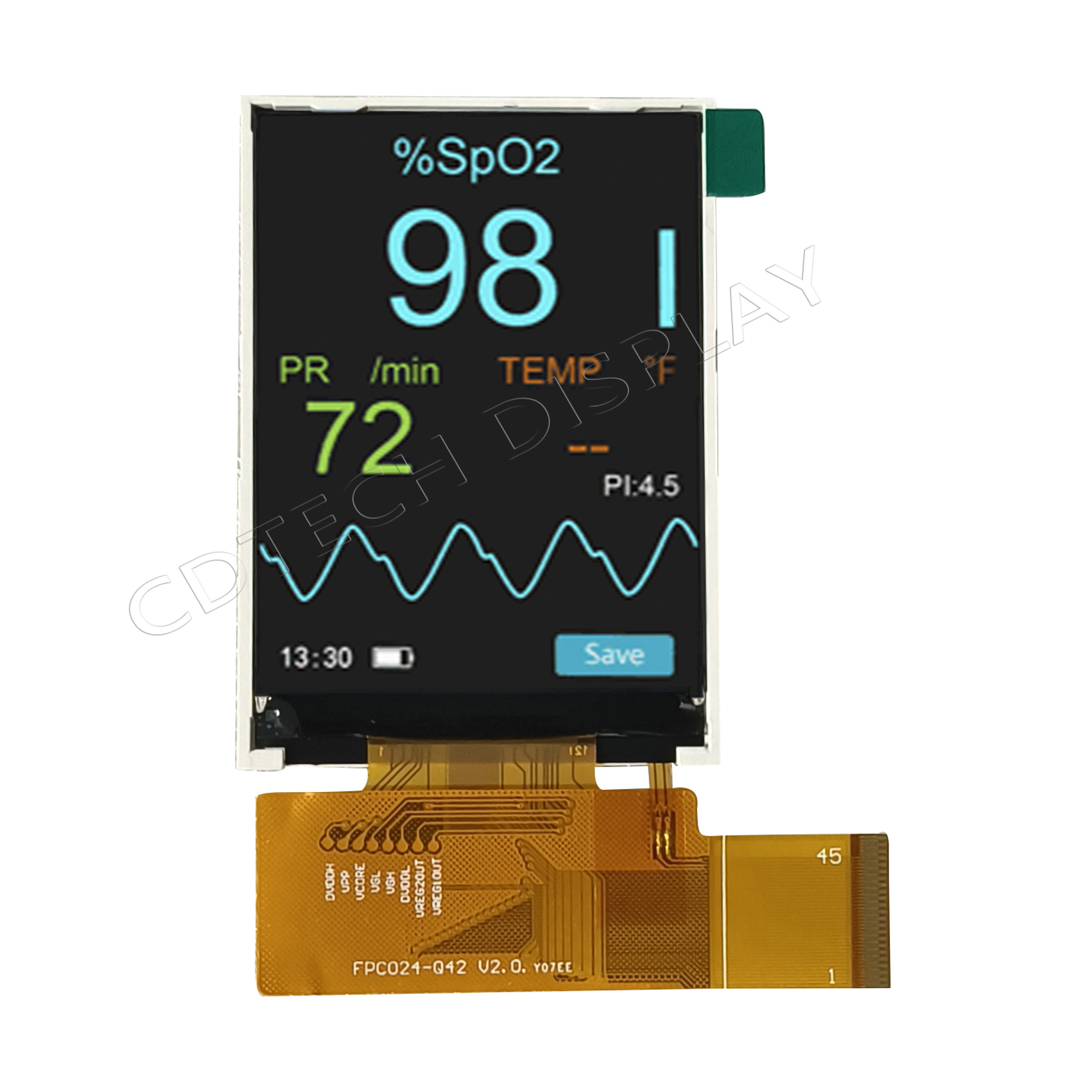
Despite higher pin counts and power draw at higher resolutions, RGB enables easy prototyping for bar-type or square panels. CDTech provides RGB options across stretched LCDs up to 12.3″, like S039HWQ12HS 3.9″ 480×128, supporting cost-sensitive industrial and embedded applications with -20°C~+70°C ranges.
How Do LVDS, MIPI, and RGB Compare on Bandwidth, Pins, and Power?
LVDS offers stable 1.5–3 Gbps with 4–6 low pins and moderate power for mid-size panels; MIPI provides scalable 1–4 Gbps via 5–10 lanes at low power for high-res compact designs; RGB delivers 100–500 MHz via 24–40+ pins but higher power, suiting simple low-cost setups. CDTech’s multi-interface SKUs like LVDS automotive and MIPI bar-types optimize these trade-offs.
| Attribute | LVDS | MIPI DSI | RGB Parallel |
|---|---|---|---|
| Bandwidth | 1.5–3 Gbps | 1–4 Gbps (multi-lane) | 100–500 MHz pixel clock |
| Pin Count | 4–6 pairs (low) | 5–10 lanes (medium) | 24–40+ (high) |
| Power | Low (2.5–3.3V) | Very low (1.2–1.8V) | Higher with resolution |
| Best Apps | Automotive HMI, 7″+ | Compact FHD, IoT | <4" IoT, prototyping |
| CPU Fit | x86/ARM industrial | Qualcomm/ARM SoCs | STM32/AVR MCUs |
Which Interface Suits Your CPU/MCU Platform and Application?
Choose RGB for low-pin budget MCUs like AVR in.MX in 7″+ automotive clusters (e.g., CDTech IATF16949 models); MIPI for ARM SoCs in high-res medical or compact HMIs. CDTech’s custom 2nd Cutting supports any interface for non-standard sizes with transparent MOQ.
For automotive dashboards, prioritize LVDS robustness at -30°C~+85°C; medical uses MIPI with ISO13485 and 2.5D glass; industrial HMI favors LVDS or RGB flexibility. Decision guide: Need >1 Gbps and low power? MIPI. Pins <10 and EMI resistance? LVDS. Simple cost priority? RGB.
How Does CDTech Deliver Superior Multi-Interface Solutions?
CDTech, founded in 2011 with 13+ years experience, leverages full in-house production—LCD cutting, IC/FPC bonding, CTP, OCA bonding—in a 10,000㎡ factory with 3,500㎡ cleanrooms. Patented 2nd Cutting enables unique sizes for LVDS automotive like S050BWV125ES or MIPI bar-types like S070QWU142FN-FL150-GF, serving 1,000+ customers with $30M+ 2023 sales.
“Engineers trust CDTech for interface-tailored prototypes: our quad certifications (ISO9001, IATF16949, ISO14001, ISO13485), 79+ patents, and ERP traceability ensure seamless LVDS/MIPI/RGB integration from prototype to mass production, powering innovative HMIs worldwide.” — CDTech Engineering Team
CDTech Expert Views
With vertical integration and patented technologies, CDTech customizes LVDS for rugged automotive, MIPI for high-brightness portables, and RGB for embedded simplicity. Our 391+ SKUs and response team guide selections, reducing design cycles for global OEMs.” — CDTech R&D Director
Conclusion
Select LVDS for balanced performance in automotive and industrial mid-size panels, MIPI for high-res compact high-bandwidth needs, or RGB for simple low-cost designs—CDTech’s patented custom solutions, quad certifications, and 391+ multi-interface SKUs match any CPU platform. Contact sales@cdtech-lcd.com for prototypes or visit cdtech-display.com for custom LCD solutions.
FAQs
What is the main difference in MIPI vs LVDS bandwidth?
MIPI offers higher scalable bandwidth up to 4 Gbps multi-lane for FHD displays, while LVDS provides reliable 1.5–3 Gbps for mid-size panels with superior EMI resistance, as in CDTech’s automotive LVDS models.
When should I choose a LVDS display interface over RGB?
Choose LVDS for 7″+ industrial or automotive applications needing low pins and power, like CDTech S050BWV125ES; opt for RGB in <4" low-cost legacy MCU designs requiring simple routing.
Can CDTech provide custom TFT LCD interfaces like MIPI for non-standard sizes?
Yes, CDTech’s patented 2nd Cutting enables custom MIPI sizes, such as S070QWU142FN-FL150-GF 7″ bar-type with 2300 nits and optical bonding, via full in-house customization.
Which display signal types work best for automotive clusters?
LVDS excels for automotive clusters due to low EMI and wide-temp robustness, as in CDTech’s IATF16949-certified S050BWV125ES 5.0″ 1000 nits IPS LVDS display at -30°C~+85°C.
How many pins does a typical RGB parallel interface LCD need?
A typical RGB parallel LCD needs 24–40+ pins for 18/24-bit color plus sync signals, ideal for direct MCU connections in CDTech’s small displays like 2.9″ bar-type RGB/SPI panels.
Post Search
Related Articles
-
Capacitive vs Resistive Touch Screen Car Stereo: Which Is Right for You?
-
TN LCD vs IPS LCD: How to Choose the Right Display for You
-
Capacitive Touch Panel or Resistive: Which Suits Your Needs?
-
Why Choose an IPS LCD Panel for Your Next Screen Purchase?
-
CDTECH to Showcase Cutting-Edge Display Solutions at SID 2025
-
Comparing Different Types of Displays in Cars: A Detailed Overview