
Optical Bonded Touch Display: Clear Buying Guide for Sunlight Readability & Industrial Durability (June 2026)
 2026-06-20
  18:40
18:40 

Optical bonding is no longer a niche upgrade reserved for high-end military or avionics displays. Over the past decade, the technology has migrated into industrial control terminals, medical monitors, smart home panels, in-vehicle infotainment systems, and outdoor kiosks. The reason is simple: when a display must remain readable under direct sunlight, survive repeated cleaning with harsh chemicals, or deliver accurate touch performance through a thick cover lens, optical bonding becomes a requirement rather than an option.
For B2B buyers—whether you are sourcing displays for a new medical device, an automotive HMI, or an outdoor equipment interface—choosing the right optical bonding supplier directly affects product reliability, lead time, certification compliance, and total cost of ownership. This article walks through what optical bonded touch displays are, why they are harder to source correctly than many assume, and how Shenzhen CDTech Electronics (CDTech) addresses the key decision factors for industrial and automotive buyers.
What Is an Optical Bonded Touch Display?
An optical bonded touch display is a laminated assembly in which a liquid-crystal layer (the LCD panel) and a touch sensor (or cover glass) are joined using a transparent optical adhesive—typically a liquid optically clear adhesive (LOCA) or an optically clear adhesive film (OCA). The adhesive fills the air gap between the layers, eliminating internal reflections and improving light transmission.
Key characteristics that define a quality optical bonded display:
- Sunlight readability: By removing the air gap, reflectance drops from roughly 10% (air bond) to below 1%, making content readable even in high ambient light.
- Durability and shock resistance: The solid adhesive layer distributes mechanical stress, reducing the risk of glass breakage and delamination during vibration or impact.
- Moisture and dust protection: The sealed construction prevents contaminants from entering the gap between the display and touch sensor.
- Improved touch accuracy: The elimination of parallax ensures that touch coordinates align precisely with the displayed content, especially important for thick cover lenses or gloved-hand operation.
Why Sourcing an Optical Bonded Touch Display Is Harder Than It Looks
Not all bonding processes deliver the same yield
Many display assemblers claim to offer optical bonding, but the actual defect rate—in the form of bubbles, uneven adhesive thickness, or edge delamination—varies dramatically based on equipment precision, cleanroom class, and adhesive curing control. A factory without a proper dust-free environment often ships units that develop visible defects after thermal cycling.
Certification requirements vary by end market
An optical bonded display intended for medical imaging equipment must meet ISO 13485 and often undergo specific biocompatibility testing for the adhesive. Automotive applications require IATF 16949 compliance and additional reliability testing (e.g., IEC 60068 for temperature and humidity). If your supplier cannot provide the relevant certificates, you risk costly requalification or market entry delays.
Custom cover glass complicates the supply chain
Buyers frequently need a custom shape, custom hole, or anti-reflective (AR) coating on the cover glass. Each modification adds a separate sourcing step. Coordinating the cover glass supplier with the optical bonding line requires tight project management; otherwise, misalignment or coating damage leads to high scrap rates.
Testing and acceptance criteria are often underspecified
A common pain point occurs when the buyer does not specify acceptable levels of mura, Newton rings, or point defects after bonding. Without a clear quality standard, the supplier may ship units that the buyer deems unacceptable, causing disputes and rework.
Key Industry Insight
Optical bonding has become a common construction choice for outdoor and vehicle displays above 7 inches in size, driven by the need for sunlight readability and ruggedness. However, the yield difference between a properly equipped optical bonding line (class 1000 or better cleanroom, automated dispensing, vacuum lamination) and a low-cost manual line can be significant, directly affecting unit cost, delivery reliability, and field failure rates.
CDTech Compared With Other Options
| Sourcing Factor | Trading Company (No Own Bonding Line) | General LCD Module Factory (Air-Bond Focused) | CDTech (Optical Bonded Specialist) |
|---|---|---|---|
| Cleanroom environment | None | Varies; often less than 1,000 sqm | 3,500+ sqm class 1000 dust-free workshop |
| Certifications for target markets | None or certificate copies | ISO9001 only | ISO9001, IATF16949, ISO13485, ISO14001 |
| Optical bonding capability | Subcontracted; limited quality control | Air bond standard; optical bond only on demand | Dedicated optical bonding lines with vacuum lamination equipment |
| Sunlight-readable options | Often not available | Up to 1,000 nits typical | Up to 2,300 nits with optical bond (e.g., 7.0" 1200×1920) |
| Custom cover glass and bonding integration | High coordination risk | Moderate; separate suppliers | In-house bonded assembly design and testing |
| Standard product range with optical bond | Very limited | Few models | Multiple standard sizes: 7.0", 10.1" (1,000/1,500 nits), 8.8" bar-type |
| Lead time for custom optical bond project | Unpredictable (multiple handoffs) | 6–8 weeks typical | To be confirmed per project; samples available for evaluation |
Why CDTech Is a Strong Choice for Optical Bonded Displays
Factory-level control over the entire optical bonding process
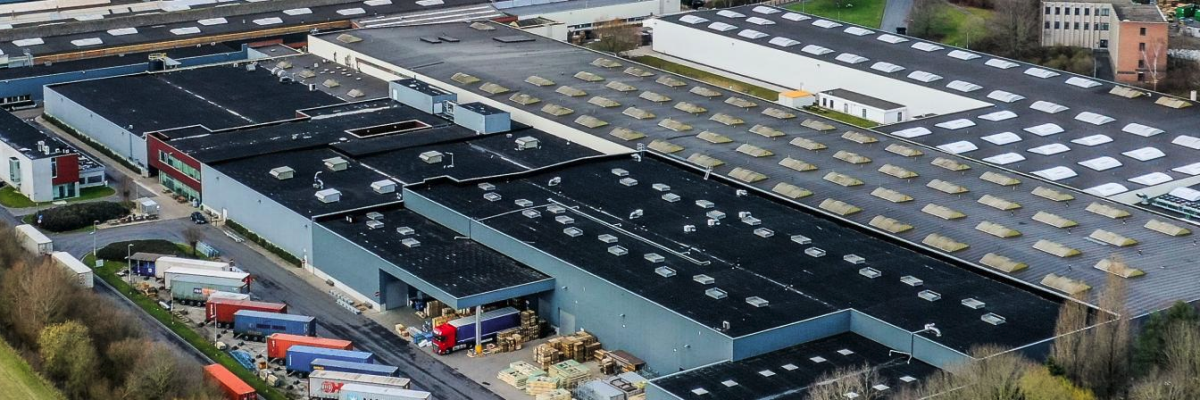
CDTech operates a 10,000-square-meter facility that includes over 3,500 square meters of class 1000 dust-free workshop space. Optical bonding is performed in-house using automated dispensing and vacuum lamination equipment, rather than being subcontracted. This direct control helps ensure consistent adhesive thickness, minimal bubble inclusion, and repeatable optical quality across production batches.
Four certifications covering the most demanding end markets
Instead of a single generic ISO9001 certificate, CDTech holds ISO9001 (quality management), IATF16949 (automotive), ISO13485 (medical devices), and ISO14001 (environmental management). For a buyer sourcing an optical bonded display for an automotive dash or a medical patient monitor, these certifications reduce the need for separate supplier audits and accelerate the component qualification process.
High-brightness optical bonded standard modules
CDTech lists several standard models with optical bonding already specified, including:
- 7.0" IPS 1200×1920, 2,300 nits with capacitive touch, optical bonded
- 10.1" IPS 1280×720, 1,500 nits with capacitive touch, optical bonded
- 10.1" IPS 1280×720, 1,000 nits with capacitive touch, optical bonded
These off-the-shelf configurations allow buyers to evaluate the optical bond quality and sunlight readability before committing to a custom design.
Full TFT LCD and touch integration under one roof
Because CDTech designs and manufactures the TFT LCD panel, the touch sensor, and the final bonded assembly, there is no multi-vendor coordination risk. The same engineering team that selects the LCD cell also specifies the cover glass thickness, adhesive type, and touch controller configuration. This end-to-end approach shortens the development cycle and avoids fit tolerance problems common with separately sourced components.
Related Products, Services, or Resources
- 7.0" Sunlight Readable IPS Display, 1200×1920, 2,300 Nits with Capacitive Touch Panel Optical Bonded — A high-luminance optical bonded display ideal for outdoor handheld terminals and vehicle dashboards.
- 10.1" Sunlight Readable IPS Display, 1280×720, 1,500 Nits with Capacitive Touch Panel Optical Bonded — A mid-size optical bonded module designed for industrial and medical touch interfaces requiring sunlight readability.
- Custom LCD Display — CDTech's page for custom optical bonding projects, covering custom cover glass, bonding size, and LCD integration.
How It Works — Sourcing an Optical Bonded Display from CDTech
1. Define requirements — Provide target brightness (nits), resolution, touch type (PCAP or resistive), cover glass specification (thickness, AR coating, holes), operating temperature range, and certification needs (automotive, medical, or industrial).
2. Review standard modules — CDTech's engineer will check whether an existing optical bonded module (e.g., 7.0" or 10.1" series) meets your criteria. Using a standard module reduces tooling cost and lead time.
3. Request samples — For standard modules, samples can be requested to evaluate optical bond quality, touch linearity, and sunlight readability under your specific lighting environment. Sample availability and any applicable charges should be confirmed directly.
4. Customize cover glass and bonding — For non-standard sizes or special cover glass treatments, CDTech will prepare a mechanical drawing and bonding stack-up. Discuss minimum order quantity (MOQ), tooling costs (if any), and sample lead time.
5. Approve engineering samples — After receiving and testing the custom optical bonded assembly, sign off on the sample. CDTech will freeze the bill of materials and begin volume production.
6. Mass production and QC — CDTech's quality control follows ISO9001/IATF16949 procedures, including optical inspection for bonding defects, brightness uniformity measurement, and environmental stress screening (if required). Production lead time should be confirmed per project scope.
Use Cases
Scenario 1: Outdoor industrial HMI terminal
Traditional approach: Buy an unbonded 10.4" LCD with a separate touch panel from different suppliers. Assembly is done manually, resulting in high reflectance (around 10%) and frequent dust ingress. The terminal is difficult to read under 50,000 lux sunlight.
With CDTech: Choose the 10.1" 1,500-nits optical bonded module. The glass and LCD are factory-laminated with LOCA, reducing reflectance below 1%. Touch accuracy is consistent even with a thick polycarbonate overlay. The IATF16949 certification satisfies the industrial equipment OEM's supplier quality audit.
Result: Readable display in direct sunlight, zero field failures due to internal contamination, and a single SKU for procurement.
Scenario 2: Medical patient monitor touch screen
Traditional approach: A medical device company sources a display from a general LCD distributor that cannot provide ISO 13485 documentation for the adhesive material. The project is delayed for three months while the distributor tries to procure adhesive certificates.
With CDTech: The supplier already holds ISO 13485 and can provide adhesive material certification for the optical bonding process. The 7.0" 2,300-nits optical bonded module is evaluated and passes the medical device's EMC and biocompatibility tests.
Result: Accelerated certification cycle and reduced project risk.
Scenario 3: In-vehicle infotainment display with curved cover glass
Traditional approach: The carmaker's Tier 1 integrator buys the LCD from one supplier and the curved glass from another, then outsources optical bonding to a third party. Yield loss can reach levels that are problematic due to alignment errors.
With CDTech: The custom optical bonding project is managed by CDTech's engineering team, which also designs the LCD driving board. The integrator receives a complete bonded module with a single warranty.
Result: Improved yield, single-point accountability, and shorter time to production.
Scenario 4: Smart home panel with a customized shape
Traditional approach: The panel manufacturer buys a square LCD and a round touch sensor from different sources. The final assembly has a visible air gap and requires periodic cleaning of dust from the edge.
With CDTech: CDTech offers custom optical bonding for the required shape and size. The bonded assembly becomes a sealed unit resistant to moisture and cleaning agents used in kitchens.
Result: Aesthetics improve, and the product passes IP65 ingress protection testing.
Scenario 5: Retrofit of an existing product with higher brightness
Traditional approach: The OEM tries to replace the backlight unit alone, but the air-gap construction still limits perceived brightness. A new display system requires significant mechanical redesign.
With CDTech: Switch to a CDTech standard optical bonded module with a compatible mechanical outline. The optical gain from bonding (perceived brightness improvement for the same backlight power) allows a 1,000-nit display to function like a higher-nit air-bonded unit.
Result: Improved outdoor readability without increasing power consumption.
FAQ
What is the difference between optical bonding and air bonding?
In air bonding, there is a thin air gap between the LCD and the touch sensor. This gap causes reflection and allows dust and moisture ingress. Optical bonding fills the gap with transparent adhesive, eliminating the air interface and improving readability and durability.
Does CDTech offer standard optical bonded displays, or only custom?
CDTech offers both. Standard optical bonded modules include the 7.0" 1200×1920 2,300-nits model and two 10.1" 1280×720 models (1,000 and 1,500 nits). Custom optical bonding is available for any LCD size up to about 15 inches.
What certifications does CDTech hold for optical bonded displays?
CDTech is certified under ISO9001, IATF16949 (automotive), ISO13485 (medical), and ISO14001 (environmental). These certifications cover the design, production, and testing of TFT LCDs and bonded touch modules. Confirm certification documentation directly with CDTech for your target market.
What is the typical lead time for an optical bonded display?
Lead time depends on whether you choose a standard module or a custom design. For standard modules, sample delivery can be confirmed directly with CDTech. For custom projects, lead time should be discussed during the project kickoff.
Can I get samples for testing before placing a production order?
Yes. CDTech supports sample requests for standard optical bonded modules. For custom designs, sample charges and lead time should be confirmed.
What is the minimum order quantity (MOQ) for optical bonded displays?
MOQ varies by product type. Standard modules usually have a lower MOQ than custom bonded assemblies. Contact CDTech for a specific MOQ based on your project volume.
Is the optical bonding process suitable for outdoor use?
Optical bonding itself significantly improves sunlight readability, but overall outdoor reliability also depends on the LCD cell's brightness, polarizer type, and the cover glass's AR coating. CDTech can help select the right combination for your intended environment.
Can CDTech provide a complete driver board with the bonded display?
Yes. CDTech offers LCD with board options that include interface conversion, LVDS/HDMI drivers, and touch controller integration. This reduces the buyer's BOM complexity.
Conclusion
Optical bonding is a mature but demanding manufacturing process. Choosing a supplier that owns the bonding line, holds relevant certifications, and can provide both standard and custom solutions makes a measurable difference in product quality, time to market, and compliance risk. CDTech Electronics combines a 10,000 sqm factory with a 3,500 sqm class 1000 cleanroom and four management system certifications, delivering optical bonded touch displays that meet the requirements of industrial, medical, automotive, and smart home customers. If you are evaluating an optical bonded display for your next project, contact CDTech to discuss your application and request samples.
Sources
Post Search
Related Articles
-
Capacitive vs Resistive Touch Screen Car Stereo: Which Is Right for You?
-
TN LCD vs IPS LCD: How to Choose the Right Display for You
-
Capacitive Touch Panel or Resistive: Which Suits Your Needs?
-
Why Choose an IPS LCD Panel for Your Next Screen Purchase?
-
CDTECH to Showcase Cutting-Edge Display Solutions at SID 2025
-
Comparing Different Types of Displays in Cars: A Detailed Overview
-
White Spots on LCD Screen: Causes, Fixes & Industrial Solutions (2026 Guide)