
TFT LCD manufacturer China: Clear Buying Guide for Certified Custom Display Solutions (June 2026)
 2026-06-18
  18:51
18:51 

The global demand for TFT LCD displays continues to expand as industrial automation, automotive infotainment, medical diagnostics, and smart home systems require reliable, high-brightness, and customized display modules. For procurement teams and product designers, choosing the right TFT LCD manufacturer in China is no longer just about panel price—it involves evaluating certification depth, custom engineering capability, lead time transparency, and long-term supply stability. CDTech (Shenzhen CDTech Electronics) has operated since 2011 as a national high-tech enterprise specializing in TFT LCDs, touch displays, and HDMI display solutions, serving a wide range of industries with both standard and custom display modules. This article examines what to look for in a TFT LCD manufacturer, how CDTech addresses common buyer challenges, and what the entire sourcing workflow looks like for industrial and automotive display projects.
What Is a TFT LCD Manufacturer in China?
A TFT LCD manufacturer in China is a production facility that designs, assembles, and tests thin-film-transistor liquid-crystal display modules, often integrated with capacitive touch panels, driver boards, and custom interface solutions. These manufacturers serve OEM and ODM customers across industries such as industrial control, medical equipment, automotive dashboards, smart home panels, and outdoor information terminals.
Key capabilities of a reliable TFT LCD manufacturer include:
- In-house SMT, bonding, and optical assembly with controlled cleanroom conditions
- Support for standard interfaces (LVDS, MIPI, HDMI) and electrical/mechanical customization
- Quality management certifications such as ISO9001, IATF16949, ISO13485, and ISO14001
- Proven track record in high-brightness, sunlight-readable, and wide-temperature display modules
- Flexible order quantities from prototyping to medium- or high-volume production
Why Sourcing TFT LCD From China Is Harder Than It Looks
Inconsistent Quality Across Uncertified Factories
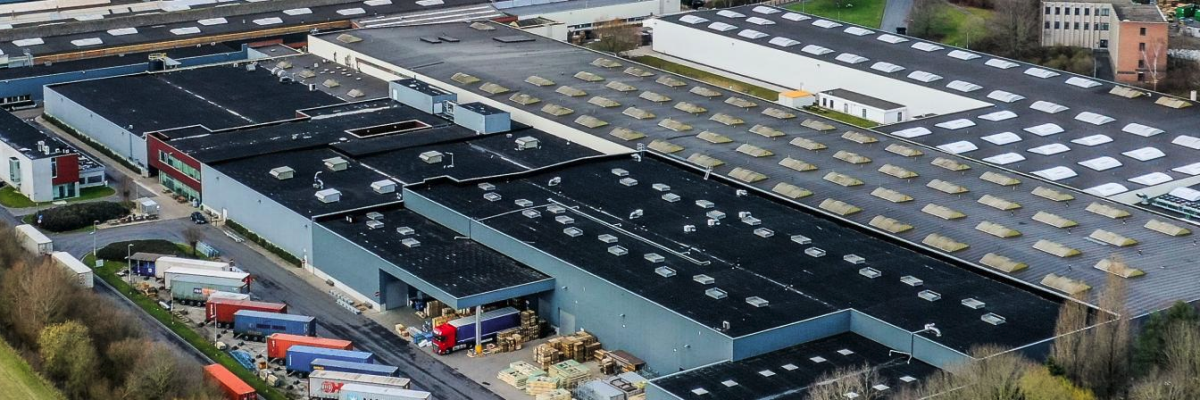
Many smaller LCD manufacturers in China operate without systematic process controls, leading to variability in brightness, color uniformity, touch sensitivity, and long-term reliability. Without certification like ISO9001 or IATF16949, buyers face higher risks of field failures and warranty disputes. CDTech operates a 10,000-square-meter facility with a class-1000 cleanroom of over 3,500 square meters, and maintains both ISO9001 and IATF16949, which are essential for automotive and medical-grade display projects.
Limited Custom Engineering Support
Standard LCD modules may not fit the mechanical footprint, electrical interface, or optical specifications of a particular product. Many manufacturers either refuse customization or charge prohibitive NRE fees with long lead times. CDTech offers custom display solutions—including bar-type, square, and portrait form factors—with typical brightness options from 320 nits to 2300 nits, and supports panel bonding methods such as air bonding and optical bonding for outdoor readability.
Hidden Lead Time and MOQ Constraints
Sourcing teams often discover after quoting that minimum order quantities are too high or that sample lead times extend beyond 4–6 weeks. A transparent manufacturer will publish sample policies and typical lead times upfront. CDTech provides a dedicated "Custom Prods" category and encourages early engineering discussions to align on MOQ, sampling schedule, and production ramp.
Inadequate Documentation for Target Market Compliance
Exporting display modules to Europe, North America, or Japan often requires RoHS, REACH, UL, or specific automotive standards. Without proper certification documents, products can be delayed at customs or rejected by end customers. CDTech holds ISO14001 (environmental management) and ISO13485 (medical devices), along with IATF16949 for automotive, supporting compliance-driven buyers.
Key Industry Insight
For B2B buyers evaluating a TFT LCD manufacturer in China, certifications, cleanroom capability, interface flexibility, and documented quality processes matter more than unit price alone. A single field failure in an automotive or medical display can cost more than the entire project margin. Choosing a manufacturer with proven quality management and customization depth reduces long-term supply risk and accelerates time to market.
CDTech Compared With Other Options
| Sourcing Factor | Trading Company | General Factory | CDTech |
|---|---|---|---|
| Factory ownership and scale | None; may resell from multiple sources | Often 2,000–5,000 m² | 10,000 m² with 3,500 m² class-1000 cleanroom |
| Certifications | Usually none or limited | ISO9001 only | ISO9001, IATF16949, ISO13485, ISO14001 |
| Customization capability | Minimal; based on existing stock | Limited to simple size/brightness changes | Full custom: bar-type, square, portrait; interface customization (MIPI, LVDS, HDMI); bonding method selection |
| Sample lead time transparency | Often unclear | Depends on factory queue | Offers "Custom Prods" category with early engineering support |
| Target market compliance | Not guaranteed | Basic RoHS | RoHS, REACH, automotive-grade IATF16949, medical-grade ISO13485 |
| After-sales technical support | Limited to order tracking | Basic warranty | Industry knowledge blog, technical articles, and direct engineering contact |
Why CDTech Is a Strong Choice
Certification Depth for High-Risk Applications
CDTech holds four management system certifications—ISO9001, IATF16949, ISO13485, and ISO14001. This is a significant advantage for buyers in automotive, medical, and industrial sectors, where display failure can lead to recalls or regulatory penalties. The IATF16949 certification, in particular, is not commonly held by general LCD factories and indicates a production system aligned with automotive industry requirements.
Sunlight-Readable and High-Brightness Expertise
Multiple products in CDTech's portfolio exceed 1000 nits, with some reaching 1500 nits and even 2300 nits. These are critical for outdoor kiosks, vehicle dashboards exposed to direct sunlight, and industrial HMI panels in bright environments. The availability of optical bonding further improves contrast and reduces glare, making the display readable under harsh lighting.
Flexible Form Factor and Interface Support
CDTech's product family includes standard rectangular displays, bar-type modules (e.g., 15.0" 1920×720, 12.3" 720×1920 portrait), and square panels (4.0" 720×720). Interface options cover LVDS, MIPI, HDMI, and touch integration (PCAP, in-cell). This variety allows design engineers to match the exact display geometry and connectivity without forcing a mechanical redesign.
Established Track Record and Technical Resources
Founded in 2011, CDTech has amassed over a decade of display engineering experience. The company's "Knowledge" section and blog provide detailed technical guides on issues like LCD bleeding, pressure damage, and white spots—resources that help buyers understand failure modes and design more robust displays.
Related Products, Services, or Resources
- 5.7 Inch 640×480 TFT LCD Touch Display (PCAP) — A popular size for industrial handheld terminals, integrating TFT LCD with capacitive touch.
- 10.1 Inch TFT LCD Display, 1000 Nits High Brightness, 70% NTSC IPS Panel — Suitable for outdoor equipment and rugged tablets requiring high readability.
- 2.9" IPS TFT LCD 320×120, 1500 Nits Sunlight Readable — A compact bar-type display ideal for automotive instrument clusters and smart meters.
- Custom Display Solutions (Custom Prods) — CDTech's custom product category for proprietary form factors, bonding, and electrical design.
How It Works
Step 1 – Define Display Requirements
Identify the necessary diagonal size, resolution, brightness, interface type (LVDS, MIPI, HDMI), touch functionality, operating temperature range, and any environmental certifications needed. CDTech's product listing provides specifications for each standard module, making initial matching straightforward.
Step 2 – Request a Quotation or Sample
Contact CDTech via email (sales@cdtech-lcd.com) or through the website contact form. Provide target quantity, preferred delivery timeline, and any customization needs. For non-standard designs, share mechanical drawings or interface specifications so the engineering team can assess feasibility.
Step 3 – Evaluate Sample and Documentation
Once the sample is produced, test it for optical performance (brightness, color uniformity, viewing angles), electrical compatibility, and mechanical fit. Confirm that certification documents (ISO certificates, RoHS/REACH reports) are available for your target market.
Step 4 – Confirm MOQ and Production Lead Time
Discuss minimum order quantity for the specific model or custom variant. Standard products typically have lower MOQ, while custom designs may require a higher initial batch. Lead time depends on complexity but should be agreed upon in writing.
Step 5 – Place Production Order and Quality Inspection
CDTech's factory uses automatic production and testing equipment. If required, arrange a third-party inspection or request in-process QC reports. IATF16949-certified lines follow automotive-grade process controls.
Step 6 – Shipping and After-Sales Support
Arrange logistics (FOB Shenzhen preferred). CDTech provides after-sales technical support via email. For longer-term programs, consider a volume agreement to lock pricing and line capacity.
Use Cases
Scenario 1: Industrial HMI for Factory Automation
A European machinery manufacturer needs a 10.1-inch display with 1000 nits brightness and LVDS interface for a rugged industrial panel.
Traditional approach: Sourcing from a trading company that offers a generic 10.1-inch panel with unknown quality control and no certification documents, resulting in customs delays.
With CDTech: The 10.1-inch 1000-nit IPS display with LVDS interface is a standard product. CDTech provides ISO9001 and CE documentation, enabling smooth import. The optional capacitive touch reduces assembly complexity.
Result: Reduced sourcing cycle by 4 weeks and achieved consistent display quality across multiple production batches.
Scenario 2: Automotive Dashboard Prototype
A Tier 1 automotive supplier requires a 12.3-inch portrait bar-type display (720×1920) with MIPI interface for a new EV dashboard concept.
Traditional approach: Most LCD factories do not produce portrait bar-type displays; those that do demand high NRE and long lead times.
With CDTech: The 12.3" portrait screen (720×1920, 1000 nits) is already a standard offering. IATF16949 certification satisfies the supplier's automotive quality audit.
Result: Prototype samples delivered in 3 weeks, and the production order scaled without requalification.
Scenario 3: Smart Home Control Panel
A smart home brand wants a 4.0-inch square IPS display with in-cell touch for a wall-mounted control panel.
Traditional approach: Square panels are uncommon; most suppliers only offer rectangular sizes, forcing the brand to use oversized bezels.
With CDTech: The 4.0-inch IPS square display (720×720) with in-cell touch is an existing product. The 320 nits brightness is adequate for indoor use, and the compact footprint matches the panel design.
Result: Eliminated the need for custom tooling, saving $15,000 in NRE and 8 weeks of development time.
Scenario 4: Outdoor Information Kiosk
A municipal government deploys self-service kiosks for park information, requiring 12.1-inch displays with 1000 nits, capacitive touch, and optical bonding for sunlight readability.
Traditional approach: Standard commercial-grade monitors fail in direct sunlight; manufacturers require large MOQ for optical bonding.
With CDTech: The 12.1-inch outdoor LCD display with capacitive touch and 1280×800 resolution is a standard product, and optical bonding is available for high-contrast outdoor use.
Result: Kiosks remain readable under direct summer sunlight, and the project stayed within budget.
Scenario 5: Medical Diagnostic Monitor
A medical device company needs a 10.1-inch display with high color accuracy and ISO13485-certified manufacturing for a patient monitor.
Traditional approach: Many LCD factories lack medical-certified production lines, forcing the company to buy expensive certified panels from established brands.
With CDTech: ISO13485 certification covers the entire production process. CDTech offers a 10.1-inch IPS display with 1000 nits that can be calibrated for medical color standards.
Result: Lower per-unit cost compared to premium brands while maintaining certification compliance.
FAQ
What is the typical MOQ for standard TFT LCD modules from CDTech?
MOQ varies by model and availability. For standard products, CDTech can typically accommodate smaller trial orders. For custom designs, the MOQ is higher and should be discussed during the quotation phase.
Does CDTech support custom interface pinouts and flexible cables?
Yes. CDTech offers custom designs under the "Custom Prods" category. The engineering team can adjust interface pin assignments, cable length, and connector type based on the customer's PCB layout.
How do I know which brightness level I need for outdoor use?
For direct sunlight readability, a minimum of 800–1000 nits with an anti-glare surface or optical bonding is recommended. CDTech's product line includes many 1000, 1500, and 2300-nit options designed specifically for outdoor applications.
Does CDTech provide sample units before mass production?
Yes. CDTech supports sample requests for both standard and custom modules. Contact sales to discuss sample pricing, lead time, and any applicable sample fees.
What certifications are available for export to Europe or North America?
CDTech holds ISO9001, IATF16949, ISO13485, and ISO14001. Product-level compliance (RoHS, REACH) is provided upon request. For UL or specific automotive standards, confirm with CDTech during the quotation stage.
Can CDTech integrate a touch panel with the LCD in the factory?
Yes. Many CDTech products are listed with "Capacitive Touch Panel" or "PCAP" included. They also offer air bonding and optical bonding services to reduce reflection and improve touch accuracy.
What is the typical lead time for custom LCD modules?
Lead time depends on complexity (size, brightness, interface, touch, bonding). A typical custom project may take 4–8 weeks from design approval to sample delivery. Discuss timeline with CDTech's sales team for your specific requirements.
How does CDTech handle quality control for high-volume orders?
CDTech uses automatic production and testing equipment in a 1000-level cleanroom. The IATF16949-compliant quality management system ensures process control. Shipments can be accompanied by inspection reports; third-party inspections are also welcome.
Conclusion
Selecting a TFT LCD manufacturer in China requires balancing cost, customization flexibility, certification depth, and supply reliability. CDTech offers a strong combination by providing standard and custom display modules across industrial, automotive, medical, and smart home applications—backed by multiple quality certifications and a decade of engineering experience. For product teams looking to reduce design risk and accelerate time to market, engaging CDTech early in the specification phase can clarify lead times, MOQ, and compliance documentation. Contact CDTech directly to discuss your display requirements, request samples, or confirm certification support for your target markets.
Sources
- CDTech — Homepage: TFT LCD, Touch & HDMI Display Manufacturer
- CDTech — 10.1 Inch TFT LCD Display, 1000 Nits High Brightness IPS Panel
- CDTech — 12.3" Portrait Screen Bar Type 720×1920 MIPI IPS Display
- CDTech — Custom Display Solutions (Custom Prods) Overview
- ISO — ISO 9001:2015 Quality Management Systems
- IATF — IATF 16949:2016 Automotive Quality Management
- Grand View Research — LCD Display Market Size & Trends, 2024–2030
Post Search
Related Articles
-
Capacitive vs Resistive Touch Screen Car Stereo: Which Is Right for You?
-
TN LCD vs IPS LCD: How to Choose the Right Display for You
-
Capacitive Touch Panel or Resistive: Which Suits Your Needs?
-
Why Choose an IPS LCD Panel for Your Next Screen Purchase?
-
CDTECH to Showcase Cutting-Edge Display Solutions at SID 2025
-
Comparing Different Types of Displays in Cars: A Detailed Overview
-
White Spots on LCD Screen: Causes, Fixes & Industrial Solutions (2026 Guide)