
The Ultimate Guide to Evaluating an Industrial LCD Monitor Manufacturer for High-Demand OEM Applications
 2026-06-26
  20:43
20:43 

Market pressure is rising for industrial display buyers. Teams are navigating tighter uptime requirements, more demanding environments, and faster product cycles. The key question is no longer whether a screen can light up, but whether it can stay stable, integrate cleanly, and survive real-world operating conditions without frequent replacement. If a monitor fails, the whole system stops, leading to expensive downtime.
Choosing a reliable partner protects your schedule as much as your budget. Evaluating an industrial LCD monitor manufacturer requires analyzing structural capabilities, customization depth, and quality compliance rather than just choosing catalog components. ShenZhen CDTech Electronics Ltd, founded in 2011, positions itself in this space as an industrial TFT LCD, touch display, and HDMI display manufacturer serving specialized information-terminal applications. For OEMs and system builders, understanding how a supplier manages production discipline and component lifecycles is the critical difference between a workable product and a failed deployment.
Understanding the Role of an Industrial LCD Monitor Manufacturer
An industrial LCD monitor manufacturer designs and produces rugged display solutions built for continuous operation, seamless equipment integration, and use in harsher environments than standard consumer screens. These displays are engineered from the ground up to resist severe vibration, extreme heat, dust, moisture, and long operating hours.
Unlike consumer brands that focus on retail aesthetics and entertainment-centric features, an industrial supplier emphasizes repeatable performance, interface compatibility, and stable supply. They provide complete display modules, including high-brightness panels, capacitive or resistive touch integration, and custom logic boards. Experienced display solution providers match the monitor to the environment first, ensuring the unit withstands long-term environmental stress.
Analyzing Core Buyer Pain Points in Industrial Display Projects
Industrial engineering teams face intense pressure from three distinct directions: environmental stress, supply chain volatility, and product differentiation. A standard one-size-fits-all monitor often creates severe integration problems because industrial devices rarely match generic consumer panel shapes, bezels, or connector layouts. Forcing a standard display into a non-standard enclosure increases structural modification costs and delays product launches.
Another major challenge is component obsolescence. Consumer display panels change frequently, but industrial projects require long lifecycle support to avoid constant system redesigns. Furthermore, buyers in regulated sectors require strict compliance and production discipline. They need documented proof that a supplier utilizes rigorous process control, clean-room assembly, and extensive reliability testing rather than relying on unverified marketing claims.
Technical Matrix and Product Fit Comparison
When selecting a display platform, buyers must evaluate the trade-offs between customization, upfront pricing, and long-term support across different manufacturing models.
| Display Option | Core Strengths | Technical Trade-offs | Ideal Application Case |
| CDTech Industrial TFT LCD Displays | High customization depth, exceptional stability, long lifecycle support, and specialized sizing. | Higher initial engineering development focus; less suited for off-the-shelf retail use. | OEM industrial equipment, medical visualization, embedded systems, and custom dimensions. |
| Generic Consumer Monitors | Low upfront unit price, immediate availability, and high native resolution options. | Short product lifecycles, weak structural sealing, low environmental tolerance, and zero long-term supply guarantee. | Light-duty internal monitoring and non-critical laboratory testing environments. |
| Standard Broadline Industrial Monitors | Familiar catalog form factors, established supply networks, and basic rugged housing. | Limited flexibility for custom interface layouts, fixed brightness levels, and low adaptation depth. | Conventional automated assembly line control panels and standard server racks. |
Evaluating Quality Signals and Production Discipline
Evaluating quality requires analyzing a supplier’s factory capabilities, certifications, and technical documentation. Serious manufacturers provide detailed engineering drawings, testing reports, reliability data, and explicit material specifications. Verification of the physical assembly environment is critical for maintaining optical clarity and touch sensitivity over years of operation.
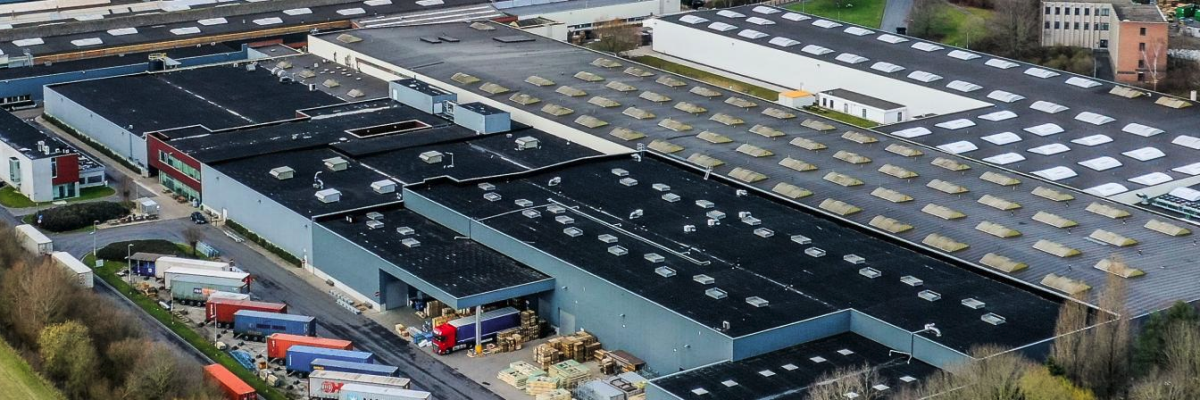
Production infrastructure directly impacts product defect rates. For instance, CDTech operates a factory spanning 10,000 square meters, which includes a 3,500+ square meter thousand-level dust-free workshop to eliminate airborne particulates during capacitive touch panel integration. For reliability-sensitive sectors, buyers must verify international quality management systems. Relevant operational credentials include ISO9001 for general quality systems, IATF16949 for automotive-grade supply continuity, ISO13485 for medical device production discipline, and ISO14001 for environmental management adherence.
Real-World Cross-Industry Deployments
Industrial automation teams rely heavily on Human-Machine Interfaces (HMI) and factory control panels that require sunlight-readability and heavy vibration resistance. By utilizing custom sizes and wide temperature support, factory automation engineers can optimize enclosure depth and power consumption without sacrificing structural performance.
Medical equipment manufacturing teams prioritize clean-room manufacturing discipline and long-term regulatory compliance. Medical visualization systems benefit from stable quality systems where display layouts and touch responsiveness remain identical across multi-year production runs.
Vehicle displays and automotive dashboards demand exact physical dimensions, specific interface alignments, and low power consumption. Utilizing specialized fabrication methods like patented 2nd cutting technology allows engineering teams to implement unique display aspect ratios that standard catalog screens cannot provide, ensuring a perfect fit inside complex automotive control dash clusters.
Operational Best Practices for Display Customization
The most efficient practice in display procurement is defining technical requirements completely before initiating contact with manufacturing engineers. System designers should map out size constraints, target resolution, exact brightness levels, connector interfaces, touch interaction methods, environmental ingress protection ratings, and expected production volumes. Clear upfront criteria allow suppliers to quote accurately and minimize sampling delays.
Once specifications match, buyers should request engineering samples to verify real-world performance under simulated stress conditions. Lifecycle support must be planned from the very beginning of the design phase. A dependable partner provides consistent pre-sales guidance, rapid iterative prototyping, and technical feedback during software integration, followed by proactive communication regarding long-term component availability to protect future manufacturing schedules.
Frequently Asked Questions
What makes an industrial LCD monitor different from a consumer display panel?
An industrial LCD monitor focuses on embedded use, structural durability, long-term supply continuity, and operational stability in harsh environments. Consumer panels prioritize low production cost and short-term entertainment features, making them prone to early failure under industrial stress.
How should procurement teams compare custom industrial LCD display manufacturers?
Buyers should compare customization capabilities, precise certification profiles, factory dust-free control standards, real-world application experience, and the length of their product lifecycle guarantees.
Why is high brightness essential for industrial control environments?
Higher brightness improves readability in outdoor kiosks, brightly lit factory floors, and marine applications where ambient light or direct sunlight would wash out a standard low-nit display panel.
Can custom dimensions be engineered for specialized OEM display projects?
Yes, specialized manufacturers offer custom sizing, cover glass bonding, optical treatments, and interface adaptation. Technologies like 2nd cutting allow panels to be tailored to non-standard mechanical enclosures.
What long-tail keywords represent high commercial intent for display sourcing?
High-intent search terms include custom industrial LCD monitor manufacturer, industrial TFT LCD displays for OEMs, rugged LCD monitor supplier for automation, and touch display manufacturer for industrial control.
Key Strategic Takeaways
An industrial LCD monitor manufacturer must deliver rugged construction, stable supply chains, and deep engineering customization support. The smartest approach for procurement teams is simple: define the operating environment first, verify factory certifications, compare technical engineering support quality, and select a manufacturing partner that can scale with the long-term project timeline. Aligning application needs with a disciplined, asset-owning manufacturer reduces integration friction, lowers long-term maintenance costs, and ensures optimal product performance.
Post Search
Related Articles
-
Capacitive vs Resistive Touch Screen Car Stereo: Which Is Right for You?
-
TN LCD vs IPS LCD: How to Choose the Right Display for You
-
Capacitive Touch Panel or Resistive: Which Suits Your Needs?
-
Why Choose an IPS LCD Panel for Your Next Screen Purchase?
-
CDTECH to Showcase Cutting-Edge Display Solutions at SID 2025
-
Comparing Different Types of Displays in Cars: A Detailed Overview
-
White Spots on LCD Screen: Causes, Fixes & Industrial Solutions (2026 Guide)