

Touch Panel Display Manufacturer: Reliable Custom Solutions for Automotive and Medical Projects (June 2026)
 2026-06-20
  18:41
18:41 

As industrial automation, smart medical devices, and in-vehicle infotainment systems continue to evolve, the demand for reliable, high-performance display interfaces has never been greater. Touch panel displays are no longer just an optional feature—they are the primary human-machine interface controlling critical operations in environments ranging from factory floors to surgical suites. Yet sourcing a display module that meets specific brightness, temperature, interface, and certification requirements remains a complex challenge for OEMs and project managers. Many buyers find themselves caught between low-cost generic panels that fail under real-world conditions and over-engineered solutions that inflate BOM costs. This article evaluates what it takes to choose a capable touch panel display manufacturer, and why Shenzhen CDTech Electronics has become a trusted partner for industrial, automotive, and medical display projects since 2011.
What Is a Touch Panel Display Manufacturer?
A touch panel display manufacturer is a company that designs, engineers, and produces integrated display modules combining an LCD panel with a touch sensor layer (resistive, capacitive, or in-cell), often including driver boards, backlight units, and interface cables. Unlike a generic trading company that merely brokers standard panels from multiple sources, a true manufacturer owns the production line, controls the bonding process, and can offer custom optical bonding, brightness tuning, and interface adaptation.
Key characteristics of a reliable touch panel display manufacturer include:
- Vertical integration: In-house SMT, bonding, testing, and QC rather than outsourced assembly.
- Certification readiness: ISO9001, IATF16949 (automotive), ISO13485 (medical), and ISO14001 (environmental) certifications to meet regulated market entry requirements.
- Design capability: Ability to modify mechanical outlines, optical specifications, and electrical interfaces from a standard base platform.
- Cleanroom manufacturing: Dust-free workshops to ensure optical clarity and touch sensitivity consistency.
Why Sourcing a Touch Panel Display Manufacturer Is Harder Than It Looks
Quality consistency across batches
When a display runs through thousands of units, even minor variations in backlight uniformity, touch sensitivity, or air-gap bonding can lead to field failures. A manufacturer without strict process control and automated optical inspection may ship panels that pass initial samples but degrade after temperature cycling or humidity exposure. For automotive or medical projects, such inconsistency can cause costly recalls or FDA 483 observations.
Certification burden is often underestimated
Entering highly regulated markets such as North America, Europe, or Japan requires more than just a RoHS declaration. Automotive displays must comply with IATF 16949 and specific OEM standards; medical displays need ISO 13485 and sometimes FDA 510(k) clearance for the complete assembly. Many trading companies or small factories claim “certification support” but lack the documentation trail and annual audits required by Tier-1 buyers.
Customization complexity adds lead time risk
A standard 10.1-inch panel may be available in two weeks, but once you request a custom FPC, different LVDS pinout, or an optical-bonded cover glass with AR coating, the lead time can stretch unpredictably. Without in-house engineering to validate the design early, the project may get stuck in prototyping loops.
Communication gaps cause specification errors
Time zone differences, language barriers, and unclear technical terms (e.g., “sunlight readable” vs. actual nit level) can result in misalignment between the buyer’s spec and the delivered product. A manufacturer that provides a clear datasheet template and asks for critical parameters like operating temperature range, interface type, and touch controller firmware version reduces the risk of receiving a non-functional module.
Key Industry Insight
For B2B buyers in industrial and automotive display procurement, the decision is driven less by the lowest piece price and more by the manufacturer’s ability to demonstrate repeatable quality (ISO certified), proven customization workflow, and documented after-sales support. A single display line failure in a medical pump or car infotainment unit often costs 100× the module price in warranty and reputation damage.
CDTech Compared With Other Options
| Sourcing Factor | Trading Company | General Factory | CDTech Display |
|---|---|---|---|
| Own Manufacturing | No; sources from multiple factories | Yes, but often small-scale lines | Yes; 10,000 m² factory with 3,500 m² class-1000 cleanroom |
| Certifications | Paper invoices only | Basic ISO9001 if any | ISO9001, IATF16949, ISO13485, ISO14001 |
| Customization Lead Time | Depends on which factory is used | Often 4–6 weeks for simple changes | Engineering team helps confirm feasibility within 1–3 days; sample lead time quoted per project |
| Touch-LCD Bonding | Limited to air-gap bonding | Air-gap only or outsourced | In-house optical and air bonding options |
| Application Focus | General consumer | Consumer or low-end industrial | Industrial, automotive, medical, smart home |
| After-Sales Support | Email-only, slow | Limited warranty | Documented warranty and technical troubleshooting |
Why CDTech Is a Strong Choice
In-house cleanroom manufacturing
CDTech operates a 10,000 m² facility with over 3,500 m² of class-1000 dust-free workshop space. This enables air-bonding and optical-bonding processes to be performed under controlled conditions, reducing particle contamination that causes touch dead zones or display mura. The company also uses automated production and testing equipment, which improves consistency for high-volume orders.
Multi-industry certification portfolio
Instead of a single generic certificate, CDTech has passed ISO9001 (quality management), IATF16949 (automotive), ISO13485 (medical devices), and ISO14001 (environmental management). For a buyer sourcing displays for a medical infusion pump or a heavy-equipment dashboard, these certifications provide the documentation baseline required for OEM audits and regulatory submissions.
Broad product range from standard to custom
CDTech offers standard LCD modules in sizes from 2.9” to 15.0”, including square, bar-type, portrait, and sunlight-readable variants with brightness up to 2300 nits. But its real differentiator is the ability to combine touch panels, cover glass, and driver boards into a single custom assembly. The “Custom Prods” category specifically serves projects that cannot use off-the-shelf parts.
Established track record since 2011
Founded in 2011, CDTech has accumulated over a decade of engineering experience in TFT LCD, touch displays, and HDMI display integration. Its products are already used in industrial control equipment, medical devices, smart home panels, in-vehicle displays, and instrumentation. This long market presence indicates institutional knowledge in coping with evolving interface standards (MIPI, LVDS, HDMI) and environmental reliability requirements.
Related Products, Services, or Resources
- 5.7 Inch 640×480 TFT LCD Touch Display (PCAP): A proven PCAP touch module suitable for handheld industrial terminals.
- 10.1 Inch TFT LCD Display, 1000 Nits High Brightness, 70% NTSC IPS Panel: Ideal for outdoor kiosks and semi-outdoor automotive HMI.
- 12.3" Portrait Screen, Bar Type 720×1920, 1000 Nits, MIPI IPS Display: A specialized portrait bar display used in rear-seat entertainment and slim dashboard designs.
- 4.0 Inch IPS Square Screen, 720×720, 320 Nits with Capacitive Touch Panel: Compact square display for smart home panels and IoT control units.
How It Works
Step 1: Submit inquiry with key specifications – Provide target size, resolution, brightness, interface, touch type, and operating temperature range. CDTech’s sales engineering team reviews feasibility within 1–2 business days.
Step 2: Design and quotation – If a standard product matches, a quote with pricing and lead time is issued. For custom requests, the engineering team outlines modification scope, possible cost changes, and estimated sample timeline.
Step 3: Sample request and confirmation – Request samples to validate mechanical fit, optical performance, and touch functionality. Ask whether sample fees apply and what the sample lead time is (typically 2–4 weeks for custom assemblies).
Step 4: Order placement – After sample approval, confirm MOQ, bulk lead time, payment terms, and packaging requirements. CDTech provides a proforma invoice with delivery schedule.
Step 5: Production and quality control – Manufacturing follows ISO-controlled processes with in-line AOI and final functional testing. For automotive or medical projects, additional traceability documentation can be provided.
Step 6: Shipment and after-sales support – Units are packed with anti-static protection. CDTech offers technical support for integration issues and handles warranty claims per agreed terms.
Use Cases
Scenario: Startup Consumer Electronics Brand
Traditional approach: A startup tries to buy standard 7” panels from an online marketplace. Inconsistent brightness and no touch calibration support lead to high return rates.
With CDTech: The startup selects a 7” sunlight-readable display with PCAP touch, receives a datasheet with confirmed interface timing, and gets batch-to-batch consistency through CDTech’s in-house QC. The startup can then focus on enclosure design and firmware integration.
Scenario: Automotive Tier-2 Supplier
Traditional approach: The supplier sources displays from a consumer-grade factory, but fails the OEM’s 85°C/85% RH reliability test because the bonding adhesive was not rated for high temperature.
With CDTech: The supplier works with CDTech’s automotive experience and IATF 16949-certified production line. The display is designed to meet AEC-Q100-equivalent stress tests, and the supplier passes the OEM audit.
Scenario: Medical Device OEM Requiring ISO 13485
Traditional approach: The OEM uses a generic display and attempts to do its own certification paperwork, but the auditor demands evidence of the display manufacturer’s own medical quality system.
With CDTech: CDTech’s ISO 13485 certification directly supports the medical device submission. The display comes with a documented design history file and change control process, reducing the OEM’s regulatory burden.
Scenario: Industrial Sourcing Manager Expanding to Multiple Regions
Traditional approach: The manager contacts separate suppliers for Europe, North America, and Asia, leading to incompatible interfaces and varying quality levels.
With CDTech: A single display platform is standardized across regions. CDTech provides compliance with EU RoHS and REACH, and the same display can be used in China and exported with necessary declarations. The sourcing manager reduces SKU complexity.
Scenario: Private Label Smart Home Panel Project
Traditional approach: The brand owner buys ready-made panels and sticks a logo on them, but the UI looks washed out under ambient light.
With CDTech: The brand customizes the display with 1000 nits brightness, optical bonding to reduce glare, and a specific touch controller that supports their gesture library. The result is a premium smart home panel that differentiates from competitors.
FAQ
What is the typical MOQ for a custom touch panel display from CDTech?
MOQ varies by complexity and component availability. For standard modules, MOQ can be as low as 100–500 pieces. For fully custom designs with custom FPC or cover glass, MOQ typically ranges from 1,000 to 3,000 pieces. Contact CDTech directly to confirm for your specific project.
How long does it take to receive a sample?
For standard products, samples can be shipped within 1–2 weeks. For custom assemblies requiring new tooling or optical bonding, sample lead time is usually 2–4 weeks after design approval.
Does CDTech charge for samples?
Sample fees may apply, especially for custom optical-bonded modules or non-standard sizes. The fee is often negotiable and may be deducted from a future bulk order. It is best to ask about sample fees and conditions during the initial inquiry.
What certifications does CDTech hold?
CDTech is certified under ISO9001, IATF16949, ISO13485, and ISO14001. These cover quality management, automotive production, medical device manufacturing, and environmental management respectively. For display modules destined for automotive or medical products, these certifications are critical for your own compliance.
Can CDTech design a completely new display from scratch?
Yes. CDTech has a dedicated engineering team for custom products. They can design the LCD cell, touch sensor, backlight, and driver board to meet your mechanical and electrical requirements. The process starts with a technical discussion to define the specification and feasibility.
What is the difference between a trading company and a manufacturer like CDTech?
A trading company sources products from various factories and often adds little engineering or quality control. CDTech owns the factory, performs in-house bonding and testing, and provides direct technical support. For projects that require customization, certification support, or high reliability, working directly with the manufacturer reduces miscommunication and traceability gaps.
Does CDTech support after-sales technical integration?
Yes. CDTech’s engineers can assist with interface timing configuration, touch controller firmware setup, and mechanical integration advice. They also provide datasheets, application notes, and compatibility testing support for common system-on-module platforms.
Which industries does CDTech primarily serve?
CDTech’s products are used in industrial control equipment, medical devices, smart home systems, automotive and vehicle displays, instrumentation, and other information terminals. Their display portfolio includes solutions for both indoor and outdoor/sunlight-readable environments.
Conclusion
Choosing the right touch panel display manufacturer is a strategic decision that affects product quality, time-to-market, and regulatory compliance. For industrial and automotive applications where reliability under harsh conditions is non-negotiable, a manufacturer with cleanroom facilities, multi-industry certifications, and direct customization capabilities offers clear advantages over general factories or trading companies. CDTech Electronics combines over a decade of display engineering experience with certified production lines and a wide range of standard and custom solutions. If you are evaluating display options for your next project, contact CDTech to discuss your specifications, request samples, and confirm MOQ and lead time for your target market.
Sources
- CDTech Display – Home Page
- CDTech Display – 5.7 Inch 640×480 TFT LCD Touch Display (PCAP)
- CDTech Display – 10.1 Inch TFT LCD Display, 1000 Nits
- ISO – ISO 9001:2015 Quality Management Systems
- IATF Global Oversight – IATF 16949 Automotive Quality Management
- ISO – ISO 13485:2016 Medical Devices Quality Management
Post Search
Related Articles
-
Capacitive vs Resistive Touch Screen Car Stereo: Which Is Right for You?
-
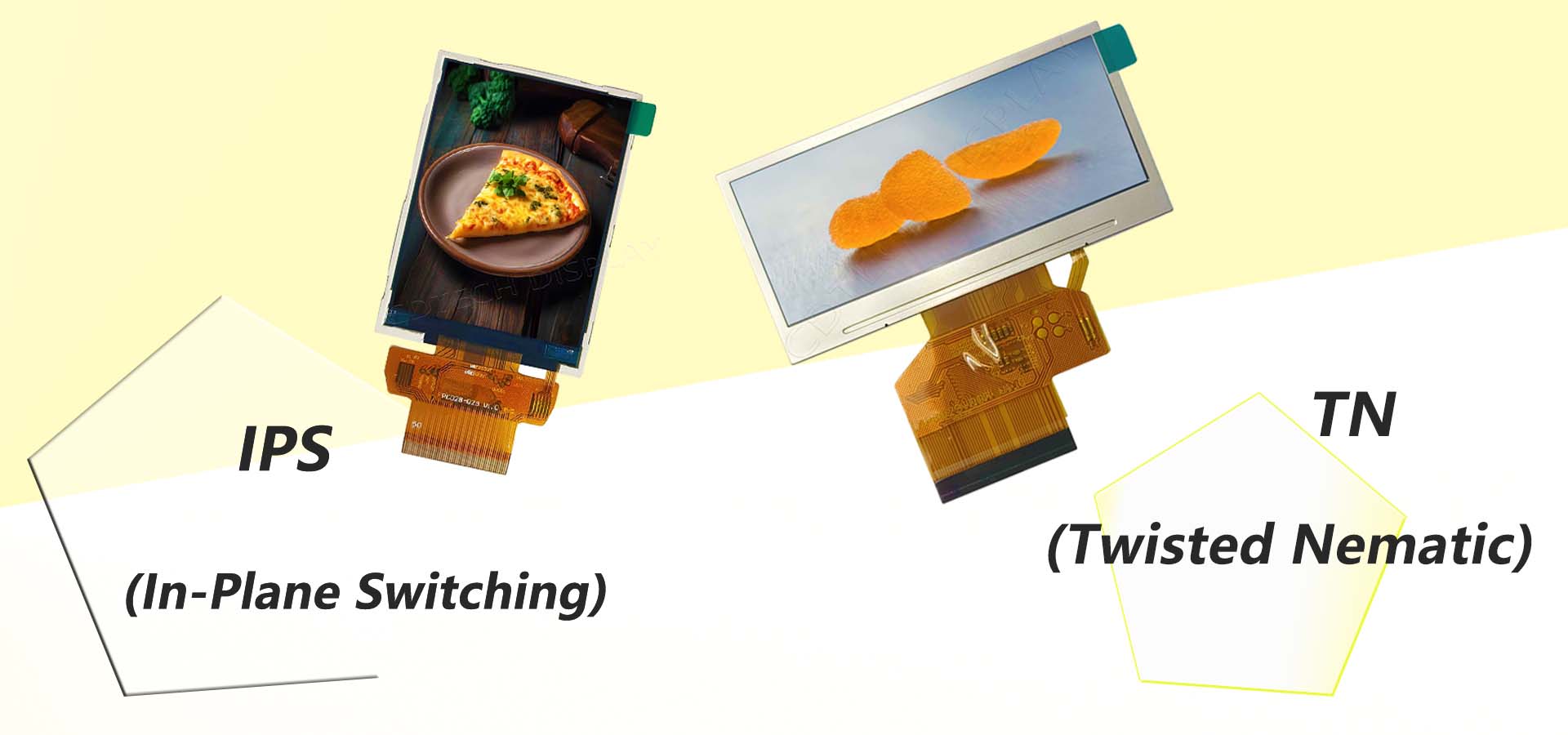
TN LCD vs IPS LCD: How to Choose the Right Display for You
-
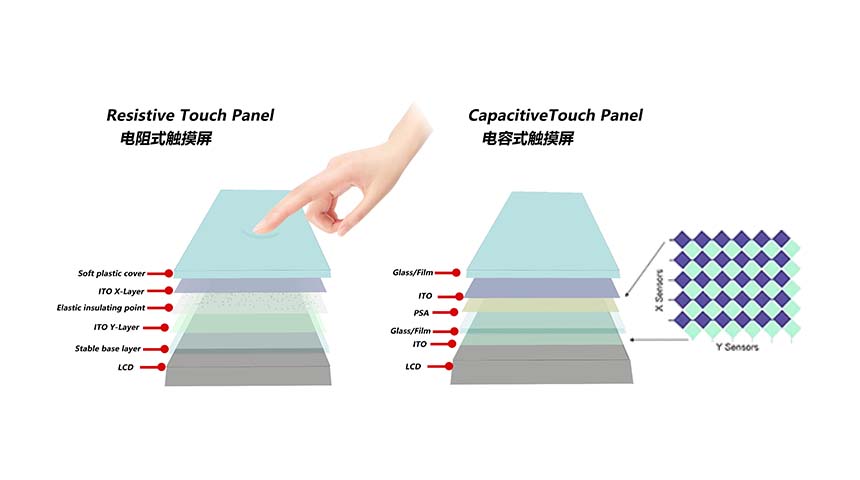
Capacitive Touch Panel or Resistive: Which Suits Your Needs?
-
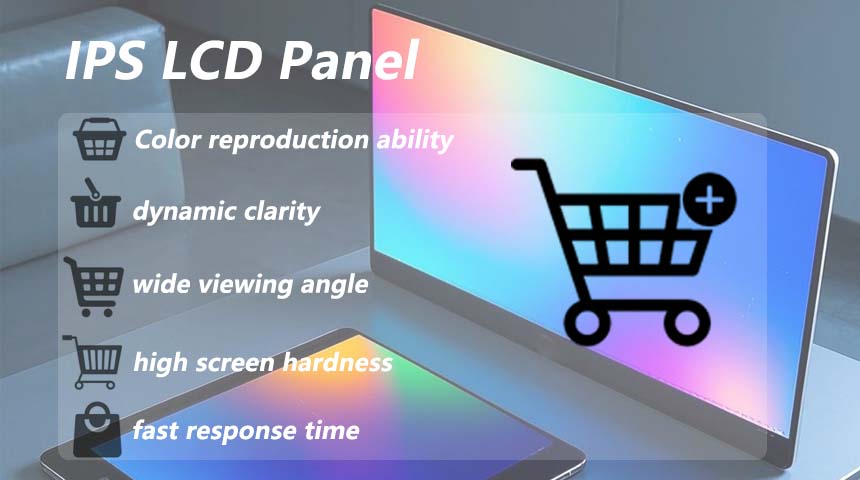
Why Choose an IPS LCD Panel for Your Next Screen Purchase?
-
CDTECH to Showcase Cutting-Edge Display Solutions at SID 2025
-
Comparing Different Types of Displays in Cars: A Detailed Overview
-
White Spots on LCD Screen: Causes, Fixes & Industrial Solutions (2026 Guide)