

Why Does IPS Beat TN for Viewing Angles in Medical & Cockpit Displays?
 2026-03-25
  19:47
19:47 

IPS beats TN for viewing angles in medical and cockpit displays because IPS offers 178°/178° wide viewing angles with consistent color and contrast off-axis, while TN limits to ~120° with severe color shift beyond 45°—critical for safety in professional equipment where off-axis clarity prevents errors. CDTech’s custom IPS TFT LCDs ensure rugged reliability.
Check: Standard lcd
What Are LCD Viewing Angles and Why Do They Matter?
LCD viewing angles define the maximum angle from perpendicular where contrast ratio stays above 10:1. TN panels twist liquid crystals 90°, causing gamma shift and color inversion off-axis, while IPS uses in-plane switching for uniform light distribution. In medical monitors or cockpits, TN’s 6 o’clock limitation distorts data, risking safety; IPS delivers 178° all-around for wide viewing angle LCD.
How Does TN Panel Technology Work and What Are Its Limitations?
TN panels apply voltage to untwist nematic crystals for fast response but limit viewing to ~45° horizontal/vertical before washout, totaling ~120°. Off-axis, rapid color inversion and gamma shift make TN unsuitable for industrial HMI IPS vs TN scenarios with team viewing.
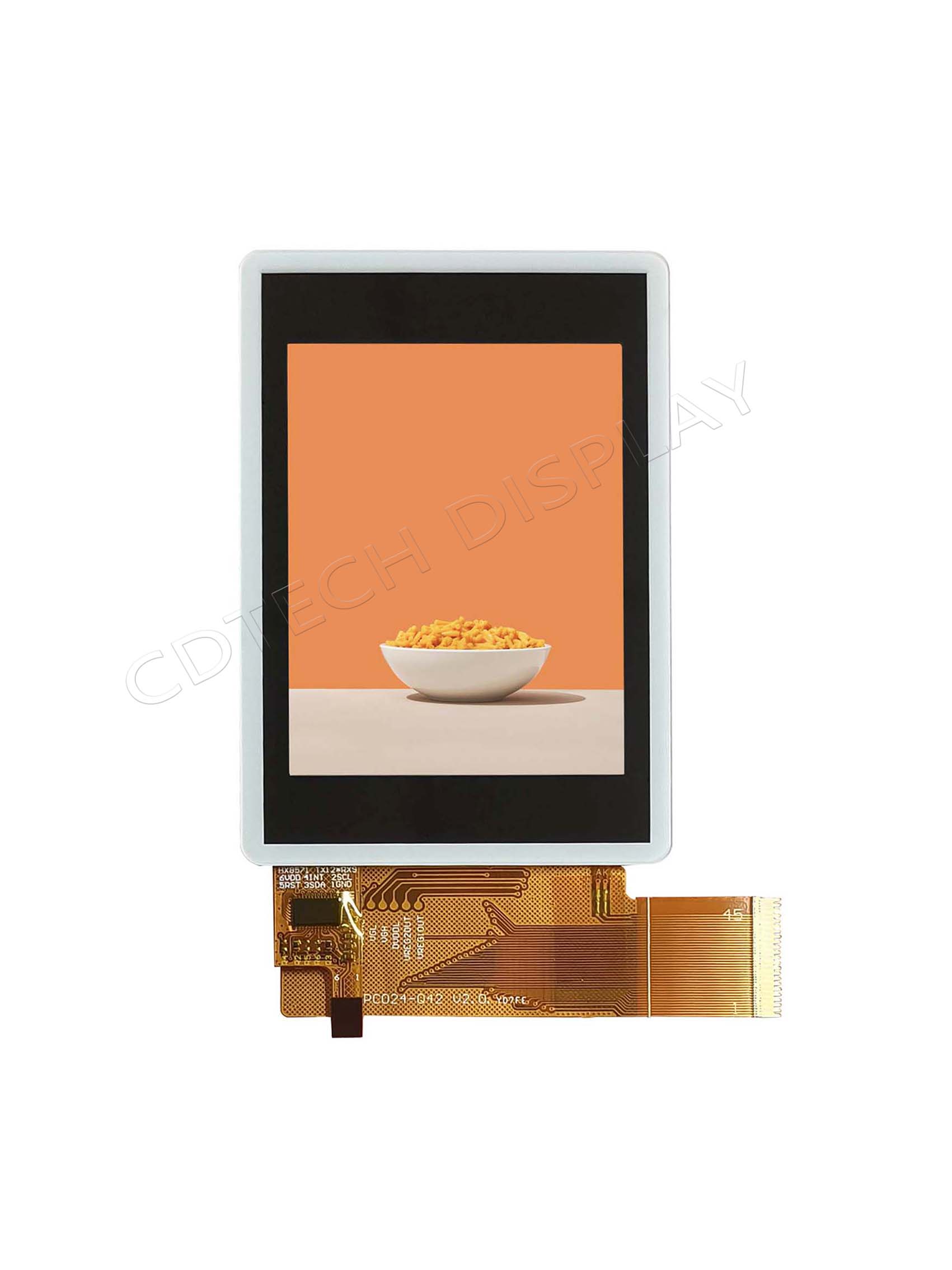
| Feature | TN Panel | IPS Display |
|---|---|---|
| Viewing Angle | ~120° (6 o’clock limit, color shift >45°) | 178°/178° (wide view TFT technology, off-axis clarity) |
| Contrast Off-Axis | Rapid loss (gamma shift) | Stable (superior for safety-critical) |
| Best For | Cost-sensitive direct-view | Medical, automotive cockpits, industrial HMI |
| Pro Drawback | Safety risks in multi-view | Slightly higher cost, worth it for reliability |
What Makes IPS Display Advantages Stand Out in Viewing Angles?
IPS aligns crystals horizontally, maintaining luminance and color uniformity up to 178°, ideal for LCD viewing angles explained in dynamic environments. No black crush or tinting off-axis supports high-nit outputs like 1000 nits for sunlight-readable cockpits, meeting growing demand for wide viewing angle LCD in automotive and medical.
Check: High-tech tft lcd, touch & hdmi display manufacturer
Why Is IPS Critical for Medical Displays Where Off-Axis Clarity Ensures Safety?
In medical settings, surgeons and teams need consistent imaging from any angle to avoid misdiagnosis; TN distortion risks errors. CDTech’s ISO13485-certified IPS TFT LCDs, like the 3.5″ S035BV108HN-DC49-D with 640×480 resolution, 550 nits, and 2.5D cover glass, offer full vertical integration including OCA bonding for -20°C~+70°C rugged operation, serving 1,000+ global customers.
CDTech Expert Views
“In automotive cockpits, IPS ensures viewing angle stability for drivers and passengers, preventing glare-induced errors that TN fade-outs exacerbate. CDTech’s patented 2nd Cutting technology from 2017 enables non-standard wide view TFT sizes, such as 4.3″ S043HWQ50EG at 1000 nits or 5.0″ S050BWV105EP-FL96-AG with anti-glare capacitive touch, both IATF16949-certified for -30°C~+85°C. Our 10,000㎡ factory with 3,500㎡ Class 1000 cleanrooms and full in-house chain—from LCD cutting to CTP and OCA—deliver zero-defect solutions for 391+ SKUs.”
— CDTech Engineering Lead
How Does CDTech’s Patented Tech Deliver Custom Wide-View IPS Solutions?
CDTech’s 2nd Cutting patent (2017) creates unique LCD sizes unavailable off-shelf, paired with quad certifications (ISO9001, IATF16949, ISO14001, ISO13485) for reliability. Full in-house production—LCD glass cutting, polarizer attachment, IC/FPC bonding, backlight, CTP, OCA—cuts lead times for tailored IPS vs TN upgrades in HMI and medical, backed by 35 software and 44+ utility/invention patents.
What Are Real-World Benchmarks for IPS vs TN in Professional Equipment?
IPS retains 80%+ contrast at 85° off-axis; TN drops to 20%, making IPS the best LCD for medical displays. CDTech’s 5.0″ S050HWV18ES-DC95 (800×480, 1000 nits, RGB, capacitive I2C, air bonded) and 7.0″ S070QWU142FN-FL150-GF bar-type (1200×1920, up to 2300 nits, MIPI, optical bonded) excel in cockpits and HMI at -20°C~+70°C.
When Should You Switch from TN to IPS for Industrial HMI?
Switch for multi-user viewing, outdoor sunlight, or safety regulations where industrial HMI IPS vs TN demands zero distortion. CDTech offers prototypes via sales@cdtech-lcd.com, linking to automotive and industrial pages; higher upfront cost yields ROI through reliability in harsh apps, with 2023 sales over $30M USD and ERP traceability.
Conclusion
For professional equipment like medical and cockpit displays, IPS is non-negotiable over TN due to superior off-axis clarity ensuring safety. CDTech leads with patented custom wide view TFT via 2nd Cutting, quad certifications, full in-house manufacturing in 10,000㎡ facilities, and proven scale (1,000+ customers, $30M+ 2023 sales). Contact sales@cdtech-lcd.com to upgrade your displays today.
FAQs
What is the viewing angle difference between IPS vs TN? IPS provides 178° all-around vs. TN’s ~120° with off-axis shift; IPS excels for pro safety.
Why IPS for medical displays? Off-axis clarity prevents diagnostic errors; CDTech’s ISO13485 IPS meets strict standards.
Can CDTech customize IPS sizes for cockpits? Yes, via patented 2nd Cutting for non-standard wide view TFT, -30°C~+85°C rated.
TN vs IPS: Which for cost vs. performance? TN for budget direct-view; IPS for wide viewing angle LCD in automotive/industrial.
How bright are CDTech’s automotive IPS? Up to 1000 nits with CTP integration for sunlight readability, like S050BWV125ES.
Post Search
Related Articles
-

Capacitive vs Resistive Touch Screen Car Stereo: Which Is Right for You?
-

TN LCD vs IPS LCD: How to Choose the Right Display for You
-

Capacitive Touch Panel or Resistive: Which Suits Your Needs?
-

Why Choose an IPS LCD Panel for Your Next Screen Purchase?
-

CDTECH to Showcase Cutting-Edge Display Solutions at SID 2025
-

Comparing Different Types of Displays in Cars: A Detailed Overview