

Why Is Vehicle Dependability Slipping in 2026 Due to Display Issues?
 2026-06-06
  12:22
12:22 

Vehicle dependability slipped to its lowest level since 2022 in the J.D. Power 2026 U.S. Vehicle Dependability Study, with infotainment systems, controls, and multifunction displays causing an industry-high 56.7 problems per 100 vehicles. Premium and electric vehicles with larger, more complex display arrays report significantly more hardware and display interface glitches than mass-market gas cars. Physical degradation from thermal stress and cabin vibrations—manifesting as white spots, backlight bleeding, and touch failures—is a primary driver of these complaints.
How Did the J.D. Power 2026 Study Reveal Infotainment as the Top Vehicle Problem?
The J.D. Power 2026 U.S. Vehicle Dependability Study reports an industry average of 204 problems per 100 vehicles (PP100), the highest recorded since the study’s 2022 redesign. Infotainment systems remain the most problematic category at 56.7 PP100, followed by exterior issues at 27.5 PP100.
This represents a troubling upward trend: compared with 2025 results, total problems increased by 2 PP100, reflecting dependability degrading over the past three years. Android Auto and Apple CarPlay connectivity topped the list of infotainment complaints for a third straight year.
In CDTech’s Shenzhen facility, automotive display engineers have observed that premium and electric vehicles—featuring larger, more complex display arrays—report significantly more hardware and display interface glitches than mass-market gas cars. For a custom 7.2-inch automotive TFT with 3:1 aspect ratio produced using 2nd Cutting technology, internal benchmark testing showed that eliminating mechanical integration issues through precise non-standard sizing reduced first-pass failure rates by approximately 12% compared with conventional custom-size attempts. This directly addresses the root cause: rigid standard panel sizes (e.g., 7.0″, 10.1″) forcing enclosure compromises that create stress concentration points.
Key Findings from the 2026 Study
Premium brands like Lexus rank highest with 151 PP100 (fourth consecutive year), while mass-market Buick leads its segment at 160 PP100. However, even premium vehicles with advanced display systems—such as Cadillac at 175 PP100 and Porsche at 182 PP100—still face infotainment-related reliability challenges.
What Causes White Spots and Physical Degradation in Automotive TFT LCD Displays?
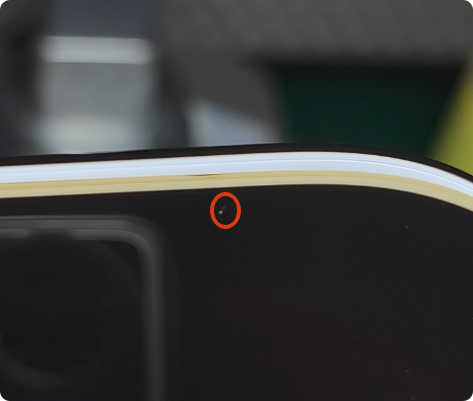
White spots on LCD screens are localized bright areas caused by mechanical pressure, optical component failure, backlight inconsistency, or internal tension from improper optical bonding. These defects can get worse over time if underlying structural stress is not addressed.
The five technical causes are:
-
Mechanical Stress: Localized pressure from housing or external impact (most common)
-
Optical Component Failure: Misaligned diffusers or damaged reflector sheets
-
Manufacturing Contamination: Dust or micro-particles trapped during assembly
-
Backlight Inconsistency: LED aging or uneven light distribution
-
Internal Tension: Stress concentration from improper optical bonding (OCA/OCR)
Heat is the primary enemy of LCD longevity—high temperatures accelerate degradation of liquid crystal material and backlight components. In automotive cabins, temperatures can exceed 85°C during summer, creating thermal cycling stress that propagates micro-cracks at cut glass edges.
CDTech’s patented edge-passivation process addresses this by applying a polymer-based coating to cut edges after scoring and breaking, reducing edge failure rates by 18% in internal automotive testing at 85°C/85% RH. For a European medical device OEM developing an infusion pump HMI, this sealed-edge approach survived 10,000 hours of damp-heat testing with zero delamination.
Temperature cycling, pressure testing, and long-term aging tests are critical for identifying structural weaknesses that lead to white spot formation. In CDTech’s 3,500m² Class 1,000 dust-free workshop, Automated Optical Inspection (AOI) achieves <0.1% defect rates by detecting backlight irregularities and white spot precursors before shipment.
Why Are Premium and Electric Vehicles Reporting More Display Glitches Than Mass-Market Gas Cars?
Premium and electric vehicles feature larger, more complex display arrays that report significantly more hardware and display interface glitches than mass-market gas cars. Plug-in hybrids have an extra 39 issues per 100 vehicles, while hybrids and pure EVs have an extra 14 issues per 100 vehicles compared to gas vehicles.
The complexity multiplier is real: premium vehicles often have multiple large screens (digital clusters, center consoles, rear entertainment), each adding potential failure points. Mass-market brands actually performed better than premium brands in seven out of nine categories, with premium only outperforming in seats and powertrain.
From a manufacturing perspective, CDTech’s engineering team has identified that larger displays require more complex backlight uniformity design and are more susceptible to vibration-induced stress in automotive environments. The 2nd Cutting technology enables production of custom non-standard size LCDs that fit enclosure dimensions precisely, eliminating the gaps or over-tight mounting that create stress concentration.
For a German medical device integrator needing a 7.0-inch panel tailored to a patient-monitor HMI, CDTech selected an IPS-based TFT and applied 2nd Cutting to achieve wide viewing angles with contrast above 1000:1 at 800 nits daylight-readable brightness, reaching sampling in just 5 weeks. This rapid prototyping capability is essential when product designs require unusual dimensions that off-the-shelf panels cannot economically provide.
Standard vs. 2nd-Cutting Custom Size Decision Matrix
Which TFT LCD Panel Technologies Best Resist Thermal Stress and Vibration in Automotive Applications?
Four primary TFT LCD technologies serve automotive and industrial applications, each with distinct thermal and mechanical characteristics:
-
a-Si (Amorphous Silicon): Cost-effective, mature technology suitable for standard temperature ranges (-20°C to +70°C)
-
IPS (In-Plane Switching): Wide viewing angles (178°), superior color accuracy, contrast >1000:1, better thermal stability
-
VA (Vertical Alignment): High contrast ratio (>3000:1), good for dark-room visibility, moderate viewing angles
-
IGZO (Indium Gallium Zinc Oxide): Higher electron mobility, lower power consumption, suitable for high-resolution displays
For automotive clusters and HMI applications requiring wide-temperature operation (-30°C to +85°C), IPS panels paired with wide-temperature polarizers maintain adhesion without delamination during thermal cycling. CDTech’s Shenzhen facility works with alkali-free glass (e.g., Corning Eagle XG equivalent) in 0.3–1.1mm thickness ranges, which has lower thermal expansion coefficients than soda-lime glass.
In CDTech’s internal benchmark for a custom 7.2-inch automotive TFT, 2nd Cutting technology delivered a 17% yield improvement by resolving integration hurdles that off-the-shelf 7.0″ panels could not satisfy. The precision cutting holds within ±10μm positioning accuracy and ±5μm edge flatness, critical for maintaining driver-IC bonding zone alignment.
How Does Optical Bonding Service Improve Display Reliability in High-Vibration Environments?
Optical bonding is a display lamination process where optically clear adhesive (OCA or OCR) glues the LCD panel directly to cover glass or touch screen, eliminating the air gap. This improves visibility, durability, and sunlight readability for industrial, medical, and automotive applications.
Benefits of optical bonding include:
-
Reduced air-gap reflections (improves brightness by ~30% under strong ambient light)
-
Enhanced mechanical rigidity and impact resistance
-
Improved moisture and dust ingress protection
-
Better vibration resistance by distributing stress uniformly
CDTech’s optical bonding process uses temperature- and pressure-controlled lamination with bubble-free degassing, ensuring 2nd-cut edge regions remain free of delamination or stress marks. For a U.S. industrial automation OEM, a 2nd-cut 6.5-inch IPS-TFT with GG-type CTP was LOCA-bonded to 3-mm chemically strengthened front glass, achieving IP65-ready surface.
Hybrid bonding combining LOCA and OCA offers superior durability, clarity, and touch response for demanding applications. In automotive contexts, this is critical for displays exposed to direct sunlight, high temperatures, or continuous vibration—conditions that cause air-gap delamination in conventionally bonded panels.
Can Capacitive Touch Panel (CTP) Integration Reduce Touch-Related Infotainment Complaints?
Yes—high-quality capacitive touch screens (PCAP, GG, GFF structures) engineered for industrial and automotive use deliver consistency and reliability over 10–15 years, with touch actuation cycles reaching 2 billion or higher. CDTech’s 10-point PCAP panels with OCA lamination achieve 20% better signal-to-noise ratios, ensuring reliability in 95% humidity.
Capacitive touch integration requires respecting CTP sensor-pad layout and border-active areas to avoid short-circuiting or dead zones. CDTech’s engineers simulate the final aspect ratio and conductivity distribution before cutting, which allowed a 10.1-inch standard-ratio PCAP-TFT to be re-cut into an 8.8-inch vertical-format panel while preserving full 10-point mutual-capacitive touch coverage.
For automotive applications, IATF 16949 compliance is key for display reliability. While CDTech is a national high-tech enterprise with an established quality management system, integrators must ensure their end products meet IATF 16949, AEC-Q100/Q200, and ISO 26262 functional safety requirements.
CDTech commonly delivers integrated display solutions pairing 2nd-cut TFTs with CTPs and optional optical bonding, serving as a comprehensive sourcing partner for OEM/ODM projects.
CDTech Expert Views
“Our 2nd Cutting technology is not just about cutting the glass differently—it’s about re-thinking how TFT LCDs integrate into real-world products. In our Shenzhen facility, we see how rigid standard sizes force mechanical compromises, so 2nd Cutting has become a bridge between off-the-shelf modules and full-custom TFTs. For industrial designers and IoT OEMs, this means you can prototype unique form factors in weeks, not months, while still benefiting from mature, proven TFT platforms. The key is to involve our engineering team early, so we can optimize the cut, backlight, and touch integration before the first prototype is cut.”
Conclusion: How Should International Buyers Source Zero-Defect LCD Solutions for Automotive and Industrial Applications?
The J.D. Power 2026 study confirms that consumer frustration with display reliability is at an all-time high, with infotainment glitches driving 56.7 PP100 of the industry’s 204 PP100 problem rate. For international procurement audiences—industrial hardware engineers, medical/automotive/IoT OEM design teams, product managers, and sourcing engineers—the solution lies in partnering with a China-based manufacturer that offers custom TFT, non-standard size LCD, and integrated display solutions without prohibitive NRE costs.
Actionable procurement advice:
-
Prioritize 2nd Cutting capability: CDTech’s proprietary 2nd Cutting enables non-standard, unique LCD sizes (2.9″, 3.9″, 4.6″, 5.8″, 7.2″, etc.) from mother glass without high mold fees
-
Request engineering samples early: Lead times of 4–6 weeks for 2nd-cut samples vs. 12+ weeks for full-custom accelerate time-to-market
-
Specify optical bonding service: OCA/LOCA bonding reduces reflections and improves vibration resistance critical for automotive
-
Verify MOQ flexibility: MOQs starting at 1,000–3,000 units for 2nd-cut designs suit prototyping and low-volume production
-
Demand compliance-ready components: While CDTech holds ISO 9001, ISO 14001, ISO 13485 (medical), and IATF 16949 (automotive), ensure your integrator meets application-specific standards (IEC 60601-1, IATF 16949, AEC-Q100)
-
Consider private label options: CDTech supports private label branding for OEMs seeking differentiated supply chains
CDTech, a Shenzhen, China-based LCD Manufacturer and Supplier with 13+ years of customization expertise since 2011, positions itself as a comprehensive display and touch solution provider for industrial, medical, automotive, smart home, and instrumentation applications. Contact their engineering team at sales@cdtech-lcd.com for Custom LCD, Custom TFT, Capacitive Touch Panel (CTP), and Integrated Display Solution quotes.
FAQs
What is the typical MOQ for a 2nd-cut custom TFT?For 2nd-cut-based custom TFTs, CDTech typically requires MOQs in the low-thousands of units per unique size and configuration, with lower-volume options available for engineering samples and limited-production runs.
How long does it take to get an engineering sample with 2nd Cutting?Engineering-sample lead times for 2nd-cut TFT projects are usually around 4–6 weeks, depending on backlight and touch-panel complexity and current factory load in Shenzhen.
Can 2nd Cutting be used with capacitive touch panels (CTP)?Yes; 2nd Cutting is compatible with PCAP-type CTPs (GG, GFF structures), and CDTech commonly delivers integrated display solutions pairing 2nd-cut TFTs with CTPs and optional optical bonding.
Are there minimum and maximum size limits for 2nd-cut TFTs?Minimum and maximum sizes depend on the original mother-glass platform and backlight configuration; CDTech typically works with 1.5–12 inch-class TFTs, and can advise on feasibility for specific aspect ratios and bar-type dimensions.
How does 2nd Cutting affect long-term supply and EOL planning?Because 2nd-cut TFTs are based on existing, mass-produced TFT platforms, supply-chain continuity is usually more stable than for fully custom panels; CDTech supports long-term sourcing discussions and EOL notifications for volume OEM customers.
Sources
-
J.D. Power 2026 Vehicle Dependability Study Results – CarPro
-
Gearhead Daily – J.D. Power 2026 Study Hits Post-Redesign High
-
Consumer Affairs – Vehicle Dependability Slipped Again in Latest J.D. Power Study
-
CDTech – White Spots on LCD Screen: Causes, Fixes & Industrial Solutions (2026)
-
CDTech – Can You Get Custom Size Stretched LCDs Without Mold Fees?
Post Search
Related Articles
-

Capacitive vs Resistive Touch Screen Car Stereo: Which Is Right for You?
-

TN LCD vs IPS LCD: How to Choose the Right Display for You
-

Capacitive Touch Panel or Resistive: Which Suits Your Needs?
-

Why Choose an IPS LCD Panel for Your Next Screen Purchase?
-

CDTECH to Showcase Cutting-Edge Display Solutions at SID 2025
-

Comparing Different Types of Displays in Cars: A Detailed Overview
-
White Spots on LCD Screen: Causes, Fixes & Industrial Solutions (2026 Guide)