

Can MicroLED Technology Revolutionize the Future of Video Wall Manufacturers?
 2026-02-02
  17:32
17:32 

LED Video Wall Manufacturers at a Strategic Turning Point
LED video wall manufacturers are entering a phase where technology decisions directly influence long-term competitiveness rather than short-term differentiation. In earlier stages of the market, improvements in pixel pitch or brightness were often enough to win projects. Today, buyers evaluate LED video walls as long-life systems that must remain stable, serviceable, and visually consistent for years.
This shift is driven by how LED video walls are used. They now function as core infrastructure in control rooms, broadcast studios, corporate headquarters, and immersive environments. As expectations rise, manufacturers must rethink how technology choices align with real operational demands rather than marketing trends alone.
Market Maturity of Traditional LED Video Wall Manufacturing
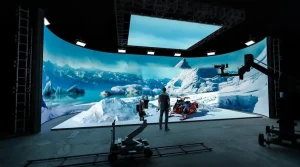
Traditional LED video wall production has grown steadily. Basic specs look alike from most makers. Cabinet sizes, pixel pitches, and brightness levels follow common patterns. So, checking spec sheets means less now. Prices face more squeeze, and clear edges fade.
This maturity also reveals limitations of conventional SMD-based architectures. While effective in many scenarios, they may struggle with ultra-fine resolution, long-term uniformity, or environments requiring uninterrupted operation. These constraints encourage LED video wall manufacturers to explore new technical directions that create value beyond incremental upgrades.
Why Display Technology Innovation Matters More Than Ever
Display technology innovation matters because video wall projects are now evaluated across their full lifecycle. Decision-makers consider calibration stability, maintenance access, energy efficiency, and upgrade flexibility alongside image quality.
In this context, advanced COB LED video walls have already reshaped expectations by improving contrast, surface protection, and reliability. These improvements naturally lead to broader discussions about MicroLED, which promises higher performance while introducing new trade-offs.
What Is MicroLED Technology and Why It Matters to Video Wall Manufacturers
MicroLED tech marks a big shift from usual LED video wall builds. It skips packed LED bulbs. Instead, it places tiny self-lit chips with great care. This allows denser pixels and better light handling.
For LED video wall manufacturers, MicroLED signals higher bars. It is not a full swap for all. But it lifts standards in building precision, check processes, and system blending.
MicroLED vs Traditional LED Video Wall Technologies
MicroLED stands apart in pixel creation. Standard SMD and COB methods weigh ease of making against output. MicroLED focuses on exact pixel work.
Still, this exactness has a price. Standard fine-pitch and COB LED video walls scale better and fix easier for most setups. Top options like the COB LED Display 8K Resolution for Monitor Room give sharp contrast, good evenness, and full front fixes. They meet key needs without extra hassle.
Key Performance Advantages of MicroLED for Large-Scale Displays
MicroLED shines in light control, even contrast, and HDR output. These traits help most in the top large screens seen up close.
For LED video wall manufacturers, the real issue is clear. Does MicroLED’s edge outweigh its demands for that task? It is not just about lab results.
How MicroLED Could Reshape the Competitive Landscape for LED Video Wall Manufacturers
MicroLED may reshape competition by shifting emphasis from volume manufacturing to engineering capability. Higher technical barriers favor manufacturers with strong process control, testing systems, and integration experience.
This shift encourages a move away from price-led positioning toward long-term performance and reliability as competitive advantages.
From Hardware Supplier to High-Value Solution Provider
MicroLED speeds the change from part seller to full answer giver. Top video walls need early plans for backups, heat handling, and tune flows.
This view already fits strong LED options in use. In tough spots, makers stress fix ease and lasting build. Items like the Outdoor COB LED Display HD Front Access Panel show how front fixes and weather shields aid long runs. These ideas apply just as well to MicroLED checks.
Impact on Manufacturing, Yield Control, and Quality Standards
Maintenance complexity also affects adoption. MicroLED repair is more intricate than replacing conventional LED panels, which can increase downtime risk.
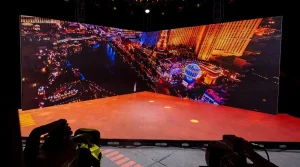
This is why many immersive environments rely on optimized LED solutions. In virtual production, for example, the HD LED Display For Virtual Production and XR Stage emphasizes ultra-high refresh rates, grayscale accuracy, and camera-friendly performance while remaining serviceable within real production workflows.
Real-World Challenges Slowing MicroLED Adoption in Video Wall Projects
Despite its potential, MicroLED adoption remains limited by cost, scalability, and maintenance realities. Many projects reconsider MicroLED after evaluating total ownership cost and service implications.
Recognizing these constraints helps align technology decisions with operational reality.
Manufacturing Complexity and Cost Scalability
Build trouble stands as a big block. Chip moves and fixes raise costs fast with bigger screens. This cuts MicroLED’s fit for huge video walls.
In contrast, strong COB and fine-pitch LED video walls have steady prices and set ways to make. They suit business and public jobs well.
Integration, Maintenance, and Long-Term Service Considerations
Fix trouble hits use too. MicroLED patches take more work than swapping standard LED boards. This can raise stop times.
That is why many engaging spots use tuned LED options. In virtual builds, for instance, the HD LED Display For Virtual Production and XR Stage stresses fast refresh, color truth, and camera fit. It stays fixable in real workflows.
Where MicroLED Makes the Most Sense Today: Use Cases and Market Signals
MicroLED fits best where it uses its strong points fully. It acts as a special pick in a wide display mix, not for all.
Market hints show growth where sharp sight and key work pay for extra steps.
High-End Control Rooms, Broadcast, and Mission-Critical Video Walls
Control rooms and broadcast sites need truth, steadiness, and round-the-clock runs. There, MicroLED’s evenness can help for real. But many spots still use strong COB LED video walls with tested trust.
The end pick weighs top output against fixed ease and full costs.
XR, Virtual Production, and Premium Commercial Displays
XR studios and top business areas eye MicroLED for exact light and steady faces, mainly under cameras.
Yet, many jobs keep picking honed LED video wall options. These meet needs now and leave room for later changes.
How SRYLED Helps Customers Navigate MicroLED and Advanced LED Video Wall Decisions
At SRYLED, we weigh MicroLED against solid LED video wall tech with a hands-on build view. We do not chase trends. Instead, we check if it suits the job’s aims.
Our work with fine-pitch LED, COB video walls, and trusty systems lets us lead clients through tough calls with clear steps.
Engineering-Driven LED Video Wall Manufacturing Capabilities
We focus on steady builds, full run-in tests, tune steadiness, and fix-friendly plans. This base holds for now LED video walls and new tech. It keeps trust intact.
Offering the Right Technology for the Right Project Stage
Our job is to match tech to task needs, not flash. Sometimes MicroLED fits. Other times, strong COB or fine-pitch LED video walls give better full worth.
By looking at view setups, work needs, and life hopes, we ensure the LED video wall spends. They stay useful and set for tomorrow.
FAQ
Q: What makes MicroLED important for LED video wall manufacturers?
A: MicroLED raises performance ceilings and manufacturing standards, encouraging competition based on engineering quality rather than price alone.
Q: How does MicroLED compare with COB LED video wall technology?
A: MicroLED offers higher pixel density and contrast potential, while COB LED video walls provide mature scalability, easier maintenance, and predictable lifecycle cost.
Q: How should LED video wall manufacturers choose between MicroLED and other LED technologies?
A: The decision should be based on application requirements, maintenance expectations, and total cost of ownership rather than theoretical performance.
Q: Which LED video wall technology is better for control rooms?
A: Control rooms often favor advanced COB LED video walls for reliability and serviceability, though MicroLED may suit high-end installations with sufficient budget.
Q: Can MicroLED replace traditional LED video walls in the near future?
A: MicroLED is unlikely to fully replace traditional LED video walls soon, but it will expand steadily in specialized, premium applications.
Post Search
Related Articles
-
Choosing the Right Automobile Display: Key Factors to Consider
-
How High-Brightness Touch Displays Are Redefining Cockpit Gaming
-
What Is My Screen Resolution? Here's How to Find & Fix It (2026 Guide)
-
How to Choose the Right 7 Inch TFT Screen for Your Needs
-
How Small LCD Panels are Transforming Display Technologies