

Capacitive Touch Panel Manufacturers: Key Factors for Expert Selection
 2026-10-02
  11:00
11:00 

Selecting among capacitive touch panel manufacturers requires more than comparing a catalogue and unit price. Supplier selection should determine whether a manufacturer has the factory capability, process control and engineering support to translate mechanical, optical, electrical and environmental requirements into a stable production module. A reliable shortlist should therefore be based on manufacturing scope, controlled drawings, quality records, traceability, sample validation and change control—not broad marketing claims.
What Should Capacitive Touch Panel Manufacturers Prove First?
Capacitive touch panel manufacturers should first prove what they manufacture, what they outsource and how they control each handoff. Buyers need named engineering contacts, controlled drawings, traceable materials and a documented sample-approval route. A supplier should also distinguish standard features from project-specific options before quoting.
What Should Buyers Confirm Before Shortlisting a Capacitive Touch Panel Supplier?
Before shortlisting capacitive touch panel manufacturers, buyers should confirm the supplier’s actual manufacturing scope and responsibility for the complete touch module. This includes the sensor, cover glass, FPC, controller, bonding, firmware support and final testing. The key question is not simply what products appear in the catalogue, but which processes are controlled in-house, which are outsourced, how outsourced steps are managed, and whether the supplier can provide consistent engineering and quality records from sample approval through mass production.
Which Factory Evidence Matters Before a Supplier Shortlist?
A custom capacitive touch screen factory should show its actual manufacturing scope, process ownership, equipment, inspection points and quality-control records. Buyers should verify which critical processes are performed in-house and which are outsourced, and how outsourced processes are qualified and monitored. Material lots, drawings, firmware versions, bonding parameters and inspection results should be traceable to the relevant sample or production batch. The supplier should also have a documented change-control process so that changes to materials, tooling, FPC, adhesive, controller or firmware cannot enter production without review and approval. Factory capability should be demonstrated through process records, traceability evidence and validated samples—not simply by the size of a product catalogue.
How Do You Compare Custom Capacitive Touch Panels for the Application?
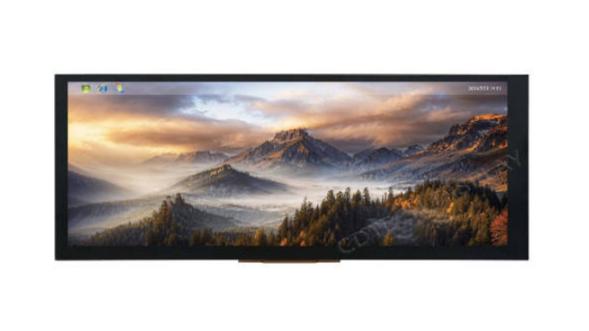
Comparison begins with the application, not with a generic sensor. Custom capacitive touch panels may vary in outline, active area, cover shape, surface treatment, FPC direction, controller, bonding and interface. Buyers should turn these variables into a common RFQ so competing proposals can be evaluated against the same conditions.
Which Cover, Bonding and Touch-Plate Options Should Be Compared?
A capacitive touch screen custom brief should define cover material and thickness, printed border, holes, edge treatment, impact expectations, surface coating and optical or air bonding. It should also state whether the system must work with gloves, water or active and passive pens. These choices affect sensitivity, optical clarity, mechanical fit and controller tuning, so they should appear in the drawing and validation plan.

How Should Buyers Compare PLS LCD and OLED Capacitive Touchscreens?
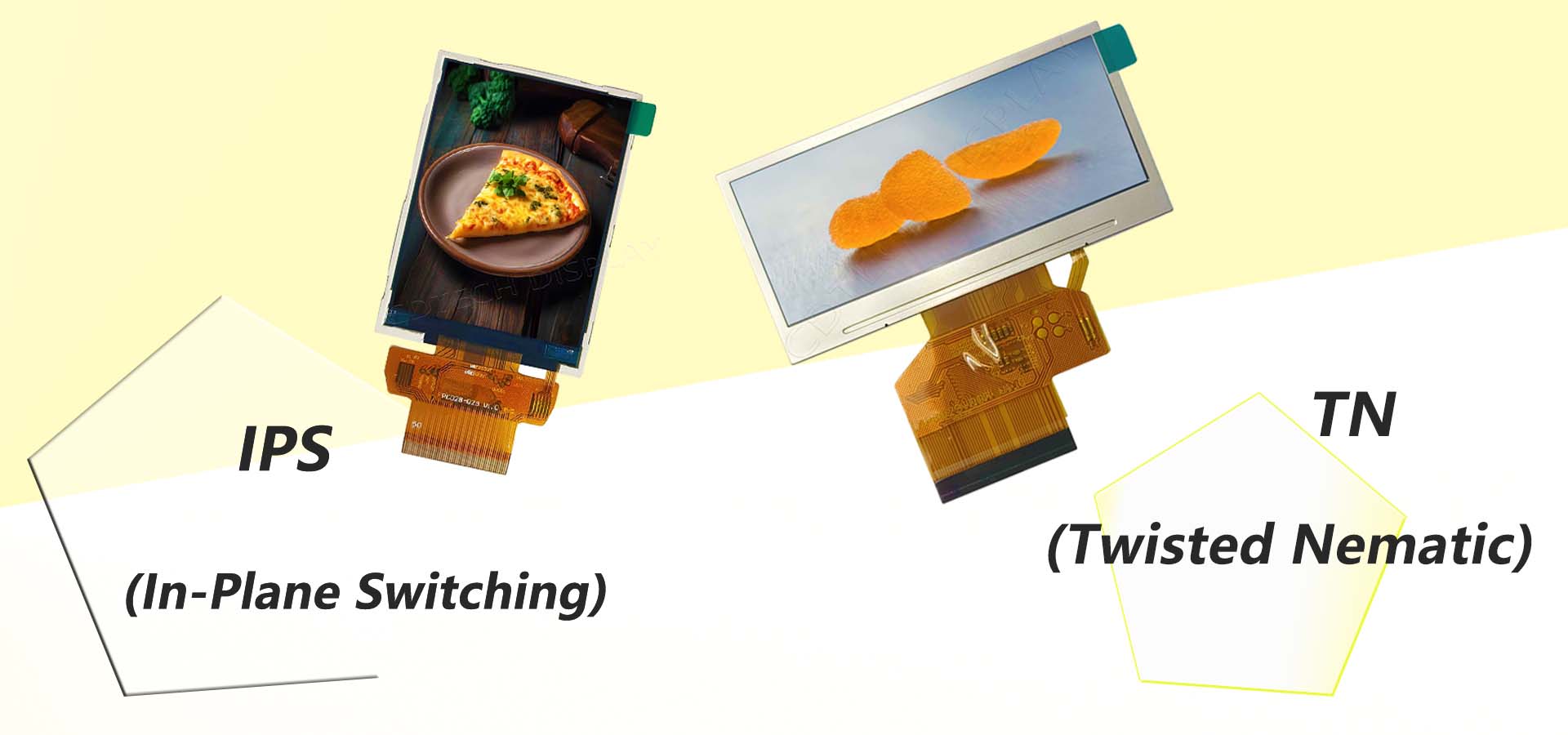
A PLS LCD capacitive touchscreen uses an LCD architecture with a backlight, while an OLED capacitive touchscreen uses a self-emissive display. The useful comparison covers luminance, viewing conditions, black level, power, thermal design, image-retention risk, supply continuity and interface support. The resistive vs capacitive touchscreen question is separate: it concerns input behavior and environment, not the underlying display technology.
Which Interfaces and Quality Checks Reduce Supplier Risk?
Capacitive touch panel manufacturers should document the image and touch paths separately. The LCD may use LVDS, RGB, MIPI or HDMI, while touch data may use IIC or USB. Connector position, FPC length, grounding, shielding and host timing must match the enclosure and mainboard. During supplier evaluation, buyers should also confirm incoming inspection, in-process inspection and final inspection criteria for key materials and assemblies. Electrical function, touch response, appearance, bonding quality and relevant environmental tests should be recorded against the approved specification, with failures and corrective actions traceable to the affected lot or revision.
What Should an Automotive Capacitive Touch Panel Manufacturer Validate?
An automotive capacitive touch screen may face sunlight, temperature change, vibration, electrical noise and repeated cleaning. A capacitive touch screen car stereo also needs legible controls, appropriate target sizes and predictable touch response from different seating positions. Buyers should request evidence for brightness, viewing angle, cover treatment, EMI approach, interfaces and vehicle-level sample testing instead of accepting a generic “automotive” label.
Can a Supplier Support Capacitive Touch for Automatic Temperature Control?
Fully automatic temperature control with capacitive touch often uses a narrow display to show a set point, timer and operating state. A capacitive touch bar can fit that layout, but moisture, oils, cleaning agents and gloves may affect operation. The supplier should define the test liquid, contact area, gesture, response criteria and enclosure conditions before promising reliable appliance control.
.jpg)
How Can Buyers Audit a Capacitive Touch Panel Factory Before a Pilot?
A useful supplier audit should follow the product flow from incoming material through manufacturing, inspection and final shipment. Capacitive touch panel manufacturers should explain where glass preparation, sensor production, FPC work, controller programming, bonding, assembly and electrical testing occur, and identify which steps are controlled in-house. Buyers should review the related equipment, work instructions, inspection standards, material traceability and quality records rather than relying only on a factory presentation. This helps identify uncontrolled handoffs before sample approval and clarifies whether the same process can be maintained when the project moves into production.
Which Manufacturing Steps Should Be In-House or Traceable?
Not every process must be located in one building, but every critical step should be either directly controlled or fully traceable. A custom capacitive touch factory should control approved drawings, BOM and material revisions, key bonding parameters, visual criteria, inspection records and nonconforming product. Lot numbers and revision information should allow the supplier to trace key materials and process records back to a specific sample or production batch. Changes to cover glass, FPC, adhesive, controller, firmware or critical process parameters should not enter production without documented review, validation and customer approval where required.
What Should a Pilot Sample and Quality File Contain?
The pilot package should include approved drawings, BOM and material identifiers, interface definitions, controller and firmware versions, optical data, touch-test results and applicable environmental limits. A custom capacitive touch display should be evaluated in the target host system, not only on a supplier test board, because enclosure structure, grounding, display noise and host electronics can affect actual touch performance. Buyers should record the sample revision, firmware, test setup, failures and corrective actions, and define the approved sample or specification as the production baseline. Before mass production, the supplier should confirm that production materials, tooling, process parameters and inspection criteria match the approved sample condition.
Why Consider CDTech for a Custom Capacitive Touch Display Program?
CDTech can be evaluated alongside other capacitive touch panel manufacturers using a complete module brief. Our verified process scope covers LCD glass cutting, polarizer attachment, IC and FPC bonding, backlight assembly, CTP production and full lamination. Our PCAP options include custom cover glass, thick-cover, glove and waterproof touch, active or passive pens, surface treatments, custom CTP FPC and USB or IIC touch interfaces.
What Does CDTech Bring to a Manufacturer Comparison?
Our custom capacitive touch panels can be reviewed with the TFT-LCD, cover lens, controller, bonding and interface as one system. The verified portfolio includes model-specific 10.1-inch and automotive capacitive references using LVDS or HDMI image paths and IIC or USB touch. Each brightness, temperature, EMI and touch value remains model-specific and must be confirmed for the selected module.
Which Inputs Should an OEM Send CDTech for Supplier Review?
A useful OEM RFQ should give each shortlisted supplier the same technical and commercial baseline so that quotations and samples can be compared directly. Before requesting a quotation or sample, buyers should provide or confirm the following:
· Mechanical requirements: outline drawing, active area, cover-lens dimensions, thickness, mounting structure and FPC direction.
· Display requirements: display size, resolution, target luminance, viewing requirements and display interface.
· Touch requirements: number of touch points, cover-glass thickness, glove operation, water conditions, stylus requirements and touch interface such as IIC or USB.
· Surface and bonding requirements: printing, coating, optical bonding or air bonding, adhesive requirements and cosmetic criteria.
· Operating environment: operating and storage temperature, humidity, vibration, cleaning exposure and applicable EMC/EMI requirements.
· Sample requirements: sample quantity, required tests, test fixture or host-system conditions, sample revision identification and expected approval criteria.
· Production information: estimated annual quantity, pilot quantity, target schedule, packaging requirements and any required quality documentation or traceability records.
· Change-control requirements: identify which material, process, controller, firmware or mechanical changes require notification and re-approval.
CDTech can then separate standard features from customization requirements, confirm the required validation work and prepare samples against a defined approval baseline. Using the same RFQ checklist for each capacitive touch panel manufacturer makes supplier comparison more measurable and reduces differences that may otherwise appear only after sample testing or production release.
FAQ
Q: What Is the First Question to Ask Capacitive Touch Panel Manufacturers?
A: Ask which critical processes the supplier controls in-house, which are outsourced, and what manufacturing and quality evidence will be delivered with the sample. Controlled drawings, material traceability, inspection records, interface definitions, sample-validation results and a documented change-control route are more useful than a broad capability claim.
Q: How Should Buyers Compare Resistive vs Capacitive Touchscreen Options?
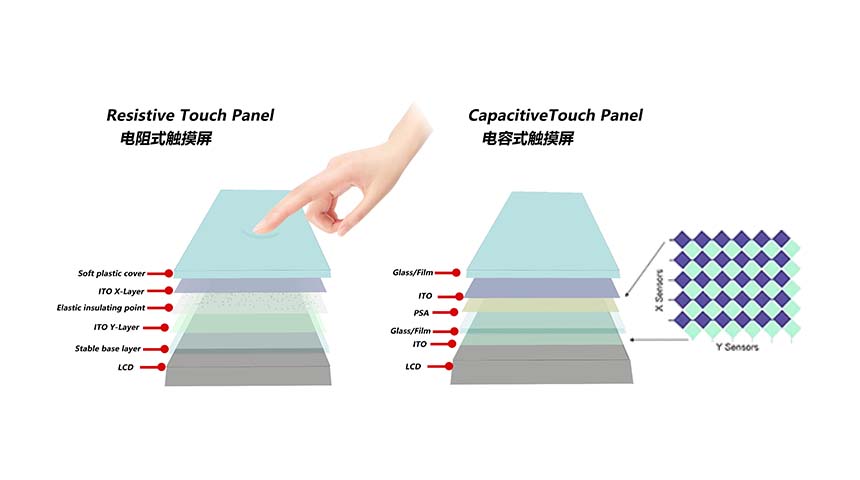
A: For resistive vs capacitive touchscreen, compare input tool, gloves, water exposure, gestures, cover design, multi-touch needs and calibration. Select the technology that meets the verified workflow rather than the most familiar label.
Q: What Makes a Custom Capacitive Touch Display Ready for OEM Use?
A: A custom capacitive touch display is ready when mechanics, optics, interfaces, firmware response and environmental limits are documented and the approved revision has passed testing in the intended host system.
Post Search
Related Articles
-
Capacitive vs Resistive Touch Screen Car Stereo: Which Is Right for You?
-
TN LCD vs IPS LCD: How to Choose the Right Display for You
-
Capacitive Touch Panel or Resistive: Which Suits Your Needs?
-
Why Choose an IPS LCD Panel for Your Next Screen Purchase?
-
CDTECH to Showcase Cutting-Edge Display Solutions at SID 2025
-
Comparing Different Types of Displays in Cars: A Detailed Overview
-
White Spots on LCD Screen: Causes, Fixes & Industrial Solutions (2026 Guide)