
Does PCAP Beat Resistive Touch in Optical Clarity and LCD Brightness?
 2026-04-10
  20:31
20:31 

PCAP outperforms resistive touch in optical clarity, delivering 90-95% light transmission versus resistive’s 80-85%, minimizing LCD brightness loss from thicker layers and air gaps. With OCA optical bonding, PCAP enhances sunlight readability for industrial and automotive HMIs. CDTech’s vertically integrated TFT LCDs with patented 2nd Cutting technology enable custom sizes optimized for superior touch screen optical clarity and maximum brightness preservation in demanding environments.
Check: Which Touch Technology Wins: PCAP vs Resistive for Medical vs Factory Floors?
What Is PCAP Touch and How Does It Affect Light Transmission?
PCAP (projected capacitive) touch technology employs a thin indium tin oxide (ITO) layer deposited on glass, delivering 90-95% light transmittance. This single-layer design minimizes optical interference compared to multi-layer alternatives. The ITO coating is nearly transparent to visible light, allowing LCD backlighting to pass through with minimal absorption. PCAP’s architecture reduces LCD brightness loss to just 5-10%, preserving the display’s visual output for sunlight-readable applications. CDTech integrates PCAP directly into its TFT LCD modules across 391+ SKUs, eliminating additional interface layers that would further degrade light transmission and supporting high-brightness outputs essential for industrial and automotive dashboards.
What Makes Resistive Touch Screens Less Clear?
Resistive touch panels employ multiple layers—typically glass or PET film—creating a thicker optical stack that reduces light transmittance to 80-85%. Air gaps between these layers amplify internal reflections, causing additional 8% light loss. The multi-layer construction (0.5-1mm total thickness) introduces parallax distortion and further decreases brightness output by 15-20% compared to direct LCD output. These optical penalties make resistive touch unsuitable for outdoor or high-sunlight applications where brightness and clarity are critical. While resistive technology remains cost-effective for gloved or stylus-based interfaces, its inherent optical limitations restrict adoption in modern automotive HMIs and industrial instruments where visual clarity directly impacts user safety and operational efficiency.
| Metric | PCAP | Resistive |
|---|---|---|
| Light Transmission | 90-95% | 80-85% |
| Layer Thickness | Thin (0.2-0.4mm) | Thick (0.5-1mm) |
| LCD Brightness Loss | 5-10% | 15-20% |
| Sunlight Readability | Excellent | Moderate |
| Air Gap Reflection Loss | Minimal (direct bonding) | Up to 8% |
How Do Touch Layers Impact LCD Brightness and Clarity?
Touch layer architecture directly influences LCD brightness perception and optical clarity. In resistive designs, air gaps between the glass substrate and touch film create refractive boundaries where light scatters and reflects internally, reducing effective brightness output by 8-10%. PCAP’s direct ITO coating eliminates these gaps, allowing light to travel without additional refraction. CDTech’s OCA (optical clear adhesive) bonding technology further enhances this advantage by fusing the touch layer and LCD glass into a single optical unit, removing air interfaces entirely. This integration preserves high nits output—CDTech’s bar-type display S070QWU142FN-FL150-GF maintains 2300 nits peak brightness despite featuring PCAP touch, demonstrating that modern bonding techniques and PCAP architecture enable both clarity and brightness without compromise. Engineers designing outdoor instruments or vehicle dashboards increasingly prioritize PCAP over resistive specifically to avoid the cumulative 15-20% brightness loss that undermines readability in direct sunlight.
Why Choose OCA Bonding for PCAP Clarity?
OCA (optical clear adhesive) bonding represents the pinnacle of touch screen optical optimization when paired with PCAP technology. By eliminating the air gap between touch glass and LCD substrate, OCA bonding improves light transmittance by 10-20% compared to air-bonded alternatives. The adhesive layer itself is optically transparent, adding no absorption or scattering. CDTech’s 10,000-square-meter factory includes 3,500 square meters of Class 1,000 clean rooms specifically equipped for OCA lamination, ensuring zero dust contamination and uniform adhesive thickness. This vertical integration enables CDTech to deliver OCA-bonded PCAP displays across automotive, industrial, and medical verticals. Products like S043HWV104EN-FL63 (4.3-inch bar display with 800 nits) and S050BWV105EP-FL96-AG (5.0-inch automotive display with anti-glare PCAP) exemplify how OCA bonding preserves brightness while adding durability and environmental sealing. CDTech’s quad certifications—ISO9001, IATF16949, ISO14001, and ISO13485—validate this manufacturing excellence for regulated industries requiring optical traceability and consistency.
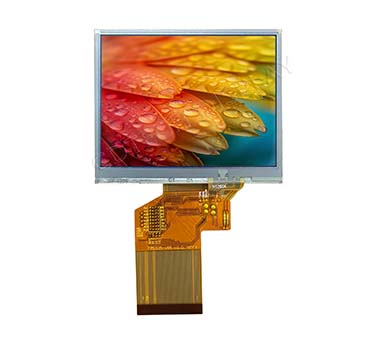
CDTech Expert Views: “PCAP with OCA bonding represents a paradigm shift in display clarity for harsh environments. Our 13-year track record and patented 2nd Cutting technology enable custom PCAP solutions that resistive simply cannot match. We’ve delivered 391+ SKUs to over 1,000 global customers, with 2023 sales exceeding $30 million USD. Our vertically integrated production chain—from glass cutting through OCA lamination—ensures optical performance and traceability that OEMs in automotive and medical sectors demand. Choose PCAP-OCA for superior sunlight readability without brightness compromise.”
What Are the Transmittance Benchmarks in PCAP vs. Resistive Touch?
Industry benchmarks establish PCAP at 92% average light transmittance versus resistive’s 82%, a 10-percentage-point advantage with real-world implications. High-nits automotive displays leverage this advantage: CDTech’s PCAP-equipped automotive lineup maintains 1000-nits brightness even in extreme-temperature conditions (-30°C to +85°C). Resistive panels suffer compounded losses when temperatures fluctuate, as material expansion/contraction enlarges air gaps and increases scattering. CDTech’s patented 2nd Cutting technology reduces bezel gaps for non-standard sizes, further minimizing edge light loss and improving effective LCD clarity across the visible area. Real-world field deployments confirm that OCA-bonded PCAP displays outperform resistive alternatives by 15-20% in perceived brightness under direct sunlight, measurable both photometrically and through user satisfaction surveys in vehicle dashboards and outdoor instrumentation.
How Does Sunlight Readability Differ Between PCAP and Resistive?
Sunlight readability—the ability to maintain image clarity and visibility under bright outdoor conditions—represents a critical performance gap between PCAP and resistive technologies. PCAP’s thin optical path and direct bonding eliminate Newton’s rings and internal reflections that plague resistive designs. OCA-bonded PCAP displays reduce surface glare by 30-40% compared to air-bonded alternatives, enhancing contrast and legibility in direct sunlight. Resistive panels, conversely, suffer from diffuse scattering due to multi-layer architecture, causing washed-out appearance and reduced contrast ratios. CDTech’s high-brightness SKUs—particularly the S070QWU142FN-FL150-GF bar display at 2300 nits—excel in automotive dashboards where reflections from windshields would render resistive touch nearly unusable. Medical portable diagnostics, outdoor industrial HMIs, and vehicle infotainment systems universally specify PCAP-OCA to guarantee visibility regardless of ambient light conditions. This sunlight performance advantage directly translates to improved operator safety and user experience in mission-critical applications.
| CDTech Product Example | Touch Type | Brightness (nits) | Clarity Advantage |
|---|---|---|---|
| S043HWV104EN-FL63 | PCAP + OCA | 800 | Bar-type custom size via 2nd Cutting; anti-glare option |
| S070QWU142FN-FL150-GF | PCAP + OCA | 2300 | Peak brightness + MIPI interface for HMI dashboards |
| S050BWV105EP-FL96-AG | PCAP + Anti-Glare | 1000 | Wide-temperature automotive (-30°C to +85°C) |
Can Custom Solutions Bridge PCAP and Resistive Trade-Offs?
Custom display engineering increasingly renders the PCAP-versus-resistive debate obsolete by combining PCAP’s optical clarity with resistive’s ruggedness through hybrid configurations. CDTech’s 13+ years of manufacturing experience and 44+ utility and invention patents enable tailored solutions that address specific application constraints. For gloved-hand industrial use, engineers can specify PCAP with protective cover glass and anti-fingerprint coatings rather than reverting to resistive. For extreme temperature swings, CDTech’s automotive-grade PCAP (-30°C to +85°C) outperforms resistive equivalents due to superior thermal stability of ITO coatings. The company’s patented 2nd Cutting technology delivers non-standard form factors—such as stretched bar displays or custom corner radii—without resorting to compromised touch performance. CDTech’s transparent MOQ and NRE (non-recurring engineering) fee structure enables partners to prototype custom PCAP solutions efficiently. Contact sales@cdtech-lcd.com to explore how vertical integration and design expertise unlock PCAP clarity in applications historically limited to resistive touch.
Check: LCD with Touch
What Makes CDTech’s PCAP Touch Solutions Stand Out?
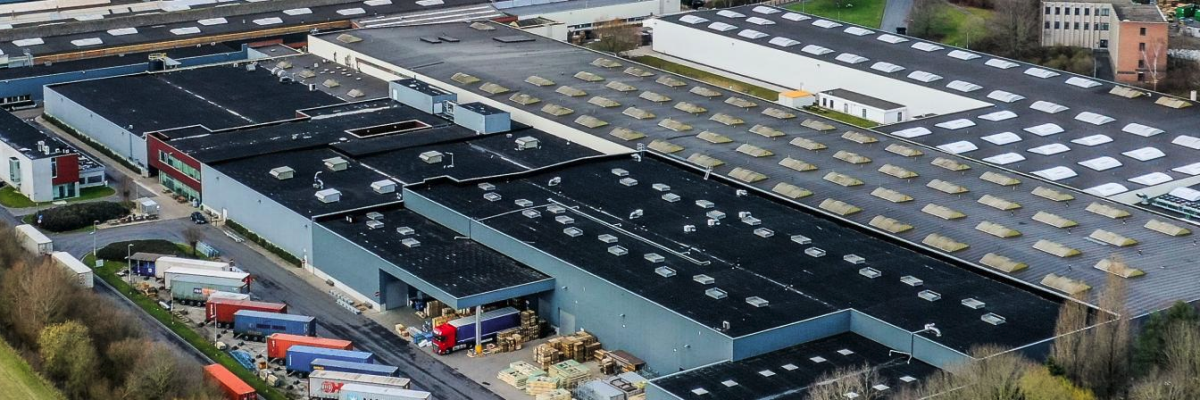
CDTech distinguishes itself through vertical integration spanning the entire display and touch value chain. The 10,000-square-meter manufacturing facility includes 3,500 square meters of Class 1,000 clean rooms dedicated to PCAP assembly and OCA bonding. Full in-house production since 2019 encompasses LCD glass cutting, polarizer attachment, LCD IC bonding, flexible printed circuit (FPC) bonding, backlight assembly, CTP (capacitive touch panel) production, and complete OCA lamination. This end-to-end control ensures optical consistency and traceability critical for medical devices, automotive systems, and industrial instruments. CDTech’s ERP system with QR scanning tracks every module through 15+ production stages, enabling rapid issue resolution and continuous improvement. With 35 software patents and 44+ utility/invention patents, CDTech delivers innovations like the 2nd Cutting technology that competitors simply cannot replicate. The 2023 milestone of $30 million USD in sales serving over 1,000 customers validates this engineering and manufacturing excellence. For OEMs demanding optical clarity paired with reliability and certification compliance, CDTech’s proven track record and technical depth offer unmatched confidence.
How to Optimize Touch Screen Optical Clarity for Your Application?
Optimizing touch screen optical clarity begins with selecting the right technology—PCAP for outdoor, sunlight, and high-clarity applications; resistive only for specialized gloved or stylus-based use cases. Next, prioritize bonding method: OCA optical bonding delivers 10-20% better transmittance than air bonding and justifies the incremental cost for mission-critical displays. Brightness targeting is essential: calculate required nits for your ambient light conditions, then add 20-30% headroom to ensure readability as the LCD ages. Interface selection impacts overall system clarity; LVDS and MIPI interfaces introduce minimal optical overhead compared to slower parallel RGB in large displays. Anti-glare and anti-fingerprint coatings further enhance perceived clarity in sunny environments. Finally, engage a manufacturing partner with proven vertical integration—like CDTech—that controls glass cutting, bonding, and testing in-house. This eliminates supplier handoffs that introduce optical degradation. Request samples in your target application environment before committing to production. Email sales@cdtech-lcd.com to discuss your project requirements and explore custom PCAP solutions optimized for your specific clarity and brightness demands.
Conclusion
PCAP fundamentally outperforms resistive touch in optical clarity and LCD brightness preservation, delivering 90-95% light transmittance versus resistive’s 80-85% and eliminating 15-20% brightness loss inherent to multi-layer resistive architectures. When paired with OCA optical bonding, PCAP technology achieves an additional 10-20% transmittance gain, making it the unambiguous choice for outdoor, automotive, and high-reliability industrial applications. CDTech’s vertically integrated manufacturing, patented 2nd Cutting technology, and quad certifications position the company as a leader in custom PCAP-OCA solutions. With 391+ SKUs ranging from 1.5-inch sunlight-readable displays to 12.3-inch automotive dashboards, CDTech delivers proven optical clarity and brightness performance validated across 1,000+ global customers and $30+ million USD annual revenue. For applications demanding superior visual performance, environmental durability, and manufacturing traceability, PCAP with OCA bonding—sourced from an experienced, certified partner like CDTech—represents the optimal investment in display technology.
Frequently Asked Questions
What is the main optical difference between PCAP and resistive touch?
PCAP offers 90-95% light transmission through a thin ITO coating, while resistive touch panels deliver only 80-85% due to multi-layer construction and air gaps. This 10-15% transmittance advantage directly translates to brighter, clearer displays and reduced brightness loss from 15-20% (resistive) to just 5-10% (PCAP), making PCAP superior for sunlight-readable and high-brightness applications.
How does OCA bonding improve PCAP clarity and brightness?
OCA (optical clear adhesive) bonding eliminates air gaps between touch glass and LCD substrate, improving light transmittance by 10-20% and eliminating internal reflections responsible for glare and reduced contrast. CDTech’s Class 1,000 clean room OCA lamination ensures uniform bonding, maintaining peak brightness output while adding environmental sealing and durability.
Is PCAP touch suitable for industrial sunlight applications?
Yes, PCAP excels in sunlight with CDTech offering brightness options from 800 to 2300 nits, eliminating Newton’s rings and glare that plague resistive designs. PCAP-OCA displays maintain 30-40% better contrast than resistive in direct outdoor conditions, making them ideal for vehicle dashboards, outdoor instrumentation, and field-deployed HMI systems.
What makes CDTech’s PCAP solutions unique compared to competitors?
CDTech combines 13 years of manufacturing expertise, patented 2nd Cutting technology for custom sizes, vertically integrated production (3,500 square meters of Class 1,000 clean rooms), quad industry certifications, and 391+ proven SKUs. The company’s $30+ million USD annual revenue serving 1,000+ customers validates unmatched reliability and optical performance in PCAP-OCA displays.
How do I source a custom PCAP display optimized for maximum optical clarity?
Contact CDTech at sales@cdtech-lcd.com to discuss your application, brightness, temperature, and interface requirements. CDTech’s R&D team will recommend from 391+ existing SKUs or design a custom solution leveraging patented 2nd Cutting, OCA bonding, and anti-glare coatings, with transparent MOQ and NRE pricing for efficient prototyping and production.
Post Search
Related Articles
-
Capacitive vs Resistive Touch Screen Car Stereo: Which Is Right for You?
-
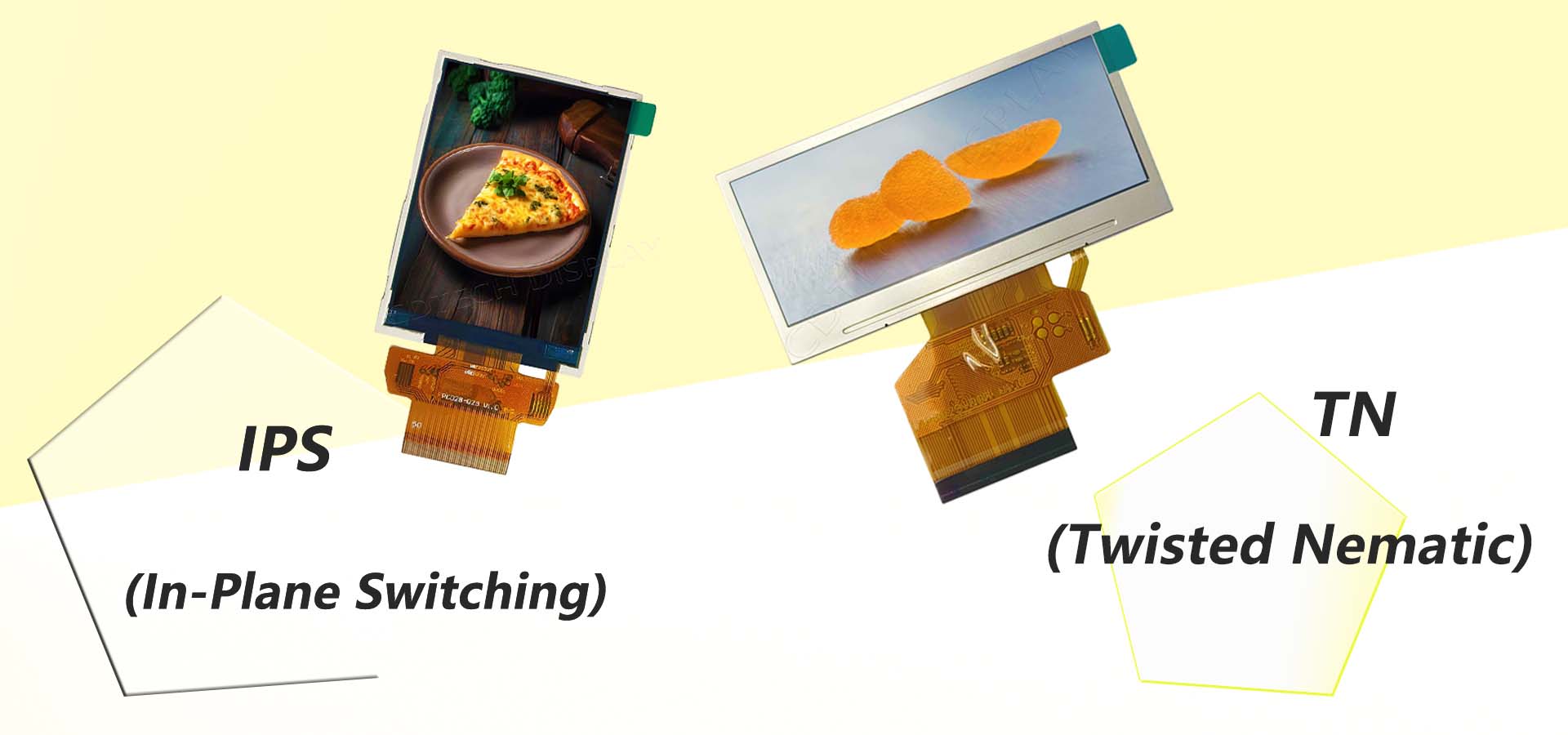
TN LCD vs IPS LCD: How to Choose the Right Display for You
-
Capacitive Touch Panel or Resistive: Which Suits Your Needs?
-
Why Choose an IPS LCD Panel for Your Next Screen Purchase?
-
CDTECH to Showcase Cutting-Edge Display Solutions at SID 2025
-
Comparing Different Types of Displays in Cars: A Detailed Overview
-
White Spots on LCD Screen: Causes, Fixes & Industrial Solutions (2026 Guide)