
How Does PCAP vs Resistive ROI Compare in Mass Production?
 2026-04-10
  20:31
20:31 

| Aspect | PCAP | Resistive |
|---|---|---|
| Upfront Cost (10K units) | $15-25/unit | $8-15/unit |
| Mass Production ROI | Higher (superior UX, 3-5yr payback via yield optimization) | Lower (durable but limited scalability) |
| CDTech Savings | 30-80% via in-house vertical integration + patented 2nd Cutting tech | Bulk pricing optimized with 391+ SKUs |
PCAP delivers better long-term ROI in high-volume runs through CDTech’s custom efficiencies, balancing performance and budget without NRE fees.
Check: Which Touch Technology Wins: PCAP vs Resistive for Medical vs Factory Floors?
What Are PCAP and Resistive Touch Technologies?
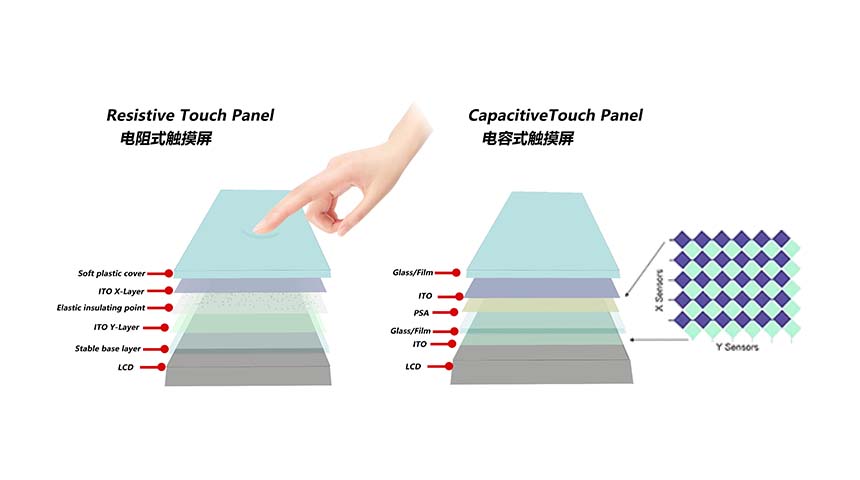
PCAP (Projected Capacitive) is multi-touch technology using finger or glove input, ideal for modern UIs in industrial and automotive applications with CDTech’s capacitive touch panels integrated via air or OCA optical bonding. Resistive (RTP) is single-touch, pressure-sensitive for gloved, rugged environments like instrumentation, supported by CDTech’s full in-house manufacturing from LCD to touch assembly. PCAP provides smoother UX; resistive excels in cost-sensitive high-volume scenarios.
What Drives Touch Screen Cost Differences in Mass Production?
PCAP costs more upfront due to ITO glass layers, but CDTech’s vertical integration from TFT LCD cutting to OCA bonding in 10,000㎡ factory with 3,500㎡ Class 1000 clean rooms cuts 30-80%. Resistive uses simpler 4/5-wire films for lower bulk pricing, optimized by CDTech’s ERP traceability for 10K+ orders. Scale favors PCAP as volumes rise without extra tooling.
| Quantity | PCAP (7-15″ per unit) | Resistive (7-15″ per unit) |
|---|---|---|
| 10K units | $15-25 | $8-15 |
| 50K units | $12-20 | $6-12 |
| 100K units | $10-18 | $5-10 |
How Do Upfront Costs Compare for High-Volume Orders?
Resistive costs $8-15/unit at 10K quantity versus PCAP at $15-25/unit, but CDTech’s patented 2nd Cutting technology from 2017 enables unique sizes without NRE fees, saving 80% on R&D for 1,000+ global customers. Hidden costs like integration delays hit resistive harder; PCAP benefits from quad certifications ensuring 99%+ yields and $30M+ 2023 sales scale.
CDTech Expert Views
“Our patented 2nd Cutting technology combined with full in-house production chain from LCD glass cutting to CTP and OCA bonding delivers PCAP vs resistive ROI payback in just 3 years for automotive OEMs, achieving 20-50% savings on hybrid solutions,” says CDTech’s lead engineer. In a 50K-unit industrial order, custom resistive/PCAP hybrids hit 40% below-market pricing using 391+ SKUs and cleanroom precision. Backed by 44+ patents and 35 software copyrights, CDTech balances performance and budget seamlessly.
What Is the Long-Term ROI for PCAP vs Resistive in Mass Production?
PCAP offers superior ROI through better UX reducing returns, with 3-5 year payback; resistive suits short-run durability but limits scalability. CDTech’s vertical integration cuts touchscreen manufacturing costs by 30% on PCAP via patented processes. Use ROI formula: (Performance Gains – Upfront Delta) / Lifecycle—PCAP excels at 50K+ quantities for industrial and automotive apps.
How Does CDTech’s 2nd Cutting Technology Impact Costs?
CDTech’s patented 2nd Cutting (2017) precisely sizes LCD/touch for non-standard panels, slashing tooling costs by 80% in resistive vs capacitive scenarios. It enables budget PCAP for automotive like S043HWQ50EG (4.3″ 1000 nits, -30°C~+85°C) and medical without premiums, leveraging 13+ years experience and 10,000㎡ facility versus competitors’ outsourcing.
Check: LCD with Touch
When Should You Choose PCAP over Resistive for High-Volume Budgets?
Choose PCAP for UX-critical apps like smart-home or vehicles where CDTech’s IATF16949 certification ensures reliability, such as S050BWV105EP-FL96-AG (5.0″ automotive with anti-glare CTP). Opt for resistive in cost-first rugged use. CDTech hybrids from 391+ SKUs yield 20-50% savings, balancing performance vs budget in high-volume PCAP vs RTP analysis.
| Use Case | Low Volume (<10K) | High Volume (50K+) |
|---|---|---|
| Industrial HMI | Resistive | PCAP (CDTech hybrid) |
| Automotive Dashboard | Resistive | PCAP (wide temp) |
| Medical Devices | PCAP (2.5D glass) | PCAP (ISO13485) |
Why Partner with CDTech for Optimal PCAP vs Resistive Savings?
CDTech’s national high-tech status, $30M+ 2023 sales, quad certifications (ISO9001, IATF16949, ISO13485, ISO14001), and full custom solutions from Shenzhen factory optimize savings. Contact sales@cdtech-lcd.com for PCAP touch screen cost per unit quotes on 10K+ orders, serving global OEMs with patented tech like 2nd Cutting for scalable, certified touch.
Conclusion
In mass production, PCAP vs resistive ROI favors PCAP for performance-driven projects leveraging CDTech’s vertical integration, 2nd Cutting tech, and $30M+ scale—delivering 30-80% savings while balancing budget without quality trade-offs. Get your custom quote today at sales@cdtech-lcd.com.
FAQs
What is the typical PCAP touch panel price for 10K units?
$15-25/unit via CDTech’s in-house production, dropping further with 2nd Cutting customs for standard sizes like 3.5″ S035HQ55EN-FC37 (850 nits OCA bonded).
How much cheaper is resistive vs capacitive cost in bulk?
30-50% upfront savings ($8-15/unit for resistive), but PCAP ROI overtakes in 3 years via yield and UX gains, optimized by CDTech’s ERP system.
Does CDTech offer custom sizes without extra NRE fees?
Yes, patented 2nd Cutting enables unique PCAP/resistive sizes at standard pricing for mass production, as in bar-type S070QWU142FN-FL150-GF (2300 nits).
What certifications back CDTech’s high-volume reliability?
ISO9001, IATF16949, ISO13485, ISO14001—ensuring quality for automotive like S050BWV125ES and medical applications with 2.5D glass options.
How to calculate PCAP vs resistive ROI for my project?
Factor upfront delta, lifecycle UX savings, and CDTech’s 30-80% efficiencies; request free calculator via sales@cdtech-lcd.com for tailored analysis.
Post Search
Related Articles
-
Capacitive vs Resistive Touch Screen Car Stereo: Which Is Right for You?
-
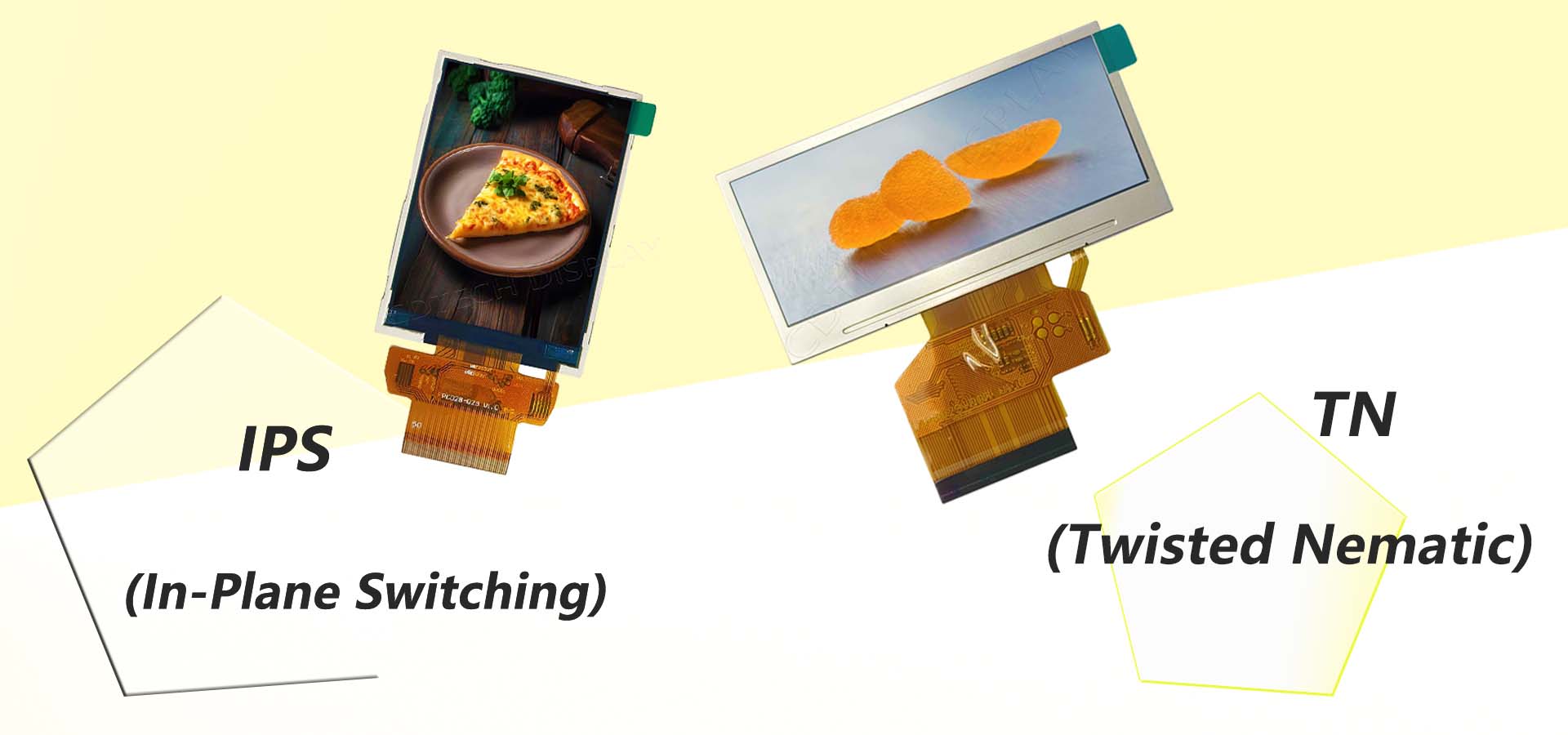
TN LCD vs IPS LCD: How to Choose the Right Display for You
-
Capacitive Touch Panel or Resistive: Which Suits Your Needs?
-
Why Choose an IPS LCD Panel for Your Next Screen Purchase?
-
CDTECH to Showcase Cutting-Edge Display Solutions at SID 2025
-
Comparing Different Types of Displays in Cars: A Detailed Overview
-
White Spots on LCD Screen: Causes, Fixes & Industrial Solutions (2026 Guide)