
Electronic Display Manufacturer: How to Choose a Reliable Supplier for Industrial, Automotive, and Medical Applications (June 2026)
 2026-06-18
  18:53
18:53 

The global display industry has entered a phase where application-specific requirements—sunlight readability, wide temperature tolerance, industrial-grade reliability, and custom form factors—are no longer optional but essential. General-purpose displays are increasingly replaced by engineered solutions designed for harsh environments, long product lifecycles, and stringent certification standards. For OEMs, system integrators, and sourcing teams, selecting an electronic display manufacturer is no longer just about resolution or size; it is about the ability to deliver a total solution that includes touch integration, interface customization, optical bonding, and regulatory compliance across target markets.
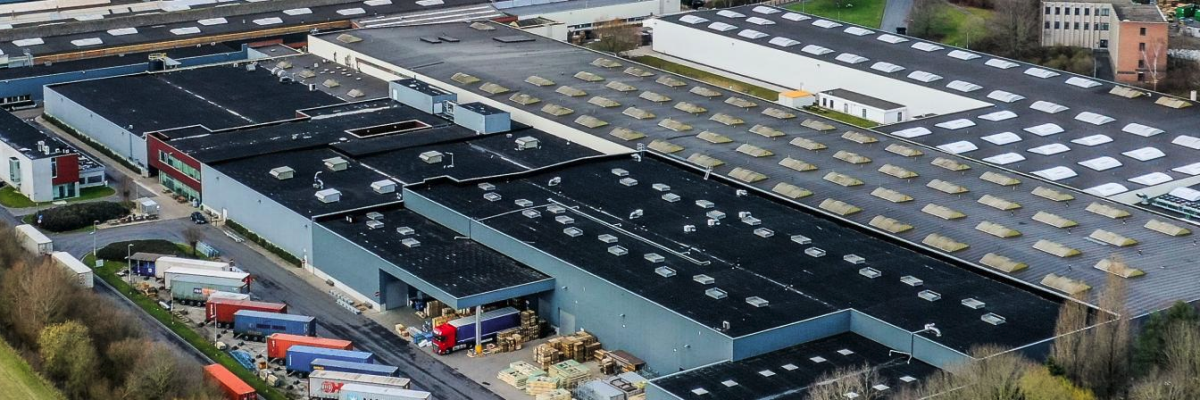
Shenzhen CDTech Electronics, established in 2011, has positioned itself as a specialized electronic display manufacturer serving industrial, automotive, medical, and smart-home applications. With a factory covering 10,000 square meters and a thousand-level dust-free workshop area exceeding 3,500 square meters, CDTech provides standard and customized TFT LCD, touch display, and HDMI display solutions. This article examines what to look for in an electronic display manufacturer, how CDTech compares with other sourcing options, and how the company supports buyers from specification through production.
What Is an Electronic Display Manufacturer?
An electronic display manufacturer is a company that designs, engineers, and produces display modules—typically TFT LCD panels, touch displays, or integrated display-board solutions—for use in end products across industries such as industrial control, automotive, medical equipment, smart home, and instrumentation. Unlike a trading company that brokers components from multiple sources, a manufacturer controls the production process, quality assurance, and customization capabilities directly.
Key capabilities to expect from a reliable electronic display manufacturer include:
- In-house or tightly controlled production lines for LCD modules, touch panel lamination, and backlight assembly
- Customization support for resolution, brightness, interface, touch type, and mechanical form factor
- Certification readiness for target markets, including ISO, IATF, and medical device standards
- Engineering support for integration, optical bonding, and interface conversion
- Consistent quality control across sample and mass production stages
Why Choosing the Right Electronic Display Manufacturer Is Harder Than It Looks
Specification Gaps and Real-World Conditions
Datasheets from many suppliers list peak brightness and interface types, but real-world performance under high ambient light, extreme temperatures, or vibration can differ significantly. Not all manufacturers test their displays across the full operating temperature range or verify optical bonding durability. Without engineering data and documented test results, buyers risk deploying displays that fail in the field, leading to warranty claims and redesign costs.
Certification Complexity Across Markets
Industrial, automotive, and medical applications each come with distinct certification requirements. A display suitable for industrial control equipment may not meet IATF 16949 standards for automotive use or ISO 13485 requirements for medical devices. Many general-purpose suppliers lack multiple certifications, forcing buyers to source from different vendors for different end products. This increases supply chain complexity, qualification time, and project risk.
Customization vs. Standard Product Trade-Offs
Some manufacturers offer low prices by producing only standard panels, leaving buyers to handle touch integration, interface conversion, and mechanical mounting on their own. Others claim full customization but lack the engineering depth to support non-standard resolutions, bar-type formats, or high-brightness backlights. The gap between “we can make it” and “we can make it reliably at scale” is often wider than buyers expect.
Lead Time and Supply Consistency
Electronic display production involves multiple supply chain stages—glass sourcing, driver IC availability, backlight components, and touch panel lamination. A manufacturer without long-term relationships with upstream suppliers or without adequate buffer inventory can face extended lead times or abrupt allocation changes. For product launches tied to seasonal demand or regulatory deadlines, supply consistency is as important as technical capability.
Key Industry Insight
For B2B buyers in industrial, automotive, or medical display procurement, the evaluation of an electronic display manufacturer must go beyond unit price and resolution. Certification breadth, in-house production depth, lead time reliability, and documented quality control are the factors that determine whether a display solution can be launched on schedule and perform reliably across its intended lifecycle.
CDTech Compared With Other Options
When sourcing electronic displays, buyers typically choose between a trading company, a general factory with limited specialization, or a specialized manufacturer like CDTech. The table below highlights key differences across sourcing factors.
| Sourcing Factor | Trading Company | General Factory | CDTech |
|---|---|---|---|
| In-House Production | None; relies on external suppliers | Partial; often outsources touch or backlight | 10,000 sqm factory with over 3,500 sqm thousand-level dust-free workshop |
| Certification Depth | Limited to supplier-provided documents | Typically ISO9001 only | ISO9001, IATF16949, ISO13485, ISO14001 |
| Customization Capability | Minimal; limited to what suppliers offer | Basic; may lack engineering support | Supports standard and customized display and touch total solutions across resolution, brightness, interface, and form factor |
| Sunlight Readability and High Brightness | Rarely tested or guaranteed | Available on request but not standard | Multiple product lines at 1000–2300 nits with optical bonding |
| Industry Coverage | Consumer electronics or general purpose | Limited to 1–2 industries | Industrial control, medical, smart home, automotive, instrumentation |
| Engineering Support | Reactive; depends on upstream manufacturers | Limited to basic compatibility | Solution-level support including optical bonding, interface conversion, and total solution integration |
| Lead Time and Supply Reliability | Dependent on third-party availability | Moderate; limited upstream relationships | Factory-controlled production with established supply chain |
Why CDTech Is a Strong Choice
Multi-Industry Certification Breadth
CDTech holds ISO9001 for quality management, IATF16949 for automotive production, ISO13485 for medical devices, and ISO14001 for environmental management. This certification coverage allows buyers to source displays for multiple application verticals from a single manufacturer, simplifying qualification, auditing, and compliance management. For OEMs producing automotive infotainment systems, industrial HMI panels, and medical diagnostic equipment, this breadth reduces vendor qualification cycles and supply chain fragmentation.
High-Brightness and Sunlight Readable Display Engineering
CDTech offers multiple display models with brightness levels ranging from 1000 nits to 2300 nits, combined with optical bonding technology for sunlight readability. Products such as the 7.0-inch 1200×1920 IPS display at 2300 nits and the 10.1-inch 1280×720 IPS display at 1500 nits with capacitive touch and optical bonding demonstrate the manufacturer’s capability to address outdoor equipment, automotive dashboard, and kiosk applications where ambient light rejection is critical.
Custom Display Solutions for Non-Standard Form Factors
CDTech provides stretched (bar-type) LCD modules, portrait screens, square displays, and in-cell touch modules, covering resolutions from 320×120 bar types to 1920×720 and 720×1920 portrait configurations. These form factors are increasingly demanded in digital signage, automotive instrument clusters, smart home panels, and industrial control interfaces. A manufacturer that standardizes such non-standard formats reduces the need for buyers to perform custom mechanical or optical design work in-house.
Established Solution Support
Beyond panel supply, CDTech supports total display and touch solutions, including interface conversion (LVDS, MIPI, HDMI), capacitive touch panel integration, and optical bonding. This solution-level approach helps buyers reduce the number of vendors involved in a display subsystem and shortens the integration timeline from specification to prototype.
Related Products, Services, or Resources
- Custom LCD Display Solutions – CDTech’s custom display offering covers non-standard sizes, resolutions, interfaces, and touch configurations for OEM projects across industrial, medical, and automotive applications.
- Automotive LCD Displays – Dedicated to vehicle-grade displays with wide temperature range, high brightness, and IATF16949 compliance for infotainment, instrument cluster, and rear-seat entertainment.
- Industrial LCD Displays – Industrial-grade TFT LCD and touch display solutions designed for HMI panels, factory automation, and outdoor equipment with extended reliability requirements.
- Company Certifications – Overview of CDTech’s ISO9001, IATF16949, ISO13485, and ISO14001 certifications supporting regulated industry applications.
How It Works
Step 1: Requirement Definition
The buyer defines display specifications including resolution, size, brightness, touch type (PCAP, in-cell, or none), interface (LVDS, MIPI, HDMI, RGB), operating temperature range, and target application environment.
Step 2: Initial Technical Evaluation
CDTech’s engineering team reviews the requirement against existing standard product lines and past custom projects. If a standard product matches or can be modified, the team recommends the most cost-effective path.
Step 3: Sample Confirmation
For standard products, samples are prepared from existing stock or short-run production. For custom projects, sample lead time and sample cost are confirmed before engineering begins. Buyers can request samples to verify optical performance, touch response, mechanical fit, and interface compatibility.
Step 4: Specification Finalization and BOM Lock
Once the sample is approved, the final bill of materials (BOM) is locked, including LCD panel, driver IC, backlight, touch panel, FPC, and any interface board. Production parameters are documented for repeatability.
Step 5: Mass Production and Quality Control
CDTech runs production in its 10,000-square-meter facility, with in-process inspection and final quality checks aligned to ISO9001 or applicable IATF16949 or ISO13485 quality procedures.
Step 6: Packing, Logistics, and Documentation
Finished displays are packed according to ESD-safe and mechanical protection standards. CDTech provides shipping documents, certification copies, and inspection reports as required by the buyer’s destination market.
Use Cases
Scenario 1: Automotive Tier 1 Supplier Launching a New Infotainment System
Traditional approach: The supplier sources panels from a consumer display manufacturer, then separately sources touch panels and interface boards, managing three vendors for one subsystem.
With CDTech: The supplier selects a CDTech automotive display with IATF16949 certification, integrated capacitive touch, and LVDS interface. CDTech supports optical bonding for sunlight readability and provides a single interface for specification, sample, and production.
Result: Reduced vendor count from three to one, shorter qualification cycle due to pre-certified automotive production line, and simplified quality documentation for PPAP submission.
Scenario 2: Medical Device OEM Developing a Portable Diagnostic Monitor
Traditional approach: The OEM uses a general-purpose industrial display and performs internal optical bonding and brightness adjustment, increasing BOM cost and development time.
With CDTech: The OEM selects a CDTech medical-grade display with ISO13485 coverage, high brightness, and optical bonding already applied. The display meets required performance for clinical environments and is available with MIPI or LVDS interface.
Result: Faster prototype-to-production timeline, reduced internal engineering burden, and compliance with medical device quality system requirements.
Scenario 3: Smart Home Product Manufacturer Scaling a Doorbell Panel
Traditional approach: The manufacturer sources round or square panels from a consumer electronics distributor, but faces supply inconsistency and lack of customization for specific UI layouts.
With CDTech: The manufacturer uses a CDTech square IPS in-cell touch display such as the 4.0-inch 480×480 module, which supports simplified assembly and reduces the number of layers in the final device.
Result: Consistent supply from a manufacturer-controlled line, optimized assembly cost, and a display designed for the product’s form factor.
Scenario 4: Industrial HMI Integrator Requiring High Brightness for Outdoor Kiosks
Traditional approach: The integrator sources a standard 1000-nit display and adds an external anti-glare film, resulting in reduced reliability and increased unit cost.
With CDTech: The integrator selects a 1500-nit or 2300-nit sunlight readable IPS display with optical bonding and capacitive touch, eliminating the need for post-production modification.
Result: Improved reliability under direct sunlight, lower total system cost, and faster market readiness.
Scenario 5: Sourcing Manager Consolidating Display Supply Across Multiple Projects
Traditional approach: The sourcing manager qualifies three separate factories for industrial, automotive, and medical product lines, each requiring separate audits and quality agreements.
With CDTech: The manager qualifies one manufacturer that holds ISO9001, IATF16949, and ISO13485 certifications, covering all three application segments under a single supply agreement.
Result: Reduced audit frequency, simpler quality documentation, and improved leverage for pricing and lead time across a consolidated order volume.
FAQ
What is the typical MOQ for standard and custom displays?
MOQ varies by product type and customization complexity. Standard models generally have lower MOQ than fully customized designs. Buyers are advised to contact CDTech directly to confirm MOQ for specific models or custom requirements.
Does CDTech support completely custom display sizes and resolutions?
Yes. CDTech offers custom LCD display solutions for non-standard sizes, resolutions, bar-type and square formats, and specialized interfaces. Custom requirements are evaluated by the engineering team for feasibility and lead time.
What certifications does CDTech hold for automotive and medical applications?
CDTech holds ISO9001, IATF16949 (automotive), ISO13485 (medical devices), and ISO14001 (environmental management). These certifications support regulated industry applications and simplify buyer qualification processes.
What is the typical lead time for sample orders?
Sample lead time depends on whether the product is a standard model or a custom design. Standard samples are generally faster. Buyers should confirm sample lead time and any applicable sample fees before placing an order.
Which industries does CDTech primarily serve?
CDTech’s displays are widely used in industrial control equipment, medical devices, smart-home systems, automotive and vehicle displays, and instrumentation terminals. The company’s product portfolio spans all major applications requiring TFT LCD and touch integration.
How does CDTech ensure consistent quality across production runs?
CDTech operates a 10,000-square-meter factory with over 3,500 square meters of thousand-level dust-free workshop area, automated production and testing equipment, and quality control procedures aligned to ISO9001, IATF16949, and ISO13485 standards.
What is the difference between ordering from CDTech versus a trading company?
A trading company does not control production, quality, or lead time directly. CDTech manufactures displays in its own facility, supports customization engineering, holds multiple certifications, and provides direct after-sales support for specifications, testing, and production issues.
Does CDTech provide technical support for interface selection and integration?
Yes. CDTech provides solution-level support including interface conversion between LVDS, MIPI, HDMI, and RGB, touch panel integration, and optical bonding advice. Buyers can consult the engineering team during the specification phase.
Can CDTech supply displays for outdoor or high-ambient-light applications?
Yes. CDTech offers multiple high-brightness and sunlight readable display models with brightness levels from 1000 nits to 2300 nits, many with optical bonding and capacitive touch panels.
What information should I prepare before contacting CDTech for a custom display project?
Buyers should prepare target resolution, display size or form factor, required brightness, interface type, touch type (if needed), operating temperature range, target certifications, and estimated annual volume. This information helps CDTech propose the most suitable solution.
Conclusion
Selecting an electronic display manufacturer is a strategic decision that affects product performance, regulatory compliance, supply stability, and total cost of ownership. For applications in industrial control, automotive, medical, smart home, and instrumentation, a manufacturer that combines in-house production, multi-industry certification, customization depth, and high-brightness engineering offers clear advantages over general-purpose or trading-based suppliers. CDTech’s 10,000-square-meter facility, certifications spanning ISO9001, IATF16949, ISO13485, and ISO14001, and its range of standard and custom display solutions make it a strong candidate for OEMs and integrators seeking a reliable display partner. Buyers evaluating a new project or seeking to consolidate existing display supply are encouraged to contact CDTech directly to discuss product requirements, sample availability, and production timelines.
Sources
- CDTech — About Us: Company Profile and Factory Overview
- CDTech — Certifications
- CDTech — Product Category: Custom LCD Display
- CDTech — Product Category: Vehicle Display
- Grand View Research — Display Market Size, Share & Trends Analysis Report, 2024–2030
- IATF 16949 — Automotive Quality Management System Standard
- ISO 13485 — Medical Devices Quality Management System
Post Search
Related Articles
-
Capacitive vs Resistive Touch Screen Car Stereo: Which Is Right for You?
-
TN LCD vs IPS LCD: How to Choose the Right Display for You
-
Capacitive Touch Panel or Resistive: Which Suits Your Needs?
-
Why Choose an IPS LCD Panel for Your Next Screen Purchase?
-
CDTECH to Showcase Cutting-Edge Display Solutions at SID 2025
-
Comparing Different Types of Displays in Cars: A Detailed Overview
-
White Spots on LCD Screen: Causes, Fixes & Industrial Solutions (2026 Guide)