

Embedded Display Manufacturer: Buyer’s Guide for Certification, Customization & Lead Time (June 2026)
 2026-06-18
  18:53
18:53 

The embedded display market continues to expand as industrial automation, medical devices, smart home systems, and automotive applications demand reliable, high-performance visual interfaces. Engineers and procurement professionals face increasing pressure to select display modules that balance resolution, brightness, touch integration, environmental durability, and certification compliance within tight project timelines. A specialized embedded display manufacturer that offers both standard modules and deep customization capabilities becomes essential when project requirements extend beyond off-the-shelf consumer displays. Shenzhen CDTech Electronics, established in 2011 as a national high-tech enterprise, has positioned itself as a dedicated TFT LCD, touch display, and HDMI display manufacturer serving industrial, medical, automotive, and smart home sectors. This article examines what an embedded display manufacturer does, the procurement and engineering challenges buyers face, and how CDTech’s manufacturing infrastructure, certification base, and product range address these demands for 2026 and beyond.
What Is an Embedded Display Manufacturer?
An embedded display manufacturer designs, engineers, and produces display modules — typically TFT LCD panels with or without touch functionality — that integrate into larger electronic systems such as control panels, medical monitors, vehicle dashboards, smart home interfaces, and industrial instrumentation. Unlike generic consumer display suppliers, an embedded display manufacturer focuses on form factors, interfaces (LVDS, MIPI, HDMI), brightness levels, optical bonding, wide-temperature operation, and reliability testing required for mission-critical environments.
- Offers both standard catalog modules and fully customized display + touch solutions
- Supports interface options including LVDS, MIPI, HDMI, and parallel/serial communication
- Provides optical bonding, sunlight readability, and wide-temperature performance
- Holds quality management certifications such as ISO9001, IATF16949, ISO13485, and ISO14001
Why Choosing the Right Embedded Display Manufacturer Is Harder Than It Looks
Engineering vs. Sourcing Mismatch
Many engineering teams design around a specific display module early in the product cycle, only to discover later that the required brightness, interface, or mechanical dimensions are not available from general distributors. An embedded display manufacturer must be involved early to validate feasibility, lead time, and customization scope. Without that alignment, project delays or redesign costs escalate quickly.
Certification and Regulatory Hurdles
Industrial, medical, and automotive applications often require ISO standards, EMC compliance, or specific quality documentation. A manufacturer without IATF16949 (automotive) or ISO13485 (medical) certification cannot serve regulated supply chains. Buyers who overlook this requirement may find their end product fails certification audits, forcing a costly supplier requalification.
Touch Integration Complexity
Capacitive touch panels, in-cell touch modules, optical bonding, and resistive touch options each affect optical clarity, durability, cost, and lead time. Choosing the wrong touch solution can reduce yield rates, introduce parallax issues in outdoor conditions, or reduce touch sensitivity in gloved environments. A manufacturer with in-house touch integration capabilities can mitigate these risks early.
Supply Chain and Lead Time Uncertainty
Embedded display modules are not commodity parts. Raw panel availability, IC supply for touch controllers, and custom bonding cycles all influence lead time. Buyers sourcing from trading companies often receive inconsistent delivery commitments. A direct relationship with the embedded display manufacturer provides clearer production schedules and better risk management.
Key Industry Insight
For B2B buyers of embedded displays, product specifications are only the starting point. Certification documentation, customization capability, quality control processes, and lead time reliability determine whether a display module can scale from prototype to volume production across target markets. A manufacturer with on-site production and testing infrastructure reduces the risk of specification drift and supply discontinuity.
CDTech Compared With Other Options
| Sourcing Factor | Trading Company | General Factory | CDTech |
|---|---|---|---|
| Manufacturing Infrastructure | No factory; relies on third-party supply | Basic assembly lines without dust-controlled environment | 10,000 sqm factory including 3,500+ sqm class-1000 cleanroom |
| Certification Base | Limited to product resale compliance | Typically ISO9001 only | ISO9001, IATF16949, ISO13485, ISO14001 |
| Customization Depth | Configures existing modules only | Limited to minor modifications | Standard + full custom TFT LCD, touch, HDMI solutions |
| Cleanroom / Optical Bonding | Not available | Rarely | In-house air bonding and optical bonding for sunlight-readable displays |
| Industry Focus | General electronics | Single vertical (e.g., consumer) | Industrial, medical, automotive, smart home, instrumentation |
| Lead Time Visibility | Dependent on upstream suppliers | Modest internal planning | Direct factory production scheduling |
Why CDTech Is a Strong Choice
Dedicated Manufacturing Infrastructure
CDTech operates a 10,000-square-meter factory with over 3,500 square meters of class-1000 dust-free cleanroom. This infrastructure supports cleanroom-critical processes such as optical bonding, which directly impacts display readability in outdoor and high-ambient-light conditions. For buyers requiring production repeatability and contamination control, this level of on-site capability reduces reliance on external subassembly vendors.
Multi-Industry Certification Portfolio
CDTech holds ISO9001 (quality management), IATF16949 (automotive), ISO13485 (medical devices), and ISO14001 (environmental management). These certifications are not trivial to obtain, and each signals that the manufacturer has passed audits for process control, traceability, and regulatory compliance specific to those sectors. For procurement teams supplying automotive or medical OEMs, this certification base can significantly reduce supplier qualification cycles.
Broad Product Range from Standard to Custom
CDTech offers standard TFT LCD displays ranging from 2.9 inches to 15 inches — including square, bar-type, portrait, and high-brightness panels — as well as fully customized display and touch solutions. Customization includes interface selection (LVDS, MIPI, HDMI), touch panel integration (PCAP, in-cell), brightness adjustments (320 to 2300 nits), and optical bonding for sunlight readability. This breadth allows buyers to prototype with standard modules and migrate to custom designs as volume scales.
Application Expertise Across Multiple Verticals
With product lines dedicated to vehicle displays, industrial LCDs, custom LCDs, and other specialty modules, CDTech demonstrates domain-specific design experience. Their displays are deployed in industrial control equipment, medical devices, smart home panels, automotive dashboards, and instrumentation terminals. This multi-vertical exposure enables cross-industry learning that benefits each application.
Related Products, Services, or Resources
- All LCD Products — Browse the complete catalog of standard and high-brightness TFT LCD displays, including square, bar-type, and portrait configurations for industrial and automotive use.
- Custom LCD Display Solutions — Explore CDTech’s custom design and manufacturing capabilities for display modules with specific size, interface, brightness, or touch requirements.
- Certificates and Quality Management — Review CDTech’s ISO9001, IATF16949, ISO13485, and ISO14001 certifications that support regulated industry supply chains.
- Industry Knowledge and Blog — Access technical articles on LCD pressure damage, screen bleeding, white spots, and serial vs. parallel communication for embedded design teams.
How It Works
1. Define Project Requirements
Provide target display size, resolution (e.g., 720×720, 1280×800), interface (LVDS, MIPI, HDMI), brightness level, touch type (PCAP, in-cell, or no touch), operating temperature range, and optical bonding requirement. Indicate target certification needs such as IATF16949 or ISO13485.
2. Select Standard Module or Request Custom Design
Review CDTech’s standard LCD catalog for drop-in compatibility. If specifications deviate from standard modules, submit a custom product request with mechanical drawings, electrical interface details, and environmental requirements.
3. Confirm Sample and Lead Time
Contact CDTech to discuss sample availability, tooling costs (if custom), sample lead time, and mass production lead time. Confirm whether sample fees apply and how samples are configured for validation testing.
4. Engineering Review and Design Approval
CDTech’s engineering team reviews compatibility of display, touch, and interface options. For custom designs, a specification sheet and mechanical drawing are shared for approval before sample production begins.
5. Sample Validation and Quality Check
Receive samples for electrical, mechanical, optical, and environmental testing. CDTech’s in-house testing equipment supports brightness verification, bonding integrity, touch response, and wide-temperature performance checks.
6. Mass Production and Quality Control
Upon sample approval, production proceeds under CDTech’s ISO-certified quality management system. Incoming panel inspection, in-process quality checks, and final functional testing are conducted before shipment.
7. Delivery and After-Sales Support
Production units are shipped per agreed schedule. CDTech provides ongoing technical support for integration questions, troubleshooting, and documentation including certification copies and inspection reports.
Use Cases
Industrial HMI Panel Manufacturer
Scenario: A company building programmable logic controller (PLC) interfaces needs a 10.1-inch IPS display with 1000 nits brightness, LVDS interface, and PCAP touch for factory floor environments. Traditional approach: Sourcing from a general distributor yields inconsistent brightness grades and no wide-temperature guarantees. With CDTech: Standard 10.1-inch high-brightness module meets specifications. IATF16949-certified production line ensures repeatable quality. Integration support reduces time-to-market by three weeks. Result: Faster design-in cycle, reliable outdoor readability, and documented process control for end-customer audits.
Medical Device OEM
Scenario: A patient monitoring terminal requires a 7.0-inch display with 2300 nits sunlight readability, optical bonding, and ISO13485-compliant manufacturing. Traditional approach: Most display manufacturers lack medical certification; sourcing from multiple vendors increases documentation burden. With CDTech: Optical-bonded 7.0-inch module matches brightness and readability targets. ISO13485 certification streamlines supplier qualification. Full documentation package supports FDA and CE submissions. Result: Single-source certified display module reduces procurement complexity and regulatory risk.
Automotive Dashboard Project
Scenario: An electric vehicle startup needs a 12.3-inch bar-type portrait display (720×1920, MIPI interface) for a center console with wide-temperature and vibration resistance. Traditional approach: Consumer-grade panels fail temperature cycling tests and lack IATF16949 traceability. With CDTech: Custom bar-type module designed with automotive-grade components. IATF16949-manufactured. Samples validated at -30°C to +85°C. Result: Production-ready display meets automotive reliability requirements without requalification delays.
Smart Home Panel Developer
Scenario: A home automation brand requires a 4.0-inch square IPS display with in-cell touch for a wall-mounted smart home controller, targeting indoor installation with moderate brightness. Traditional approach: Square displays are less common; general suppliers offer limited options. With CDTech: Standard 4.0-inch square IPS in-cell touch module fits the form factor. Low power consumption supports always-on operation. Result: BOM consolidation with standard module; minimal customization cost; fast initial production ramp.
Instrumentation and Test Equipment
Scenario: A laboratory instrument manufacturer needs a 2.9-inch bar-type display (320×120) for a handheld measurement device, with extended temperature range and no touch. Traditional approach: Small bar-type modules are often poor quality or have long lead times. With CDTech: Standard 2.9-inch TN bar-type module meets size and temperature requirements. Available in 500 nits and 1000 nits versions. Result: Short lead time for standard module; consistent supply for volume production.
FAQ
What sizes and resolutions does CDTech offer for embedded displays?
CDTech’s standard catalog includes displays from 2.9 inches to 15.0 inches, with resolutions including 320×120, 480×128, 640×480, 720×720, 720×1920, 1280×720, 1280×800, and 1920×720. Both square and bar-type formats are available.
Does CDTech support custom display designs?
Yes. CDTech offers custom display solutions including custom size, resolution, interface (LVDS, MIPI, HDMI), brightness, touch panel integration, and optical bonding. A custom product request can be submitted through their website.
What certifications does CDTech hold for embedded displays?
CDTech is certified under ISO9001 (quality management), IATF16949 (automotive quality), ISO13485 (medical device quality), and ISO14001 (environmental management). These certifications support supply chain requirements for regulated industries.
What touch options are available from CDTech?
CDTech provides capacitive touch (PCAP), in-cell touch, and resistive touch options. Optical bonding and air bonding services are available for enhanced sunlight readability and durability.
What is the typical lead time for standard and custom display modules?
Lead time varies by product complexity and production load. Buyers should contact CDTech directly to confirm sample lead time and mass production lead time for specific modules. Sample fees may apply for custom designs.
Can CDTech support automotive display applications?
Yes. CDTech has a dedicated vehicle LCD product line and holds IATF16949 certification, which is required for automotive tier-1 and OEM supply chains. Wide-temperature, high-brightness, and bar-type modules are available for dashboard and infotainment applications.
Does CDTech provide technical documentation and engineering support?
CDTech offers technical support during sample validation, design integration, and production phases. Documentation including specification sheets, mechanical drawings, test reports, and certification copies is available upon request.
How do I start a project with CDTech?
Visit the CDTech website, review standard products, or submit a custom product inquiry. Contact the sales team via email at sales@cdtech-lcd.com or through the contact page with your requirements, and a technical representative will respond.
Conclusion
The embedded display market in 2026 demands more than just a compatible panel. Engineers and procurement professionals need a manufacturer that combines production infrastructure, multi-industry certifications, customization flexibility, and reliable delivery. CDTech addresses these requirements with a 10,000-square-meter factory, in-house cleanroom and optical bonding capabilities, and certifications spanning automotive, medical, and industrial quality standards. Whether your next project requires a standard high-brightness display or a fully custom touch module, establishing a direct relationship with the manufacturer early in the design cycle reduces risk and accelerates time to market. Contact CDTech to discuss your display requirements, request samples, or confirm lead time and customization options for your specific application.
Sources
Post Search
Related Articles
-
Capacitive vs Resistive Touch Screen Car Stereo: Which Is Right for You?
-
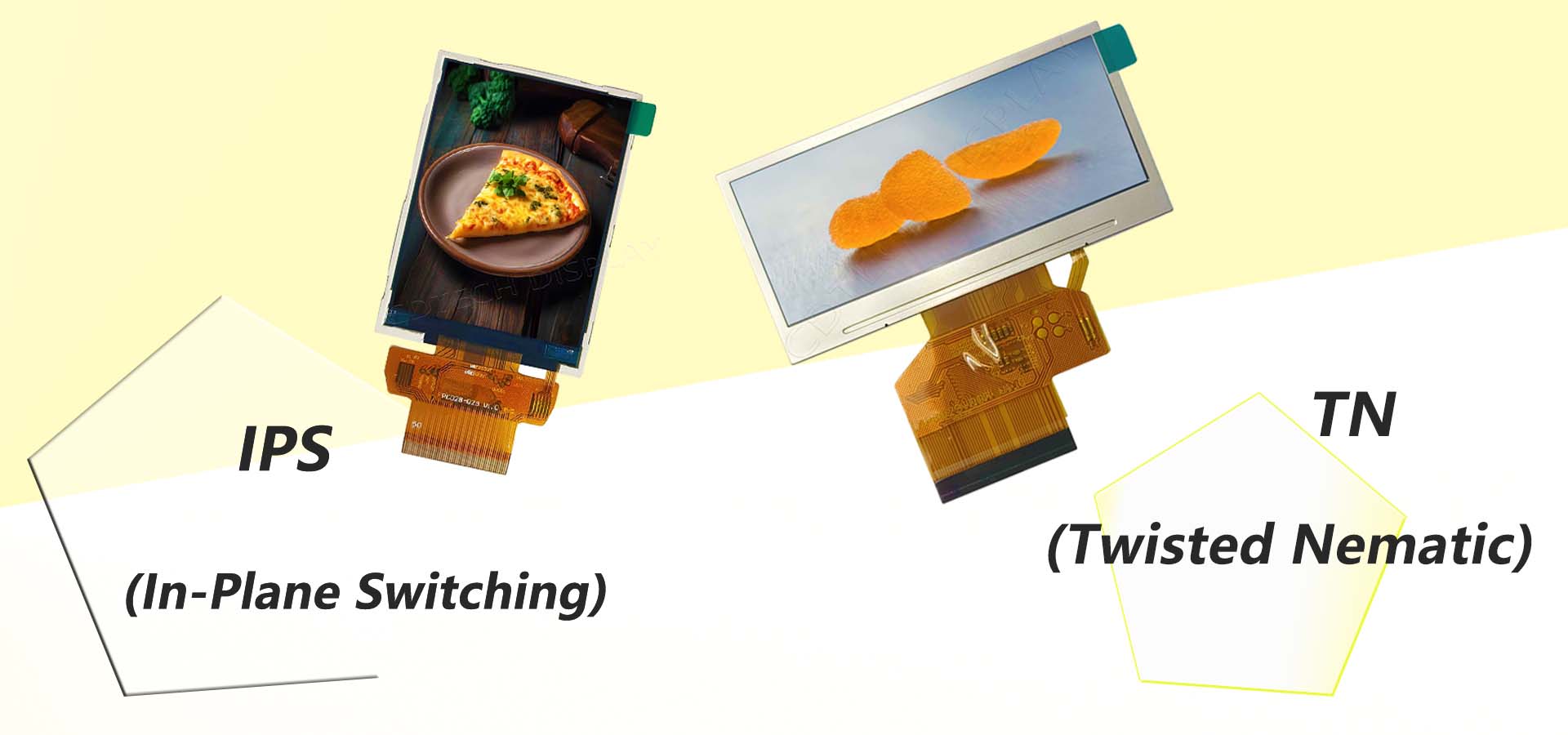
TN LCD vs IPS LCD: How to Choose the Right Display for You
-
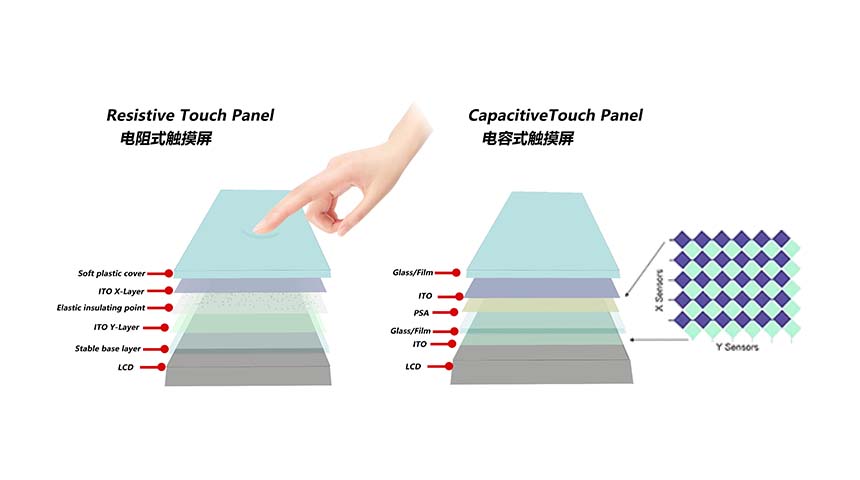
Capacitive Touch Panel or Resistive: Which Suits Your Needs?
-
Why Choose an IPS LCD Panel for Your Next Screen Purchase?
-
CDTECH to Showcase Cutting-Edge Display Solutions at SID 2025
-
Comparing Different Types of Displays in Cars: A Detailed Overview
-
White Spots on LCD Screen: Causes, Fixes & Industrial Solutions (2026 Guide)