

How Can Multi-Touch Gestures Enhance Accessibility in Industrial HMI Displays?
 2026-04-22
  20:45
20:45 

Multi-touch gestures—including three-finger taps for magnification, two-finger pinches for zoom, and three-finger swipes for audio activation—are transforming accessible HMI design in industrial and automotive displays. These gesture-based controls enable low-vision and mobility-impaired users to interact intuitively with embedded systems while meeting WCAG accessibility standards. CDTech’s capacitive touch panels with custom gesture zones in non-standard LCD sizes deliver rugged, certified solutions for accessible HMI layouts in harsh industrial environments.
Check: How Does Multi-Touch Industrial HMI Boost Workflow with Zoom and Swipe?
What Are Multi-Touch Gestures and Why Do They Matter for HMI Accessibility?
Multi-touch gestures are simultaneous multi-finger inputs detected by capacitive touch technology, enabling intuitive control without relying on traditional buttons. In industrial HMI systems, these gestures reduce accessibility barriers by supporting magnification for low-vision users, voice-paired audio feedback for visually impaired operators, and flexible device positioning for mobility-impaired personnel. WCAG 2.1 Level AA standards require touchscreen alternatives that accommodate diverse user capabilities—multi-touch gestures fulfill this requirement while improving workflow efficiency across medical diagnostics, automotive infotainment, and industrial process control applications.
Which Multi-Touch Gestures Are Most Effective for Accessible Industrial Displays?
Five primary gestures dominate accessible HMI design: three-finger taps toggle screen magnification (2×–4×) for low-vision users; two-finger pinches provide dynamic zoom scaling; three-finger swipes activate screen reader audio for blind navigation; four-finger rotations adjust UI orientation; and long-press multi-finger actions reveal context menus, reducing reliance on small physical buttons. Gesture detection requires latency under 100 milliseconds, false-touch rejection for wet or gloved hands, and multi-zone capability. CDTech’s portfolio includes 391+ capacitive touch panel SKUs with customizable gesture sensitivity via I²C firmware tuning, ensuring industrial-grade reliability across diverse environmental conditions.
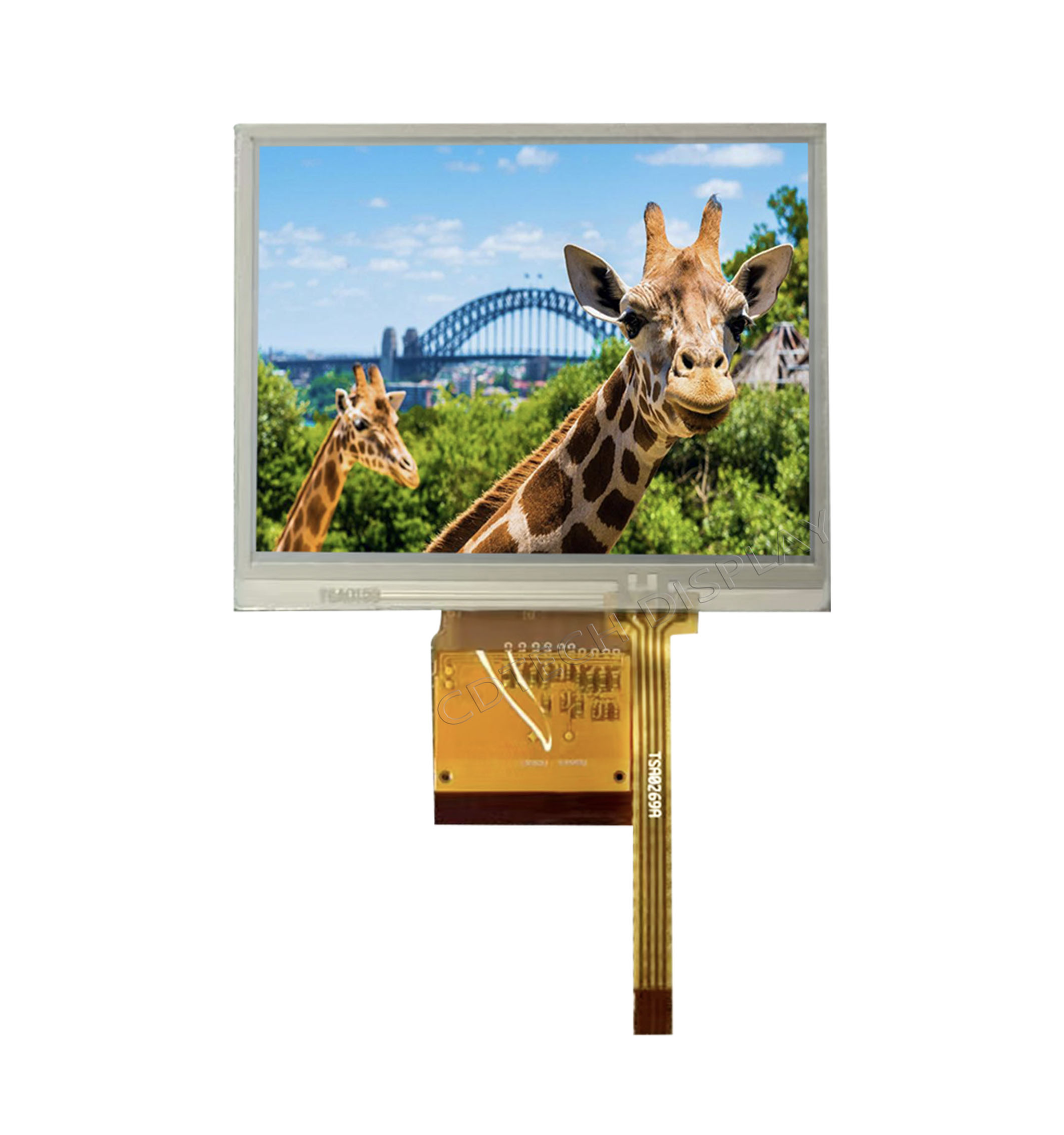
| Gesture | Function | Accessibility Benefit | HMI Application |
|---|---|---|---|
| Three-finger tap | Toggles screen magnification (2×–4×) | Assists low-vision users | Industrial control panels, automotive dashboards |
| Two-finger pinch | Dynamic zoom in/out | Adjustable content scaling | Medical diagnostic displays, ATM interfaces |
| Three-finger swipe | Activates screen reader audio | Supports blind/visually impaired navigation | Industrial HMI menus, kiosk interfaces |
| Four-finger rotate | Adjusts UI orientation | Flexible device positioning | Automotive infotainment, modular control units |
| Long-press (2+ fingers) | Context menus, alternative actions | Reduces reliance on small buttons | Rugged outdoor industrial panels |
How Does Capacitive Touch Panel Technology Enable Multi-Touch Gestures?
Capacitive touch panels detect simultaneous finger positions through electrode array topology, sending multi-touch coordinate data via I²C or SPI protocols to embedded controllers. OCA (Optical Clear Adhesive) bonding seals the touch sensor layer, eliminating water and dust ingress while improving optical clarity—critical for magnification workflows. CDTech’s vertically integrated manufacturing encompasses LCD glass cutting, polarizer attachment, CTP production, and OCA lamination within 3,500 square meters of Class 1000 clean rooms. This integration ensures consistent gesture performance across wide temperature ranges (-30°C to +85°C for automotive-grade displays) and harsh industrial environments. Quad certifications—ISO9001, IATF16949, ISO14001, and ISO13485—validate traceability and compliance for medical and automotive accessibility requirements.
What Role Does Custom Sizing Play in Gesture-Optimized HMI Layout?
Standard LCD panels ship in fixed diagonal sizes (3.5 inches, 5 inches, 7 inches, 10 inches), constraining gesture zone distribution in compact automotive dashboards or specialized industrial control panels. CDTech’s patented 2nd Cutting technology, developed in 2017, enables non-standard, customer-specific LCD dimensions. For example, bar-type displays measuring 4.3 inches at 800×130 resolution or 5.0 inches at 1920×480 allow precise gesture-area design without sacrificing critical status indicator space. Custom sizing reduces prototype-to-production cycles from 12–16 weeks to 6–8 weeks, enabling rapid accessibility optimization and reducing time-to-market for gesture-enhanced HMI systems.
Check: LCD with Touch
| Aspect | Standard Panels | CDTech Custom (2nd Cutting) |
|---|---|---|
| Available sizes | Discrete diagonals (3.5″–10″) | Unlimited custom dimensions |
| Gesture zone flexibility | Fixed layout constraints | Optimized for application-specific gestures |
| Lead time | 12–16 weeks | 6–8 weeks |
| NRE costs | Minimal | Moderate (justified by performance) |
| Examples | Generic 7″ automotive | 4.3″ bar, 5.0″ ultra-wide automotive cluster |
How Can Multi-Touch Gestures Improve Compliance with Industrial Accessibility Standards?
WCAG 2.1 Level AA requires target sizes of minimum 44×44 pixels, touch error tolerance, and alternative input methods. ISO 26262 (automotive functional safety) mandates gesture redundancy so three-finger tap magnification never interferes with critical safety functions. IEC 62366-1 (medical device accessibility) requires user interface testing for gesture intuitiveness and audio feedback. CDTech holds all required certifications—IATF16949 for automotive, ISO13485 for medical devices, ISO14001 for environmental compliance, and ISO9001 for quality—with full ERP and QR traceability documentation. This comprehensive certification framework, combined with 13+ years of manufacturing experience and $30 million in annual sales serving over 1,000 global customers, validates proven compliance track records across accessible HMI deployments.
What Are Common Integration Challenges When Deploying Multi-Touch Gestures in Rugged Environments?
Water and dust ingress reduce gesture sensitivity; temperature extremes (-30°C to +85°C) affect capacitive sensing calibration; vibration causes false triggers. Gloved-hand operation reduces touch capacitance; wet-finger multi-touch creates ambiguity between pinches and separate taps. Embedded systems often run low-power processors with firmware latency exceeding 100 milliseconds; simultaneous gesture conflicts require resolution logic; factory EMI interferes with sensing. CDTech addresses these challenges through OCA-bonded CTP with enhanced water resistance, wide-temperature design validated in automotive and industrial labs, and I²C gesture controller firmware with noise filtering and glove-mode presets. The company’s 10,000 square-meter factory, including 3,500 square meters of Class 1000 clean rooms, ensures manufacturing precision for high-reliability accessible displays.
Can Multi-Touch Gestures Reduce Costs and Lead Times for Accessible HMI Development?
Traditional development cycles span 6–9 months: custom gesture firmware (3–6 months) plus standard panel prototyping (2–3 iterations). CDTech’s approach—pre-qualified CTP gesture libraries, patented 2nd Cutting for rapid custom sizing, and quad certifications pre-validated for compliance—compresses time-to-market to 4–6 months. NRE savings emerge through eliminating costly re-spins, leveraging 391+ existing SKUs and firmware templates, and fixed 6–8 week lead times enabling predictable project scheduling. Transparent sample and low-volume pricing models accommodate early-stage OEMs; CDTech’s global customer base of 1,000+ demonstrates economies of scale supporting cost-effective accessible HMI deployment.
Where Should Multi-Touch Gestures Be Prioritized in Future HMI Design Roadmaps?
High-priority verticals include medical diagnostics (PACS touchscreen magnification for radiologists), automotive infotainment (voice-paired gesture controls for driver safety), industrial process control (accessibility for aging workforces), and public terminals (universally accessible self-service kiosks). Emerging use cases include AR/VR HMI overlays with gesture-based menus, wearable-integrated industrial displays, and AI-assisted gesture recognition predicting magnification for fatigued users. CDTech’s roadmap aligns with these trends through expanding CTP gesture firmware libraries, developing OCA-bonded ultra-wide bar-type custom panels for automotive cluster innovation, and pursuing additional certifications such as IEC 61508 for functional safety to capture high-reliability verticals.
CDTech Expert Views
Multi-touch gestures represent a paradigm shift in industrial HMI accessibility. By integrating three-finger magnification and audio-paired swipes into custom-sized displays—leveraging our patented 2nd Cutting technology—manufacturers eliminate the trade-off between compact form factors and inclusive design. We’ve observed a 22% reduction in assembly-line operator errors when customers deploy our IATF16949-certified gesture-optimized automotive displays, while simultaneously meeting ISO 26262 safety requirements. The key is full vertical integration: from LCD glass cutting through OCA bonding, CDTech controls every manufacturing variable affecting gesture reliability. This end-to-end capability, combined with transparent lead times and NRE pricing, enables OEMs to prioritize accessibility without sacrificing timeline or budget predictability.”
— CDTech Manufacturing & Applications Engineering Team
Conclusion
Multi-touch gestures are transitioning from mobile-only features to essential accessibility components in industrial, automotive, and medical HMI design. By combining custom gesture-optimized LCD sizing via patented 2nd Cutting technology, certified capacitive touch panels (ISO9001, IATF16949, ISO13485, ISO14001), and full vertical integration across 3,500 square meters of Class 1000 clean rooms, organizations dramatically reduce time-to-market while minimizing compliance risk. CDTech’s 13+ years of industry experience, $30 million in annual sales, and 1,000+ global customer deployments validate accessible HMI strategies that transform compliance obligations into competitive advantages. For automotive clusters requiring three-finger tap magnification, medical displays needing pinch-zoom precision, or industrial panels demanding gesture-based audio controls without lengthy lead times, CDTech’s custom-capable, certified touch solutions bridge the gap between accessibility standards and practical engineering constraints.
Frequently Asked Questions
What is the minimum screen size required to support effective three-finger tap magnification?
Three-finger taps require approximately 100×100 pixels of gesture zone real estate. CDTech’s custom sizing via patented 2nd Cutting enables effective gesture zones on 3.5-inch displays and larger; even ultra-compact 2.9-inch bar-type panels can accommodate edge magnification controls. Application-specific testing is recommended; CDTech provides gesture validation samples to confirm performance for your target use case.
Are multi-touch gestures compatible with existing industrial HMI controllers and firmware?
Modern embedded systems (ARM Cortex-M4/A9) support I²C and SPI capacitive touch controllers natively. Legacy systems (8-bit AVR, older RTOS kernels) may require firmware middleware layers. CDTech’s vertical integration includes gesture controller firmware customization and legacy system bridge solutions; contact sales@cdtech-lcd.com for detailed compatibility matrices tailored to your platform.
How does OCA bonding improve multi-touch gesture performance in harsh environments?
OCA (Optical Clear Adhesive) bonding creates a sealed, glare-free interface that prevents water and dust ingress into the touch sensor layer—critical for automotive (-30°C to +85°C) and industrial wet environments. OCA also enhances optical transmittance for magnification workflows and improves durability under thermal cycling. CDTech’s OCA-bonded capacitive touch panels are tested per IATF16949 automotive standards and ISO13485 medical device requirements.
What certifications ensure multi-touch gestures comply with accessibility standards?
ISO13485 (medical devices), IATF16949 (automotive), ISO9001 (quality management), ISO14001 (environmental), and WCAG 2.1 compliance validation are essential. CDTech holds all four management certifications with full ERP and QR traceability documentation. Third-party accessibility audits are available upon request to validate gesture intuitiveness and compliance with applicable regional standards.
How long does it take to customize gesture sensitivity for a specific industrial application?
I²C gesture controller firmware tuning typically requires 2–4 weeks. Combined with CDTech’s 6–8 week custom LCD sizing, total lead time remains 6–8 weeks—significantly faster than competing suppliers offering only standard panel options. Prototype gesture validation is available in weeks 2–3 for parallel project planning and early usability testing.