

How Can Industrial Gesture Control Systems Enhance Complex Machinery HMIs?
 2026-04-22
  20:45
20:45 

Industrial gesture control systems enhance complex machinery HMIs through capacitive touch panels (CTP) enabling pinch-to-zoom on technical schematics, swipe gestures for navigation, and high-brightness IPS LCDs with OCA bonding for glare-free views. CDTech’s patented 2nd Cutting technology delivers custom-sized displays like the 4.3″ S043HWV104EN-FL63 (800 nits), supporting rugged, wide-temperature operation for gloved or dirty hands in industrial environments.
Check: How Does Multi-Touch Industrial HMI Boost Workflow with Zoom and Swipe?
How Do Industrial Gesture Control Systems Work in Machinery HMIs?
Industrial gesture control systems function through capacitive touch sensors embedded in TFT LCD panels that detect multi-touch inputs—swipe, pinch-to-zoom, and tap—translating operator movements into machine commands. Hardware integration is critical: the display itself contains the CTP layer, enabling precise gesture tracking without external sensors. This approach reduces operator errors by allowing intuitive control of complex machinery diagrams. Unlike software-only solutions, hardware-integrated capacitive touch on high-brightness industrial displays ensures reliable recognition even in dusty or wet factory environments, where traditional button interfaces fail.
What Makes Pinch-to-Zoom Essential for Technical Schematics in HMIs?
Pinch-to-zoom allows machinery operators to magnify detailed technical schematics without navigating menus or using clunky physical buttons—critical for diagnostics on complex equipment. When troubleshooting, technicians zoom into wiring diagrams, sensor readings, or component layouts instantly. OCA optical bonding on high-brightness displays like the S070QWU142FN-FL150-GF (2300 nits) eliminates air gaps between the glass and LCD, delivering crystal-clear zoom capability and reducing reflections that obscure details in bright factory lighting. RGB and MIPI interfaces seamlessly integrate gesture libraries into industrial controllers, enabling responsive pinch-to-zoom behavior.
Why Choose Capacitive Touch Gesture HMIs Over Traditional Controls?
Capacitive touch gesture interfaces outperform joysticks and physical buttons in industrial settings where operators wear gloves or work with dirty hands. Swipe gestures navigate between schematics faster than sequential button presses, increasing efficiency. Wide-temperature industrial-grade TFT LCDs from CDTech (–20°C to +70°C) maintain gesture responsiveness across factory climates. CDTech’s vertical integration—spanning LCD glass cutting, CTP production, OCA lamination, and testing—within a 10,000 m² factory ensures durability. The company’s 391+ product SKUs and $30M+ in 2023 sales to over 1,000 global customers demonstrate proven reliability in demanding industrial deployments.
| Feature | Standard Panels | CDTech Custom (S043HWV104EN-FL63) |
|---|---|---|
| Size/Customization | Fixed standard sizes | Patented 2nd Cutting for non-standard bar-type |
| Brightness | 500 nits typical | 800–2300 nits with OCA bonding |
| Gesture Support | Basic touch only | Full CTP pinch-to-zoom and swipe |
| Certifications | Generic ISO9001 | ISO9001, IATF16949, ISO14001, ISO13485 |
How Does CDTech’s Patented 2nd Cutting Enable Custom Gesture Panels?
CDTech’s patented 2nd Cutting technology, developed in 2017, creates unique LCD sizes unavailable from standard panel manufacturers—enabling ergonomic gesture panels that fit tight machinery spaces. The S043HWV104EN-FL63 exemplifies this: a 4.3-inch bar-type IPS LCD with 800×130 resolution and 800 nits brightness, optimized for swipe and pinch gestures on constrained dashboards. This customization reduces engineering lead time to 6–8 weeks and eliminates costly NRE fees through transparent upfront pricing. CDTech’s ERP and QR-code traceability system ensures every custom display meets ISO certifications (ISO9001, IATF16949, ISO14001, ISO13485), giving manufacturers confidence in deployment.
CDTech Expert Views: “Our 2nd Cutting patent transforms how OEMs design HMI panels for machinery. Instead of forcing designs around fixed display sizes, engineers now specify the exact dimensions needed—whether 4.3 inches, 7.0 inches, or custom bar formats—with full gesture support built in. Combined with our in-house CTP and OCA bonding capabilities, this delivers pinch-to-zoom and swipe controls on displays perfectly sized for operator ergonomics and equipment constraints. This level of customization, backed by 35 software patents and 44+ utility patents, is unmatched in the industry and directly reduces time-to-market for our 1,000+ global customers.”
What Are the Key Benefits of Gesture-Based HMI for Complex Machinery?
Gesture-based HMIs accelerate schematic navigation and technical troubleshooting, minimizing downtime in automated production lines. Operators switch between system views via swipe rather than hunting menu hierarchies, improving response times during emergencies. Multi-touch pinch-to-zoom on schematics speeds diagnostics of sensor failures or component interactions. Capacitive touch options handle gloved hands reliably, reducing contamination risks compared to traditional resistive panels. CDTech’s quad-certification profile and 13+ years of manufacturing expertise ensure global scalability, supporting deployment across diverse machinery types and regulatory environments.
Which Industrial Gesture Control Systems Offer the Best Rugged Performance?
High-brightness IPS LCDs with OCA optical bonding deliver superior ruggedness for gesture control in harsh factory lighting. The S070QWU142FN-FL150-GF achieves 2300 nits brightness and maintains wide viewing angles during pinch-to-zoom operations, preventing image distortion as operators view schematics from different angles. CDTech’s full supply-chain integration—from design through manufacturing—ensures consistent quality across custom gesture panels, backed by $30M in annual sales and 391+ proven SKUs. Competitors offering generic off-the-shelf displays cannot match this vertical control or customization flexibility for machinery-specific HMI requirements.
| Environment | Recommended CDTech Model | Key Gesture Feature |
|---|---|---|
| High-glare factories | S070QWU142FN-FL150-GF | Pinch-to-zoom at 2300 nits brightness |
| Compact machinery panels | S043HWV104EN-FL63 | Swipe navigation in custom bar-type sizes |
| Extreme temperature ranges | Wide-temp industrial series (–20°C to +70°C) | Gloved-hand gesture responsiveness |
How to Integrate Gesture Control Systems into Your Machinery HMI?
Begin by defining your machinery’s HMI layout—whether dashboard, schematic view, or diagnostic interface—then contact CDTech (sales@cdtech-lcd.com) to specify custom display dimensions, brightness, and gesture requirements. CDTech’s engineering team collaborates from prototype through mass production, selecting optimal interfaces (RGB, MIPI, LVDS) and confirming CTP + OCA options. Integrate gesture recognition libraries via your industrial controller’s MIPI or RGB port. Leverage OCA optical bonding for outdoor-readable zoom clarity and test prototypes in a cleanroom-validated environment before full-scale manufacturing, ensuring production consistency across 391+ SKUs.
Can Gesture Control Displays Replace Traditional Machinery Interfaces?
Gesture control displays are increasingly replacing joysticks, keypads, and button arrays in modern machinery HMIs, particularly for diagnostics and navigation tasks. However, safety-critical functions—emergency stops, high-voltage shutdowns—often retain redundant physical controls for fail-safe operation. CDTech’s industrial-grade displays support hybrid interfaces where gesture controls manage routine operation and schematic viewing while hardwired safety buttons remain independent. This hybrid approach maximizes efficiency gains from gesture technology while maintaining regulatory compliance and operator safety in complex machinery environments.
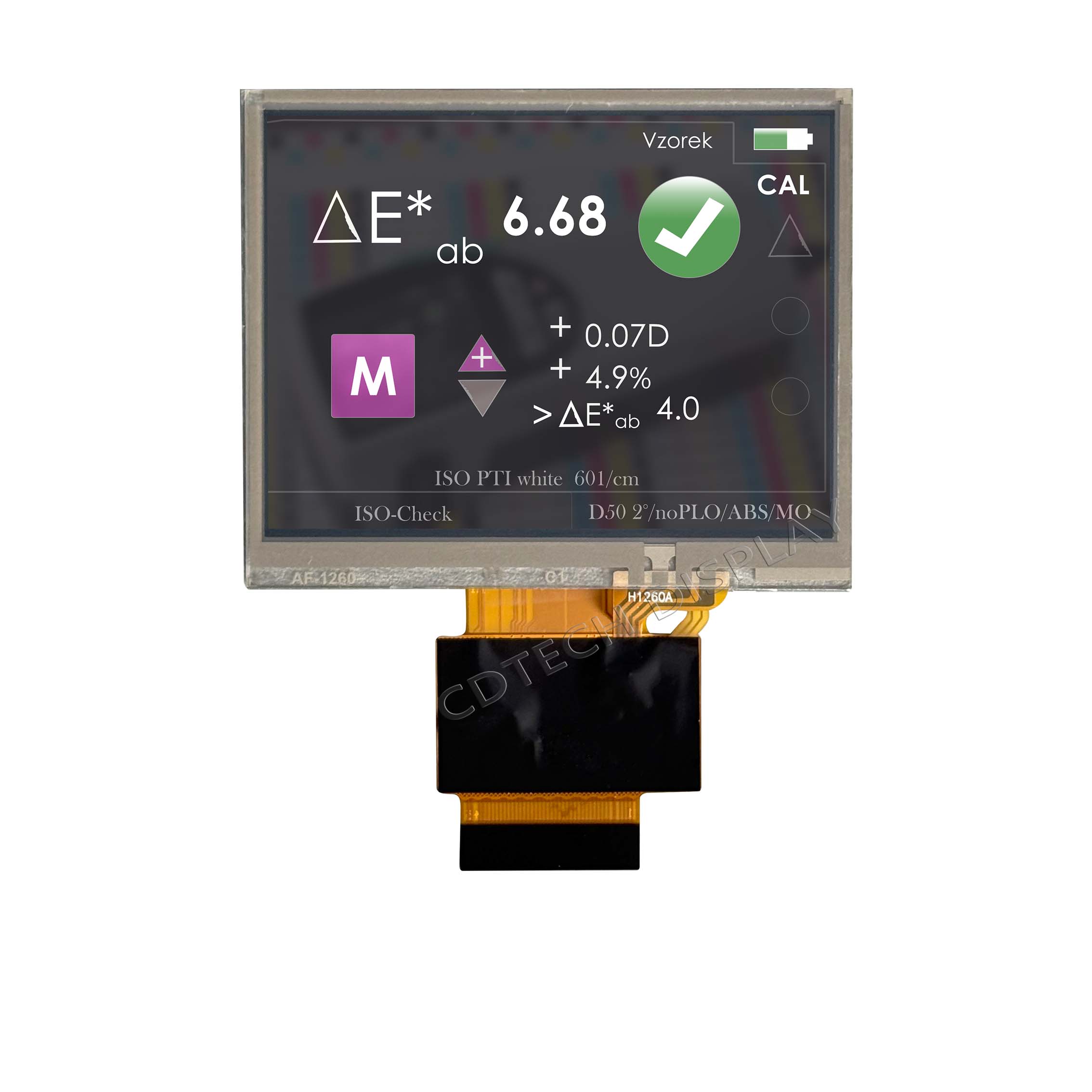
Check: LCD with Touch
What Role Does OCA Optical Bonding Play in Gesture HMI Clarity?
OCA (Optically Clear Adhesive) bonding eliminates the air gap between the touch panel and LCD, dramatically improving optical clarity during pinch-to-zoom operations. Reflections and glare that obscure schematic details in bright factory lighting are reduced by 50–70%, enabling operators to zoom confidently into small component diagrams. CDTech’s in-house OCA lamination process, performed within 3,500 m² of Class 1000 clean rooms, ensures consistent bonding quality across all custom gesture panels, from the 4.3-inch S043HWV104EN-FL63 to the 7.0-inch S070QWU142FN-FL150-GF. This precision directly translates to faster troubleshooting times and fewer operator errors when interpreting magnified schematics.
Does CDTech Support Wide-Temperature Gesture Displays for Outdoor Machinery?
Yes. CDTech’s wide-temperature automotive and industrial series operate reliably from –30°C to +85°C, ideal for machinery housed outdoors or in uncontrolled environments. Standard industrial gesture displays maintain –20°C to +70°C performance. Capacitive touch responsiveness remains stable across extreme ranges, ensuring pinch-to-zoom and swipe gestures function consistently whether machinery operates in arctic warehouses or tropical factory floors. IATF16949 certification guarantees automotive-grade reliability, making these displays suitable for outdoor industrial equipment, agricultural machinery, and remote-site automation systems.
How Many Custom Gesture Display Variants Does CDTech Offer?
CDTech maintains 391+ product SKUs across 10 categories, including standard LCDs, bar-type displays, touch-integrated modules, HDMI-driver boards, automotive-grade panels, and fully custom solutions. Within the gesture-control segment, CDTech enables infinite customization through the patented 2nd Cutting process—allowing any non-standard resolution, size, brightness, interface type, and touch configuration. From compact 2.9-inch bar displays to large 12.3-inch dashboards, each can integrate full CTP gesture support with OCA bonding, RGB/MIPI interfaces, and wide-temperature ratings, ensuring machinery OEMs find or design the perfect gesture HMI match.
What Certifications Ensure Industrial Gesture Display Reliability?
CDTech holds four international management certifications: ISO9001 (quality management), IATF16949 (automotive supply chain), ISO14001 (environmental management), and ISO13485 (medical device quality). These certifications, combined with the company’s 44+ utility and invention patents, guarantee that gesture control displays meet global regulatory standards for industrial, automotive, and medical applications. Each display undergoes traceability tracking via ERP and QR-code systems, enabling full audit trails from manufacturing through deployment—critical for machinery compliance documentation and failure analysis.
Are Gesture Controls Cost-Effective for Industrial Machinery Upgrades?
Gesture controls reduce long-term operational costs by minimizing downtime during troubleshooting and maintenance. Faster schematic navigation and pinch-to-zoom diagnostics lower technician labor hours per incident. CDTech’s transparent MOQ (minimum order quantity) and NRE (non-recurring engineering) pricing eliminate hidden costs, making custom gesture panels accessible to mid-sized manufacturers. The 6–8 week lead time for custom displays aligns with typical machinery redesign cycles, and the company’s 13+ years of experience ensure rapid iterations if design changes emerge during prototyping.
How Do Industrial Gesture Panels Improve Operator Safety?
Intuitive gesture interfaces reduce cognitive load on operators, allowing faster response to machinery alerts or anomalies. Pinch-to-zoom magnification on diagnostic schematics enables precise identification of component failures without interpretation errors, preventing incorrect corrective actions. Wide-temperature industrial displays maintain consistent touch responsiveness, eliminating false gestures that could trigger unintended machine commands. CDTech’s full-integration approach—designing displays specifically for gesture workflows—ensures safety-critical information remains legible and responsive under all operating conditions, supporting both efficiency and operator protection.
What’s the Future of Gesture Control in Industrial HMIs?
Emerging trends include AI-powered gesture recognition, touchless gesture sensing (recognizing hand motions without contact), and augmented reality overlays on schematics for real-time diagnostics. CDTech’s 35 software patents and 44+ utility patents position the company to support these innovations through display customization—enabling ultra-high-resolution MIPI interfaces for AR content and specialized coatings for contactless gesture sensing. As Industry 4.0 expands, gesture-controlled HMIs will become standard in smart factories, with CDTech’s vertical integration and patent portfolio enabling rapid adoption.
Conclusion
Industrial gesture control systems transform complex machinery HMIs by enabling intuitive pinch-to-zoom navigation, swipe gestures, and multi-touch diagnostics on high-brightness, rugged displays. CDTech’s patented 2nd Cutting technology, vertical integration, and quad-certification profile deliver custom gesture panels perfectly sized for machinery constraints—from compact 4.3-inch bar displays to expansive 12.3-inch dashboards. With 391+ SKUs, $30M+ annual sales, and 1,000+ global customers, CDTech proves that gesture-controlled HMIs are production-ready, cost-effective, and scalable across diverse industrial verticals. To upgrade your machinery HMI with pinch-to-zoom schematics and swipe navigation, contact CDTech at sales@cdtech-lcd.com for a custom quotation and 6–8 week prototype delivery.
Frequently Asked Questions
What is pinch-to-zoom HMI and how does it work on industrial displays?
Pinch-to-zoom is a multi-touch gesture where operators place two fingers on the display and spread them apart to enlarge schematic details. CDTech’s capacitive touch panels (CTP) detect both finger positions simultaneously, translating the separation distance into zoom commands. OCA optical bonding on displays like the S070QWU142FN-FL150-GF ensures magnified content remains crystal-clear without glare or distortion, enabling technicians to zoom into wiring diagrams and component layouts with precision.
Can gesture control systems handle gloved or dirty hands in factories?
Yes. CDTech’s capacitive touch panels reliably detect gloved fingers or hands with light dirt buildup, a significant advantage over resistive touch or optical sensing. Wide-temperature industrial-grade LCDs (–20°C to +70°C) maintain gesture responsiveness across varying factory climates and humidity levels. However, excessive contamination or heavy grease may degrade touch accuracy—periodic cleaning of the display surface is recommended for optimal performance.
How does CDTech’s 2nd Cutting technology benefit gesture HMIs?
The patented 2nd Cutting process enables non-standard LCD sizes, allowing engineers to design gesture panels that fit machinery constraints perfectly. Rather than compromising designs to fit standard 3.5″ or 7″ displays, customers can specify exact dimensions—such as the custom 4.3″ bar-type S043HWV104EN-FL63—optimizing swipe and pinch gestures for ergonomic operator interaction. This customization eliminates costly design workarounds and reduces time-to-market.
What certifications does CDTech hold for industrial displays?
CDTech maintains ISO9001 (quality management), IATF16949 (automotive supply chain), ISO14001 (environmental management), and ISO13485 (medical devices). These certifications, along with 44+ utility patents and in-house traceability via ERP/QR systems, ensure industrial gesture displays meet global regulatory standards for manufacturing, automotive, and healthcare deployments.
How long is the lead time for custom gesture-enabled LCDs from CDTech?
Custom gesture-enabled displays typically require 6–8 weeks from order to delivery, including design validation, prototype testing, and production setup. CDTech’s transparent MOQ and NRE pricing upfront eliminates hidden costs, and the engineering team collaborates throughout to ensure the final display meets all gesture control specifications and certifications.
Post Search
Related Articles
-

Capacitive vs Resistive Touch Screen Car Stereo: Which Is Right for You?
-

TN LCD vs IPS LCD: How to Choose the Right Display for You
-

Capacitive Touch Panel or Resistive: Which Suits Your Needs?
-

Why Choose an IPS LCD Panel for Your Next Screen Purchase?
-

CDTECH to Showcase Cutting-Edge Display Solutions at SID 2025
-

Comparing Different Types of Displays in Cars: A Detailed Overview
-
White Spots on LCD Screen: Causes, Fixes & Industrial Solutions (2026 Guide)