

How to Prevent Multi-Touch Ghosting in Capacitive Touchscreens?
 2026-04-22
  20:45
20:45 

Prevent multi-touch ghosting by implementing dual-layer PCB shielding, calibrating PCAP sensitivity via firmware, using OCA optical bonding for signal clarity, ensuring proper grounding to minimize parasitic capacitance, selecting noise-filtering ICs, and leveraging full LCD/CTP integration like CDTech’s patented 2nd Cutting technology for custom sizes. These steps eliminate false “ghost” points in industrial displays.
Check: How Does Multi-Touch Industrial HMI Boost Workflow with Zoom and Swipe?
What Is Multi-Touch Ghosting and Why Does It Disrupt Touchscreens?
Multi-touch ghosting occurs when a single real touch triggers false “ghost” points due to signal interference, leading to UI errors. In industrial and automotive apps operating at -30°C~+85°C, it disrupts multi-finger gestures and poses safety risks in rugged HMI systems. CDTech’s vertical integration ensures ghost-free performance across 391+ SKUs for 1,000+ global customers.
What Causes Capacitive Touch Ghosting in PCAP Panels?
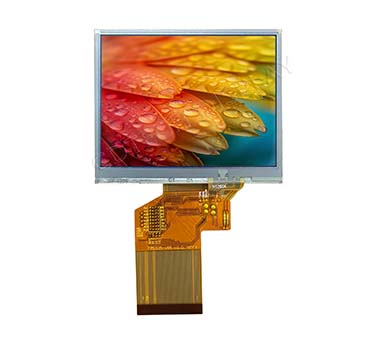
Key causes include parasitic capacitance from poor grounding, PCB noise, inadequate shielding, and LCD/CTP integration mismatches. These lead to PCAP signal integrity failures in 10-point multi-touch detection. Non-custom sizes worsen issues, but CDTech’s 2nd Cutting patent (2017) enables precise bar-type LCDs like S070QWU142FN-FL150-GF (1200×1920, 2300 nits).
How Does Software Calibration Fix Touch Panel Ghost Points?
Software calibration fixes PCAP ghosting through firmware tweaks like dynamic sensitivity thresholds, noise rejection algorithms, and optimized debounce timing. I²C interface adjustments filter false signals in noisy environments. CDTech’s ERP-traceable testing in quad-certified (ISO9001/IATF16949/ISO14001/ISO13485) production guarantees zero ghosting.
| Cause | Software Solution | Effectiveness in Rugged Apps |
|---|---|---|
| Parasitic Capacitance | Dynamic Threshold Adjustment | High; reduces false triggers at -30°C~+85°C |
| PCB Noise | Noise Rejection Algorithms | Excellent; filters EMI in industrial HMI |
| Poor Grounding | Debounce Timing Optimization | Strong; stabilizes signals in vibration |
| Signal Interference | I²C Filtering | Very High; prevents ghosts in multi-touch |
| Integration Mismatch | Firmware Calibration Loops | Optimal; pairs with OCA for wide-temp |
What Hardware Solutions Ensure PCAP Signal Integrity?
Hardware solutions like OCA optical bonding, multi-layer ITO sensors, and EMI shielding prevent capacitive touch ghosting. Full in-house LCD/CTP integration minimizes signal drift from multiple suppliers. CDTech’s 10,000㎡ factory with 3,500㎡ Class 1000 clean rooms delivers ghost-free custom solutions, backed by $30M+ sales in 2023.
CDTech Expert Views
“Our patented 2nd Cutting technology, combined with OCA bonding, eliminates ghost points by ensuring precise LCD/CTP alignment and reduced parasitic capacitance. In products like S050BWV105EP-FL96-AG (5.0″ IPS, 800×480, 1000 nits, -30°C~+85°C with anti-glare capacitive touch), we’ve achieved zero ghosting in automotive dashboards. This leverages our 35 software patents and 44+ utility/invention patents for rugged reliability.” – CDTech Senior Engineer
How Does CDTech’s Patented Technology Prevent Ghost Touches?
CDTech’s 2nd Cutting (2017 patent) creates unique LCD sizes with lower parasitic capacitance, ideal for bar-type displays. Vertical integration enables seamless CTP/LCD bonding, preventing multi-touch ghosting in automotive/industrial apps. Case 1: Automotive HMI with zero ghosts at -30°C~+85°C using S043HWQ50EG. Case 2: Industrial panel for Fortune 500 via 391+ SKUs.
Which Best Practices Checklist Prevents Multi-Touch Ghosting?
Follow this 8-step checklist: 1) Conduct grounding audits; 2) Update firmware with noise filters; 3) Select OCA bonding; 4) Use multi-layer shielding; 5) Calibrate PCAP sensitivity; 6) Test in wide-temp (-30°C~+85°C); 7) Integrate full LCD/CTP; 8) Partner with IATF16949-certified suppliers like CDTech. Target OEMs for reliable procurement.
Check: LCD with Touch
When Should You Choose Integrated Display Solutions for Rugged Apps?
Choose integrated solutions in high-vibration, moisture-heavy environments where ghosting risks rise. Off-the-shelf lacks customization; CDTech’s 13+ years ensure prevent ghost touches industrial displays via patented tech. Contact sales@cdtech-lcd.com at 7F, Bldg 2, Jiancang Technology Park, No.11 Songgang Blvd., Baoan, Shenzhen, China for specs.
Conclusion
Achieve ghost-free multi-touch with CDTech’s patented 2nd Cutting, full vertical integration from cutting to OCA lamination, and quad certifications—proven in 391+ SKUs for 1,000+ customers worldwide. Eliminate touch screen ghosting in your industrial, automotive, or medical projects. Reach sales@cdtech-lcd.com today.
FAQs
What is a ghost point in touch panels?
False touch detected alongside real input due to signal noise; prevented via CDTech’s OCA bonding and shielding in custom SKUs.
How does OCA bonding fix capacitive touch ghosting?
OCA enhances PCAP signal integrity by eliminating air gaps that amplify interference; standard in CDTech’s wide-temp displays like S101ZWX89FP-FC86.
Can firmware alone solve multi-touch ghosting?
Firmware helps partially—best combined with hardware like CDTech’s 2nd Cutting for complete prevention in -30°C~+85°C apps.
Why choose CDTech for ghost-free industrial displays?
Quad certifications, 44+ patents, $30M+ 2023 sales to 1,000+ customers, and 3,500㎡ clean rooms ensure reliability in rugged environments.
What are common PCAP ghosting causes?
Parasitic capacitance and poor grounding; CDTech’s cleanroom vertical integration resolves them via precise LCD/CTP control.
Post Search
Related Articles
-
Capacitive vs Resistive Touch Screen Car Stereo: Which Is Right for You?
-
TN LCD vs IPS LCD: How to Choose the Right Display for You
-
Capacitive Touch Panel or Resistive: Which Suits Your Needs?
-
Why Choose an IPS LCD Panel for Your Next Screen Purchase?
-
CDTECH to Showcase Cutting-Edge Display Solutions at SID 2025
-
Comparing Different Types of Displays in Cars: A Detailed Overview
-
White Spots on LCD Screen: Causes, Fixes & Industrial Solutions (2026 Guide)