
How do automotive LCDs survive -40°C to +85°C without freezing or fading?
 2026-07-17
  08:55
08:55 

Automotive LCDs survive -40°C to +85°C by using wide temperature liquid crystal formulations, optimized cell gaps, and automotive‑grade driver and backlight designs. Standard LCDs thicken and slow down in extreme cold, and lose their clearing point in heat, while CDTech wide temperature displays maintain stable response, contrast, and image integrity across harsh automotive environments.
Wide Temperature Automotive Displays
What happens to ordinary liquid crystals at -40°C and +85°C, and why do standard automotive screens freeze or wash out?
Ordinary liquid crystals become highly viscous at low temperatures, slowing molecular rotation and pixel response, then approach or exceed their clearing point at high temperatures, where the ordered phase collapses and contrast disappears. This is why standard screens streak, ghost, or go milky in extreme automotive conditions.
In our lab runs, a consumer‑grade TFT LCD that works fine at 0–40°C becomes unusably slow below about -10°C: gray‑to‑gray transitions stretch into seconds, and ghost images stay on the cluster. At 70–80°C panel surface, we see contrast collapse as the LC approaches clearing point; blacks lift to gray and color saturation drops. CDTech treats these behaviors as baseline failure modes, and designs automotive panels specifically to avoid them by shifting the LC phase diagram.
How does low temperature make ordinary liquid crystals “sticky” and slow, causing automotive screen freezing and ghosting?
Low temperatures increase LC viscosity, which raises the time needed for molecules to reorient under an electric field and relax back. When the LC material becomes “sticky,” response times rise dramatically, leading to blurred motion, frozen frames, and persistent ghost images on instrument clusters and center displays.
On our -40°C chamber tests of non‑automotive LC mixtures, we observe response times balloon from 20–30 ms at room temperature to hundreds of milliseconds or more; some pixels barely move at all under normal driving voltages. The result in a vehicle is a speedometer that lags dangerously and UI animations that smear into unreadable blobs. CDTech’s automotive LC chemistries are formulated to maintain manageable viscosity at these temperatures, keeping critical information legible on cold starts.
Why does the clearing point matter at high temperature, and what happens when an LCD’s clearing point fails in an automotive cabin?
The clearing point is the temperature at which liquid crystals transition from the ordered nematic phase to isotropic liquid. When the clearing point fails—i.e., cabin temperature approaches or exceeds it—the LC loses its anisotropy, cannot modulate light properly, and the display turns washed‑out or uniformly bright.
We routinely bake consumer panels to +85°C in our ovens. Above roughly 60–70°C for standard mixtures, we begin to see contrast ratios fall sharply, and by approaching clearing point the panel can look like a backlight behind frosted glass: no black level, no differentiation. In car cabins parked in sun, local panel temperatures can reach these levels easily. CDTech wide temperature LCDs are built with LC mixtures whose clearing points sit well above expected extremes, and whose electro‑optical curves remain usable up to +85°C.
How do wide temperature LCD displays redesign liquid crystal chemistry to operate from -40°C to +85°C in automotive environments?
Wide temperature LCD displays use specially engineered LC mixtures with broader nematic ranges, lower viscosity at cold temperatures, and higher clearing points. Additives and mixture components are chosen to flatten the electro‑optical curve so contrast and response remain acceptable across -40°C to +85°C.
In our formulation work, we see automotive LC recipes that combine multiple compounds to shift both low‑end and high‑end limits: cold performance improved by lowering rotational barriers, and hot performance protected by boosting clearing point. CDTech’s engineering team tunes these blends with repeated chamber cycles, looking not only at whether pixels switch, but how consistent gamma, color, and viewing angles remain across the full automotive range. It’s the chemistry that sets the foundation for true wide temperature behavior.
Table: Typical operating ranges – standard vs. CDTech wide temperature LCD
How do cell gap design and LC alignment affect wide temperature performance in automotive screens?
Cell gap—the distance between glass substrates—and alignment layers determine how much LC must move and how electric fields interact with molecules. For wide temperature panels, gaps and pre‑tilt angles are optimized so LC motion remains efficient even when viscosity changes, keeping response and contrast stable.
In production, we see that a slightly thicker cell gap can improve static contrast but worsen low‑temperature response because molecules have more distance to cover. For automotive designs, CDTech narrows tolerances on cell thickness and alignment films to strike a balance: enough LC volume for strong dark states, but not so much that pixels become sluggish at -30°C. We also control alignment rubbing and anchoring strength; overly strong anchoring can lock molecules too tightly and cause uneven response in cold climates.
Which supporting components—drivers, polarizers, backlights—must be upgraded along with liquid crystals for true automotive wide temperature LCDs?
Drivers must be specified to operate and switch reliably across -40°C to +85°C, polarizers and optical films need temperature‑stable birefringence, and backlights require LEDs and drivers rated for automotive heat and cold. Without upgrading these components, wide temperature LC chemistry alone cannot deliver reliable performance.
In our automotive projects, CDTech rarely changes LC chemistry without simultaneously reviewing driver IC specs, flex PCB materials, and polarizer films. We’ve seen standard polarizers distort at high temperature, causing color shifts even when LC remains functional. LED backlights must handle thermal cycling and avoid color drift that confuses drivers at dawn or dusk. A full car‑grade solution considers each layer: LC, glass, films, electronics, mechanical design, and sealing.
How do automotive displays avoid condensation, mechanical stress, and freezing issues that can accompany extreme temperatures?
Automotive displays avoid these issues through controlled module sealing, mechanical designs that accommodate expansion and contraction, and sometimes localized heating strategies. Proper venting and desiccant management also reduce the risk of fogging or ice films on internal surfaces.
On real modules, we’ve seen cracked glass or delaminated films not because the LC failed, but because the mechanical frame locked the panel too rigidly through thermal cycles. CDTech designs bezels and mounts with expansion allowances and uses adhesives with appropriate glass transition temperatures. For some Nordic or high‑altitude applications, customers add low‑power heaters or direct warm airflow around clusters to shorten “cold start” response times. We integrate with these strategies to ensure the LC and optics work with, not against, environmental management.
Chart: Key engineering strategies for automotive LCD survival from -40°C to +85°C
-
Wide temperature LC mixture with extended nematic range
-
Optimized cell gap and alignment for cold and hot response
-
Automotive‑grade driver ICs and LED backlight systems
-
Temperature‑stable polarizers and optical films
-
Robust mechanical design for thermal cycling and condensation control
How does CDTech test and validate wide temperature LCDs beyond typical consumer standards?
CDTech tests wide temperature LCDs with extended thermal cycling (-40°C to +85°C), operational tests at temperature extremes, vibration and shock, and long‑duration baking and freezing while running actual automotive UI patterns. We look at response times, contrast, color, and failure modes, not just simple on/off operation.
In our chambers, we simulate scenarios like a vehicle parked in snow overnight then started and immediately driven, or a car left under direct summer sun with the cluster powered on. We measure gray‑to‑gray response, cluster readability, and touch performance on integrated CTP units. Panels that pass these tests are then subjected to multi‑hour cycles at both extremes. CDTech’s wide temperature automotive displays only ship after they demonstrate stable, usable performance through hundreds of such cycles.
CDTech Expert Views
“When we say a display can survive -40°C to +85°C, we mean more than ‘it turns on.’ In our automotive programs at CDTech, we’ve run countless panels through thermal chambers and seen what happens when ordinary LC mixtures hit their limits—the image freezes in winter and melts into gray in summer. Our wide temperature LCDs use carefully tuned liquid crystal chemistry, cell design, and automotive‑grade components so that clusters stay readable, animations stay smooth, and touch responses stay reliable, even when the cabin environment is far beyond what a living room TV will ever experience.”
Why is wide temperature LCD critical for safety and UX in modern automotive cockpits and EV dashboards?
Wide temperature LCD is critical because instrument clusters, ADAS visualizations, and EV energy data must remain legible in all conditions. Frozen screens or washed‑out graphics can delay driver reaction, obscure warnings, and undermine trust in digital cockpits.
In EVs, we’ve seen owners rely heavily on range and battery temperature displays when leaving a vehicle parked outdoors. If the screen lags or fades precisely when conditions are most extreme, the UX and perceived safety collapse. CDTech’s wide temperature displays ensure that essential information—speed, alerts, lane guidance—stays visible and responsive regardless of external weather, supporting both regulatory expectations and driver confidence.
When should automotive designers specify wide temperature LCDs instead of standard modules, and what trade-offs must they accept?
Designers should specify wide temperature LCDs whenever vehicles will see harsh climates, prolonged sun exposure, or mission‑critical cluster functions. Trade‑offs include slightly higher module cost and stricter design constraints, but these are small compared to the risk of failures and redesigns in the field.
From our experience, trying to stretch standard modules into automotive use leads to late‑stage problems: complaint rates in cold regions, warranty replacements due to screen fogging or fading, and urgent engineering changes. CDTech recommends committing to wide temperature modules as soon as a project targets global markets or extreme conditions. The upfront cost delta is typically offset by reduced field issues and a stronger cockpit experience.
Where can wide temperature LCD technology be extended beyond automotive—to other harsh LCD environments?
Wide temperature LCD technology extends naturally to construction machinery, marine electronics, outdoor kiosks, military equipment, and industrial HMIs. Any application facing thermal extremes, vibration, and operational criticality can benefit from the same LC and stack design principles used in automotive.
We’ve applied CDTech wide temperature designs to mining trucks, agricultural vehicles, and outdoor control panels. The same -40°C to +85°C survivability helps these systems handle cold mornings, engine bay heat, and full sun exposure. Lessons from automotive—such as handling rapid thermal swings and shock—translate well into these sectors, giving customers a proven starting point rather than a fresh experimental path.
FAQs
Can a standard consumer LCD ever be safely used as an automotive cluster display?
Generally no, except in very mild climates. Standard LC mixtures and components are not designed for -40°C to +85°C, leading to freezing, ghosting, and contrast loss.
Does a wide temperature LCD guarantee instant perfect performance at -40°C?
It guarantees usable performance, but response may still be slower at extremes. Proper design and, where needed, cabin warming strategies keep displays readable and responsive.
Are wide temperature LCDs much more expensive than normal panels?
They do cost more due to specialized materials and testing, but the difference is modest relative to total cockpit cost and the value of reliability.
Will a wide temperature LCD also improve display performance in normal room temperatures?
Typically yes. Panels designed for robustness often show more stable contrast and response across everyday temperatures as well.
Do wide temperature LCDs require special handling during vehicle assembly?
They are installed similarly to standard panels, but designers should respect specified mounting and venting guidelines to preserve thermal and mechanical performance.
Post Search
Related Articles
-
Capacitive vs Resistive Touch Screen Car Stereo: Which Is Right for You?
-
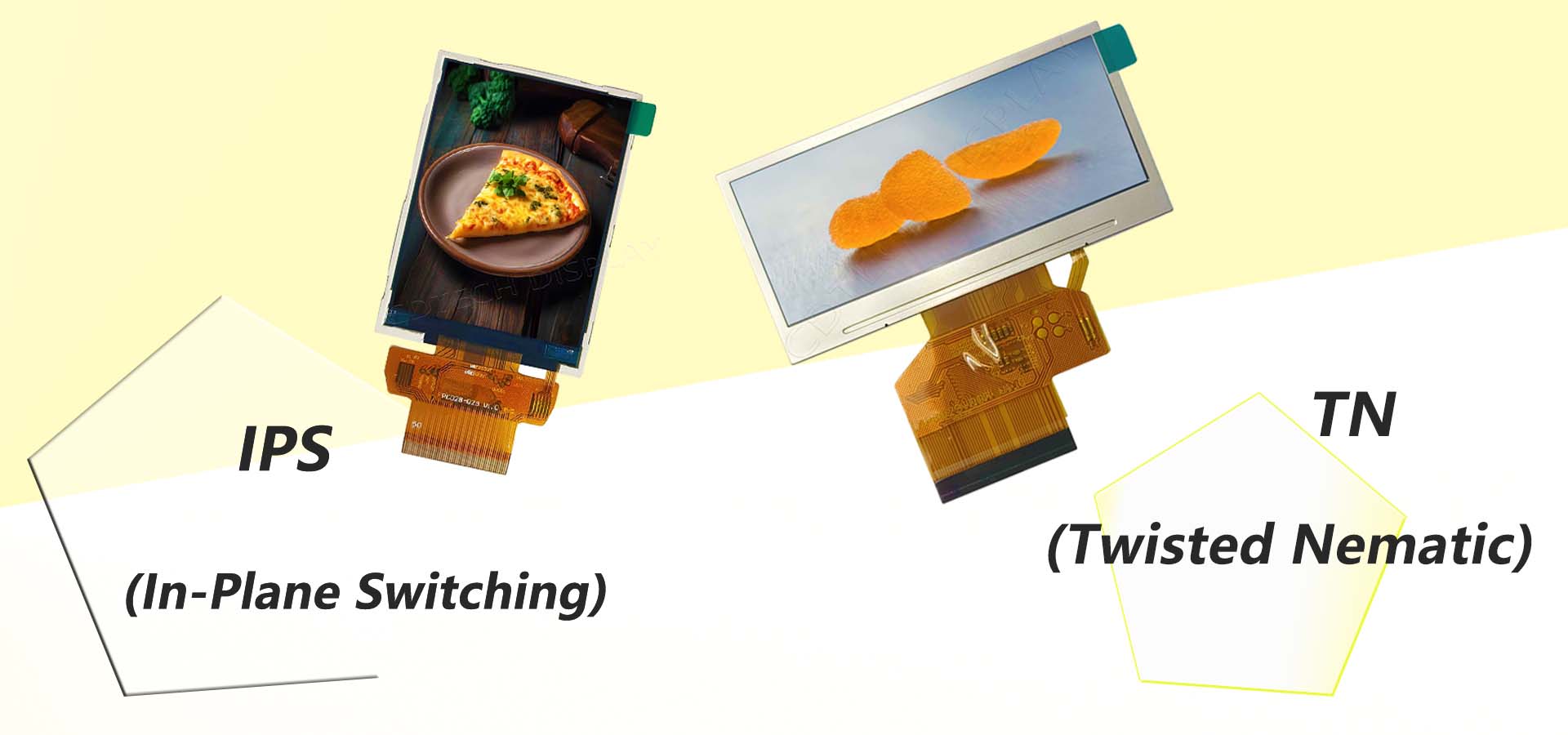
TN LCD vs IPS LCD: How to Choose the Right Display for You
-
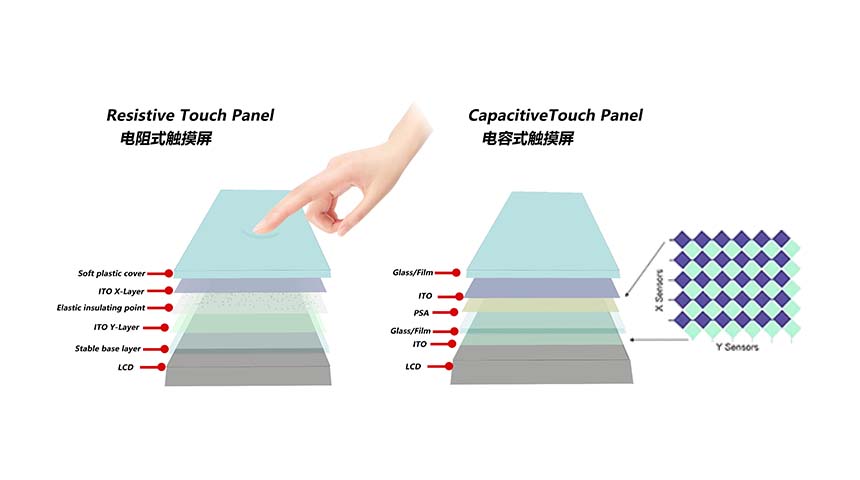
Capacitive Touch Panel or Resistive: Which Suits Your Needs?
-
Why Choose an IPS LCD Panel for Your Next Screen Purchase?
-
CDTECH to Showcase Cutting-Edge Display Solutions at SID 2025
-
Comparing Different Types of Displays in Cars: A Detailed Overview
-
White Spots on LCD Screen: Causes, Fixes & Industrial Solutions (2026 Guide)