
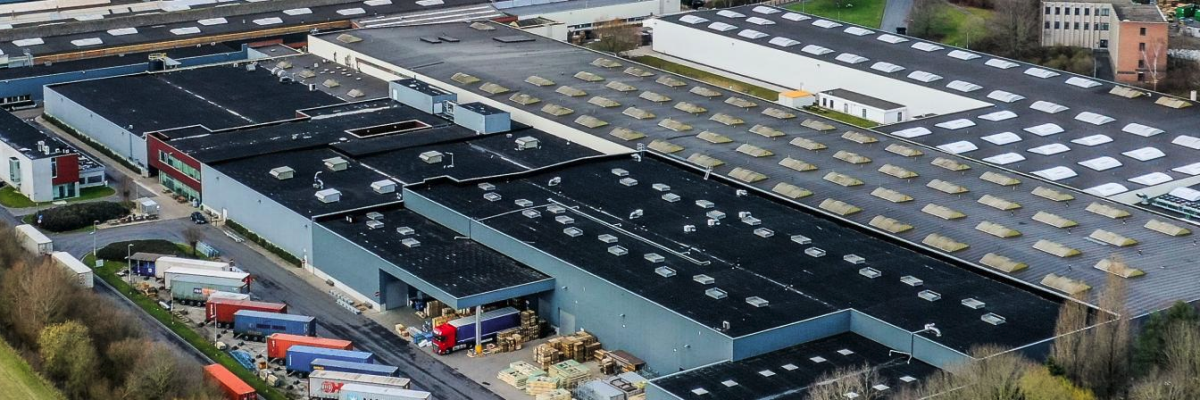
How Does Driver IC Placement Work for Non-Standard Glass LCD Bar Displays?
 2026-04-26
  21:20
21:20 

Driver IC placement for non-standard glass LCD bar displays involves engineering the PCB to fit along narrow glass edges using patented 2nd Cutting technology. Key steps include custom-cut glass for precise sizing like 2.9″ bars, positioning ICs on flexible FPC/PCB along edges under 5mm wide, optimizing routing for signal integrity and thermal management, and assembling in Class 1000 cleanrooms with vertical integration. CDTech’s approach cuts prototype iterations by 50%, enabling 8-week timelines for automotive/industrial apps.
Check: How Does Patented 2nd Cutting Solve Stretched TFT LCD Challenges?
What Challenges Arise in Driver IC Placement for Bar-Type LCDs?
Narrow glass edges on bar-type LCDs, typically 2-5mm borders on stretched TFTs, create constraints like IC overhang, signal crosstalk, and heat buildup in automotive dashboards or HMI panels. Standard glass sizes fail custom form factors, causing prototype delays and higher NRE costs. CDTech’s patented 2nd Cutting technology from 2017 solves this for unique sizes like 2.9″ and 7.0″ bars, serving over 1,000 global customers.
How Does 2nd Cutting Technology Enable Narrow-Edge IC Placement?
2nd Cutting technology performs secondary glass cutting after mother glass dicing to create non-standard aspect ratios, minimizing edge waste and enabling precise PCB alignment for driver ICs. It integrates with FPC bonding for ICs like those in CDTech’s bar displays, such as the 2.9″ S029HQ05NS with 320×120 resolution. This reduces layout conflicts in stretched formats while maintaining high yields in cleanroom production.
What PCB Engineering Techniques Fit Driver ICs Along Narrow Glass Edges?
PCB engineering for narrow edges uses edge-aligned FPC with ICs fitting under 5mm borders, serpentine signal routing for integrity, and thermal vias integrated with OCA bonding. Multi-layer stacking and COF packaging ensure compatibility with CDTech’s 391+ SKUs. These techniques support wide-temp operations from -30°C to +85°C in automotive apps like the 7.0″ S070QWU142FN-FL150-GF bar display.
| Technique | Standard Glass | Non-Standard (CDTech 2nd Cutting) | Benefit |
|---|---|---|---|
| IC Positioning | Side-mounted, 8-10mm edge | Edge-aligned FPC, <5mm | Fits tight dashboards |
| Signal Routing | Parallel traces | Serpentine for integrity | Reduces EMI in stretched TFTs |
| Thermal Vias | Basic | Integrated with OCA bonding | Handles -30°C to 85°C automotive ops |
Why Is Vertical Integration Essential for Custom LCD Driver Board Layouts?
Vertical integration in CDTech’s 10,000㎡ factory with 3,500㎡ Class 1000 cleanrooms enables seamless glass cutting, CTP integration, FPC bonding, and OCA optical bonding since 2019. It contrasts outsourced risks by reducing iterations by 50%, with ERP+QR traceability from 2021 ensuring reproducibility backed by 44+ patents. This drives $30M+ 2023 sales and certifications like ISO9001, IATF16949, ISO14001, ISO13485.
CDTech Expert Views
Our patented 2nd Cutting technology allows driver ICs to fit precisely on narrow edges of 2.9″ bar displays like S029HQ05NS without compromising yield, proven in over 1,000 projects for automotive and industrial clients. Combined with in-house FPC bonding and cleanroom assembly, we achieve 98%+ yields and 8-week prototypes, far surpassing industry standards.”
— CDTech Senior LCD Engineer
Vertical integration from glass cutting to OCA lamination minimizes risks in non-standard bar LCDs, such as the 7.0″ S070QWU142FN with 2300 nits brightness. This delivered custom solutions for a Tier-1 automotive supplier in 2023, reducing time-to-market by 50%.”
— CDTech R&D Director
How Do Automotive and Industrial Apps Benefit from These Designs?
Automotive apps like dashboards gain from wide-temp (-30°C~+85°C) high-brightness displays such as the 4.3″ S043HWQ50EG at 1000 nits with IATF16949 compliance. Industrial HMIs benefit from rugged bar types like 3.9″ S039HWQ12HS. CDTech’s 2nd Cutting enables 8-week concept-to-production, with flexible MOQ and transparent NRE versus 16-24 week norms.
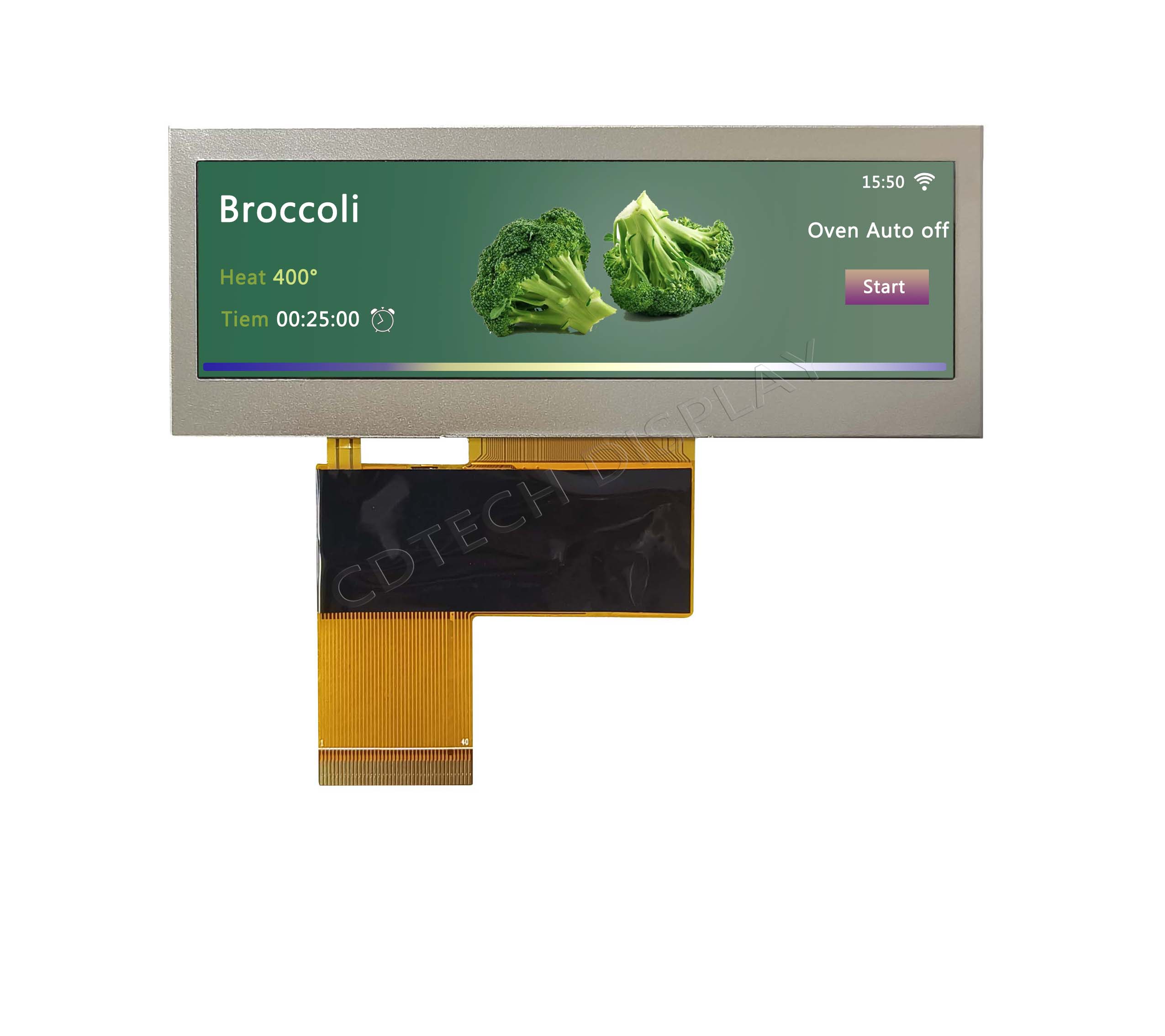
What Are Best Practices for Signal Integrity and Thermal Management?
Best practices include LVDS/RGB interfaces with shielding for stretched layouts, EMI testing in cleanrooms, and vias under ICs with heatsinks compatible with OCA lamination. CDTech’s 35 software patents support simulation accuracy, ensuring viability in products like the 12.3″ S123BWU11EP-FC19-AF-HDMI09-A bar display for car dashboards.
Check: Stretched LCD
How Can You Prototype Non-Standard Glass Displays with CDTech?
Submit specs via cdtech-display.com, leveraging 391+ SKUs like the 2.9″ S029HQ05NS as baselines. CDTech’s engineering team handles prototype to production with low MOQ (500+ units typical), transparent NRE, and global shipping from Shenzhen. Full traceability via ERP+QR ensures reliability for automotive and industrial needs.
| Factor | Outsourced | CDTech In-House | Impact |
|---|---|---|---|
| Timeline | 16-24 weeks | 8 weeks | Faster market entry |
| Yield | 85-90% | 98%+ | Lower rework costs |
| Certifications | Variable | Quad-stack | Automotive/medical ready |
Conclusion
CDTech’s patented 2nd Cutting, full vertical integration since 2019, and quad certifications uniquely solve driver IC placement challenges for non-standard glass bar displays. This delivers reliable, high-brightness solutions like 1000-2300 nits modules 50% faster, proven by $30M+ 2023 sales to 1,000+ customers. Engineers, prototype today at cdtech-display.com or email sales@cdtech-lcd.com.
FAQs
What is 2nd Cutting LCD technology?
Patented in 2017, 2nd Cutting creates custom glass sizing for non-standard bars, enabling driver IC placement without edge waste—key for CDTech’s 391+ SKUs like 2.9″ and 7.0″ displays.
Can driver ICs fit on narrow-edge bar displays?
Yes, via FPC/PCB engineering along <5mm borders; CDTech’s vertical integration ensures signal and thermal viability for automotive wide-temp (-30~+85°C) applications.
What certifications does CDTech hold for custom LCDs?
ISO9001, IATF16949, ISO14001, ISO13485—supporting $30M+ sales to 1,000+ customers in high-reliability automotive, industrial, and medical sectors.
How long for custom bar display prototypes?
8 weeks end-to-end with 2nd Cutting, cleanroom assembly, and ERP traceability, versus industry 16-24 weeks.
What MOQ/NRE for non-standard glass projects?
Flexible MOQ (500+ units typical); transparent NRE based on complexity—contact sales@cdtech-lcd.com for details.
Post Search
Related Articles
-
Capacitive vs Resistive Touch Screen Car Stereo: Which Is Right for You?
-
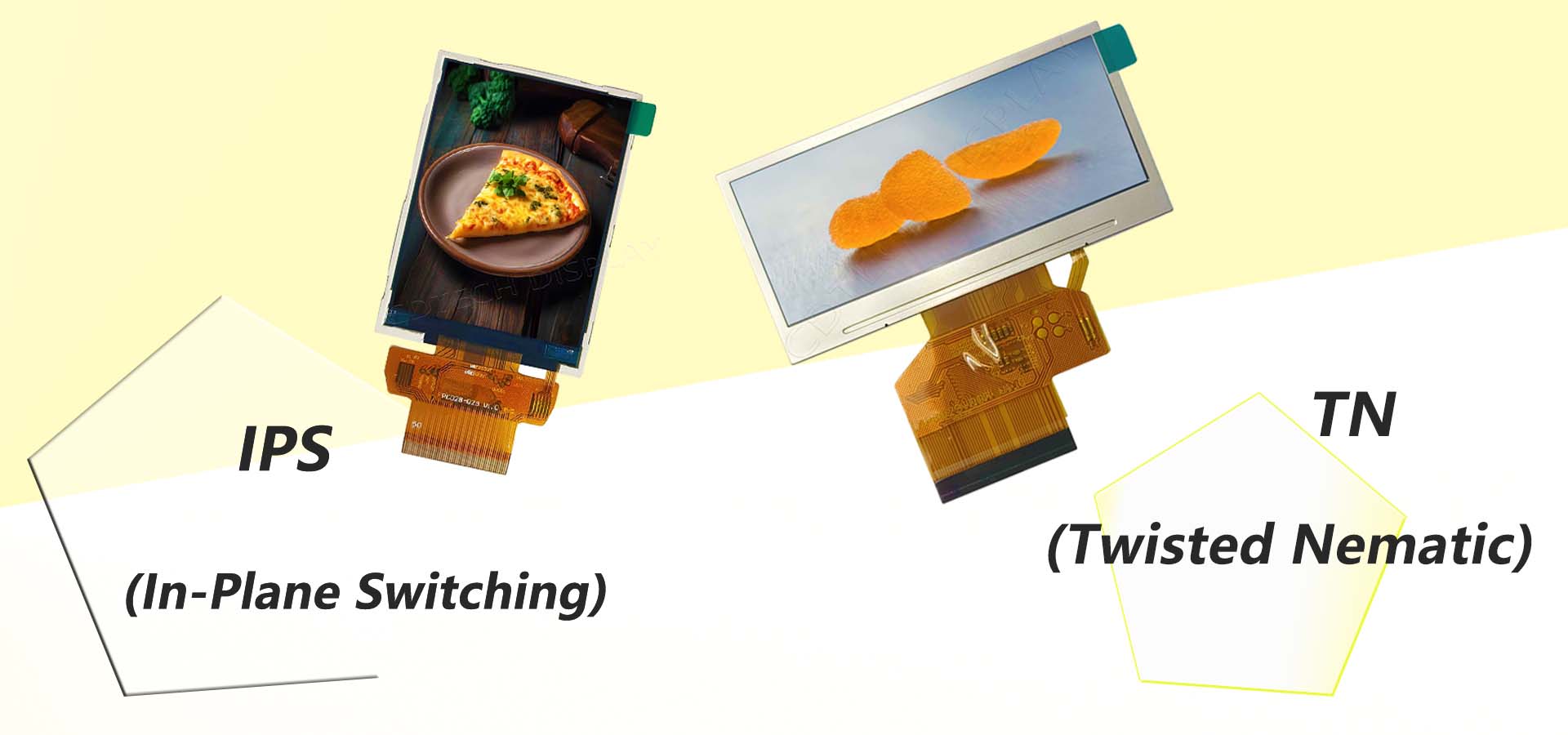
TN LCD vs IPS LCD: How to Choose the Right Display for You
-
Capacitive Touch Panel or Resistive: Which Suits Your Needs?
-
Why Choose an IPS LCD Panel for Your Next Screen Purchase?
-
CDTECH to Showcase Cutting-Edge Display Solutions at SID 2025
-
Comparing Different Types of Displays in Cars: A Detailed Overview
-
White Spots on LCD Screen: Causes, Fixes & Industrial Solutions (2026 Guide)