

Why Does Standard Glass Cutting Fail on Stretched TFT LCDs?
 2026-04-26
  21:21
21:21 

Standard glass cutting fails on stretched TFT LCDs due to thermal stress cracking thin-film layers, polarizer delamination, and LCD cell misalignment from uneven force distribution in ultra-wide bar shapes. Patented 2nd Cutting technology, like CDTech’s process developed in 2017, uses precision laser scoring and controlled breaking to resize mother glass into non-standard sizes while preserving optical integrity and achieving tolerances under 0.1mm—enabling 6-8 week production for automotive and industrial HMI without full NRE.
Check: How Does Patented 2nd Cutting Solve Stretched TFT LCD Challenges?
What Is LCD Glass Cutting Technology in TFT Manufacturing?
LCD glass cutting in TFT manufacturing scores large mother glass sheets, typically 1500x1850mm Gen 6/7, using diamond wheels or CO2 lasers, followed by mechanical breaking to separate panels, relying on brittle soda-lime glass fracture under controlled tensile stress. For stretched TFTs, 2nd cutting resizes after cell formation to create bar-type ratios like 16:3, avoiding defects in ITO layers and liquid crystal alignment. CDTech’s patented 2nd Cutting enables unique sizes from standard panels in 3,500㎡ Class 1000 clean rooms.
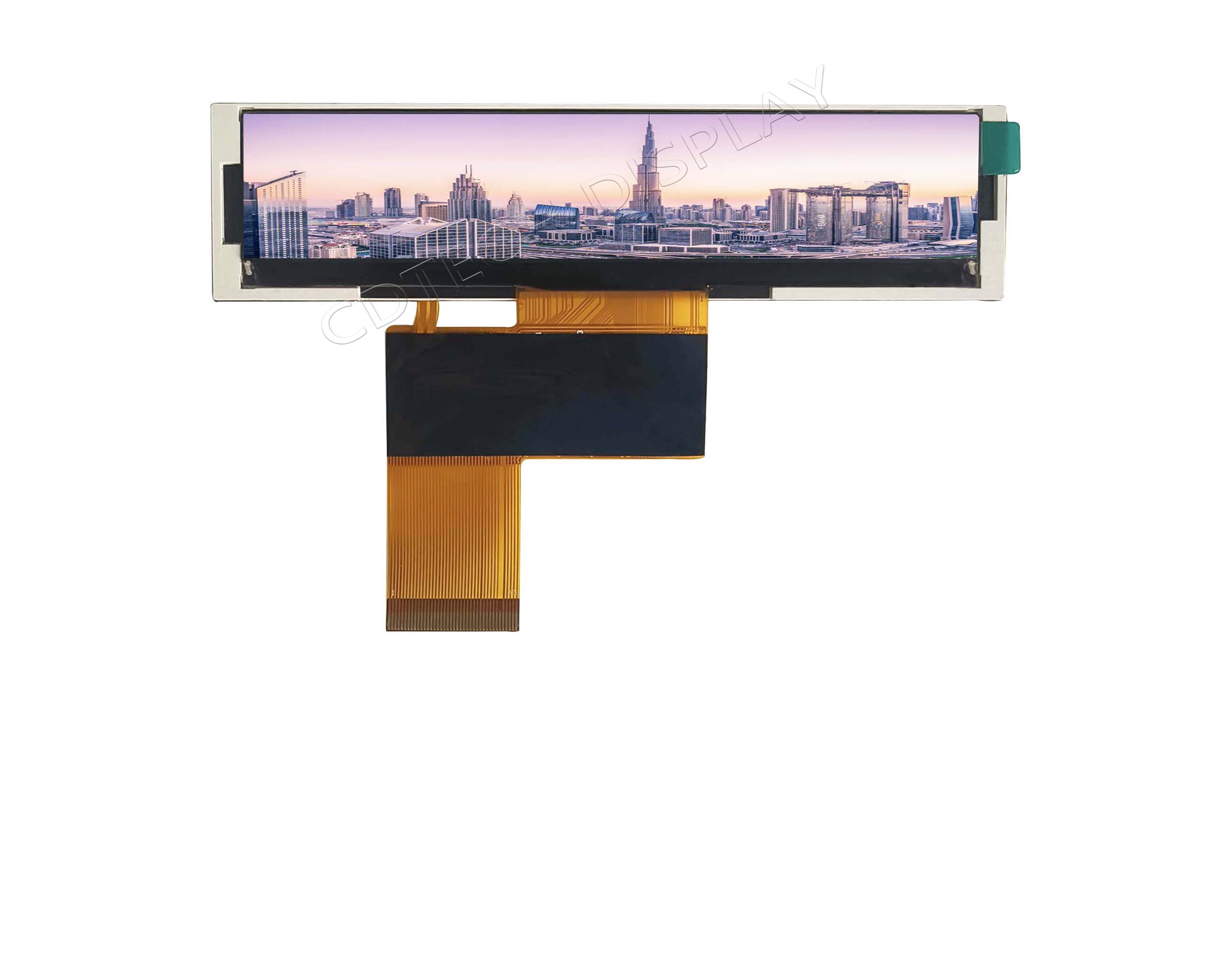
How Does Standard Glass Resizing Work for Bar-Type Displays?
Standard resizing starts with diamond scribing to create micro-cracks, then applies thermal or mechanical stress to propagate breaks; for bar-types, secondary horizontal cuts stretch square panels into ultra-wide formats. Glass fracture toughness of about 0.7 MPa·m½ restricts kerf width to under 0.5mm, but stretched shapes increase edge chipping from anisotropic stress.
| Aspect | Standard Rectangular | Stretched Bar-Type |
|---|---|---|
| Aspect Ratio | 16:9 | 32:9+ |
| Cut Length | <500mm | >1000mm |
| Failure Risk | Low (even stress) | High (polarizer warp) |
| CDTech Lead Time | N/A | 6-8 weeks |
Why Do Physics Challenges Arise in Stretched TFT Production?
Physics challenges in stretched TFTs include residual stress from polarizer lamination causing microcracks up to 10µm deep, with thin 0.3-0.7mm glass vibrating during breaking to misalign TFT backplanes. Laser kerf heating over 500°C induces birefringence, degrading contrast by 5-15% in bars, filling a market gap where generic methods fail LCD tolerances; CDTech optimizes with 35 software patents.
Check: Stretched LCD
What Is CDTech’s Patented 2nd Cutting Process?
CDTech’s 2017-patented 2nd Cutting employs dual-axis laser ablation with real-time stress monitoring to cut non-standard bars like 7.0″ 1200×1920 from stock panels, ensuring <50µm precision via pre-cut fiducials and post-cut annealing for optical bonding. This supports full vertical integration in a 10,000㎡ factory with quad certifications including IATF16949 and ISO13485.
CDTech Expert Views
“Our 2017-patented 2nd Cutting uses dual-axis laser ablation with real-time stress monitoring, cutting non-standard bars (e.g., 7.0” 1200×1920 at 2300 nits) from stock panels—proven in 1,000+ global projects with $30M+ 2023 sales. This enables custom sizes unavailable from standard suppliers, ideal for automotive dashboards like our S070QWU142FN-FL150-GF and industrial HMIs, all traceable via ERP + QR systems since 2021.
— Senior Engineer, Shenzhen CDTech Electronics Ltd.
How Does 2nd Cutting Overcome Standard Cutting Limitations?
2nd Cutting overcomes limitations with non-contact laser precision avoiding 0.2mm+ die-cutting burrs, perfect for automotive edges, and scalability across 391+ SKUs like 4.3″ 800×130 bars. It cuts ROI by eliminating $50K+ NRE through mother glass efficiency, delivering 6-8 week timelines versus industry norms, serving CDTech’s 1,000+ customers.
Which Applications Benefit from Precision Stretched LCD Cutting?
Precision stretched LCD cutting benefits automotive dashboards like 12.3″ 1920×720 bar-types for instrument clusters, industrial HMI with ultra-wide panels for control systems enhanced by OCA bonding, and rugged setups tolerating vibration. CDTech’s portfolio includes examples like S043HWV104EN-FL63 (4.3″ 800×130, 800 nits, optical bonded) for these demanding uses.
Can Patented Cutting Accelerate Custom Display Timelines?
Patented 2nd Cutting accelerates timelines to 6-8 weeks for prototypes versus 16+ weeks traditionally, with minimal NRE and 98%+ yields from vertical integration covering cutting to CTP/OCA lamination.
| Method | Lead Time | NRE Cost | Yield Rate |
|---|---|---|---|
| Standard Custom | 16+ weeks | $50K+ | 85% |
| CDTech 2nd Cutting | 6-8 weeks | Minimal | 98%+ |
Conclusion
Standard cutting fails stretched TFT LCDs due to physics-driven defects like stress cracking and delamination, but CDTech’s patented 2nd Cutting delivers precise, rapid non-standard bars with under 0.1mm tolerances. Backed by 13+ years experience, 44+ patents, $30M+ sales, and full in-house production, it empowers innovation in automotive, industrial, and custom displays. Contact sales@cdtech-lcd.com for your bar display feasibility.
FAQs
What is TFT LCD 2nd cutting?
Patented secondary process post-cell formation creates bar sizes from standard glass, minimizing stress—CDTech’s achieves 0.1mm precision for unique ratios like 32:9+.
How precise is LCD glass cutting for custom stretched displays?
Under 0.1mm tolerances with laser tech; CDTech guarantees via 44+ patents, 3,500㎡ clean rooms, and ERP traceability for bar-types like 7.0″ 1200×1920.
What lead time for non-standard bar TFTs?
6-8 weeks for prototypes, scalable to volume with no full NRE—faster than industry 16+ weeks, enabled by CDTech’s vertical integration since 2019.
Does CDTech support automotive bar displays?
Yes, IATF16949-certified for dashboards; examples include 12.3″ 1920×720 900 nits HDMI bar and 4.3″ wide-temp options with CTP.
Why choose CDTech for stretched LCD manufacturing?
13+ years, $30M 2023 sales, 1,000+ customers, patented 2nd Cutting, quad certifications, and 391+ SKUs for reliable custom bar solutions.
Post Search
Related Articles
-

Capacitive vs Resistive Touch Screen Car Stereo: Which Is Right for You?
-

TN LCD vs IPS LCD: How to Choose the Right Display for You
-

Capacitive Touch Panel or Resistive: Which Suits Your Needs?
-

Why Choose an IPS LCD Panel for Your Next Screen Purchase?
-

CDTECH to Showcase Cutting-Edge Display Solutions at SID 2025
-

Comparing Different Types of Displays in Cars: A Detailed Overview
-
White Spots on LCD Screen: Causes, Fixes & Industrial Solutions (2026 Guide)