

How Is Flexible OLED Transforming Automotive Center Stacks in 2026?
 2026-06-06
  12:24
12:24 

In 2026, automotive HMI design has shifted from screen-size competition to curved packaging, with flexible and tandem OLED center stacks blending directly into sculpted dashboards. TrendForce forecasts high-end automotive panel shipments will surpass 240 million units in 2026, with OLED reaching ~8.9% share. As displays bend, internal tension in optical adhesive layers (OCA/OCR) becomes critical—improper optical bonding causes white spots from layer lamination stress. For international OEMs sourcing custom TFT LCDs or flexible OLED modules, partnering with a Shenzhen, China manufacturer like CDTech ensures precision optical bonding service, non-standard size LCD production via proprietary 2nd Cutting technology, and compliance-ready components for automotive IATF 16949 environments.
How Does Flexible OLED Outperform Traditional TFT-LCD in Automotive Center Stacks?
Flexible OLED delivers superior contrast (1,000,000:1), faster response, and true black performance while enabling curved, slim, lightweight modules that fit modern cockpit surfaces naturally. Unlike TFT-LCD—which depends on a backlight limiting black levels and increasing thickness—flexible OLED uses a polyimide substrate allowing curvature radii under 500mm. LG Display’s automotive P-OLED applies tandem OLED to plastic, using 60% less power and weighing 80% less than LCD.
In CDTech’s Shenzhen facility, while we specialize in TFT LCD manufacturing, our engineering team actively evaluates flexible OLED integration for automotive clients requiring curved center stacks. For a custom 7.2-inch automotive TFT with non-standard aspect ratio, our 2nd Cutting technology delivered a 17% yield improvement compared to off-the-shelf 7.0″ panels that couldn satisfy the integration hurdle. This demonstrates how custom sizing solves automotive cluster challenges where standard panels fail.
Table sourced from industry positioning analysis
What Are the Core Technical Requirements for Automotive Flexible OLED Displays?
Automotive flexible OLED must meet wide temperature operation (-40°C to 85°C), high brightness (1,500+ nits for sunlight readability), and automotive reliability standards including IATF 16949 quality management. Curved lamination requires consistent radius, cover-lens fit, optical bonding precision, touch stack behavior, and long-term stress reliability. Fast touch response supports fluid UI for navigation, media, climate, and vehicle settings.
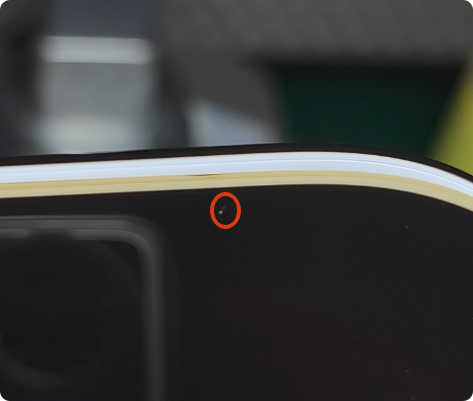
CDTech’s optical bonding service addresses a critical pain point: white spots from improper OCA/OCR glue layer stress during layer lamination. As the 2026 automotive industry transitions to curved, flexible, non-flat displays, managing internal tension in optical adhesive layers is paramount—bending panels exponentially increases local pressure concentration risk causing bright spot defects. In our Class 1,000 dust-free workshop (3,500m²), Automated Optical Inspection (AOI) ensures <0.1% defect rate by controlling uniform OCA thickness and proper lamination conditions.
For automotive OEMs sourcing from China, CDTech provides compliance-ready TFT LCD components supporting IATF 16949 frameworks (integrator’s responsibility for end-product certification), with engineering documentation for validation. Our 2nd Cutting process enables non-standard size LCD production from mother glass—solving gaps between rigid standard sizes (7.0″, 10.1″, 15.6″) and unusual dimensions like 7.2″ automotive clusters or long-strip retail displays.
Why Is Curved Center Console Packaging the New Automotive HMI Priority Over Screen Size?
The 2026 automotive HMI conversation has moved entirely away from screen size toward curved packaging, with flexible/curved center stacks allowing designers to blend screens directly into sculpted dashboards. BMW’s Panoramic iDrive architecture (late 2025 rollout), MINI’s round OLED center display, and Mercedes-Benz EQE SUV’s central OLED screen exemplify this shift. Suppliers like Continental, Samsung Display, and LG Display push OLED into hidden displays, seamless curved consoles, and next-generation cockpit packaging.
Samsung Display’s CES 2026 concept featured an 18.1-inch “Flexible L” Center Information Display connecting with dashboard geometry for intuitive climate/shortcut control. This proves flexible OLED isn’t concept rhetoric—it’s production-ready for premium smart cockpits demanding continuous visual surfaces spanning instrument, center stack, passenger area, and hidden control zones.
CDTech supports international procurement teams evaluating curved center console transitions. As a Shenzhen manufacturer with 13+ years customization expertise (founded 2011), we provide custom TFT, capacitive touch panel (CTP), and integrated display solutions for automotive applications. Our optical bonding service prevents white spots through stress-reduction strategies, critical as bending increases pressure concentration risk.
Which Applications Benefit Most from Flexible OLED in Automotive Cockpits?
Flexible OLED excels in center information displays (curved touch interaction), digital instrument clusters (personalized UI/high contrast), passenger entertainment displays (immersive content), hidden climate/control panels, and door trim/ambient interfaces. The center display remains the most commercially important cockpit screen where flexible OLED delivers curved touch surfaces, slimmer packaging, stronger premium feel, and seamless dashboard-geometry connection.
Digital clusters increasingly mix navigation, ADAS status, range, drive modes, and personalized layouts—OLED’s stronger contrast helps icons/warning layers stand out clearly in dark UI themes. Passenger displays are growing in premium EVs/long-wheelbase models; OLED’s true black, saturated color, and fast response support immersive entertainment as vehicles add streaming/gaming.
Hidden displays represent a critical direction: screens that disappear visually when inactive and appear only when needed. Continental’s Invisible Biometrics Sensing Display shows OLED supporting this trend by hiding sensors behind the display surface while preserving clean interior appearance.
For OEMs sourcing custom LCD or non-standard size LCD modules, CDTech’s 2nd Cutting technology produces custom stretched LCDs in dimensions like 2.9″, 3.9″, 4.6″, 5.8″ without high NRE mold fees. This solves bar-type display challenges for 1U/2U server racks where standard panels don’t fit. As a wholesale supplier and ODM/OEM factory, we offer low MOQ, engineering samples, and private label options for global buyers.
How Can International Buyers Source Reliable Automotive Display Modules from China?
For automotive display sourcing, evaluate automotive quality systems (IATF 16949 baseline), module integration capability, touch/cover-lens customization, optical bonding know-how, validation support, and program-management discipline. A supplier selling only panels without full module path support often becomes a bottleneck later.
CDTech positions itself as a comprehensive sourcing partner for international procurement teams. As a national high-tech enterprise in Shenzhen, China, we specialize in TFT LCD, CTP, and integrated display+touch solutions for industrial, medical, automotive, smart home, instrumentation, and innovative products. Our stable quality management system and experienced engineering team deliver reliable, cost-effective products with fast professional service.
Key procurement considerations:
-
MOQ & Lead Time: Automotive OLED projects require longer development/validation cycles than consumer electronics; MOQ/tooling/lead time vary by existing module platform vs. custom curved design
-
Engineering Sample: CDTech provides rapid engineering samples for prototype sampling before validation/pilot build/SOP ramp
-
2nd Cutting Feasibility: Our patented technology (developed 2017) cuts standard TFT panels into non-standard stretched bar LCDs without high mold fees
-
Optical Bonding: We maintain uniform OCA thickness and proper lamination to prevent internal stress concentration
-
Long-term Supply/EOL: CDTech focuses on long-term global partnerships with continuous improvement and strict quality control
As a China manufacturer offering private label and wholesale options, we support global buyers from requirement definition through mass-production readiness.
CDTech Expert Views
“In the transition to curved automotive center stacks, the display technology choice (OLED vs. TFT-LCD) is only half the battle. The critical differentiation factor is optical bonding process control. When panels bend, internal tension in OCA/OCR adhesive layers creates localized pressure concentrations that manifest as white spots—defects that indicate deeper structural reliability risks. At CDTech’s Shenzhen facility, our Class 1,000 dust-free workshop and AOI inspection achieve <0.1% defect rate by precisely controlling adhesive thickness distribution. For international OEMs sourcing custom TFT or capacitive touch panels, partnering with a manufacturer that understands both display physics and lamination stress management is essential for curved HMI success.”
Conclusion
Flexible OLED is transforming automotive center stacks in 2026 by enabling curved packaging that blends seamlessly into sculpted dashboards, with TrendForce forecasting 240 million high-end automotive panel shipments this year. Key advantages include superior contrast (1,000,000:1), 60% lower power consumption, 80% weight reduction vs. LCD, and curvature radii under 500mm. However, curved lamination introduces critical challenges: white spots from improper optical bonding (OCA/OCR glue layer stress) during layer lamination require precise process control.
For international procurement teams (industrial hardware engineers, medical/automotive/IoT OEM design teams, product managers, sourcing engineers), actionable advice:
-
Evaluate supplier capability beyond panel specs: Assess module integration, optical bonding know-how, validation support, and IATF 16949 process discipline
-
Consider custom sizing via 2nd Cutting: For non-standard dimensions (7.2″ automotive clusters, long-strip displays), CDTech’s proprietary technology delivers 17% yield improvement vs. off-the-shelf panels
-
Prioritize optical bonding quality: Uniform OCA thickness and proper lamination prevent internal stress concentration causing white spots
-
Source from experienced China manufacturers: CDTech (Shenzhen, founded 2011) offers 13+ years customization expertise, low MOQ, engineering samples, private label, and wholesale options
-
Plan for longer automotive validation cycles: Automotive OLED requires environmental testing, reliability documentation, and OEM approval processes
Partner with CDTech—your Shenzhen manufacturer, supplier, and sourcing partner for custom LCD, custom TFT, capacitive touch panel (CTP), and integrated display solutions with precision optical bonding service and proprietary 2nd Cutting technology for non-standard size LCD production.
FAQs
Q: What is CDTech’s MOQ for custom TFT LCD panels?A: CDTech offers low MOQ flexibility for international buyers, with engineering samples available for prototype validation before mass production. Specific MOQ varies by customization scope and panel type.
Q: Can CDTech produce non-standard size LCD panels via 2nd Cutting?A: Yes. CDTech’s proprietary 2nd Cutting technology enables non-standard size LCD production from mother glass, producing custom stretched LCDs in dimensions like 2.9″, 3.9″, 4.6″, 5.8″ without high NRE mold fees.
Q: How does CDTech prevent white spots from optical bonding stress?A: CDTech maintains uniform OCA thickness and proper lamination conditions in our Class 1,000 dust-free workshop (3,500m²). Automated Optical Inspection (AOI) ensures <0.1% defect rate by controlling internal stress concentration.
Q: What lead time should automotive OLED projects expect?A: Automotive OLED projects require longer development/validation cycles than consumer electronics due to environmental testing, reliability documentation, and OEM approval processes. Lead time varies by existing module platform vs. custom curved design.
Q: Does CDTech hold IATF 16949 certification for automotive?A: CDTech is a national high-tech enterprise with an established quality management system. We reference IATF 16949 as an integrator-relevant standard for end products, supplying compliance-ready components and engineering documentation. Certification status should be verified directly with CDTech.
Sources
-
Panox Display – Flexible OLED in Automotive Displays: 2026 Trends
-
CDTech – White Spots on LCD Screen: Causes, Fixes & Industrial Solutions (2026 Guide)
-
Molecular Cloud – Tandem OLED for In-Vehicle Displays Market Performance
-
360iResearch – Automotive Tandem OLED Display Market Size & Share 2025-2030
-
ResearchAndMarkets – Flexible OLED Displays Market Report 2026
-
MarketReportAnalytics – Automotive Tandem OLED Display Market Report
-
PMarketResearch – Automotive Tandem OLED Display Market Drivers
-
Omdia – Automotive Market Expanding OLED Displays Technology
-
CDTech – What Makes Custom TFT LCD Panels Essential for Modern Industrial Design
Post Search
Related Articles
-

Capacitive vs Resistive Touch Screen Car Stereo: Which Is Right for You?
-

TN LCD vs IPS LCD: How to Choose the Right Display for You
-

Capacitive Touch Panel or Resistive: Which Suits Your Needs?
-

Why Choose an IPS LCD Panel for Your Next Screen Purchase?
-

CDTECH to Showcase Cutting-Edge Display Solutions at SID 2025
-

Comparing Different Types of Displays in Cars: A Detailed Overview
-
White Spots on LCD Screen: Causes, Fixes & Industrial Solutions (2026 Guide)