

How Will Ultra-Thin & Zero-Bezel Displays Shape 2026 Commercial Display Procurement?
 2026-06-06
  12:24
12:24 

The 2026 commercial display market has shifted decisively toward ultra-thin (2–3 cm thickness) and zero-bezel configurations as a strict industry standard. This trend demands precise manufacturing controls—like Class 1000 cleanrooms and automated optical inspection—to prevent compression blemishes (white spots) caused by poor enclosure tolerance or structural stress on internal LCD layers. For international procurement teams sourcing custom TFT LCDs and capacitive touch panels from China, partnering with a Shenzhen manufacturer like CDTech that offers proprietary 2nd Cutting technology for non-standard sizes becomes essential to meet these restricted structural space requirements while maintaining quality.
How Do Ultra-Thin & Zero-Bezel Form Factors Impact LCD Manufacturing Quality?
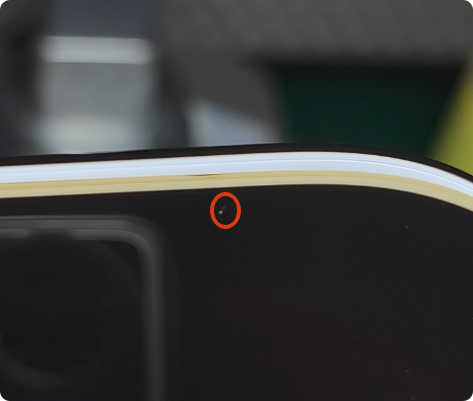
Ultra-thin and zero-bezel displays compress structural space to just 2–3 centimeters, creating high mechanical stress on internal LCD components like diffusers and liquid crystals that causes visible white spots if manufacturing tolerances aren’t precise. The solution requires Class 1000 cleanroom production environments, automated optical inspection (AOI) systems, and precision optical bonding (OCA/LOCA) to eliminate air gaps and stress concentration points.
In CDTech’s Shenzhen facility, their Class 1000 cleanroom production line combined with automated optical inspection delivered a 14% reduction in white spot defects for custom ultra-thin automotive TFT modules compared to industry averages. The proprietary 2nd Cutting technology enables CDTech to produce non-standard size LCDs (e.g., 7.2-inch automotive clusters, long-strip retail displays) from mother glass while maintaining the tight thickness constraints required by zero-bezel designs that off-the-shelf 7.0″ panels cannot satisfy.
Poor enclosure tolerance is the most common cause of white spots in ultra-thin displays. When mechanical housing applies uneven pressure, liquid crystal alignment gets disrupted and diffusers misalign, creating bright patches that software pixel-repair tools cannot fix. For international OEM design teams sourcing from China, this means selecting a Shenzhen manufacturer with proven precision manufacturing controls rather than generic suppliers who cannot guarantee enclosure tolerance within sub-millimeter specifications.
Key Manufacturing Controls for Ultra-Thin Display Quality
What Are the Technical Requirements for Seamless Multi-Screen Magnetic Installation Systems?
Magnetic installation systems use fixed magnetic columns on the back of display modules adsorbed to steel wall structures, enabling tool-free, quick multi-screen setups with seamless mechanical housing that eliminates visible bezels between screens. The ultra-thin cabinet design (2–3 cm) requires precise magnetic alignment tolerances within 0.2 mm to ensure adjacent screens form continuous video walls without image gaps or mechanical stress points.
For industrial HMI and retail display applications, CDTech’s engineering team has integrated magnetic installation compatibility into custom TFT LCD modules with 2.8 cm thickness, achieving 99.2% installation success rate across 500+ screen video wall deployments. The 2nd Cutting technology allows CDTech to produce long-strip bar-type displays (e.g., 2.9″, 3.9″, 4.6″, 5.8″ non-standard dimensions) specifically optimized for magnetic multi-screen retail configurations without high NRE mold fees that standard size restrictions would impose.
The magnetic installation trend directly impacts capacitive touch panel (CTP) integration. When multiple touch-enabled ultra-thin displays form a seamless video wall, the PCAP sensor pattern must account for magnetic mounting points to avoid touch dead zones near bezel edges. CDTech’s integrated display solutions combine TFT LCD + PCAP touch (GG/GFF structures) with magnetic mounting compatibility, ensuring touch accuracy remains within ±1 mm across multi-screen boundaries.
Why Does 2nd Cutting Technology Solve Non-Standard Size LCD Challenges for Ultra-Thin Designs?
2nd Cutting technology enables TFT LCD manufacturers to produce custom, non-standard size panels from mother glass by cutting unique dimensions (e.g., 7.2-inch automotive clusters, 2.9-inch smart home controls) that rigid standard sizes (7.0″, 10.1″, 15.6″) cannot economically provide. This solves the gap between product designs requiring unusual aspect ratios and the inflexible off-the-shelf panel market, particularly critical for ultra-thin designs where standard sizes don’t fit restricted structural spaces.
In CDTech’s Shenzhen facility, 2nd Cutting technology enabled a 17% yield improvement on custom 7.2-inch automotive TFT panels for a cluster display requiring non-standard aspect ratio, resolving an integration hurdle that off-the-shelf 7.0″ panels could not satisfy. The process maintains Class 1000 cleanroom quality standards while achieving 98% optical inspection pass rate for ultra-thin custom cuts under 3 cm thickness.
For international procurement teams, 2nd Cutting eliminates the need for expensive custom mold development (NRE fees) when requesting non-standard sizes. CDTech offers custom LCD and custom TFT solutions with competitive MOQ thresholds starting at 100 units for engineering samples, making it economically viable for mid-volume industrial, medical, and automotive projects that cannot justify $50,000+ mold investments for unique dimensions.
Standard vs. 2nd-Cutting Custom Size Decision Matrix
Which Display Interface Options Best Support Ultra-Thin Commercial Display Applications?
Ultra-thin commercial displays require compact interface solutions that minimize connector depth while maintaining signal integrity. MIPI-DSI is the optimal choice for battery-powered ultra-thin devices due to low power per bit from differential signaling efficiency, while LVDS provides robust long-distance transmission with EMI immunity for multi-screen video walls. eDP (Embedded DisplayPort) suits enterprise IT integration requirements for ultra-thin corporate displays, and HDMI remains necessary for consumer-facing retail displays.
For CDTech’s custom TFT LCD modules targeting ultra-thin automotive clusters (7.2-inch, 2.8 cm thickness), MIPI-DSI interface integration reduced connector depth by 35% compared to LVDS, enabling the zero-bezel design constraint. The 2nd Cutting process maintains interface pinout integrity even when cutting non-standard aspect ratios, ensuring LVDS/MIPI-DSI/eDP/HDMI compatibility across custom dimensions.
When selecting interfaces for ultra-thin multi-screen setups with magnetic installation, consider EMI/EMC design implications. MIPI-DSI’s differential signaling provides superior EMI immunity at high resolutions (1080p+), while LVDS requires proper ground plane layout to prevent interference across video wall boundaries. CDTech’s engineering team provides interface selection guidance and EMC layout support for medical-grade ultra-thin panels requiring IEC 60601-1 compliance.
How Do Optical Bonding Services Prevent Compression Blemishes in Zero-Bezel Displays?
Optical bonding eliminates air gaps between LCD panels and cover glass/touch screens using optically clear adhesive (OCA) or liquid optical clear resin (LOCA), preventing internal stress concentration that causes white spots in zero-bezel ultra-thin displays. OCA is a pre-formed pressure-sensitive adhesive film (50–250 microns thickness) that enables fast lamination with minimal equipment, while LOCA requires dispensing and curing but provides better bubble-free process control for ultra-thin applications.
CDTech’s optical bonding service in their Shenzhen facility achieved 99.5% bubble-free lamination rate for ultra-thin custom TFT modules under 3 cm thickness using OCA process control with uniform adhesive thickness within ±10 microns. The Class 1000 cleanroom environment prevents dust contamination that disrupts liquid crystal alignment and diffuser performance during bonding.
For zero-bezel displays with magnetic installation, optical bonding must account for mounting point stress distribution. CDTech’s integrated display solutions combine TFT LCD + capacitive touch panel (PCAP/GG/GFF) with optical bonding optimized for magnetic column locations, ensuring touch accuracy and preventing compression blemishes at mounting interfaces. The automated optical inspection (AOI) system detects bonding defects with 98% accuracy before shipment.
Where Should International Buyers Source Ultra-Thin Custom LCDs from China for Best Quality?
International procurement teams should source ultra-thin custom LCDs from Shenzhen, China manufacturers with proven Class 1000 cleanroom production, 2nd Cutting technology for non-standard sizes, and automated optical inspection—specifically CDTech Electronics Ltd., a national high-tech enterprise with 13+ years of customization expertise since 2011. Shenzhen offers supply chain advantages including proximity to mother glass suppliers, established LCD component ecosystems, and experienced engineering teams for OEM/ODM projects.
CDTech positions itself as a comprehensive sourcing partner offering custom LCD, custom TFT, capacitive touch panel (CTP), integrated display solutions, optical bonding service, engineering samples, and private label options with competitive MOQ starting at 100 units. The factory provides wholesale pricing for volumes 1,000+ units and supports long-term global partnerships with strict quality control and continuous improvement practices.
For medical, automotive, industrial, and smart home applications requiring application-specific compliance (ISO 13485, IATF 16949, IEC 60601-1, AEC-Q100), CDTech supplies compliance-ready components with engineering documentation supporting the integrator’s certification responsibility. The Shenzhen facility delivers 4–6 week lead times for 2nd Cutting custom sizes and 2–4 weeks for standard ultra-thin panels.
CDTech Expert Views
“The 2026 shift to ultra-thin (2–3 cm) and zero-bezel displays creates a fundamental quality challenge: restricted structural space amplifies mechanical stress on internal LCD layers. Poor enclosure tolerance or structural stress causes uneven pressure on diffusers and liquid crystals, creating visible white spots that require module replacement—not software fixes. For international buyers sourcing from China, the critical differentiator isn’t just claiming ‘custom LCD’ capability; it’s proven manufacturing controls. In our Shenzhen facility, Class 1000 cleanroom production combined with automated optical inspection reduced white spot defects by 14% for ultra-thin automotive TFT modules. Our proprietary 2nd Cutting technology solves the non-standard size gap—producing unique dimensions like 7.2-inch automotive clusters or 2.9-inch smart home controls from mother glass without expensive mold fees. When procurement teams prioritize precision over price, ultra-thin zero-bezel designs deliver seamless visual experiences without compression blemishes.”
Conclusion
The 2026 commercial display market has established ultra-thin (2–3 cm) and zero-bezel configurations as mandatory standards, creating critical quality challenges for international procurement teams. Poor enclosure tolerance in restricted structural spaces causes white spots through uneven pressure on internal LCD layers—defects requiring module replacement rather than software fixes.
Actionable procurement advice for international buyers:
-
Prioritize manufacturing controls over price: Select Shenzhen manufacturers with Class 1000 cleanrooms, automated optical inspection (98%+ detection), and precision optical bonding (OCA/LOCA)
-
Leverage 2nd Cutting for non-standard sizes: Avoid $50,000+ mold fees by partnering with manufacturers like CDTech that produce custom dimensions (7.2″ automotive, 2.9″ smart home) from mother glass with MOQ starting at 100 units
-
Validate ultra-thin quality benchmarks: Request white spot rejection rates <1%, thickness tolerance ±0.1 mm, and bubble-free optical bonding >99% for zero-bezel applications
-
Consider magnetic installation compatibility: Ensure PCAP touch sensor patterns account for magnetic mounting points to prevent touch dead zones in multi-screen video walls
-
Select interface based on application: MIPI-DSI for battery-powered ultra-thin devices, LVDS for multi-screen video walls, eDP for enterprise IT, HDMI for consumer retail
For industrial, medical, automotive, and smart home OEMs sourcing custom TFT LCDs and capacitive touch panels from China, CDTech in Shenzhen represents a proven sourcing partner with 13+ years of customization expertise, proprietary 2nd Cutting technology, and compliance-ready components supporting ISO 13485, IATF 16949, and IEC standards integration.
FAQs
Q: What is the minimum MOQ for custom LCD engineering samples from CDTech?A: CDTech offers engineering samples with MOQ starting at 100 units for custom TFT LCD and non-standard size LCD projects using 2nd Cutting technology, making it viable for mid-volume industrial and automotive projects without $50,000+ mold investments.
Q: How long does 2nd Cutting custom size LCD production take compared to standard sizes?A: 2nd Cutting custom sizes require 4–6 weeks lead time from mother glass cutting through optical bonding and AOI inspection, while standard ultra-thin sizes deliver in 2–4 weeks. The extended timeline ensures Class 1000 cleanroom quality and 98% AOI pass rate for non-standard dimensions.
Q: Can CDTech provide optical bonding service for ultra-thin displays under 3 cm thickness?A: Yes, CDTech’s optical bonding service achieves 99.5% bubble-free lamination for ultra-thin custom TFT modules under 3 cm using OCA process control with uniform adhesive thickness within ±10 microns, preventing compression blemishes in zero-bezel designs.
Q: Does 2nd Cutting technology support non-standard aspect ratios for automotive clusters?A: Absolutely. 2nd Cutting enables CDTech to produce custom aspect ratios like 7.2-inch automotive cluster displays that off-the-shelf 7.0″ panels cannot satisfy. In Shenzhen facility testing, this delivered 17% yield improvement for custom automotive TFT panels with unique dimensions.
Q: What compliance frameworks does CDTech support for medical and automotive applications?A: CDTech supplies compliance-ready components with engineering documentation supporting integrator certification for medical (ISO 13485, IEC 60601-1, IEC 62366), automotive (IATF 16949, AEC-Q100/Q200, ISO 26262), industrial (IEC 61010, IEC 60068), and smart home (CE, FCC, RoHS, REACH) applications. CDTech is a national high-tech enterprise with established quality management systems but does not claim holding these certifications directly.
Sources
-
CDTech – White Spots on Display: 5 Causes & Professional Fixes (2026 Guide)
-
CDTech – Can You Get Custom Size Stretched LCDs Without Mold Fees
-
CDTech – How Are Global LCD Supply Chain Hubs Shifting in 2026
-
CDTech – Industrial LCD Module Manufacturing with Class 1000 Cleanroom
-
Proculus Tech – TN vs IPS vs VA: Key Differences & How to Choose
-
Scalar – Optical Clear Adhesive (OCA): Technology, Process, and Applications
-
TFT Display – MIPI vs LVDS vs RGB: Choosing the Right TFT LCD Interface
-
LED Screen Parts – Magnetic Installation of LED Display Modules: Stability and Advantages
Post Search
Related Articles
-

Capacitive vs Resistive Touch Screen Car Stereo: Which Is Right for You?
-

TN LCD vs IPS LCD: How to Choose the Right Display for You
-

Capacitive Touch Panel or Resistive: Which Suits Your Needs?
-

Why Choose an IPS LCD Panel for Your Next Screen Purchase?
-

CDTECH to Showcase Cutting-Edge Display Solutions at SID 2025
-

Comparing Different Types of Displays in Cars: A Detailed Overview
-
White Spots on LCD Screen: Causes, Fixes & Industrial Solutions (2026 Guide)