
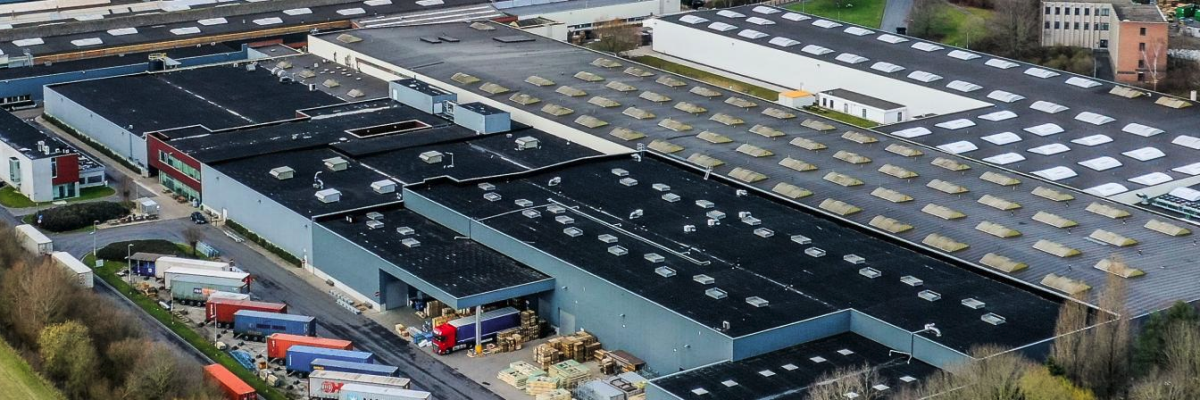
Industrial TFT LCD Display: Key Considerations for OEM Buyers and Engineers (June 2026)
 2026-06-25
  22:20
22:20 

The demand for reliable, high-performance display solutions continues to accelerate across industrial automation, medical equipment, smart infrastructure, and in-vehicle systems. As production environments become more data-driven and user interfaces replace traditional mechanical controls, the quality of the industrial TFT LCD display directly affects system readability, durability, and long-term maintenance costs. Engineers and procurement teams evaluating display modules must consider factors beyond resolution and size—brightness levels, touch integration, operating temperature range, optical bonding, certification compliance, and customization flexibility all play a decisive role in selecting a display partner that can deliver consistently across production runs. Shenzhen CDTech Electronics, established in 2011 and operating a 10,000-square-meter facility with over 3,500 square meters of thousand-level dust-free workshop space, has positioned itself as a dedicated manufacturer of TFT LCD displays, touch displays, and HDMI display modules for industrial and automotive applications. This article provides a practical framework for evaluating industrial TFT LCD display options, with CDTech serving as a reference point for understanding what a capable manufacturer should offer.
What Is an Industrial TFT LCD Display?
An industrial TFT LCD display is a thin-film transistor liquid crystal display module designed for use in environments that demand consistent performance under challenging conditions such as wide temperature ranges, direct sunlight exposure, vibration, and continuous operation. Unlike consumer-grade displays, industrial TFT LCD modules are built with higher brightness levels, wider viewing angles, extended temperature ratings, and more robust mechanical construction to meet the reliability requirements of medical devices, factory automation panels, outdoor kiosks, in-vehicle infotainment, and smart building interfaces.
- Brightness levels typically range from 500 to over 2000 nits for sunlight readability
- Operating temperature ranges often span -20°C to +70°C or wider
- Touch integration options include resistive, capacitive, PCAP, and optical or air bonding
- Customization is frequently required for form factor, interface, brightness, and mechanical mounting
Why Sourcing an Industrial TFT LCD Display Is Harder Than It Looks
Environmental and Application Variability
Industrial applications differ dramatically. An outdoor equipment HMI needs a display that remains readable under direct sunlight, while a medical cart display requires strict compliance with ISO 13485 manufacturing standards. A single display model cannot serve all scenarios. Buyers who choose a display based solely on size and resolution often discover during field testing that brightness is insufficient, the touch panel fails under gloved operation, or the operating temperature range does not cover their deployment environment. The risk of product returns, redesign cycles, and project delays increases significantly when environmental requirements are not matched at the specification stage.
Customization and Engineering Complexity
Standard off-the-shelf displays rarely fit the exact mechanical, electrical, or optical requirements of a custom enclosure. Engineers frequently need adjustments to the FPC length, connector type, bonding method (optical vs. air), cover glass dimensions, or interface protocol (MIPI, LVDS, HDMI). Working with a display supplier that lacks in-house engineering support or customization capabilities means longer development cycles, incompatible prototypes, and higher rework costs. Without a clear customization process, projects stall at the sample validation stage.
Certification and Quality Compliance Gaps
Medical devices, automotive components, and industrial equipment often require displays manufactured under certified quality management systems. IATF 16949 for automotive, ISO 13485 for medical devices, and ISO 9001 for general quality management are common requirements. A display manufacturer that cannot demonstrate current certification for the relevant standard may still produce functional modules, but the end-product manufacturer risks failing system-level certification audits. Buyers who overlook certification validation during supplier evaluation may face costly requalification efforts later.
Supply Chain Consistency and Lead Time Risk
Industrial projects often span multiple years of production. A display module selected during prototyping must remain available, consistent in quality, and supported with technical documentation over the product lifecycle. Suppliers with limited production capacity, single-sourced components, or long lead times create supply chain risk. If a display module requires requalification mid-production due to component changes or supplier discontinuity, the downstream impact on system certification, inventory, and production scheduling can be severe.
Key Industry Insight
For OEM buyers and engineers, the selection of an industrial TFT LCD display is not solely a technical specification exercise. Supplier evaluation criteria must include certification scope, customization capability, production capacity, quality control infrastructure, and long-term product support. A display module that performs well in a lab environment but cannot be reproduced consistently under production conditions introduces unacceptable risk for industrial and medical applications.
CDTech Compared With Other Options
| Sourcing Factor | Trading Company | General Factory | CDTech |
|---|---|---|---|
| Manufacturing Facility | No owned factory; relies on external production lines | Operates production lines but may lack specialized certification | 10,000 sqm factory with 3,500+ sqm thousand-level dust-free workshop |
| Certification Coverage | Limited or traded certifications from partner factories | May hold ISO 9001 only | ISO9001, IATF16949, ISO13485, ISO14001 |
| Product Range | Depends on current supplier inventory | Focused on narrow product categories | Standard LCD, stretched LCD, LCD with touch, LCD with board, custom products |
| Customization Support | Minimal; relies on factory that may deprioritize small projects | Basic; limited engineering resources | In-house customization across form factor, brightness, bonding, and touch |
| Application Coverage | General consumer or low-end industrial | Mid-range industrial | Industrial, automotive, medical, smart home, instrumentation |
| Established History | Often short-term or project-based | Varies; may lack specialized display focus | Founded 2011; national high-tech enterprise certification |
Why CDTech Is a Strong Choice
Dedicated Manufacturing Infrastructure
CDTech operates its own 10,000-square-meter production facility with over 3,500 square meters of thousand-level dust-free workshop space. This controlled environment is essential for high-yield TFT LCD module assembly, particularly when integrating touch panels or performing optical bonding. In-house production gives CDTech direct control over quality, lead time, and process repeatability—factors that are difficult to guarantee when relying on external production lines.
Multi-Industry Certification Coverage
CDTech has obtained ISO9001, IATF16949, ISO13485, and ISO14001 certifications. This certification breadth is relevant for buyers whose end products must meet automotive, medical, or environmental management standards. Rather than asking whether a display supplier can provide certificates from a partner factory, CDTech’s own certifications cover the key standards demanded by regulated industries.
Broad Product Portfolio With Customization Capability
The CDTech product lineup includes standard LCD modules, stretched (bar-type) displays, LCD with touch integration, LCD with driver boards, and fully custom products. Brightness levels range from standard indoor specifications up to 1500 and 2300 nits for sunlight-readable outdoor modules. Optical bonding and air bonding options are available for touch integration. This breadth means CDTech can often offer a starting point close to the buyer’s requirements rather than requiring a full custom design from scratch.
Application-Relevant Experience
CDTech’s products are used in industrial control equipment, medical devices, smart home interfaces, automotive and vehicle displays, and instrumentation. This application diversity suggests that the engineering team has experience addressing the reliability, interface, and environmental requirements specific to each vertical.
Related Products, Services, or Resources
- 10.1 Inch TFT LCD Display, 1000 Nits High Brightness, 70% NTSC IPS Panel — A high-brightness IPS module suitable for indoor industrial HMIs and kiosk applications.
- 7.0" Sunlight Readable IPS Display, 1200×1920, 2300 Nits with Capacitive Touch Panel Optical Bonded — An ultra-high brightness display designed for outdoor equipment and direct sunlight environments.
- 10.1 Inch LVDS Display 1000 Nits, Automotive TFT LCD Wide Temperature — A wide-temperature automotive-grade module for in-vehicle infotainment and dashboard applications.
- Custom LCD Display Solutions — Overview of CDTech’s customization capabilities for form factor, interface, brightness, and touch integration.
How It Works
Step 1: Define Display Requirements
Identify the critical parameters: diagonal size, resolution, brightness (nits), interface type (MIPI, LVDS, HDMI, RGB), operating temperature range, touch type (none, resistive, PCAP), and bonding method (optical or air). Include enclosure mechanical constraints such as active area position, mounting hole pattern, and maximum module thickness.
Step 2: Select or Propose a Base Model
Browse CDTech’s standard product catalog for a model that meets the key specifications. If an exact match is not available, select the closest model and identify the modifications needed—higher brightness, different FPC length, custom cover glass, or alternative touch controller.
Step 3: Submit Inquiry and Technical Requirements
Contact CDTech via sales@cdtech-lcd.com with the product reference number and a list of required modifications. Include mechanical drawings, electrical interface specifications, and any certification requirements (e.g., IATF 16949 documentation for automotive projects or ISO 13485 for medical applications).
Step 4: Review Sample Feasibility and Lead Time
CDTech evaluates the requested modifications and provides a sample feasibility assessment, estimated sample lead time, and whether sample fees apply. Custom projects typically require a sample approval stage before mass production.
Step 5: Sample Production and Validation
CDTech produces the sample modules. The buyer validates the sample against mechanical fit, optical performance (brightness, contrast, viewing angles), touch functionality, and electrical interface compatibility. Any issues are communicated back for adjustment.
Step 6: Mass Production and Quality Control
Upon sample approval, mass production begins under CDTech’s quality management system. In-process inspection, aging tests, and final quality checks are conducted. The buyer specifies the required packaging and shipping conditions.
Step 7: Ongoing Support and Reorder
CDTech maintains documentation and production records for repeat orders. Buyers can request periodic quality reports, certification updates, or engineering support for design changes affecting the display module.
Use Cases
Scenario 1: Outdoor Industrial HMI for Solar Monitoring Equipment
- Traditional approach: Sourcing a standard consumer display leads to washout under direct sunlight and failure when ambient temperatures exceed 50°C.
- With CDTech: Select a 10.1-inch sunlight-readable IPS display with 1500 nits brightness and optical bonding. The wide-temperature rating and high luminance ensure readability and reliability in outdoor solar farm environments.
- Result: The HMI remains fully readable in direct sunlight, and the display withstands the thermal cycling typical of outdoor installations.
Scenario 2: In-Vehicle Infotainment System for Commercial Fleet Vehicles
- Traditional approach: Using a display without IATF 16949 certification creates compliance risk during vehicle system certification.
- With CDTech: CDTech’s IATF 16949 certification and automotive-grade display modules (e.g., 10.1-inch LVDS wide-temperature) provide documented quality traceability and meet automotive qualification requirements.
- Result: The fleet infotainment system passes automotive certification audits with the display module already validated under the relevant quality standard.
Scenario 3: Medical Cart Display for Hospital Use
- Traditional approach: Sourcing from a factory that cannot provide ISO 13485 documentation forces the medical device manufacturer to conduct additional supplier audits.
- With CDTech: ISO 13485 certification is held in-house. The medical cart display project proceeds with documented process control and quality records acceptable for medical device regulatory submissions.
- Result: The medical display module integrates smoothly into the device certification process without requiring redundant supplier qualification.
Scenario 4: Smart Home Panel With Custom Form Factor
- Traditional approach: Off-the-shelf round or square displays are limited to standard sizes and resolutions, constraining the industrial designer’s layout.
- With CDTech: A 4.0-inch 480×480 square IPS display with in-cell touch provides a square format that fits the smart home panel design without mechanical compromises.
- Result: The final product achieves a clean, custom appearance while using a display module that CDTech produces as part of its standard customization offerings.
Scenario 5: Bar-Type Display for Digital Price Tag in Retail
- Traditional approach: Repurposing a standard rectangular display wastes panel area and increases bezel size.
- With CDTech: A stretched bar-type module such as the 15.0-inch 1920×720 bar-type LCD fits the narrow form factor of shelf-edge digital price tags.
- Result: The display utilizes the available enclosure space efficiently, and the bar-type module reduces overall system size.
FAQ
What is the most important specification for an industrial TFT LCD display?
Brightness (measured in nits) is often the most critical parameter because it determines outdoor readability. For indoor use, 300–500 nits may suffice, but outdoor or high-ambient-light environments typically require 1000 nits or more. Operating temperature range is equally important for applications exposed to heat or cold.
How do I choose between optical bonding and air bonding?
Optical bonding fills the gap between the LCD panel and the cover glass or touch sensor with a transparent adhesive, reducing reflections and improving sunlight readability. Air bonding leaves a thin air gap and is less expensive but increases reflection and reduces contrast under bright light. For outdoor or high-ambient-light applications, optical bonding is strongly recommended.
Can CDTech customize the FPC length or connector type?
CDTech supports customization of the flexible printed circuit (FPC) length, connector position, and connector model. These modifications should be specified during the inquiry stage so the sample matches the target PCB layout.
Does CDTech provide samples before mass production?
Yes. CDTech typically offers samples for evaluation. Buyers should inquire about sample lead time and whether sample fees apply for the specific model and customization level.
What certifications does CDTech hold for industrial TFT LCD displays?
CDTech currently holds ISO9001, IATF16949 (automotive), ISO13485 (medical devices), and ISO14001 (environmental management). Certification documentation can be requested during the procurement process.
What is the lead time for custom industrial display modules?
Lead time varies depending on the complexity of customization, material availability, and current production schedule. Buyers should request a specific lead time estimate during the inquiry phase.
How do I confirm that a CDTech display will work with my existing driver board or interface?
CDTech offers LCD modules with and without driver boards. For modules without a board, interface compatibility depends on the LVDS, MIPI, HDMI, or RGB protocol. For modules with a board, the buyer can request a board that matches the video input format (e.g., HDMI, VGA, LVDS) used in their system.
What is the minimum order quantity (MOQ) for CDTech standard and custom displays?
MOQ varies by model and customization level. Standard models typically have lower MOQ, while fully custom designs may require a higher minimum. The exact MOQ should be confirmed with CDTech for the specific project.
Conclusion
Selecting the right industrial TFT LCD display goes beyond matching resolution and size. Brightness levels, operating temperature range, touch integration method, bonding approach, certification compliance, and customization capability all determine whether a display module will perform reliably in the target environment. CDTech’s dedicated 10,000-square-meter factory, multi-industry certifications including IATF 16949 and ISO 13485, broad product portfolio covering standard to fully custom displays, and direct engineering support make it a reference-quality partner for industrial, automotive, medical, and smart display projects. To evaluate whether CDTech’s display solutions fit your current or upcoming design, review the product catalog or contact the CDTech team to discuss specifications, sample feasibility, and project timelines.
Sources
- CDTech — Company Profile and Manufacturing Facility
- CDTech — Certifications
- CDTech — Industrial LCD Display Product Category
- CDTech — Custom LCD Display Solutions
- CDTech — 10.1 Inch TFT LCD Display, 1000 Nits Product Page
- ISO — ISO 13485 Medical Devices Quality Management Systems
- IATF — IATF 16949 Automotive Quality Management Standard
- S&P Global — Industrial Display Market Trends and Forecasts
Post Search
Related Articles
-
Capacitive vs Resistive Touch Screen Car Stereo: Which Is Right for You?
-
TN LCD vs IPS LCD: How to Choose the Right Display for You
-
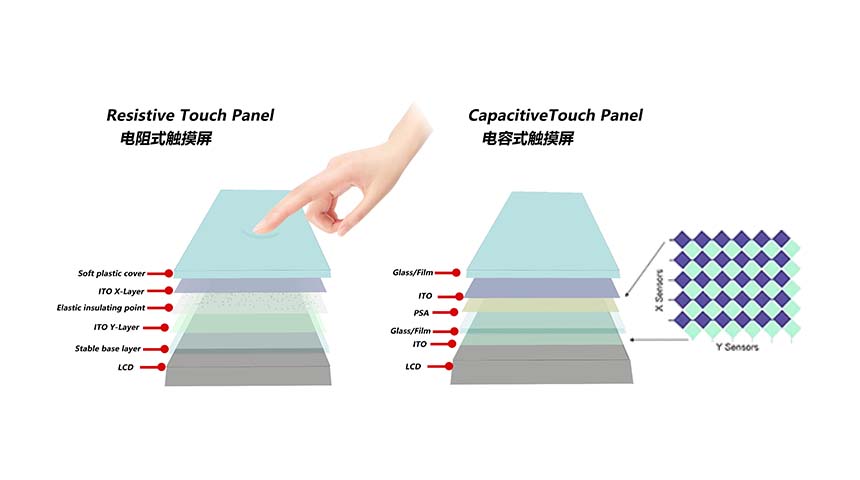
Capacitive Touch Panel or Resistive: Which Suits Your Needs?
-
Why Choose an IPS LCD Panel for Your Next Screen Purchase?
-
CDTECH to Showcase Cutting-Edge Display Solutions at SID 2025
-
Comparing Different Types of Displays in Cars: A Detailed Overview
-
White Spots on LCD Screen: Causes, Fixes & Industrial Solutions (2026 Guide)