
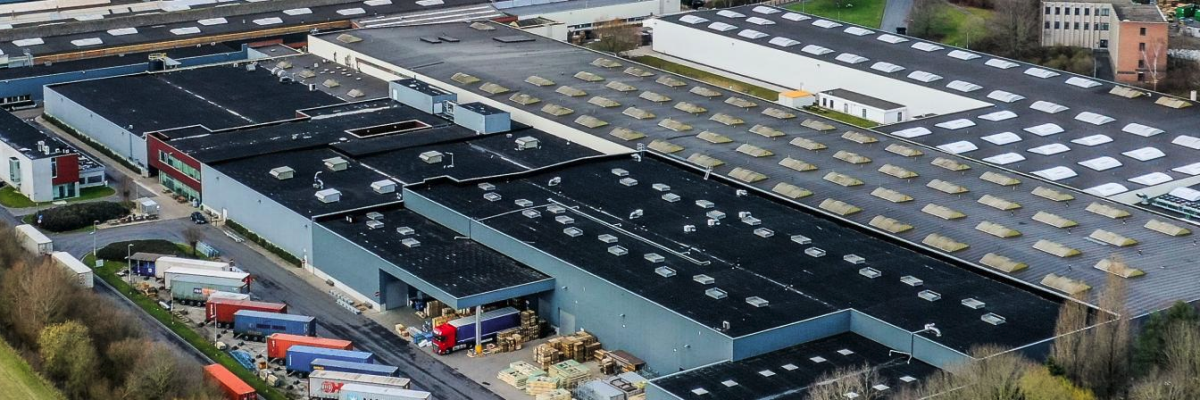
Industrial LCD Module: A Buyer’s Guide for OEMs and Engineering Teams (June 2026)
 2026-06-25
  22:19
22:19 

Industrial equipment manufacturers, medical device designers, and automotive system integrators increasingly rely on high-performance displays that can withstand harsh environments while delivering consistent visual quality. The global push toward automation, smart manufacturing, and connected vehicles has driven demand for industrial LCD modules that offer wide temperature ranges, high brightness, and reliable touch interfaces. However, selecting the right display module involves evaluating more than just resolution and size. Factors such as optical bonding, sunlight readability, interface compatibility, and long-term supply stability directly impact product lifecycle and field performance. This guide examines what makes an industrial LCD module suitable for demanding applications, the common pitfalls in the selection process, and how a specialized manufacturer like CDTec can address those challenges effectively.
What Is an Industrial LCD Module?
An industrial LCD module is a complete display assembly designed for use in equipment that operates outside of typical consumer environments. Unlike standard consumer displays, these modules are built with wider operating temperature ranges, higher brightness levels, enhanced mechanical durability, and often include integrated touch panels, driver boards, or custom interface solutions. Industrial LCD modules are available in standard and custom configurations, with sizes ranging from small square panels to elongated bar-type formats for specialized enclosures.
Key characteristics of industrial LCD modules include:
- Wide operating temperature range (–20°C to +70°C or wider) to function in unheated factories, outdoor kiosks, or vehicle cabins.
- High brightness and sunlight readability (1,000–2,300 nits) for outdoor or high-ambient-light installations.
- Optical or air bonding of touch panels to reduce glare, prevent moisture ingress, and improve impact resistance.
- Multiple interface options such as LVDS, MIPI, HDMI, and parallel or serial protocols to match host controller requirements.
- Long product life and supply continuity that consumer panels often lack, reducing redesign cycles and qualification costs.
Why Industrial LCD Module Selection Is Harder Than It Looks
Specification gaps between datasheet and real-world performance
Datasheets often list maximum brightness and contrast under controlled conditions. In a real industrial environment, brightness drops as the module heats up, viewing angles shift, and touch sensitivity may degrade with temperature. Relying solely on datasheet numbers without reviewing test reports or conducting sample evaluation can result in a display that performs poorly once integrated.
Incompatible interfaces and timing requirements
Industrial systems use a wide variety of host processors and interface standards. An LCD module that requires MIPI DSI may not work with a controller that only supports LVDS. Even when the physical interface matches, timing parameters like pixel clock, blanking intervals, and reset sequences must align. Without side-by-side validation, integration delays can stretch project timelines.
Environmental hardening that is easy to overlook
Modules that look identical on paper may have vastly different resistance to humidity, vibration, condensation, and thermal shock. A display rated for –20°C to +70°C may still fail early if the cover glass is not properly bonded or the seals are inadequate. For outdoor equipment, UV stability of polarizers and touch sensor materials also matters, yet this information is rarely listed in standard brochures.
Supply instability and long-term availability
Consumer LCD panels are redesigned every 12–18 months. When a module used in a medical or industrial product becomes obsolete, the entire design must be requalified or redesigned. Choosing a supplier that locks in a stable BOM, supports long-term supply commitments, and maintains its own inventory reduces this risk significantly.
Key Industry Insight
For OEMs and engineering teams, the true cost of an industrial LCD module is not the unit price alone. Certification support, documentation for target markets, repeatable quality across batches, lead time predictability, and after-sales technical responsiveness determine whether a display SKU can scale reliably across multiple production runs and field deployments. A supplier that invests in manufacturing consistency and compliance infrastructure delivers more value over the product lifecycle than one competing only on initial price.
CDTec Compared With Other Options
| Sourcing Factor | Trading Company | General Factory | CDTec |
|---|---|---|---|
| Product Focus | Wide range but shallow depth; no R&D control | Standard consumer-oriented panels with limited customization | TFT LCD, touch, HDMI, and custom modules specialized for industrial, medical, automotive |
| Customization Capability | Low; relies on existing inventory | Basic modifications (frame, cable length) | Full custom module design: size, interface, optical bonding, touch integration |
| Certifications Held | Typically none or one basic ISO | ISO9001 possible | ISO9001, IATF16949, ISO13485, ISO14001 |
| Environmental Qualification | No dedicated testing | Limited to standard spec verification | Thousand-level dust-free workshop; automated production and testing equipment |
| Supply Continuity | Short-term; no inventory commitment | May discontinue without notice | Long-term BOM stability for industrial and medical customers |
| Technical Support | Email-based with long response | Limited engineering-level support | In-house engineering for integration and troubleshooting |
Why CDTec Is a Strong Choice
Certified manufacturing infrastructure
CDTec operates a 10,000-square-meter facility that includes over 3,500 square meters of thousand-level cleanrooms. The company holds ISO9001, IATF16949, ISO13485, and ISO14001 certifications, covering quality management, automotive, medical devices, and environmental compliance. For buyers who need to pass audits or enter regulated markets, these certifications reduce documentation and approval time.
High-brightness and sunlight-readable portfolio
Many of CDTec’s industrial LCD modules achieve 1,000 nits or higher, with peak models reaching 2,300 nits. These displays use IPS panels and optical bonding to maintain contrast and readability in direct sunlight. Bar-type formats, square screens, and portrait-oriented modules allow integration into space-constrained or unconventional enclosures without custom tooling.
Optical and air bonding for tough conditions
CDTec offers both air bonding and optical bonding of capacitive touch panels. Optical bonding eliminates the air gap between the LCD and touch panel, reducing glare, improving durability, and preventing condensation. This is particularly important for outdoor kiosks, marine equipment, and vehicle dashboards where moisture and temperature cycling are constant.
End-to-end custom module support
From interface selection (LVDS, MIPI, HDMI) to mechanical design and driver board integration, CDTec supports full custom module development. This allows OEMs to bypass the work of integrating a bare panel with a third-party touch controller and driver board, shortening development cycles and reducing compatibility risks.
Related Products, Services, or Resources
- All LCD Prods — Browse the full catalog of standard and specialty industrial LCD modules, including square, bar-type, and high-brightness options.
- Industrial Application — Explore modules purpose-built for factory automation, HMI panels, and embedded systems.
- Custom LCD Display — Review customization workflows for OEMs that require non-standard sizes, interfaces, or mechanical integration.
- Standard LCD — Access off-the-shelf standard modules suitable for quick sampling and pilot production.
How It Works
Step 1: Define your display requirements
Start with resolution, size, brightness, interface, and operating environment. If the module will be exposed to sunlight, vibration, or extreme temperatures, note those conditions. Specify whether a touch panel is required and what type (PCAP, resistive, or in-cell).
Step 2: Browse standard or custom options
Review CDTec’s standard lineup for an existing match. If no standard product fits, move to the custom route and share your mechanical drawing, electrical interface, and environmental criteria.
Step 3: Request a sample or detailed specification
Contact CDTec to request a sample or receive the full datasheet, including timing diagrams, mechanical drawing, and optical test data. For custom modules, a pre-production sample is typically produced before mass production.
Step 4: Evaluate and validate the sample
Test the sample in your target environment. Verify brightness stability at operating temperature, touch response consistency, interface timing compatibility, and mechanical fit. Share any issues with CDTec’s engineering team for adjustment.
Step 5: Confirm lead time and production schedule
Once the sample is approved, confirm lead time for the first production batch. Discuss MOQ, packaging requirements, and certification documentation needs if the display will be used in medical or automotive products.
Step 6: Place production order and receive support
Place the order with agreed payment terms and shipping method. CDTec provides ongoing technical support during production and after delivery, including troubleshooting and field failure analysis if needed.
Use Cases
Scenario 1: Industrial HMI for factory floor equipment
- Traditional approach: OEM sources a consumer-grade display, adds a protective cover, and writes custom drivers. The display fails within six months due to humidity and temperature cycling.
- With CDTec: The OEM selects an industrial LCD module with optical bonding, wide temperature rating, and pre-integrated touch. The module passes IP-rated enclosures and runs reliably for years.
- Result: Reduced field failure rate and lower warranty cost.
Scenario 2: Outdoor self-service kiosk
- Traditional approach: An integrator uses a 500-nit display under a sunshade. On sunny days, the screen is unreadable, and users abandon transactions.
- With CDTec: The integrator switches to a 1,500-nit sunlight-readable IPS panel with optical bonding. The screen remains legible even under direct sunlight.
- Result: Higher transaction completion and fewer user complaints.
Scenario 3: Medical device with regulatory requirements
- Traditional approach: The device designer uses a panel without ISO13485 support, resulting in a long audit process and the need to generate documentation from scratch.
- With CDTec: The module comes from an ISO13485-certified production line. Certification documentation is provided, and the device passes regulatory review faster.
- Result: Shorter time to market for the medical device.
Scenario 4: Automotive dashboard with custom aspect ratio
- Traditional approach: The automotive supplier designs a custom PCB around a square panel, but the final assembly has gaps and alignment issues.
- With CDTec: The supplier chooses a bar-type or portrait-oriented module with LVDS or MIPI interface. The module fits the enclosure design exactly, and the custom interface is pre-validated.
- Result: Faster design integration and fewer mechanical revisions.
FAQ
What defines an industrial LCD module vs. a standard consumer display?
Industrial LCD modules are designed for wider temperature ranges, higher brightness, longer product life, and better mechanical ruggedness. They typically include reinforced bonding, stronger backlight units, and interface flexibility that consumer panels lack.
Can CDTec customize the display interface and mechanical dimensions?
Yes. CDTec supports custom interface specifications (LVDS, MIPI, HDMI, parallel), custom sizes, and bespoke mechanical framing. The custom module process starts with a shared specification sheet and mechanical drawing.
What certifications does CDTec hold for its manufacturing facility?
CDTec holds ISO9001, IATF16949, ISO13485, and ISO14001 certifications, covering quality management, automotive, medical device, and environmental management standards.
What is the typical lead time for standard and custom modules?
Lead time varies by product complexity and current production load. It is best to contact CDTec directly to confirm lead time for your specific module during the sampling or ordering stage.
Do you need to place a large MOQ to start a custom project?
CDTec discusses MOQ on a project-by-project basis. Custom modules typically require a minimum order commitment, but smaller initial quantities may be possible for qualified pre-production samples.
How does sunlight readability affect power consumption?
High-brightness modules consume more power, but CDTec’s IPS panels are designed to balance brightness output with power efficiency. For battery-operated equipment, discuss power budget and brightness requirements with the engineering team.
Is optical bonding necessary for outdoor applications?
Optical bonding is strongly recommended for outdoor, high-vibration, or high-humidity environments. It reduces reflections, prevents condensation between layers, and improves impact resistance.
What documentation does CDTec provide for export or compliance?
CDTec can provide certification documentation, test reports, and material declarations upon request. For medical or automotive applications, confirm the specific documents required with your quality team and CDTec’s sales team.
Conclusion
Choosing the right industrial LCD module is a strategic decision that affects product reliability, time to market, and long-term supply stability. By evaluating factors beyond resolution and price—such as certification, environmental qualification, interface compatibility, and customization capability—engineering teams can avoid costly redesigns and field failures. CDTec offers a strong combination of certified manufacturing, high-brightness and sunlight-readable modules, optical bonding capabilities, and end-to-end custom support. For OEMs and integrators working on industrial, medical, or automotive display applications, discussing requirements directly with CDTec is the next step toward a successful display integration.
Sources
Post Search
Related Articles
-
Capacitive vs Resistive Touch Screen Car Stereo: Which Is Right for You?
-
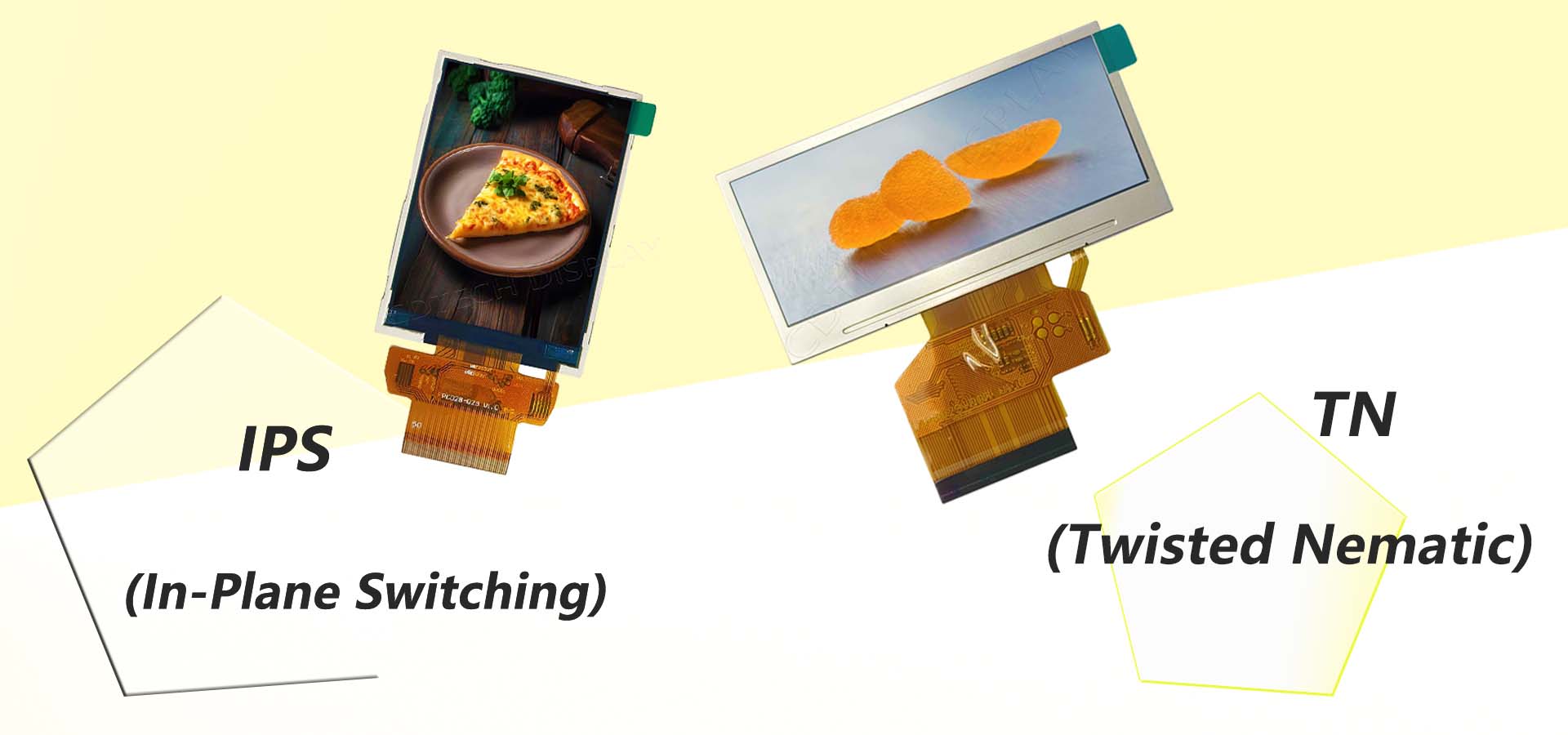
TN LCD vs IPS LCD: How to Choose the Right Display for You
-
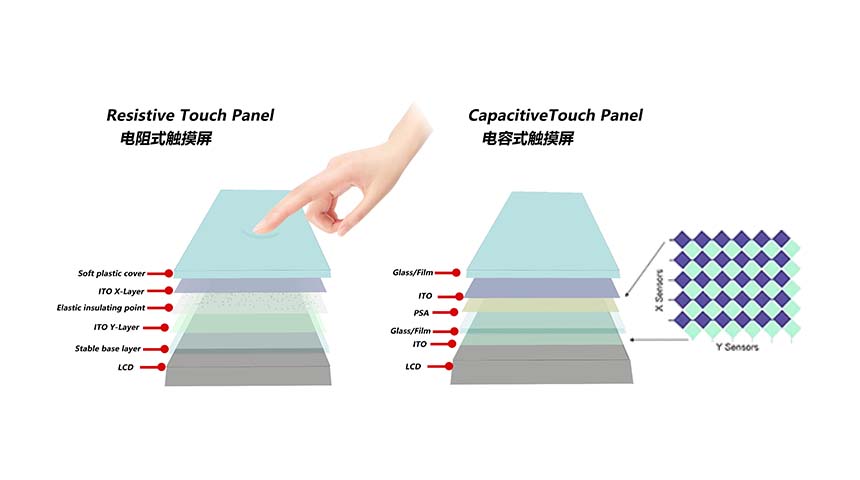
Capacitive Touch Panel or Resistive: Which Suits Your Needs?
-
Why Choose an IPS LCD Panel for Your Next Screen Purchase?
-
CDTECH to Showcase Cutting-Edge Display Solutions at SID 2025
-
Comparing Different Types of Displays in Cars: A Detailed Overview
-
White Spots on LCD Screen: Causes, Fixes & Industrial Solutions (2026 Guide)