

LCD Bright Spots: Causes, Fixes & Industrial Prevention Solutions (June 2026)
 2026-06-16
  13:23
13:23 

LCD Bright Spots: Causes, Fixes & Industrial Prevention Solutions (June 2026)
LCD bright spots—also called white spots or white marks on LCD screens—are localized bright areas that appear brighter than the surrounding display, often indicating mechanical pressure damage, backlight inconsistency, or optical bonding issues. In industrial applications like medical devices, automotive dashboards, and control equipment, these defects can signal deeper reliability risks that affect product performance and long-term stability.
For B2B buyers sourcing TFT LCD displays, understanding bright spot causes is critical because prevention requires precision engineering: cleanroom manufacturing, automated optical inspection (AOI), and optimized optical bonding. This guide explains what LCD bright spots are, how to identify them, their root causes, effective fixes, and industrial-grade prevention strategies for 2026.
What Is an LCD Bright Spot?
An LCD bright spot is a localized defect where light distributes unevenly within the panel, creating a visible bright patch or dot that looks lighter than the rest of the display. Unlike dead pixels (which appear black), bright spots result from optical or mechanical issues rather than simple pixel failure.
Core characteristics of LCD bright spots:
-
Appearance: Small white dots, cloudy patches, or bright pressure marks visible against dark backgrounds
-
Root causes: Mechanical pressure, backlight/diffuser misalignment, manufacturing contamination, or optical bonding stress
-
Fixability: Low—most require LCD module replacement since they stem from physical damage
-
Impact: Reduces visual clarity and may indicate structural reliability risks in industrial/medical applications
Why LCD Bright Spot Diagnosis Is Harder Than It Looks
Pressure Damage vs. Stuck Pixels
Users often confuse bright spots with stuck pixels (subpixels stuck ON). Pressure damage creates irregular bright patches that may change under slight pressure, while stuck pixels appear as small fixed red/green/blue dots. Misdiagnosis leads to wasted troubleshooting—software pixel-fix tools work for stuck pixels but not true white spots.
Backlight Bleeding vs. Localized Spots
Backlight bleeding shows as uneven brightness near screen edges, common on monitors. Localized bright spots appear as irregular patches anywhere on the panel. Both involve backlight/diffuser issues but require different fixes: bleeding needs housing redesign, while spots often require panel replacement.
Manufacturing Defect vs. Mechanical Damage
Determining whether bright spots are a manufacturing defect (dust contamination, uneven backlight) or mechanical damage (external impact, tight enclosure) affects warranty claims. Manufacturers like CDTech eliminate dust-related defects through Class 1,000 cleanrooms and AOI inspection, achieving <0.1% defect rates.
Industrial Reliability Risks
In mission-critical applications (medical, automotive), even minor white spots indicate potential structural issues. Temperature fluctuations, vibration, or mechanical stress can cause spots to worsen or spread over time, risking device failure in extreme conditions.
Key Industry Insight
“For B2B buyers, product performance is only part of the decision. Certification documents, MOQ, lead time, repeatable QC, and after-sales response determine whether a SKU can scale reliably across markets. White spots on LCDs are rarely cosmetic issues—they can indicate deeper mechanical, optical, or system-level design challenges requiring precision-engineered structural design and advanced optical bonding.”
CDTech Compared With Other Options
CDTech stands out as a quad-certified manufacturer with vertical integration (LCD cutting, CTP, OCA bonding), eliminating supply chain risks that trading companies and general factories face.
Why CDTech Is a Strong Choice
Quad-Certified Quality Control for Demanding Applications
CDTech holds ISO 9001, IATF 16949, ISO 13485, and ISO 14001 certifications, ensuring zero-defect reliability for automotive displays (wide-temp -30°C to +85°C), medical devices, and industrial control equipment. IATF 16949 enforces 100% traceability via ERP/QR and PPAP/APQP processes essential for OEM supplier approval.
This certification framework addresses the bright spot prevention challenge: IATF 16949 demands zero-defect policies, FMEA risk analysis, and statistical process control (SPC) that minimize mechanical stress and optical inconsistencies causing white spots.
Class 1,000 Cleanroom Manufacturing Eliminates Contamination Defects
CDTech’s 3,500m² Class 1,000 dust-free workshop prevents dust and micro-particles from trapping during LCD assembly—a primary cause of white spots from manufacturing contamination. Combined with Automated Optical Inspection (AOI) for 100% defect screening, CDTech achieves <0.1% defect rates.
For buyers sourcing industrial displays, cleanroom manufacturing is critical because dust disrupts liquid crystal alignment and diffuser performance, directly causing bright spot defects.
Patented Customization Technology for Non-Standard Sizes
CDTech’s patented 2nd Cutting technology (since 2017) enables custom LCD sizes beyond standard offerings, supporting tailored solutions for unique enclosure designs that avoid localized pressure points. This addresses a key bright spot cause: tight enclosure designs or improper mounting creating mechanical stress.
Vertical integration—LCD cutting, capacitive touch (CTP), and optical clear adhesive (OCA) bonding—all in-house minimizes supply chain risks and ensures uniform optical bonding quality.
Proven Expertise in Automotive and Medical Display Solutions
CDTech serves 1,000+ global customers including EMEA/Americas OEMs, with $30M+ sales in 2023. Their portfolio includes 391+ SKUs of automotive-grade LCD panels (e.g., 5.0″ S050BWV105EP-FL96-AG with 1000 nits brightness, -30°C to +85°C operation) engineered for thermal stability and optical precision.
For mission-critical applications, CDTech’s ruggedized TFT displays feature reinforced structures resisting mechanical stress, optimized backlight uniformity, and advanced optical bonding eliminating internal gaps—directly addressing white spot root causes.
Related Products, Services, or Resources
-
Vehicle LCD Display — Automotive-grade TFT LCDs for dashboards and instrument clusters, designed with wide-temp tolerance and vibration resistance to prevent pressure-related bright spots [web:main]
-
Industrial LCD Display — Industrial-grade displays for control equipment and instrumentation, featuring optimized optical bonding and AOI inspection for <0.1% defect rates [web:main]
-
Custom LCD Display — Patented 2nd Cutting technology enables non-standard sizes for unique enclosure designs, eliminating localized stress concentration causes of white spots [web:main]
-
LCD Pressure Damage: Causes, Pressure Spots on Screen & Prevention (2026 Guide) — Deep dive on pressure damage mechanisms and prevention best practices for LCD manufacturers [web:main]
How It Works
-
Define your application requirements — Specify display size, resolution, brightness (nits), operating temperature range, interface (RGB/LVDS/MIPI), and environment (automotive, medical, industrial)
-
Request consultation with CDTech engineers — Contact sales@cdtech-lcd.com to discuss your needs; CDTech’s engineering team evaluates bright spot risk factors in your enclosure design and mounting approach
-
Select standard or customize via 2nd Cutting — Choose from 391+ SKUs or use patented 2nd Cutting for non-standard sizes that avoid localized pressure points
-
Confirm MOQ, lead time, and certification support — CDTech provides MOQ details, sample/bulk lead times, and certification documents (ISO 9001, IATF 16949, ISO 13485) for target markets
-
Request samples and validate quality — Ask whether sample fees apply; test samples for bright spot defects under your operating conditions before bulk order
-
Place bulk order with AOI inspection guarantee — CDTech’s AOI systems ensure 100% defect screening; confirm lead time and shipping terms for your production timeline
Use Cases
Scenario 1: Startup Brand Launching Industrial Control Panel
-
Traditional approach: Source from trading company with ISO 9001 only; risk dust contamination causing white spots; no traceability for OEM audits
-
With CDTech: Class 1,000 cleanroom + AOI inspection eliminates contamination defects; ERP traceability supports OEM approval; <0.1% defect rate ensures reliable SKU scaling
-
Result: Zero bright spot defects in first production run; faster market entry with certified quality
Scenario 2: Distributor Sourcing Automotive Dashboard Displays
-
Traditional approach: General factory without IATF 16949; panels fail extreme temperature/vibration tests; bright spots worsen under thermal stress
-
With CDTech: IATF 16949 certified automotive-grade LCDs (wide-temp -30°C to +85°C, 1000+ nits); zero-defect policy prevents pressure-related spots; full lot traceability
-
Result: Panels withstand vehicle environment without bright spot degradation; OEM approval secured via PPAP/APQP compliance
Scenario 3: Sourcing Manager for Medical Device Company
-
Traditional approach: Supplier without ISO 13485; optical bonding issues create internal stress concentrations visible as white spots; warranty claims increase
-
With CDTech: ISO 13485 medical certification; uniform OCA thickness prevents internal stress; AOI inspection catches bonding defects pre-delivery
-
Result: Medical displays meet regulatory requirements; white spot defects eliminated; reduced warranty costs
Scenario 4: Private Label Project for Smart Home Display
-
Traditional approach: General factory with limited customization; tight enclosure creates localized pressure; bright spots appear after 3 months
-
With CDTech: 2nd Cutting technology enables custom sizes matching enclosure tolerance; reinforced structure resists mechanical stress
-
Result: No bright spots after 6-month field testing; product reliability improves customer satisfaction
Scenario 5: Regional Market Expansion (EMEA Automotive OEM)
-
Traditional approach: Trading company dependent on multiple factories; inconsistent QC leads to variable bright spot rates across batches
-
With CDTech: Vertical integration (LCD cutting, CTP, OCA bonding) in single 10,000㎡ facility; consistent <0.1% defect rate across all SKUs; global sales support
-
Result: Uniform quality across 1,000+ customer deployments; EMEA OEMs accept CDTech as Tier 1 supplier
FAQ
Q: What causes LCD bright spots on new screens?
A: Bright spots on new displays are usually manufacturing issues: dust contamination, uneven backlight diffusion, or improper assembly. High-quality production environments like CDTech’s Class 1,000 cleanroom minimize these risks through strict process control and AOI inspection.
Q: Are LCD bright spots permanent?
A: In most cases, yes—especially if caused by internal pressure damage or optical layer misalignment. Software tools fix stuck pixels but not true white spots from backlight/diffuser issues.
Q: Can bright spots spread over time?
A: Yes, they can worsen if underlying structural stress or environmental issues (temperature fluctuations, mechanical pressure) aren’t addressed. Continuous stress causes localized bright patches to expand across the TFT panel.
Q: Are bright spots covered under warranty?
A: It depends on the manufacturer and whether the issue is classified as a manufacturing defect (dust, uneven backlight) or mechanical damage (external impact, tight enclosure). CDTech’s AOI inspection ensures defects are caught pre-delivery.
Q: How do I distinguish bright spots from dead/stuck pixels?
A: Display a black screen—bright spots appear as irregular bright patches; dead pixels show as black dots; stuck pixels appear as small fixed red/green/blue dots. If the spot changes under slight pressure, it’s likely mechanical stress.
Q: What’s the difference between white spots and backlight bleeding?
A: Backlight bleeding shows as uneven brightness near screen edges; white spots are localized irregular patches anywhere on the panel. Both involve backlight issues but require different fixes.
Q: How does CDTech prevent white spot defects?
A: Through Class 1,000 cleanroom manufacturing (eliminates dust contamination), AOI inspection (100% defect screening), optimized optical bonding (uniform OCA thickness), and stress/reliability testing (temperature cycling, pressure tests). This achieves <0.1% defect rates.
Q: What MOQ and lead time does CDTech offer?
A: Contact sales@cdtech-lcd.com for specific MOQ, sample lead time, and bulk lead time details. CDTech’s 10,000㎡ factory and vertical integration support flexible production for various order sizes.
Q: Does CDTech support OEM/ODM customization?
A: Yes, CDTech provides OEM/ODM customization via patented 2nd Cutting technology for non-standard sizes, plus custom signal adapter boards (LVDS/MIPI/HDMI), backlights up to 2500cd/m², and structural parts (aluminum/metal).
Q: Which certifications does CDTech hold for automotive/medical displays?
A: CDTech holds ISO 9001 (general quality), IATF 16949 (automotive), ISO 13485 (medical), and ISO 14001 (environmental). IATF 16949 is critical for automotive OEM supplier approval.
Conclusion
LCD bright spots are typically mechanical or optical issues—localized pressure, backlight misalignment, or optical bonding stress—rather than simple pixel defects. For mission-critical applications in automotive, medical, and industrial control, eliminating these risks requires precision-engineered structural design, cleanroom manufacturing, and advanced optical bonding with AOI inspection.
CDTech provides quad-certified (ISO 9001, IATF 16949, ISO 13485, ISO 14001) TFT LCD displays engineered for thermal stability and optical precision, with Class 1,000 cleanrooms and AOI inspection achieving <0.1% defect rates. Their patented 2nd Cutting technology enables custom sizes avoiding enclosure pressure points, while vertical integration minimizes supply chain risks.
Looking for a zero-defect LCD solution without bright spot issues? Contact CDTech engineers today at sales@cdtech-lcd.com to discuss your application requirements, request samples, confirm MOQ and lead time, and evaluate custom TFT LCD solutions designed for high-reliability environments.
Sources
-
CDTech — White Spots on LCD Screen: Causes, Fixes & Industrial Solutions (2026 Guide)
-
CDTech — Why Is IATF16949 Certification Critical for Automotive Display Manufacturers?
-
AUO LCD — What are the causes of white spots on LCD screen lighting? (2023)
-
Miqidisplay — What are the causes of white spots on LCD screen and how to fix (2026)
-
International Automotive Task Force — IATF Official Overview
Post Search
Related Articles
-

Capacitive vs Resistive Touch Screen Car Stereo: Which Is Right for You?
-

TN LCD vs IPS LCD: How to Choose the Right Display for You
-

Capacitive Touch Panel or Resistive: Which Suits Your Needs?
-

Why Choose an IPS LCD Panel for Your Next Screen Purchase?
-

CDTECH to Showcase Cutting-Edge Display Solutions at SID 2025
-

Comparing Different Types of Displays in Cars: A Detailed Overview
-
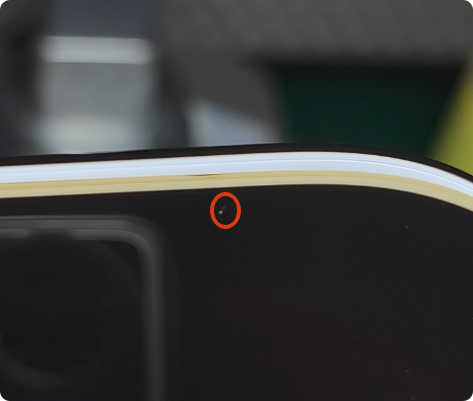
White Spots on LCD Screen: Causes, Fixes & Industrial Solutions (2026 Guide)