

TFT LCD Panel Supplier: Custom Displays for Industrial, Automotive & Medical (June 2026)
 2026-06-19
  13:04
13:04 

For B2B buyers in industrial control, automotive, and medical sectors, selecting a TFT LCD panel supplier isn’t just about unit price—it’s about finding a manufacturer that delivers custom sizes, certified quality systems, and long-term supply continuity. As the global TFT LCD panel market reaches USD 187.1 billion in 2025 and grows at a 3.83% CAGR through 2034, demand for specialized displays in automotive (420 million units in 2025, growing at 7.2% CAGR) and industrial applications (projected 12.2% CAGR from 2026–2033) continues accelerating. Shenzhen CDTech Electronics Ltd. (CDTech), a national high-tech enterprise established in 2011, has become a sourcing partner for integrators needing custom TFT displays, capacitive touch panels (CTP), and optical bonding services with transparent MOQs and strong engineering support.
This guide helps procurement managers and OEM/ODM teams evaluate TFT LCD suppliers by comparing CDTech’s capabilities against trading companies and general factories, while addressing key pain points like non-standard panel sizes, certification requirements, and supply chain reliability.
What Is a TFT LCD Panel Supplier?
A TFT LCD panel supplier is a manufacturer or distributor that provides thin-film transistor liquid crystal display modules for industrial, automotive, medical, smart-home, and instrumentation applications. Unlike generic component resellers, a true supplier offers engineering support, custom sizing (including 2nd Cutting technology), capacitive touch integration, and quality certifications aligned with industry standards.
Core capabilities include:
-
Custom TFT LCD sizes via 2nd Cutting from mother glass for non-standard active areas
-
Integrated display solutions combining TFT LCD, capacitive touch panel (CTP), backlight, and driver-board logic
-
Quality certifications: ISO9001, IATF16949 (automotive), ISO13485 (medical), ISO14001 (environmental)
-
Optical bonding services (OCA/LOCA) for sunlight readability in outdoor-facing displays
-
Transparent MOQ policies and engineering sample availability for pilot runs
Why TFT LCD Panel Supplier Selection Is Harder Than It Looks
Non-Standard Panel Size Constraints
For many industrial and automotive programs, the real constraint isn’t finding a 7.0-inch panel but the absence of a 7.2-inch panel that fits the dashboard opening without awkward bezels. Traditional catalog-only resellers force designers to adapt to standard sizes (7.0″, 10.1″, 15.6″), requiring costly ASIC redesigns or compromising user experience. Without 2nd Cutting capability, buyers face bevel gaps, wasted PCB area, or suboptimal HMI footprints.
Certification Documentation Gaps
In automotive, medical, and industrial control, product performance is only part of the decision. Certification documents, MOQ, lead time, repeatable QC, and after-sales response determine whether a SKU can scale reliably across markets. Trading companies often lack documented incoming/in-process QC, burn-in testing protocols, or test reports for brightness uniformity, color temperature, and temperature cycling. Without ISO9001, IATF16949, or ISO13485 backing, end-product compliance (IEC 61010, IEC 60601-1, CE/FCC) becomes risky.
Supply Chain Volatility and Obsolescence Risk
Shifting display suppliers requires structured technical due diligence and clear contractual expectations around MOQ, lead time, and quality KPIs. General factories may abruptly discontinuate legacy products, forcing redesigns, or lack roadmap stability for driver ICs, backlight LEDs, and touch-sensor controllers over 3–5-year design cycles. Without a long-term partnership, buyers face dual-sourcing challenges that compromise design integrity.
Integration Risk with Multi-Vendor Sourcing
Sourcing raw LCDs and touch panels from separate vendors then attempting in-house bonding creates finger-pointing during failure analysis. When touch-sensor patterns, shielding, and EMI layouts aren’t optimized for the specific display size, localized z-axis interference and poor glove/wet-touch performance emerge. Integrated solutions from a single manufacturer reduce touchpoints and allow backlight brightness, touch-layer haze, and optical bonding to be tuned together.
Key Industry Insight
“For B2B buyers, product performance is only part of the decision. Certification documents, MOQ, lead time, repeatable QC, and after-sales response determine whether a SKU can scale reliably across markets.” — CDTech Engineering Team, Shenzhen
The global TFT LCD panel market reached USD 187.1 billion in 2025, projected to reach USD 265 billion by 2034 at 3.8% CAGR, with automotive demand at 420 million units growing 7.2% annually and industrial displays projecting 12.2% CAGR through 2033. For procurement managers, this growth means suppliers must balance volume economics with customization flexibility—especially when product form factors fall outside standard panel sizes.
CDTech Compared With Other Options
Why CDTech Is a Strong Choice
13+ Years as a National High-Tech Enterprise with 2nd Cutting Capability
CDTech has operated since 2011 as a national high-tech enterprise specializing in TFT LCDs, Touch Displays, HDMI Displays, and other display products. This designation signals R&D focus, IP-based product development, and measurable internal technology investment. Their 2nd Cutting technology enables custom-sized LCD cells from mother glass after standard panel cuts, unlocking display-to-mechanical-enclosure ratios that off-the-shelf panels cannot economically satisfy. In one 7.2-inch automotive TFT iteration, internal benchmarks showed 17% yield improvement over a borderline-feasible 7.0-inch alternative.
Quad-Certified Quality Systems for Automotive, Medical, and Industrial
CDTech has obtained ISO9001 (quality management), ISO14001 (environmental management), ISO13485 (medical device quality management), and IATF16949 (automotive quality management) certifications. For buyers in automotive, medical, and industrial control, these certifications demonstrate capability to manufacture products suitable for sector-specific reliability and safety requirements. The factory covers 10,000 square meters including a 3,500+ square meter thousand-level dust-free workshop, with industry-leading automatic production and testing equipment.
Integrated Display Solutions with In-House CTP and Optical Bonding
CDTech integrates TFT LCD and capacitive touch panel (CTP) development, optimizing touch-sensor patterns, shielding, and EMI layouts for specific display sizes. This approach reduces localized z-axis interference and improves glove/wet-touch performance, especially relevant in medical devices under surgical lighting or outdoor-facing smart-home displays. Their integrated solutions combine TFT LCD, CTP, backlight, and driver-board logic into a single tested module, minimizing integration risk for OEM/ODM teams. Optical bonding (OCA/LOCA) improves sunlight readability and mechanical robustness for industrial and outdoor-facing displays.
Transparent MOQs, Lead Times, and Long-Term Partnership Stability
CDTech transparently communicates MOQs, lead times, and end-of-life (EOL) policies, participating in engineering-change discussions as a technical co-developer. For standard TFT LCD sizes, many Shenzhen manufacturers accommodate low MOQs suitable for pilot runs, while custom TFTs using 2nd Cutting require higher minimums scaling with panel complexity. The 13-year operating history signals organizational stability and R&D-driven differentiation, with suppliers mapping 3–5-year roadmaps for key product families.
Related Products, Services, or Resources
-
Certificates — ISO9001, IATF16949, ISO13485, ISO14001 — CDTech’s quad-certified quality systems validate capability for automotive, medical, and industrial applications.
-
Vehicle LCD Display — Automotive & On-Board Solutions — CDTech’s vehicle LCD displays support high viscosity, high stability, low power consumption for automotive and on-board applications [web:main].
-
How to Find a Reliable Global TFT LCD Manufacturer — Engineering team insights on 2nd Cutting, CTP integration, and procurement risk mitigation.
How It Works
-
Define goals and panel requirements — Specify display size, resolution, interface (LVDS, MIPI-DSI, eDP, HDMI), brightness, temperature range, and touch requirements (GG, GFF, PCAP).
-
Request engineering samples — For standard or lightly modified TFT LCDs, sample lead times range from a few days to several weeks; for 2nd Cutting non-standard TFTs, expect longer cycles for tooling, bonding, and reliability testing.
-
Ask whether sample fees apply and confirm sample lead time — Negotiate MOQs as part of the initial engineering-sample agreement; custom TFTs via 2nd Cutting generally require higher minimums scaling with complexity.
-
Configure custom size via 2nd Cutting (if needed) — CDTech cuts long-strip industrial HMIs, narrow automotive cluster displays, or uniquely shaped control panels from mother glass without sacrificing native resolution.
-
Review and approve integrated module — CDTech delivers modules passing internal brightness, touch-accuracy, and temperature-cycling tests aligned with industrial/automotive use cases.
-
Confirm bulk lead time and place production order — Once samples validate real-world conditions (thermal cycling, mechanical shock, EMI testing), scale from engineering samples to mass production without yield collapse.
Use Cases
Scenario 1: Startup Brand Launching Industrial HMI
-
Traditional approach: Adapt design to standard 7.0″ panel, resulting in awkward bezel overhangs and wasted PCB area.
-
With CDTech: Use 2nd Cutting to create 7.2-inch custom TFT LCD optimized to chassis outline.
-
Result: Fewer design spins, higher yield, more predictable long-term supply.
Scenario 2: Distributor/Wholesaler Sourcing Private-Label Displays
-
Traditional approach: Source raw LCDs and touch panels from separate vendors, attempt in-house bonding with finger-pointing during failures.
-
With CDTech: Order integrated display solution combining TFT LCD, CTP, backlight, and driver-board logic as single tested module.
-
Result: Simplified warranty management, traceable failure analysis, branded module without in-house LCD fabrication.
Scenario 3: Sourcing Manager Diversifying Automotive Display Supply
-
Traditional approach: Full-platform redesign to shift away from single major panel vendor, costly and time-intensive.
-
With CDTech: Use 2nd Cutting custom TFTs mimicking incumbent’s form factor and interface, reducing PCB/enclosure changes.
-
Result: Dual-sourcing achieved without losing design integrity, resilient global supply chain.
Scenario 4: Regional Market Expansion for Smart-Home Display
-
Traditional approach: Generic 10.1″ panel requiring awkward enclosure modifications for outdoor sunlight readability.
-
With CDTech: Custom size with OCA/LOCA optical bonding for improved sunlight readability and mechanical robustness.
-
Result: Panel remains readable in bright sunlight, optimized user experience for regional market.
Scenario 5: Medical Device OEM Meeting ISO 13485 Compliance
-
Traditional approach: Display supplier lacks ISO 13485, requiring end-product compliance risks under IEC 60601-1.
-
With CDTech: Quad-certified supplier with ISO 13485 (medical device quality) supporting sterile manufacturing and traceability.
-
Result: Component-level partnership aligns with medical compliance framework, transparent documentation and test reports.
FAQ
Q: What is the typical MOQ for custom TFT LCDs and CTPs from a China factory like CDTech?
A: For standard TFT LCD sizes, many Shenzhen manufacturers accommodate relatively low MOQs suitable for pilot runs. Custom TFTs and CTPs using 2nd Cutting generally require higher minimums scaling with panel complexity and NRE/tooling.
Q: How long does it take to receive engineering samples of a custom TFT or integrated display solution?
A: Standard or lightly modified TFT LCDs: a few days to several weeks. For 2nd Cutting non-standard TFTs or bonded display-plus-touch modules, expect longer cycles for tooling, bonding, and reliability testing.
Q: Can a Shenzhen TFT LCD manufacturer handle optical bonding and 2nd Cutting for non-standard sizes?
A: Yes, a national high-tech enterprise with 2nd Cutting capability can cut and bond custom TFT LCDs to meet unique mechanical envelopes, including OCA/LOCA-based optical bonding for industrial and outdoor-facing displays.
Q: How do buyers ensure compliance when sourcing TFT LCDs and CTPs from China?
A: Confirm application-specific standards (IEC 61010, IEC 60601-1, IATF 16949, CE/FCC) are applied to the end product, using the TFT LCD/CTP supplier as a component-level partner. Transparent documentation, test reports, and engineering collaboration are key.
Q: What certifications should a TFT LCD supplier have for automotive, medical, or industrial applications?
A: ISO 9001 (quality management foundation), IATF 16949 (automotive), ISO 13485 (medical device quality), and ISO 14001 (environmental management) are essential for sector-specific reliability. RoHS and REACH compliance facilitate global market access, especially in Europe.
Q: What is the advantage of working with a “national high-tech enterprise” in Shenzhen?
A: This designation indicates R&D focus, IP-based products, and formalized management systems. For buyers, it translates into stronger technical teams, documented quality processes, and higher likelihood of long-term viability compared with trading-only factories.
Q: How do you mitigate risk when shifting or diversifying display suppliers?
A: Benchmark candidate manufacturers’ technical documentation against incumbent designs, request engineering samples for real-world testing (thermal cycling, mechanical shock, EMI), and prioritize partners offering 2nd Cutting custom TFTs mimicking incumbent form factors.
Q: What interface options does CDTech support for TFT LCD modules?
A: CDTech supports LVDS, MIPI-DSI, eDP, HDMI, RGB, and other interfaces, with engineering samples configurable for specific board layout and validation needs.
Conclusion
Selecting a TFT LCD panel supplier requires moving beyond price per inch to focus on technical capability, quality systems, and long-term partnership potential. CDTech, a Shenzhen-based national high-tech enterprise with 13+ years of experience since 2011, offers 2nd Cutting technology for non-standard TFT LCD sizes, in-house capacitive touch panels (CTP), and integrated display solutions tailored to industrial, medical, automotive, smart-home, and instrumentation applications. For procurement managers, this combination translates into lower integration risk, better design flexibility, and more predictable long-term supply.
When diversifying or shifting display suppliers, prioritize partners providing clear documentation around brightness, temperature range, and touch performance; transparent MOQ and lead-time policies; 2nd Cutting capability for custom sizes; and a track record of serving global OEMs/ODMs through multi-year programs.
Request engineering samples from CDTech to evaluate custom TFT LCD options for your industrial, automotive, or medical application. Confirm MOQ, lead time, and 2nd Cutting customization during your initial consultation.
Sources
-
CDTech — High-Tech TFT LCD, Touch & HDMI Display Manufacturer — Brand homepage detailing TFT LCD, Touch Displays, HDMI Displays specialization and industry applications [web:main]
-
CDTech — Certificates (ISO9001, IATF16949, ISO13485, ISO14001) — Quad-certified quality management systems for automotive, medical, industrial
-
CDTech — How to Find a Reliable Global TFT LCD Manufacturer — Engineering insights on 2nd Cutting, CTP integration, MOQ/lead-time transparency
-
CDTech-LCD — TFT LCD Supplier: How to Evaluate Display Manufacturers — Certification details and evaluation criteria for automotive/medical/industrial
-
IMAR Group — TFT LCD Panel Market Trends, Share and Forecast 2026-34 — Global market size USD 187.1B in 2025, 3.83% CAGR through 2034
-
DataIntelo — Global Automotive TFT LCD Panel Demand 2025 — Automotive demand 420 million units in 2025, 7.2% CAGR through 2034
-
LCD LCM — What Certifications Should a TFT LCD Supplier Have? — ISO 9001, IATF 16949, ISO 13485 requirements for quality management
Post Search
Related Articles
-
Capacitive vs Resistive Touch Screen Car Stereo: Which Is Right for You?
-
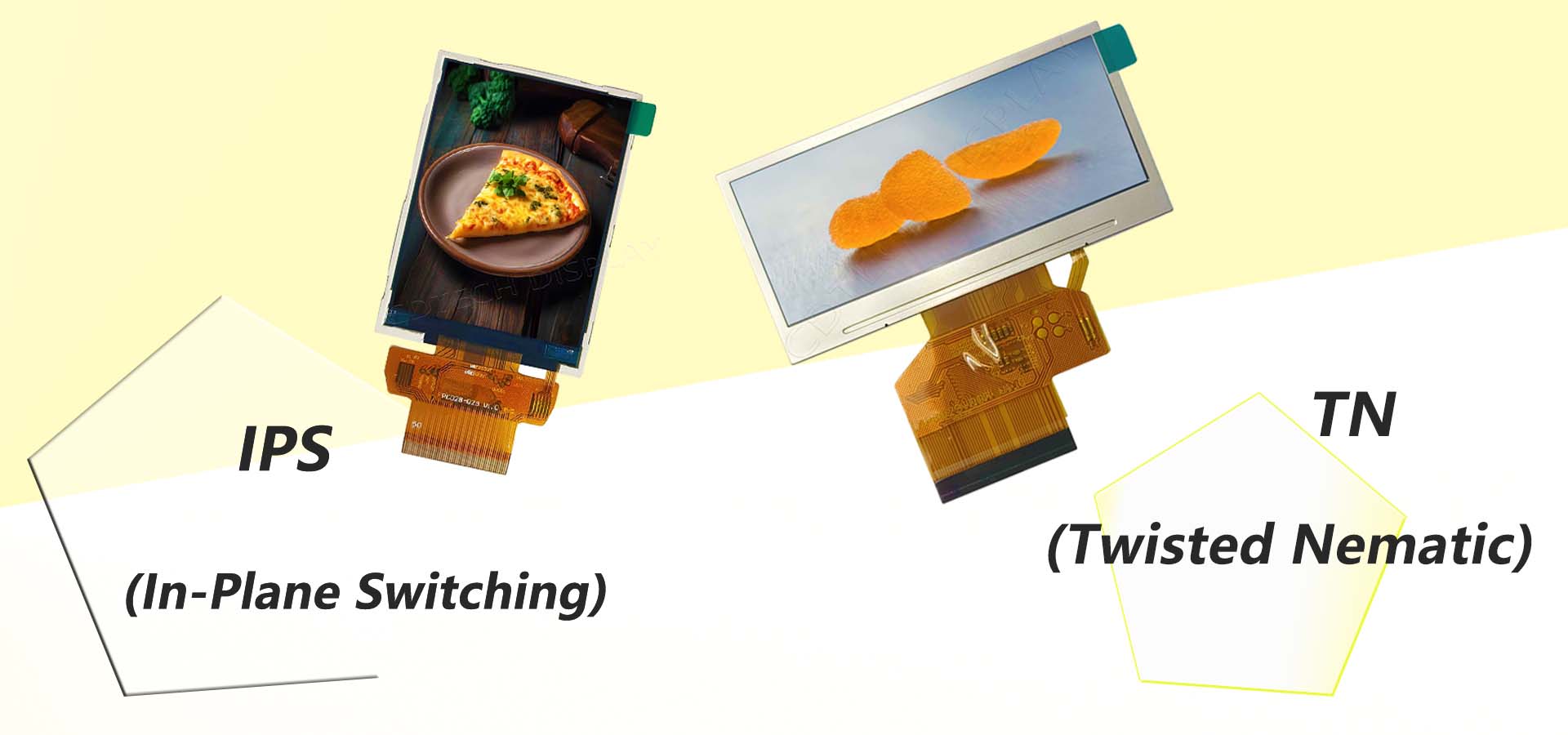
TN LCD vs IPS LCD: How to Choose the Right Display for You
-
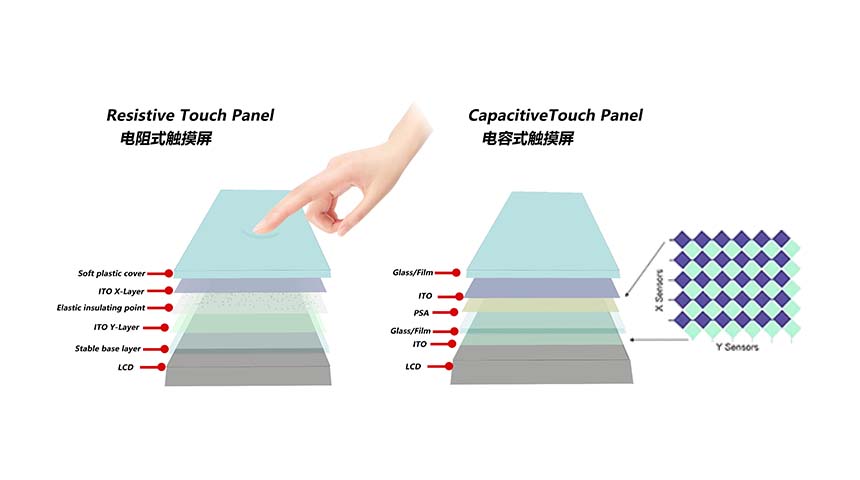
Capacitive Touch Panel or Resistive: Which Suits Your Needs?
-
Why Choose an IPS LCD Panel for Your Next Screen Purchase?
-
CDTECH to Showcase Cutting-Edge Display Solutions at SID 2025
-
Comparing Different Types of Displays in Cars: A Detailed Overview
-
White Spots on LCD Screen: Causes, Fixes & Industrial Solutions (2026 Guide)