

Which 3.5″ LCD for OBD2 Scanners Delivers Reliable Diagnostics Visualization?
 2026-04-20
  18:18
18:18 

A top 3.5″ LCD for OBD2 scanners combines high brightness (680–850 nits), wide temperature tolerance (-20°C to +70°C), and reliable touch interfaces for accurate vehicle diagnostics readouts. Key specs include 320×240 IPS resolution, RGB/MCU interfaces, optional OCA bonding, and custom sizing via patented 2nd Cutting technology—enabling exact fits for handheld diagnostic tools without high tooling costs.
Check: Why Is the 3.5 Inch LCD the Workhorse of Factory HMI Control Panels?
What Makes a 3.5″ LCD Ideal for OBD2 Scanner Applications?
The ideal 3.5″ LCD for OBD2 scanners balances portability and readability with IPS technology for wide viewing angles, ensuring clear fault codes and sensor data in tight engine bays. High brightness from 680 to 850 nits supports sunlight visibility, while capacitive touch enables precise menu navigation under varying lighting.
At 3.5 inches, these displays offer ergonomic handling for technicians, fitting handheld scanners without bulk. IPS panels like CDTech’s S035HQ55EN-FC37 provide superior color accuracy over TN for diagnostic graphs, while resolutions such as 320×240 deliver sharp P-code readouts.
| Feature | Standard 3.5″ LCD | OBD2-Optimized 3.5″ LCD |
|---|---|---|
| Brightness | 300 nits | 680–850 nits |
| Temp Range | -20°C~+70°C | -20°C~+70°C |
| Interfaces | RGB/MCU | RGB 24-bit/MCU |
| OCA Bonding | Optional | Available (e.g., S035HQ55EN-FC37) |
How Do Brightness and Sunlight Readability Impact OBD2 Display Performance?
Brightness of 680–850 nits ensures OBD2 scanner displays remain visible in direct sunlight or vehicle interiors, critical for reading live data outdoors. OCA optical bonding reduces glare, enhancing contrast for fault codes during daytime diagnostics.
CDTech’s 3.5″ models like S035HQ55EN-FC37 at 850 nits excel in bright service bays, while 680 nits in S035GQ94ES-DC37 suffices for mixed lighting. This range prevents washed-out visuals, vital for accurate sensor readings under hoods or dashboards.
Which Display Interfaces and Touch Technologies Ensure Reliable OBD2 Diagnostics?
RGB 24-bit and MCU interfaces pair with capacitive touch panels (CTP) for seamless data throughput and precise inputs on OBD2 displays. OCA bonding outperforms air bonding in durability and clarity for in-vehicle use.
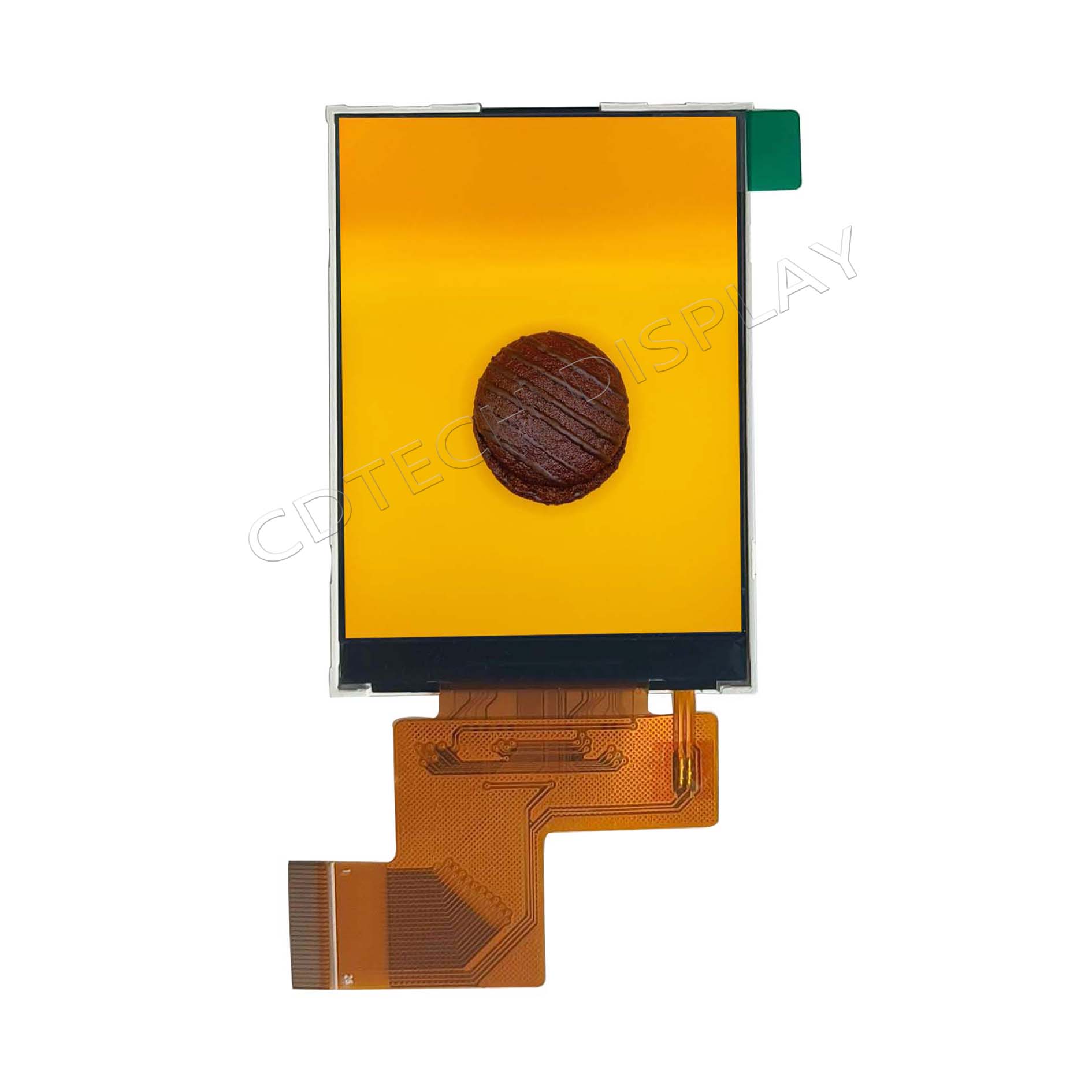
Models like S035HQ55NS-DL44 use RGB with air-bonded CTP for cost-effective navigation, while S035HQ55EN-FC37’s OCA version boosts optical performance. In-house CTP production at CDTech ensures tight integration.
CDTech Expert Views: “Our vertical integration—from LCD cutting to CTP assembly and OCA bonding—guarantees QC and traceability for OBD2 tools. With 1,000+ global customers, we deliver reliable modules that withstand diagnostics rigors, reducing failure rates in field service.”
— CDTech Engineering Team
What Temperature and Environmental Specifications Matter for In-Car OBD2 Displays?
Operating from -20°C to +70°C suits cabin and under-hood conditions, preventing degradation during thermal swings. IATF16949 certification validates resilience to vibration and moisture in OBD2 scanners.
CDTech’s 3.5″ LCDs like S035HQ55EN-FC37 maintain performance across this range, with OCA bonding adding mechanical stability against shocks on diagnostic carts.
How Does Custom Sizing via 2nd Cutting Technology Solve OBD2 Scanner Design Challenges?
CDTech’s patented 2nd Cutting (2017) creates non-standard 3.5″ sizes and resolutions like 320×240 in 6–8 weeks with low NRE and MOQ, fitting proprietary enclosures without rework.
This enables exact form factors for compact OBD2 handhelds, accelerating prototyping versus standard panels. Custom IPS variants support unique resolutions for enhanced diagnostics layouts.
Why Does Vertical Integration and Certification Matter for Mission-Critical OBD2 Modules?
Full in-house production ensures traceability via ERP/QR systems, while IATF16949, ISO9001, ISO14001, and ISO13485 certify reliability for automotive OBD2 use, backed by $30M+ 2023 sales.
CDTech’s 10,000㎡ factory with 3,500㎡ clean rooms supports high-volume runs without fragmentation, proven with 1,000+ customers including diagnostics leaders.
CDTech Expert Views: “With 391+ SKUs and 6–8 week custom cycles, our 2nd Cutting and certifications empower OBD2 makers from prototype to production, ensuring supply stability and compliance.”
— CDTech R&D Director
What Are Real-World Use Cases for 3.5″ LCDs in OBD2 Diagnostic Tools?
Handheld code readers use 3.5″ displays for P-code views and graphs; professional scanners leverage touch for resets; fleet tools integrate for tethered diagnostics with swift CTP control.
Check: Standard LCD
CDTech’s high-brightness models shine in field service, supporting live data under time pressure in workshops or roadsides.
How to Choose and Source a 3.5″ LCD for Your OBD2 Scanner Project?
Prioritize 680+ nits, -20°C~+70°C range, RGB/MCU interfaces, CTP with OCA, and custom options. Select suppliers like CDTech for low MOQ, prototyping, and long-term supply with MTBF data.
Balance costs via volume discounts; validate with reliability reports to avoid disruptions in multi-year OBD2 lifecycles.
Conclusion
A reliable 3.5″ LCD for OBD2 scanners bridges compact ergonomics with high-performance data visualization—combining 680–850 nits brightness, wide temperature tolerance, responsive touch interfaces, and custom sizing to meet technician demands in the field. CDTech’s vertically integrated 2nd Cutting technology, quad automotive certifications, and $30M+ production scale position it as the partner of choice for OBD2 scanner makers seeking proven reliability, rapid prototyping, and supply stability—enabling faster time-to-market and cost-optimized diagnostics tools without supplier fragmentation.
Explore CDTech’s full range of automotive LCD solutions for vehicle diagnostics and beyond. Discover how our patented 2nd Cutting technology enables non-standard 3.5″ variants for OBD2 scanner innovation. Learn about our integrated CTP manufacturing and OCA bonding for rugged diagnostics interfaces.
FAQs
Can a 3.5″ LCD for OBD2 scanners withstand temperature swings in vehicles?
Yes, with proper specifications. CDTech’s automotive 3.5″ modules operate -20°C to +70°C and are thermally cycled tested under IATF16949 protocols, ensuring no pixel degradation or image retention during winter cold starts or summer under-hood diagnostics.
What brightness level do I need for an OBD2 display to read data in sunlight?
Minimum 700 nits; 800–850 nits is ideal for outdoor diagnostics. OCA bonding further improves sunlight readability by reducing glare. CDTech’s high-brightness 3.5″ modules (up to 850 nits) are standard in professional OBD2 scanners.
How long does it take to develop a custom 3.5″ LCD variant for my OBD2 scanner?
CDTech’s patented 2nd Cutting technology enables custom sizing in 6–8 weeks with low NRE, compared to 12+ weeks for standard panel makers. This accelerates OBD2 scanner prototyping without high tooling costs.
Do I need CTP (capacitive touch) on my OBD2 3.5″ display?
CTP adds cost but improves user experience for menu navigation, fault code scrolling, and configuration—especially on professional diagnostic tools. CDTech manufactures CTP in-house, ensuring reliability and tight integration with OCA bonding.
What certifications should my OBD2 LCD supplier have?
IATF16949 (automotive quality), ISO9001 (general QMS), ISO14001 (environmental), and ISO13485 (if medical-grade reliability is required). CDTech holds all four, plus 35 software patents and 44+ utility/invention patents—critical for OBD2 tool OEMs serving regulated markets.
Post Search
Related Articles
-

Capacitive vs Resistive Touch Screen Car Stereo: Which Is Right for You?
-

TN LCD vs IPS LCD: How to Choose the Right Display for You
-

Capacitive Touch Panel or Resistive: Which Suits Your Needs?
-

Why Choose an IPS LCD Panel for Your Next Screen Purchase?
-

CDTECH to Showcase Cutting-Edge Display Solutions at SID 2025
-

Comparing Different Types of Displays in Cars: A Detailed Overview
-
White Spots on LCD Screen: Causes, Fixes & Industrial Solutions (2026 Guide)