Nits vs Lumens vs Luminance A Guide to Display Brightness
 2026-11-03
 10:00


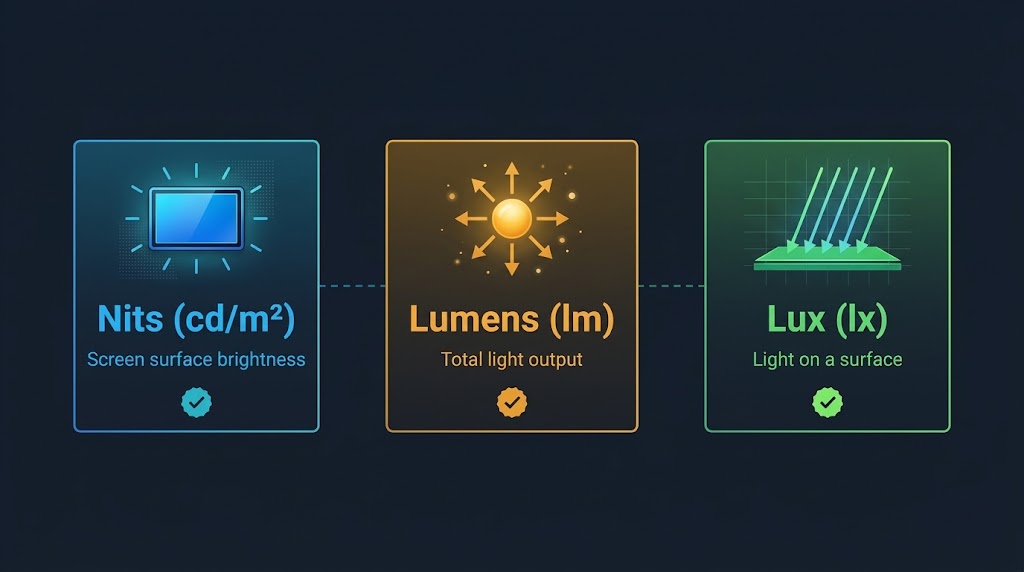
Display brightness is an important consideration when selecting a TFT LCD module for industrial equipment and embedded systems. However, terms such as nits, lumens, luminance, and lux describe different properties of light and should not be used interchangeably.
For industrial TFT LCD displays, brightness is typically specified in nits or candelas per square meter (cd/m²). Understanding these units helps engineers compare display specifications and determine whether a module is suitable for its intended operating environment.
This guide explains the differences between these measurements, how LCD brightness is measured, and what to consider when selecting a display for indoor, high-ambient-light, or outdoor applications.
What Are Nits in Display Brightness?
A nit is a unit of luminance commonly used to specify display brightness. One nit equals one candela per square meter (cd/m²).
1 nit = 1 cd/m²
Luminance describes light emitted, transmitted, or reflected from a surface in a particular direction per unit of projected area. For an LCD module, the specified brightness generally refers to the luminance measured from the display surface under defined test conditions.
For example, an industrial TFT LCD module rated at 800 nits has a specified luminance of 800 cd/m².
Higher luminance can improve visibility in bright environments, but it does not guarantee sunlight readability. Ambient light, screen reflections, contrast, and optical design also affect the viewing experience.
Nits vs Lumens vs Luminance vs Lux: What’s the Difference?
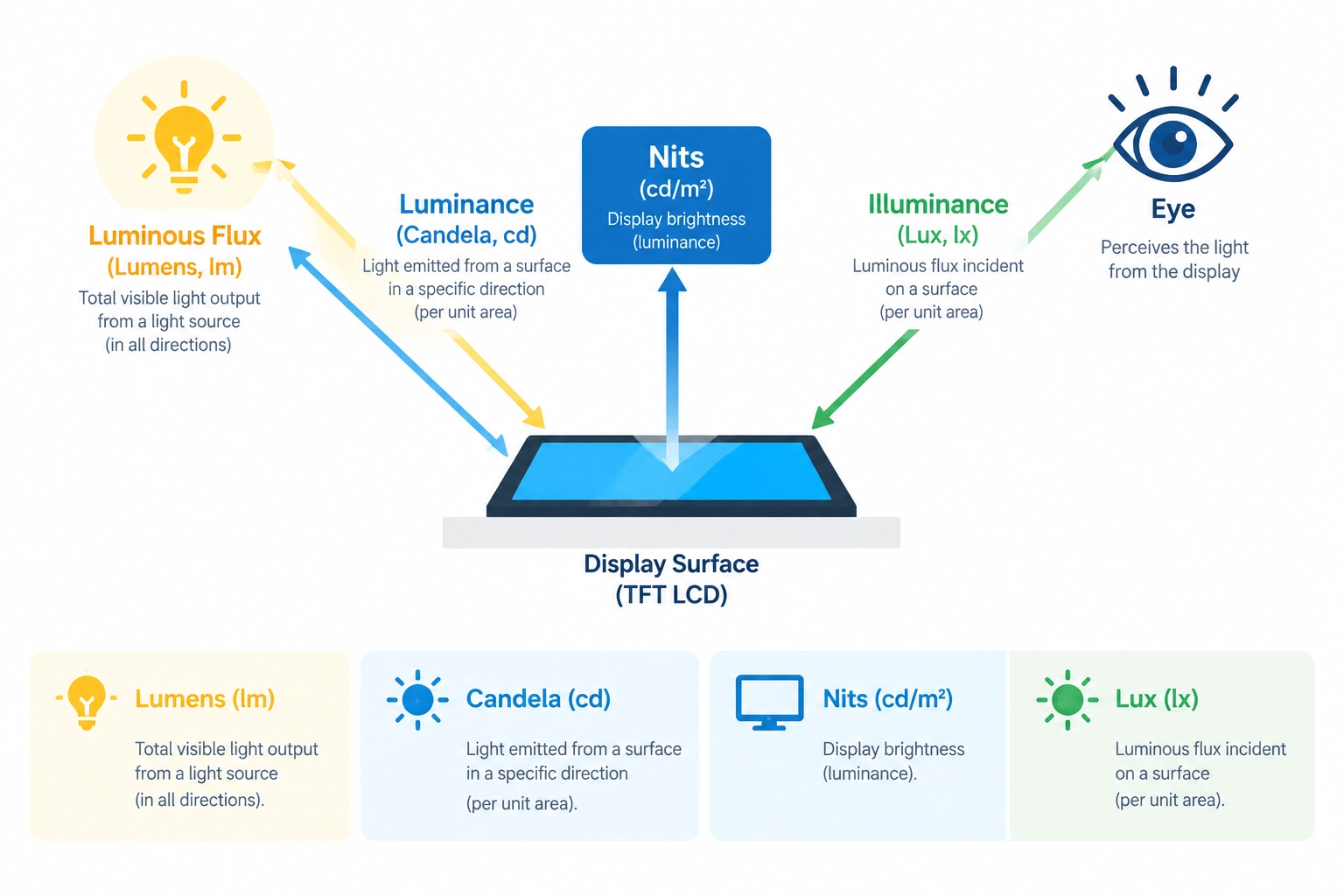
These terms describe different photometric quantities. Understanding their differences helps prevent misleading comparisons when evaluating display specifications.
|
Term |
Unit |
What it measures |
|
Luminance |
cd/m² (nits) |
Light emitted, transmitted, or reflected from a surface in a specific direction per unit projected area |
|
Luminous flux |
Lumens (lm) |
Total visible-light output from a light source |
|
Illuminance |
Lux (lx) |
Luminous flux incident on a surface per unit area |
What does nit mean? One nit equals one candela per square meter (cd/m²). It is a commonly used unit for specifying display luminance.
Nits vs Lumens
Nits express luminance in a specific viewing direction, while lumens measure the total luminous flux emitted by a light source, integrated over its angular distribution.
For an LCD module, the nit rating indicates the luminance of the display surface. A lumen value alone cannot tell you how bright that surface will appear from a specific viewing position.
Can you convert lumens to nits?
There is no universal fixed conversion factor between lumens and nits. A meaningful calculation requires additional information about the emitting surface, its area, the angular distribution of light, and the optical geometry.
When comparing industrial LCD modules, use the specified luminance in nits or cd/m² rather than attempting to convert lumens directly into display brightness.
Nits vs Luminance
Nits and luminance are closely related: luminance is the measured quantity, and the nit is a unit used to express it.
For example:
- 300 cd/m² = 300 nits
- 800 cd/m² = 800 nits
- 1,500 cd/m² = 1,500 nits
These values are directly comparable when the measurement conditions are consistent.
Nits vs Lux
Nits measure luminance, whereas lux measures illuminance—the amount of light falling on a surface per unit area.
For example, an LCD display may have a rated luminance of 800 nits while operating in an environment with strong ambient illumination. The two measurements describe different characteristics and cannot be directly compared.
Lux readings help characterize the lighting around a display, but they do not independently determine screen readability.
How Is LCD Display Brightness Measured?
LCD brightness is typically measured using a luminance meter or a suitable calibrated imaging photometer. Reliable comparisons require consistent measurement conditions.
During optical testing, the backlight unit (BLU) and completed LCD module may be evaluated separately. A luminance colorimeter, such as the Topcon BM-7A, can be used to measure luminance under defined test conditions. The final display luminance should be verified after integration with the LCD panel and other optical components, as the complete optical stack can affect the measured output.
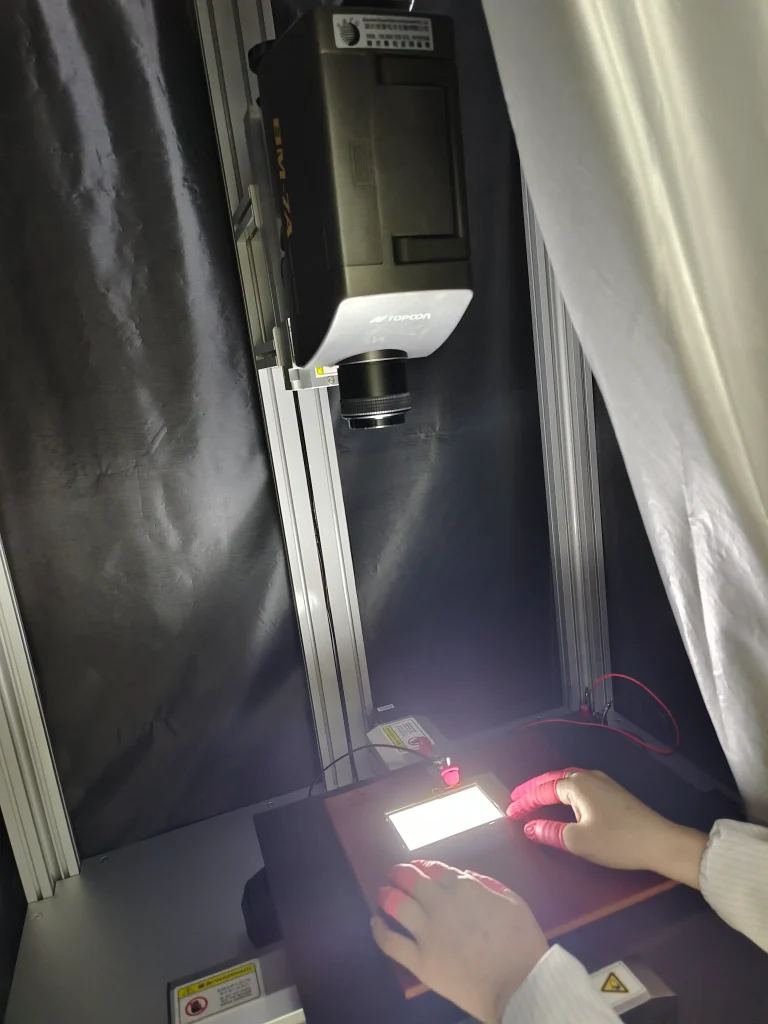
Precision luminance testing of an industrial TFT LCD backlight unit (BLU) using a Topcon BM-7A colorimeter in CDTech’s optical testing lab.
Key considerations include:
- Display settings:Record the backlight drive level and relevant display configuration.
- Operating conditions:Allow the display to stabilize according to the manufacturer’s test procedure.
- Measurement position:A center-point reading provides a reference, but luminance may vary across the screen.
- Complete assembly:Touch panels, cover glass, optical bonding, and surface treatments may affect the luminance and reflections of the final display.
An illuminance meter measures lux and should not be used as a substitute for a luminance meter when verifying a display’s rated brightness.
For demanding industrial applications, evaluate the assembled display under representative operating conditions and confirm the measurement method with the manufacturer.
How Many Nits Does an Industrial TFT LCD Display Need?
The required brightness depends on ambient lighting, viewing distance, optical construction, and the application’s readability requirements. The following ranges are illustrative starting points, not universal industry standards.
|
Application environment |
Illustrative brightness range |
|
Controlled indoor environments |
250–400 nits |
|
Bright indoor industrial environments |
400–700 nits |
|
High-ambient-light environments |
700–1,000 nits |
|
Some outdoor applications |
1,000 nits and above |
The appropriate specification should be validated against the actual installation conditions.
For indoor HMI systems and factory automation equipment, moderate brightness may be sufficient when lighting is controlled. Displays installed near windows or under strong industrial lighting may require higher luminance.
Outdoor equipment, including agricultural machinery, construction equipment, parking systems, and outdoor control terminals, may require higher brightness to maintain visibility under strong ambient light.
However, increasing luminance alone may not solve reflection-related visibility problems. Engineers should also consider:
- Surface reflections:Reflections from cover glass and touch panels can reduce perceived contrast.
- Optical bonding:In suitable designs, bonding can reduce internal reflections associated with air gaps.
- Surface treatments:Anti-glare (AG) and anti-reflective (AR) treatments manage surface reflections differently. The appropriate choice depends on the viewing environment and optical requirements. Learn more about the differences between AG, AR, and AF LCD coatings.
- Thermal and power limits:Higher backlight output can increase power consumption and heat generation.
For more detailed guidance, see CDTech’s sunlight-readable industrial TFT display guide.
Why Ambient Contrast Ratio Matters for Sunlight Readability
The ambient contrast ratio (ACR) accounts for the effect of reflected ambient light on display contrast. As reflected ambient luminance increases, dark areas appear brighter and the effective contrast decreases. This is why a high-brightness display may still appear washed out under direct sunlight if its surface reflectance is not properly controlled.
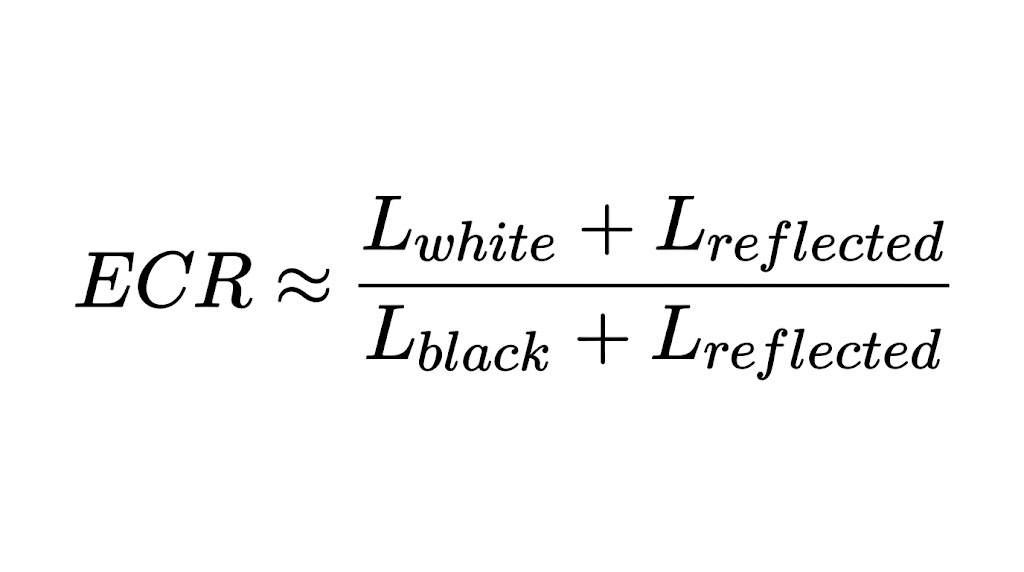
Unlike the native contrast ratio measured in dark conditions, ECR accounts for light reflected from the display surface. Strong ambient light increases reflected luminance, making dark areas appear brighter and reducing the visible contrast of displayed content.
A display with 2,000 nits of brightness may still appear washed out under direct sunlight if its surface reflectance is high. Conversely, reducing reflections through optical bonding and anti-reflective (AR) surface treatment can improve readability without relying entirely on higher backlight brightness.
When selecting an industrial TFT LCD for outdoor use, engineers should evaluate:
- Display luminance:Brightness measured in nits (cd/m²).
- Native contrast ratio:The white-to-black luminance ratio under controlled lighting.
- Surface reflectance:How much ambient light is reflected toward the viewer.
- Optical construction:Whether optical bonding and AR treatment are used to reduce reflections.
- Viewing angle:Whether sufficient contrast is maintained from the intended viewing positions.
For reliable sunlight readability, evaluate the completed display assembly under representative ambient lighting rather than relying on the brightness rating alone.
Optical bonding can further improve perceived contrast by reducing internal reflections caused by air gaps between display layers. Learn more about how optical bonding improves sunlight visibility.
How to Choose the Right Brightness for an Industrial TFT LCD Display
Before selecting a TFT LCD module, engineers should define the operating requirements of the complete display assembly.
- Identify the lighting conditions.Determine whether the equipment will be used indoors, under bright factory lighting, or outdoors under direct sunlight.
- Define the brightness target.Specify the required luminance in nits or cd/m² based on visibility requirements, and confirm the value under the intended operating conditions.
- Evaluate the optical configuration.Consider the LCD panel, touch panel, cover glass, optical bonding, and surface treatments together. Anti-glare (AG) treatment diffuses reflected light to reduce distracting reflections, while anti-reflective (AR) treatment reduces surface reflectance. The appropriate choice depends on the viewing environment and optical requirements.
- Check electrical and thermal requirements.Confirm backlight power, driver compatibility, operating temperature, and thermal management constraints.
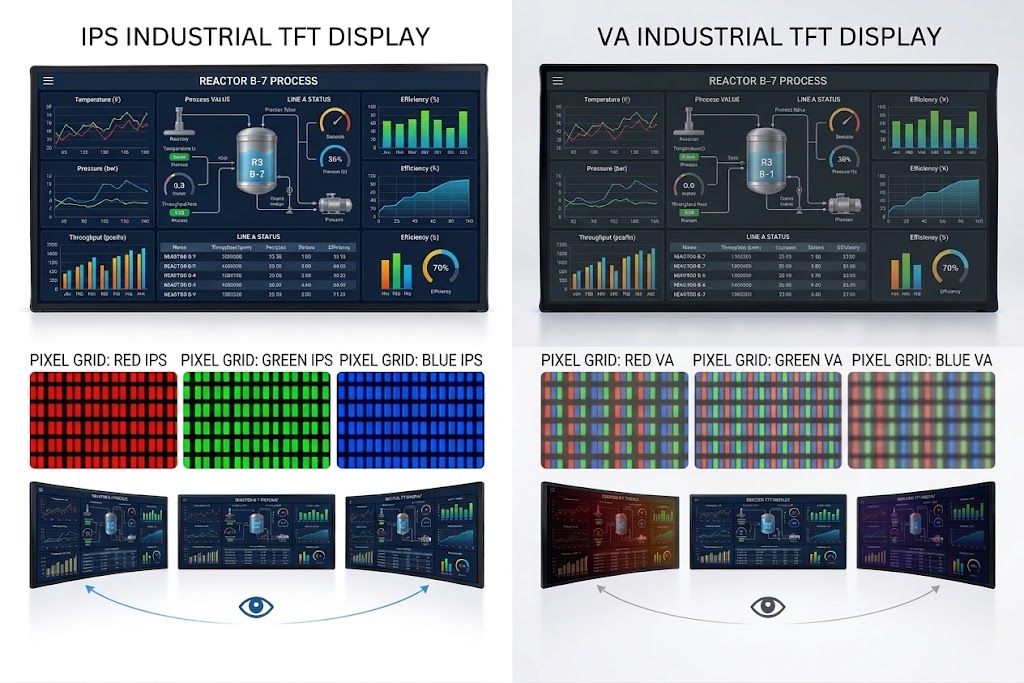
- Validate the complete assembly.For demanding applications, evaluate representative samples under realistic lighting and operating conditions rather than relying on the brightness rating alone.Brightness should also be evaluated alongside native contrast and viewing-angle performance. Our guide to IPS vs VA panel contrast and viewing-angle performance explains how panel technology affects industrial display selection.
CDTech supports industrial TFT LCD display projects with application-specific configurations. Explore our industrial LCD display solutions for application guidance, or browse all TFT LCD products to compare display sizes, brightness levels, interfaces, and touch configurations.
Frequently Asked Questions
Q: How many lumens is 1,000 nits? Can nits be converted to lumens?
A: There is no direct conversion between 1,000 nits and lumens. Nits measure luminance in cd/m², while lumens measure total luminous flux. A meaningful calculation requires information about the emitting surface, its area, and the angular distribution of light. The same applies to a display rated at 500 nits.
Q: Is 2,000 nits bright enough for outdoor use?
A: A 2,000-nit display provides high luminance and may be suitable for outdoor equipment. However, direct-sunlight readability also depends on screen reflections, cover-glass properties, optical bonding, contrast, and viewing angle. Evaluate the complete display assembly under the intended lighting conditions.
Q: Is cd/m² the same as nits?
A: Yes. One nit equals one candela per square meter (cd/m²). Both units express the same luminance value.
Q: Does a higher nit rating guarantee sunlight readability?
A: No. Higher luminance can improve visibility, but reflections, contrast, optical construction, and viewing conditions also affect readability. For outdoor applications, evaluate brightness alongside the complete optical design.
Conclusion
Understanding nits, lumens, luminance, and lux helps engineers evaluate display specifications accurately. For industrial TFT LCD modules, nits or cd/m² are the primary units used to specify luminance, while lux helps characterize ambient lighting.
When selecting a display, consider brightness alongside reflection control, optical construction, power consumption, and operating temperature. Evaluating the complete assembly under representative conditions helps ensure that the selected module meets the application’s visibility requirements.
Looking for an industrial TFT LCD display with application-specific brightness and optical configurations? Contact CDTech to discuss your display requirements.