
4K TFT LCD Display: Features, Interfaces and Industrial Applications
 2026-11-19
 11:00


For the discussion below, LCD 4K is the 3840×2160 matrix. Useful, yes, but hardly a completed brief. The host still has to generate the timing and the cable must carry it through the machine. The operator needs a reason for the detail, while the enclosure needs a path for the heat. That is a more productive comparison than asking whether 4K is simply “better.”
What is still unknown after specifying an LCD 4K TFT Display?
An active-matrix liquid-crystal panel and a 4K-class image are understood. Almost everything around them remains open. Is there an input board? A touch assembly? An enclosure or environmental rating? The quotation has to answer those questions.
What does 4K TFT LCD display resolution define?
With 4K TFT LCD display resolution, the image has a known number of pixels. The matrix used here is a 3840×2160 LCD panel. It could still be physically small or large, dim or bright, viewed head-on or off-axis. Software may scale it well or badly. A larger inspection view can put the pixels to work; on a small panel, some of that detail may disappear at the normal viewing distance.
Which system parts sit outside the panel?
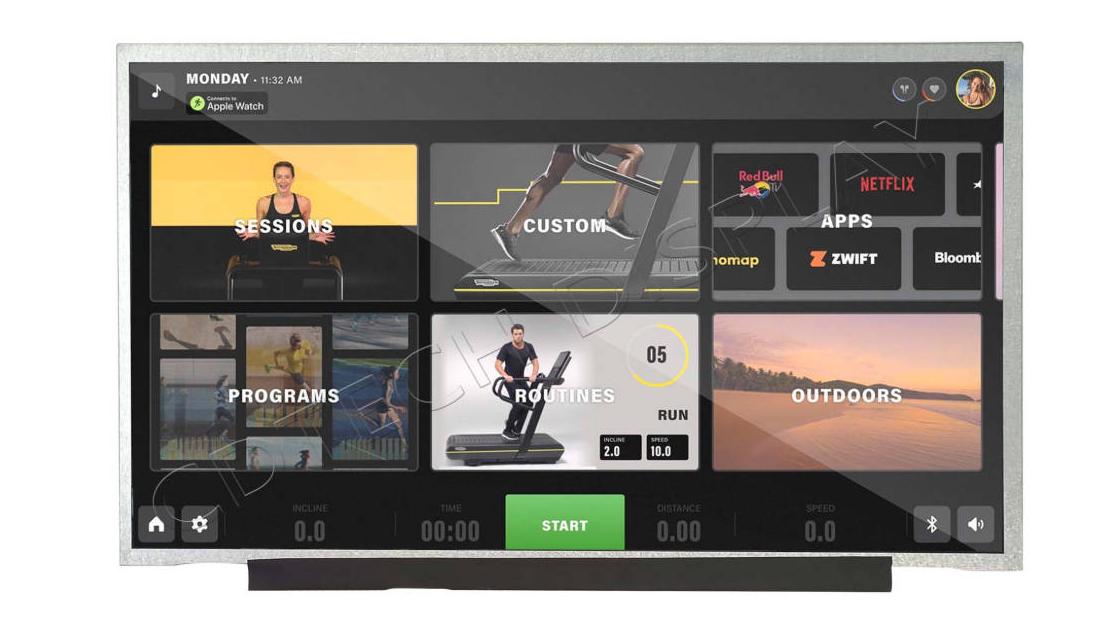
Outside the matrix sit the host output, timing, controller, cable, connector, backlight driver, power supply and enclosure. Touch adds a sensor and another interface. Unless those items appear in the brief, two offers carrying the same 4K label may describe very different assemblies.
When does LCD 4K improve an industrial task?
Fine inspection images, large maps and several data windows give 4K a plausible job. A large-font status page does not automatically need it. Content and viewing distance should settle the argument.
What should be placed on the 4K sample?
Load the page that will ship. Small labels, fine lines, trends and alarm states are more revealing than a stock photograph. View them from the operator’s position. If the difference is hard to see there, the added graphics and thermal work needs a stronger reason.
What does software scaling change?
Load the intended fonts and input method. Are the labels readable? Can an operator hit the touch targets without zooming or leaning in? Those checks reveal a scaling problem quickly. More pixels are no advantage when the interface makes the controls harder to use.
Which 4K display interface requirements should be confirmed?
The signal path is often the difficult part of an industrial 4K design. A correct matrix cannot compensate for marginal bandwidth or a connector assignment that does not match the host.
How should the source and cable be checked?
Begin at the source and follow the signal all the way to the panel. At each handoff, note what changes: timing, lanes or channels, connector, FPC and cable length. Use the planned cable route during the check, with the intended firmware, power sequence and backlight control. That is where a marginal link tends to reveal itself.
What optical and thermal fields belong beside the interface?
The same page should show luminance, viewing mode, active area, outline, thickness, cover glass and touch stack. Otherwise the signal can be approved while the screen still fails the optical or mechanical brief. Heat from the host and backlight belongs to the chosen construction, not to the word 4K.
Where do 4K industrial LCD display applications make sense?
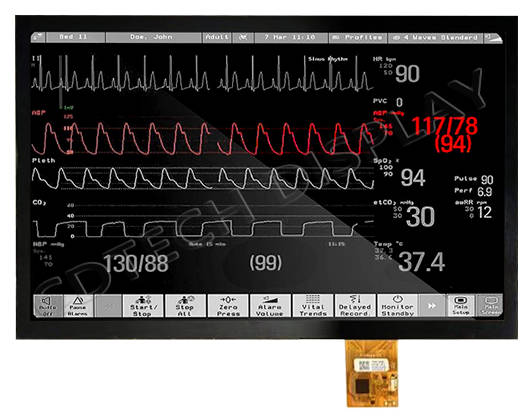
Inspection equipment, visualisation terminals, large control surfaces and information systems may justify a 4K review when detail matters.
What should the application test include?
Run representative content, start-up and recovery. Check the image from the operator position, record brightness and reflections under the expected ambient lighting, and measure the warmest part of the installed assembly. Where strong light or cover-glass reflections are a concern, Optical bonding may help reduce internal reflections in the display stack and improve readability, subject to the selected panel and cover configuration. If touch is present, check coordinate accuracy with the final cover and cable.
When is a lower matrix the more practical answer?
What if the host is short of bandwidth, the software uses large controls and the enclosure has nowhere to shed extra heat? In that case, a lower matrix may do the job with less integration work. Calling it a downgrade misses the point; the task, rather than the label, sets the requirement.
How CDTech reviews a 4K TFT LCD request
At CDTech, we review the content, host output, interface, luminance, touch stack, temperature profile and mounting drawing together. The review separates verified module information from points that still require a sample or custom engineering route, including the touch interface when touch is part of the product.
What should the engineering team send?
Send the source timing, cable drawing, content mock-up, active area, outline, brightness target, touch method and enclosure heat information. We can then identify a suitable comparison path without treating LCD 4K as a complete product description.
What stays model-specific?
Resolution, interface, optical values and temperature belong to the selected module record. We do not turn one record into a promise for every 4K design.
4K can hide a service problem. Suppose the display must be replaced without disturbing the host board: can the technician reach the connector, release the cable and restore the backlight control? Long duty and a defined restart sequence add further checks. None changes the matrix, yet any of them can make the installed screen awkward to maintain.
A still image is a weak test of the host path. Run a normal boot, change the content and return from standby. Keep the source, cable and panel revision with the result.
The mechanics can disagree even when the active area fits. Cover thickness may add depth; mounting pressure can reach the wrong place; the connector may have no clearance. Catching that on a drawing before quotation is far cheaper than finding it after tooling begins.
FAQ
Q: Does 4K TFT LCD display resolution guarantee a sharper user experience?
A: No. The additional pixels help only when the content, viewing distance, scaling, luminance and host graphics path let the operator use them.
Q: What are the main 4K display interface requirements?
A: Confirm source output, timing, lane or channel arrangement, connector, cable, firmware, power sequencing and signal integrity.
Q: Can CDTech recommend a 4K module from a keyword alone?
A: No. We need the host, content, optical, mechanical, touch and thermal brief before a model or custom route can be reviewed.
Looking for a 4K TFT LCD display for your industrial project?
Share your host output, interface requirements, brightness target, touch configuration, and mechanical and thermal constraints with CDTech. Our engineering team can help you review suitable module options, explore customization possibilities, and identify key requirements for sample validation. Contact CDTech to discuss your 4K display requirements and request a quotation.
Post Search
Related Articles
-
Storage Temperature Requirements for TFT LCD Displays
-
WQHD TFT LCD Display: Resolution Selection Guide for Industrial Applications
-
Operating Temperature of Industrial LCD Display: Standards and Selection Guide
-
5.7-Inch TFT LCD Display: Features, Resolutions and Industrial Applications
-
Nits vs Lumens vs Luminance A Guide to Display Brightness