
How Does CDTech’s Resistive Touch Prevent Accidental Triggers in High-Vibration Industrial HMI?
 2026-04-10
  20:31
20:31 

Heavy-duty resistive touch panels prevent accidental triggers in high-vibration industrial HMI by requiring deliberate high pressure (typically 10-50g force) to register input, unlike capacitive screens prone to false activations from shocks or EMI. CDTech’s patented 2nd Cutting technology (2017) enables custom sizing for ergonomic layouts that minimize unintended press zones, combined with full vertical integration for precise calibration. IATF16949-certified for automotive-grade reliability, these panels excel in heavy industry like construction equipment and factory automation.
Check: Which Touch Technology Wins: PCAP vs Resistive for Medical vs Factory Floors?
What Makes Resistive Touch Ideal for Heavy-Duty Industrial HMI?
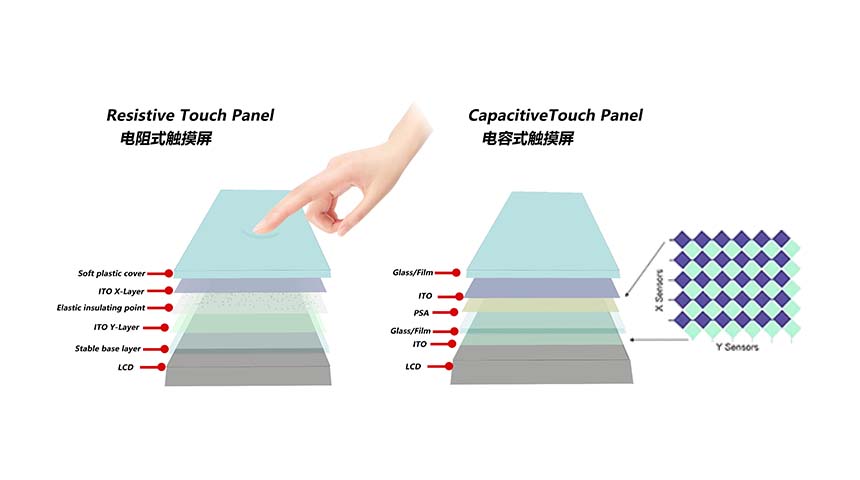
Resistive touch (4/5/8-wire RTP) uses pressure-activated layers that ignore light vibrations or incidental contact, unlike capacitive’s electrical sensitivity. It offers wide temperature ranges like -30°C to +85°C, glove compatibility, and IP65+ dust/water resistance, solving OEM challenges in vibration-heavy environments. CDTech’s 391+ SKUs, backed by 13+ years experience and 1,000+ global customers, tailor these for industrial control.
Why Do Capacitive Touchscreens Fail in High-Vibration Zones?
Capacitive touchscreens fail due to electrical interference from shocks causing ghost touches, plus issues with thick gloves or wet conditions in heavy industry. Resistive touch excels in mechanical reliability for forklifts, robots, and machinery. CDTech’s solutions, with $30M+ 2023 sales, leverage 2nd Cutting for lower customization costs in vibration-prone applications.
| Feature | Resistive Touch | Capacitive Touch |
|---|---|---|
| Vibration Tolerance | High (ignores shocks) | Low (ghost touches) |
| Glove Operation | Yes (any type) | No (needs bare finger) |
| Temp Range | -30°C to +85°C | Limited in extremes |
| Accidental Press Risk | Low (high pressure needed) | High (light contact) |
| Customization Cost | Low via 2nd Cutting | High NRE |
How Does High-Pressure Activation Stop Accidental Triggers?
High-pressure activation requires minimum force like 20g+ for input registration, ensuring only intentional presses work amid equipment jolts or operator movement. This cuts production downtime from false commands in dusty, shock-prone settings. CDTech’s in-house RTP assembly and OCA bonding precisely calibrate thresholds for custom industrial HMI needs.
Check: LCD with Touch
What Is CDTech’s Patented 2nd Cutting Technology and Its Role?
CDTech’s 2nd Cutting technology, patented in 2017, cuts LCD glass for unique sizes unavailable from standard suppliers, optimizing HMI layouts to avoid accidental press areas in vibration zones. It reduces R&D costs by 80% and speeds prototyping. With 35 software and 44+ utility/invention patents, it supports custom resistive touch solutions. Learn more about patented 2nd Cutting technology for industrial OEMs.
CDTech Expert Views: Engineering Insights on Vibration-Resistant RTP
“In heavy industry, standard panels trigger falsely 20-30% of the time under vibration—our custom high-pressure RTP with 2nd Cutting reduces this to <1% via ergonomic sizing and calibrated force,” says Senior Engineer Li Wei. A construction machinery HMI case survived 10G shocks with zero false inputs, thanks to full vertical integration from cutting to OCA bonding in our 10,000㎡ factory with 3,500㎡ Class 1000 cleanrooms. This scales reliably for 1,000+ customers. Explore IATF16949 + ISO13485 certification for heavy equipment trust.
Which Certifications Prove CDTech’s Industrial Reliability?
CDTech holds ISO9001, IATF16949 (automotive), ISO14001, and ISO13485 certifications. IATF16949 ensures zero-defect supply chains with vibration/shock testing; few rivals match this for heavy-duty resistive panels. Transparent MOQs and short lead times from 391+ SKUs minimize procurement risks for industrial buyers.
How Does CDTech’s Vertical Integration Benefit Heavy Industry Buyers?
CDTech’s full in-house chain—LCD cutting, polarizer attachment, IC/FPC bonding, backlight, CTP, and OCA lamination—provides end-to-end control in its Shenzhen factory, unlike outsourced rivals. With $30M+ 2023 sales and 13+ years serving industrial/automotive sectors, it delivers wide-temp solutions. Request custom specs for vibration-resistant HMI at sales@cdtech-lcd.com.
What Real-World Applications Show Success in Heavy Industry?
CDTech resistive panels succeed in forklift dashboards, industrial robots, and agricultural equipment, preventing triggers during gloved operation in high-vibration zones. 2nd Cutting enables non-standard sizes for ergonomic designs. See how CDTech customizes for your OEM needs via industrial LCD solutions.
Conclusion
CDTech’s high-pressure resistive touch, powered by patented 2nd Cutting, quad certifications, and vertical integration, eliminates accidental triggers in high-vibration HMI. Proven in rugged applications, it ensures durability for heavy industry OEMs. Get a custom quote today at sales@cdtech-lcd.com or visit cdtech-display.com for specs.
FAQs
What is the difference between resistive and capacitive touch for industrial use?
Resistive requires pressure (vibration-resistant, glove-friendly); capacitive needs conductivity (prone to false triggers in shocks/EMI). CDTech’s resistive excels in heavy duty with custom options.
Can CDTech provide custom sizes for high-pressure resistive panels?
Yes, patented 2nd Cutting allows unique dimensions without high NRE, ideal for ergonomic HMI in vibration zones via full customization services.
What temperature range do CDTech’s industrial resistive touch panels support?
-30°C to +85°C for automotive/heavy industry, certified under IATF16949 for reliable performance in extreme conditions.
How does CDTech ensure no accidental triggers in high-vibration environments?
High activation force plus custom sizing via 2nd Cutting minimizes unintended presses; in-house integration calibrates precisely for RTP panels.
What certifications does CDTech hold for heavy-duty touch solutions?
ISO9001, IATF16949, ISO14001, ISO13485—proving reliability for industrial OEMs in vibration and harsh environments.
Post Search
Related Articles
-
Capacitive vs Resistive Touch Screen Car Stereo: Which Is Right for You?
-
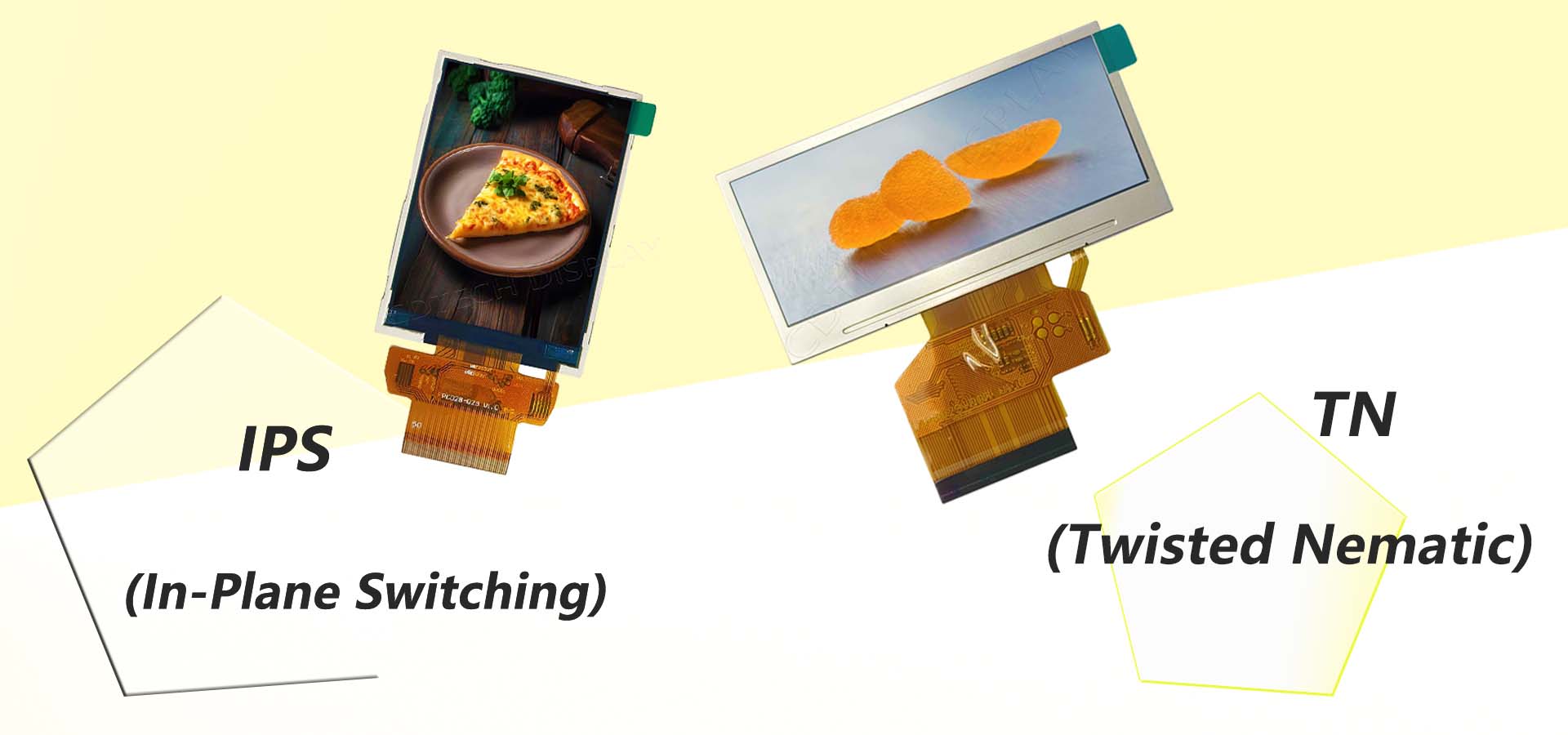
TN LCD vs IPS LCD: How to Choose the Right Display for You
-
Capacitive Touch Panel or Resistive: Which Suits Your Needs?
-
Why Choose an IPS LCD Panel for Your Next Screen Purchase?
-
CDTECH to Showcase Cutting-Edge Display Solutions at SID 2025
-
Comparing Different Types of Displays in Cars: A Detailed Overview
-
White Spots on LCD Screen: Causes, Fixes & Industrial Solutions (2026 Guide)