

How to Reduce Bridge IC Latency in TFT LCD Displays
 2026-04-18
  10:55
10:55 

Bridge IC latency is the signal delay (typically 2–15 ns) in converters like LVDS-to-MIPI bridges for TFT LCDs, caused by pixel clock sync, buffering, and serialization. Reduce it by selecting low-propagation-delay ICs (<5 ns), matching PCB traces, and optimizing impedance. CDTech’s vertically integrated displays with patented 2nd Cutting ensure real-time video via factory-tuned bridges for automotive HMI.
Check: How to Choose an LVDS to MIPI DSI Converter for Industrial Displays?
What Is Bridge IC Latency and Why Does It Matter for TFT LCDs?
Bridge IC latency is the propagation delay in signal converters like LVDS-to-MIPI bridges during pixel data serialization and deserialization in TFT LCDs. It matters because it causes video lag in automotive infotainment and industrial HMI, where delays must stay under 5 ns for real-time performance. CDTech optimizes this across 391+ SKUs for 1,000+ global customers with 13+ years of experience.
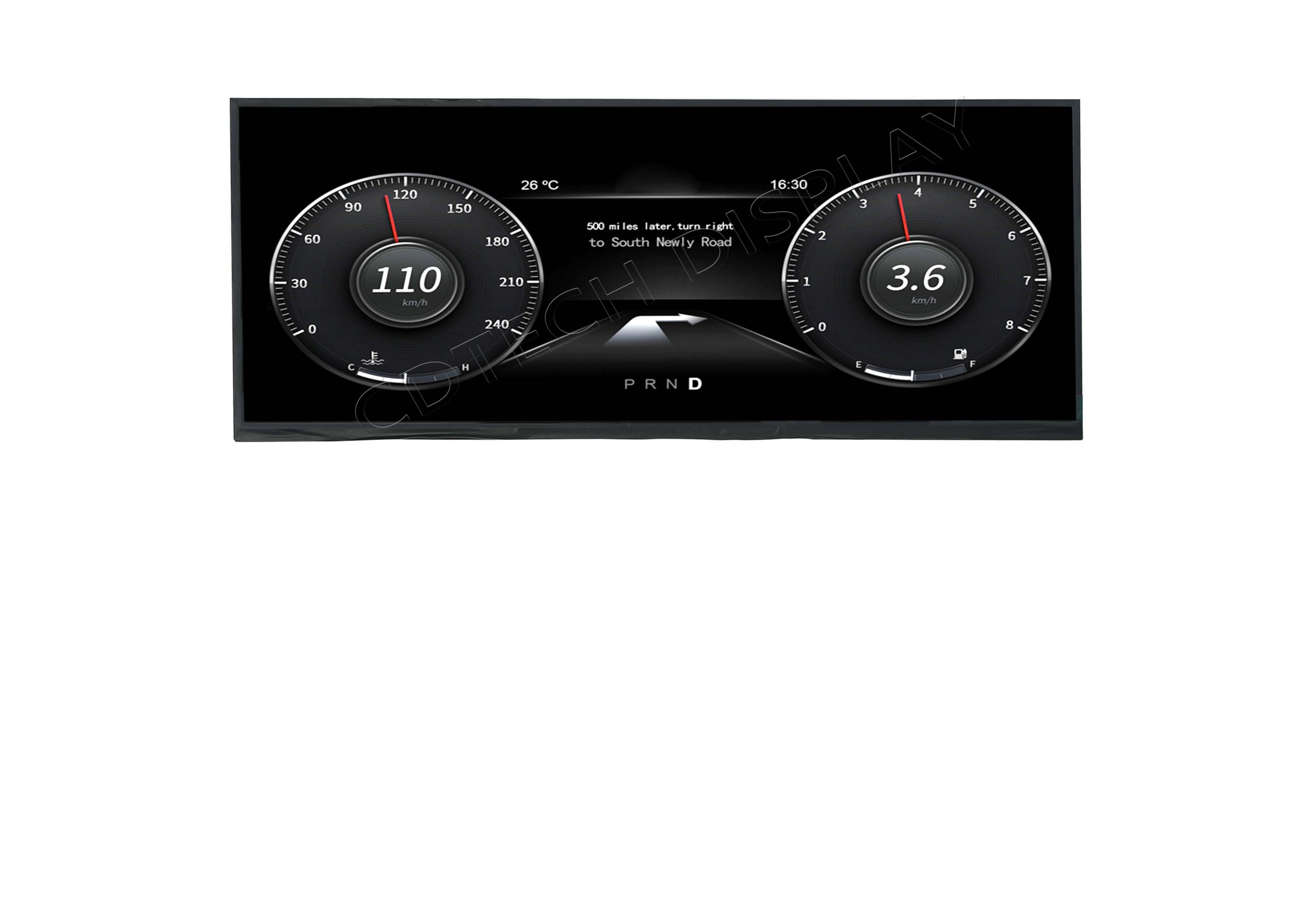
What Causes LVDS-to-MIPI Bridge IC Latency?
LVDS-to-MIPI bridge IC latency stems from pixel clock synchronization (1–5 ns), data buffering and EMI filtering (3–10 ns), and thermal jitter in wide-temp environments (-30°C~+85°C). LVDS incurs higher delays from parallel signaling compared to MIPI’s serial efficiency. CDTech’s IATF16949-certified designs address automotive crosstalk issues effectively.
How Does LVDS Compare to MIPI in Display Latency?
LVDS offers legacy compatibility but 5–12 ns latency due to parallel data, while MIPI provides 2–5 ns with high-bandwidth serial transmission and lower EMI. MIPI suits modern HMI better for low-latency needs.
| Interface | Typical Latency | Bandwidth | EMI Susceptibility | Automotive Suitability |
|---|---|---|---|---|
| LVDS | 5–12 ns | Medium | High | Good for legacy |
| MIPI | 2–5 ns | High | Low | Excellent for HMI |
| CDTech LVDS Example (S050BWV125ES) | <5 ns optimized | RGB 24-bit | Shielded | -30°C~+85°C |
| CDTech MIPI Example (S070QWU142FN-FL150-GF) | <5 ns | High (1200×1920) | Low | Bar-type automotive |
CDTech’s dual-interface expertise in custom TFT LCDs ensures <0.1% defects via ERP traceability in its 10,000㎡ factory.
Which Bridge ICs Offer the Lowest Latency for Real-Time Video?
Select bridge ICs with propagation delay <5 ns, automotive-grade IATF16949 certification, and benchmarks for real-time video. CDTech integrates low-jitter chips in MIPI models like the 7.0″ bar-type S070QWU142FN-FL150-GF at 2300 nits. Vertical integration in 3,500㎡ Class 1000 clean rooms tunes bridges factory-direct to minimize LCD signal converter delay.
CDTech Expert Views
“At CDTech, our patented 2nd Cutting technology, developed in 2017, enables unique custom LCD sizes that perfectly match bridge IC requirements, reducing interface mismatches and achieving <5 ns latency in real-time applications. With full in-house production—from LCD glass cutting and polarizer attachment to LCD IC bonding, FPC bonding, backlight assembly, CTP production, and OCA optical bonding—our 10,000㎡ factory ensures seamless integration. Holding ISO9001, IATF16949, ISO14001, and ISO13485 certifications, plus 35 software patents and 44+ utility/invention patents, we’ve served 1,000+ customers with $30M+ sales in 2023. A key case study: our wide-temp automotive infotainment display, like S050BWV105EP-FL96-AG (5.0″ IPS, 1000 nits, -30°C~+85°C with anti-glare CTP), delivers stable performance under thermal stress via ERP + QR traceability since 2021.” – CDTech Engineering Team
How Can PCB Design Minimize Bridge IC Latency?
Minimize bridge IC latency in PCB design by matching trace lengths (±0.1 mm), controlling 100Ω impedance, and adding ground plane shielding, cutting LVDS latency by 30–50%. Include heat sinks for signal integrity in industrial apps and validate with oscilloscope profiling for LVDS-to-MIPI converter latency under load. CDTech applies these in all custom solutions.
Why Choose Automotive LVDS Latency Reduction Solutions?
Choose automotive LVDS latency reduction for instrument clusters and ADAS needing EMI resilience and real-time response. CDTech excels with wide-temp displays (-30°C~+85°C), 44+ patents, and low MOQ/NRE. Factory-tested <5 ns outperforms off-the-shelf options, as proven in models like S043HWQ50EG (4.3″ IPS, 1000 nits).
Check: LCD with Board
How Does CDTech Deliver Factory-Direct Low-Latency Displays?
CDTech delivers low-latency displays through vertical integration, custom TFT LCDs via 2nd Cutting, and bridge optimization to minimize display signal latency. With 391+ SKUs across categories like automotive and industrial, transparent samples are available via sales@cdtech-lcd.com from our Shenzhen factory serving global customers.
| Model | Interface | Latency Spec | Application |
|---|---|---|---|
| S070QWU142FN-FL150-GF | MIPI | <5 ns | Automotive HMI, 2300 nits |
| S050BWV125ES | LVDS | <5 ns optimized | Automotive, 1000 nits wide-temp |
| S101ZWX89FP-FC86 | LVDS | Low-delay | Industrial HMI, 1500 nits OCA |
Conclusion
Reduce bridge IC latency through low-delay ICs, precise PCB design, and vertical integration. CDTech’s patented 2nd Cutting tech, quad certifications, and 1,000+ customers deliver proven <5 ns real-time TFT LCDs for automotive and industrial HMI. Contact sales@cdtech-lcd.com for custom consultations ensuring seamless video performance from our 7F, Bldg 2, Jiancang Technology Park, No.11 Songgang Blvd., Baoan, Shenzhen, China.
FAQs
What is the typical bridge IC latency in TFT LCDs?
2–15 ns; automotive-grade <5 ns via optimized LVDS/MIPI bridges, as standard in CDTech displays.
How does CDTech reduce LVDS to MIPI converter latency?
Patented 2nd Cutting + factory PCB tuning for trace matching, achieving real-time performance in custom displays like S070QWU142FN-FL150-GF.
Are CDTech displays certified for automotive low-latency use?
Yes, IATF16949/ISO13485 for wide-temp (-30°C~+85°C) HMI with <0.1% defects via full traceability.
What’s the MOQ for custom low-latency LCDs?
Flexible low MOQ/NRE; contact sales@cdtech-lcd.com for 1,000+ customer-validated solutions.
Can bridge IC latency affect industrial HMI video?
Yes; CDTech’s $30M+ 2023 sales prove <5 ns stability for control panels in rugged environments.
Post Search
Related Articles
-

Capacitive vs Resistive Touch Screen Car Stereo: Which Is Right for You?
-

TN LCD vs IPS LCD: How to Choose the Right Display for You
-

Capacitive Touch Panel or Resistive: Which Suits Your Needs?
-

Why Choose an IPS LCD Panel for Your Next Screen Purchase?
-

CDTECH to Showcase Cutting-Edge Display Solutions at SID 2025
-

Comparing Different Types of Displays in Cars: A Detailed Overview
-

White Spots on LCD Screen: Causes, Fixes & Industrial Solutions (2026 Guide)