
Is Penta Tandem OLED the Future of Display Lifespan?
 2026-05-13
  22:16
22:16 

Penta Tandem OLED technology enhances display lifespan by stacking five emissive layers that distribute electrical load more evenly. This reduces pixel degradation, lowers burn-in risk, and improves brightness efficiency. As a result, OLED panels become more reliable for long-term applications such as office monitors, automotive displays, and industrial systems where durability and consistent visual performance are critical.
OLED vs IPS monitor: ultimate guide to choosing the best display for gaming and work
What Is Penta Tandem OLED Technology and How Does It Work?
Penta Tandem OLED uses five organic emissive layers stacked together to share electrical current. This structure reduces stress on individual layers, lowers heat generation, and slows material degradation, resulting in improved lifespan, higher brightness, and better long-term performance stability compared to traditional OLED designs.
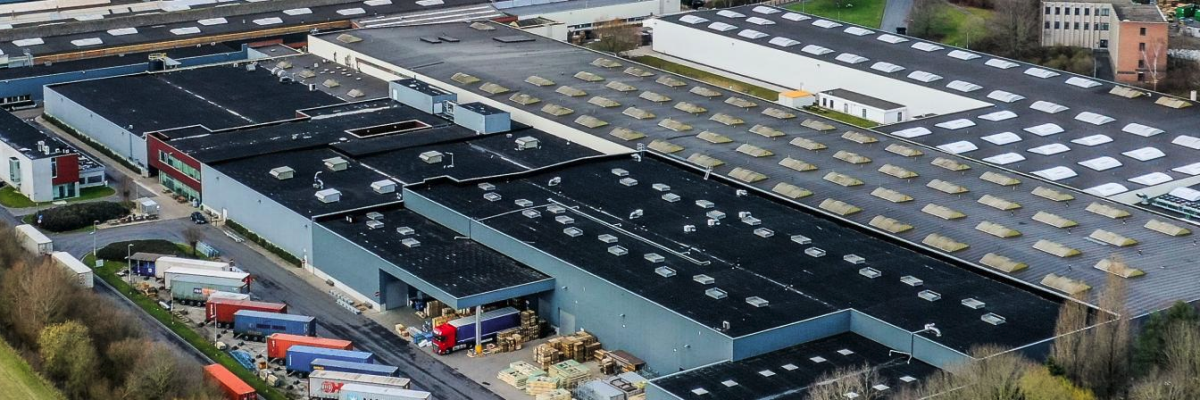
Unlike single-layer OLED, where one layer handles all luminance output, this architecture distributes the workload. In display engineering, this is similar to load balancing in power systems. At CDTech’s Shenzhen facility, similar principles are applied in TFT backlight optimization, improving uniformity and extending module life in industrial deployments.
How Does Penta Tandem OLED Improve Lifespan Compared to Traditional OLED?
Penta Tandem OLED extends lifespan by reducing current density per layer. Lower electrical stress slows organic material aging, minimizing performance degradation over time and significantly increasing operational life compared to conventional OLED panels.
In traditional OLED, pixels degrade faster due to concentrated electrical load. With five layers:
-
Each layer operates under reduced stress
-
Thermal buildup is minimized
-
Degradation becomes more uniform
CDTech applies comparable strategies in TFT LCD reliability engineering. For example, in medical-grade displays, current derating techniques have extended backlight lifespan beyond 50,000 hours, demonstrating how load distribution directly impacts durability.
Why Does Penta Tandem OLED Reduce Burn-in Risk?
Burn-in is caused by uneven pixel aging. Penta Tandem OLED reduces this risk by balancing electrical load across multiple layers, ensuring more consistent wear and minimizing permanent image retention.
Static UI elements—common in office and industrial environments—historically caused OLED burn-in. With this new structure:
-
Pixel stress is reduced
-
Luminance decay is more uniform
-
Compensation algorithms perform more effectively
For industrial clients working with CDTech, especially in factory automation, this improvement makes OLED a more viable option where static dashboards are used continuously.
How Much Brightness Boost Does Penta Tandem OLED Provide?
Penta Tandem OLED increases brightness by combining light output from five layers while maintaining efficiency. This enables higher peak luminance without accelerating degradation, making displays brighter and more reliable.
A comparison of OLED structures illustrates the improvement:
This is particularly valuable in automotive displays, where visibility under strong ambient light is essential. CDTech’s automotive TFT solutions often target high brightness levels, and OLED is now approaching similar performance thresholds with improved durability.
Which Applications Benefit Most from Penta Tandem OLED?
Applications requiring long operating hours, high brightness, and stable image quality benefit most from Penta Tandem OLED, including office monitors, automotive displays, medical systems, and industrial control interfaces.
Key use cases include:
-
Industrial HMIs with continuous operation
-
Medical diagnostic displays requiring precision
-
Automotive dashboards exposed to sunlight
-
Office monitors with static UI layouts
CDTech has observed increased interest from global clients exploring OLED for smart factory interfaces, where improved lifespan now aligns more closely with operational requirements.
Does Penta Tandem OLED Replace TFT LCD in Industrial Use?
Penta Tandem OLED does not fully replace TFT LCD, as LCD remains more cost-effective, customizable, and robust in extreme environments, though OLED is gaining ground in high-end applications.
TFT LCD continues to dominate in:
-
Harsh temperature conditions
-
Long product lifecycle requirements
-
Budget-sensitive projects
CDTech’s 2nd Cutting technology enables unique LCD sizes such as 7.2-inch or 10.3-inch panels, solving integration challenges for industrial equipment—something OLED manufacturing ecosystems still struggle to deliver at scale.
How Does Penta Tandem OLED Compare to Advanced TFT LCD?
Penta Tandem OLED offers superior contrast and improved longevity, while advanced TFT LCD provides better cost control, customization flexibility, and environmental durability.
In CDTech’s Shenzhen operations, proprietary 2nd Cutting processes have improved yield by up to 17% for irregular panel designs, enabling efficient production of non-standard sizes widely used in automotive and industrial applications.
Can Penta Tandem OLED Support Long-Term Office Use?
Penta Tandem OLED is increasingly suitable for office environments due to reduced burn-in risk and extended lifespan, making it a strong candidate for professional monitors.
Office usage involves:
-
Static interface elements
-
Long daily operation hours
-
Bright ambient lighting conditions
With improved durability and brightness, OLED becomes more practical. However, many enterprises still prefer TFT LCD from CDTech due to predictable costs, long-term supply stability, and easier system integration.
What Manufacturing Challenges Come with Penta Tandem OLED?
Penta Tandem OLED introduces manufacturing complexity due to the need for precise multi-layer deposition, increased material usage, and strict quality control, leading to higher production costs.
Key challenges include:
-
الدقيقة alignment of five organic layers
-
Increased defect sensitivity
-
Lower initial yield rates
CDTech has faced similar precision challenges in advanced LCD customization. Through process optimization, the company improved yield rates significantly in custom automotive TFT production, demonstrating how manufacturing expertise drives scalability.
CDTech Expert Views
“Penta Tandem OLED reflects a major shift toward reliability-focused display engineering. At CDTech, we have long prioritized lifespan optimization through techniques like current balancing and thermal control in TFT LCD design. While OLED is closing the durability gap, TFT LCD remains unmatched in customization and cost efficiency. The future will depend on selecting the right technology for each application, not replacing one with another.”
Conclusion
Penta Tandem OLED represents a critical advancement that addresses OLED’s long-standing weaknesses in lifespan and burn-in. By distributing electrical stress across multiple layers, it enables higher brightness and longer operational life, making OLED viable for more demanding applications.
However, TFT LCD continues to offer unmatched advantages in cost, customization, and reliability—especially in industrial environments. Companies like CDTech demonstrate how advanced manufacturing techniques, such as 2nd Cutting, deliver tailored solutions that OLED cannot yet replicate at scale.
For product developers, the best strategy is to evaluate application requirements carefully. Choose OLED for premium visual performance and improving durability, and rely on TFT LCD for flexibility, cost control, and proven long-term stability.
FAQs
What is the main advantage of Penta Tandem OLED?
It improves lifespan, reduces burn-in risk, and increases brightness, making OLED more suitable for long-term and professional applications.
Is Penta Tandem OLED suitable for industrial environments?
It can be used in high-end industrial applications, but TFT LCD remains more practical for harsh conditions and cost-sensitive projects.
Does Penta Tandem OLED completely eliminate burn-in?
No, but it significantly reduces the risk by ensuring more uniform pixel aging and lower electrical stress.
How does it impact power efficiency?
It improves efficiency by lowering current per layer, reducing energy stress while maintaining high brightness output.
Will OLED replace TFT LCD in the future?
Both technologies will coexist, with OLED focusing on performance and TFT LCD maintaining advantages in cost, customization, and durability.
Post Search
Related Articles
-
Capacitive vs Resistive Touch Screen Car Stereo: Which Is Right for You?
-
TN LCD vs IPS LCD: How to Choose the Right Display for You
-
Capacitive Touch Panel or Resistive: Which Suits Your Needs?
-
Why Choose an IPS LCD Panel for Your Next Screen Purchase?
-
CDTECH to Showcase Cutting-Edge Display Solutions at SID 2025
-
Comparing Different Types of Displays in Cars: A Detailed Overview
-
White Spots on LCD Screen: Causes, Fixes & Industrial Solutions (2026 Guide)