
Exploring the Advantages of TFT LCD Module in Modern Displays
 2026-10-23
 11:00


An OEM would choose a TFT LCD module over a standalone display when the display is to form part of a larger product. Such a TFT LCD module includes TFT panel, backlight, driver IC, FPC, connector, etc. and forms a complete integration point for the electronics designer and the mechanical designer. Key issues for such a display to be used for industrial equipment are the interface, luminance, temperature, touch and mounting. This article explains how to select such a TFT module.

What Is a TFT LCD Module?
Which parts make up a TFT LCD module?
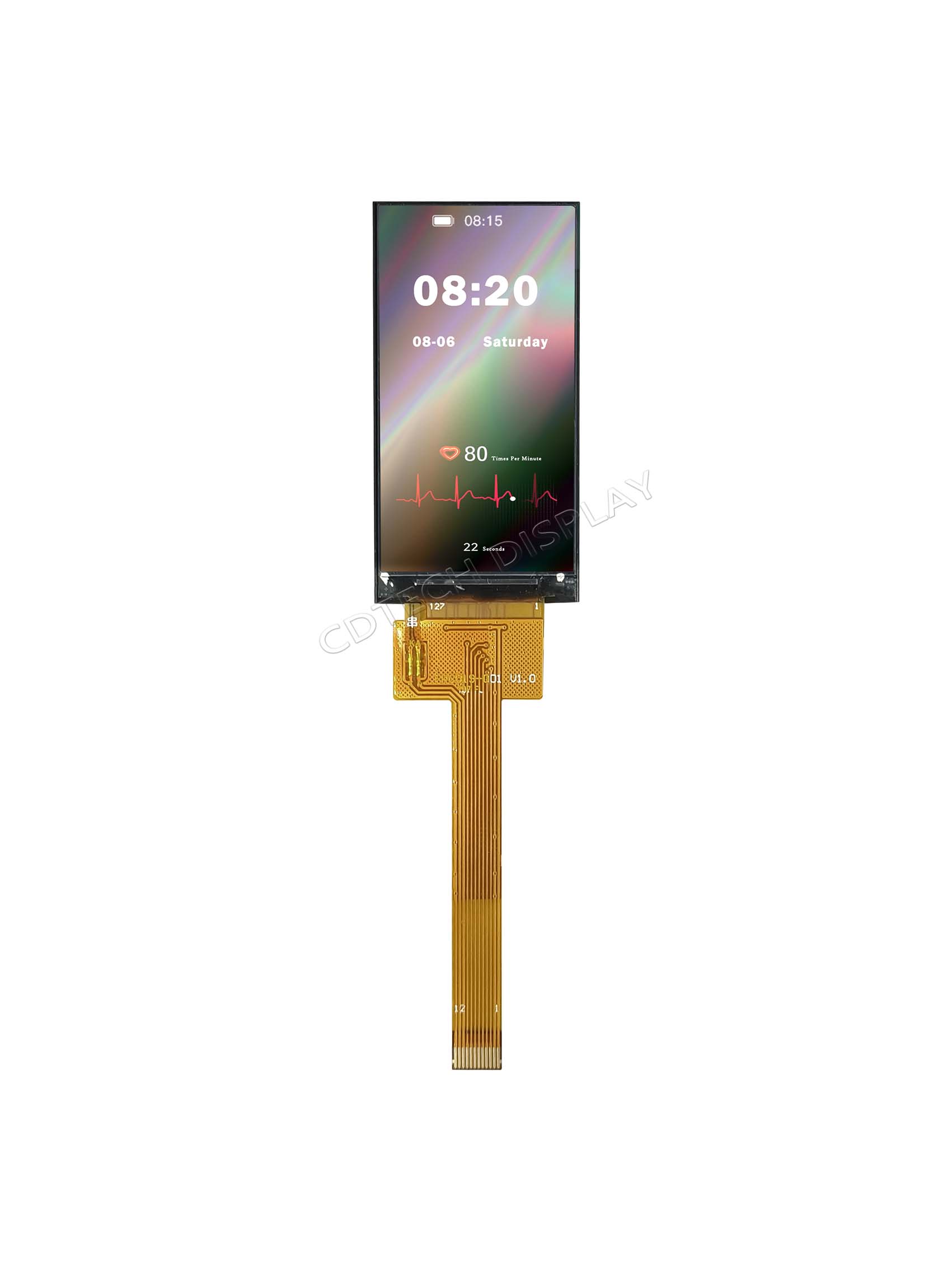
A TFT LCD module is an assembled display part using an active-matrix TFT LCD. The datasheet includes a backlight, a timing/driver IC, an FPC, a connector, a mechanical outline, etc. and also a touch panel. A drawing includes the active area, the pixel count, the luminance, the viewing direction, the operating temperature, and the storage temperature, etc.
Don’t get these fields mixed up. The interface field is for moving display data. The driver IC field is for controlling the panel. The backlight field is for illuminating the display image. And the FPC field determines physical and electrical connections. So, before you can even start sampling products, you need to specify each of these fields.
Why is a module different from a finished TFT LCD monitor?
A TFT LCD monitor is normally a user-facing product with an enclosure, power system, video input, controls, and a completed mounting solution. A module is an embedded component that the OEM places inside a product such as an instrument, appliance, vehicle console, or industrial controller. The OEM may own the enclosure, power conversion, software, and system-level thermal design.
Choose a module when the display needs to match a custom front surface, non-standard outline or host processor interface. Choose a monitor when you need a ready-to-use visual terminal. Don’t compare modules and monitors only by screen size.
What Advantages Does a TFT Module Bring to Modern Displays?
How do active-matrix control and panel choice affect image quality?
A TFT-LCD driving system directly impacts overall display performance. It controls key features like brightness, contrast, and color output. Furthermore, this setup determines the screen response time and total power consumption. You must also look at the specific panel mode. This remains a completely different factor to evaluate. For instance, an IPS TFT LCD delivers much wider viewing angles. Buyers usually select this technology for projects that need steady, clear image quality.
For an industrial design, the important point is how the selected panel, backlight, controller and optical stack perform in combination. A wide-view IPS panel is for shared viewing at a control station. Another mode is selected for another cost vs. response vs. power trade-off. This has to be clearly visible from the module’s specification.

How do custom sizes, resolutions, and interfaces reduce integration work?
A TFT LCD module supplier can coordinate a number of parameters including display size, active area, resolution, FPC pinout, connector position, and backlight structure, and even an adapter board for your controller. For products with narrow profiles such as appliance doors and control panels, the bar-type modules are very effective. Checking out the mechanical and electrical interface together allows for checking of cable bends, mounting forces, heat transfer and controller limits prior to tooling up.
IPS TFT LCD, PLS TFT LCD, or Generic TFT: Which Label Helps?
What does IPS TFT LCD tell an OEM?
IPS TFT LCD describes a TFT display with an IPS viewing mode, but it does not specify the interface, luminance, temperature range, touch function, or lifetime. OEMs should compare complete module specifications, including drivers, connectors, backlights, and touch assemblies.
Is IPS LCD vs TFT LCD which is better the right question?
The title “IPS LCD vs TFT LCD which is better” is incomplete because “IPS” usually refers to a panel type within the larger category of TFT-LCD modules. The better option depends on the viewer’s needs, the required luminance, resolution, response time, interface, housing, environment and budget. While one product may require the IPS panel for shared viewing, another product with completely different requirements might prefer a different panel type or a smaller interface.
“Better” only makes sense after you have fixed the product requirements. A comparison matrix must record the reason for every selection, not rank technologies one after another.
What should an OEM know about PLS TFT LCD terminology?
PLS TFT LCD refers to a panel technology rather than a module interface. If PLS is required, confirm the panel type, optical performance, driver, interface, and environmental ratings in the model-specific datasheet.
How Should Engineers Select a TFT LCD Interface?
Which TFT LCD interface and controller details matter?
The TFT LCD interface should match the host processor, data rate, cable length, pin count, power rails, and software support. Records may identify RGB, LVDS, MIPI, SPI, MCU, or an HDMI adapter board. Driver IC, timing, reset sequence, FPC pitch, connector orientation, and grounding also matter.
Touch data is a separate path. This path can use I2C or USB for the capacitive controller, whereas the LCD can use LVDS or RGB. This allows us to better allocate the pins and test the firmware separately.
How do brightness, temperature, touch, and mechanics complete the specification?
An interface cannot test for all conditions in which a module will be used. Some of the items to freeze are luminance, contrast, viewing angle, active surface area, screen outline dimensions, mounting holes, cover glass and screen bonding, touch surface type, operating and storage temperatures and backlight drive conditions.
A review of requirements for a vehicle or outdoor controller might focus on high luminance and thermal range. A review of requirements for a factory HMI might focus on cleaning, vibration, gloved input and long operating cycles. Each requirement should be checked against a model and then verified on a sample in the final housing.
How CDTech Customizes a TFT LCD Module for OEM Integration
Which verified CDTech TFT LCD module examples show interface range?
CDTech records show why model-specific comparison matters. The S029GQ07NN is listed as a 2.9-inch TN module with 320×120 pixels, RGB+MCU+SPI, an SSD2119 driver IC, and -20°C to +70°C operation. A separate S101HWX66ED record describes a 10.1-inch IPS module with 1280×800 pixels, LVDS, and an HDMI board with USB support. These are separate examples; their specifications should not be merged.
How can we coordinate custom cutting, FPC, backlight, and touch options?
We can discuss custom LCD size, active and outline dimensions, cutting for special shapes, FPC pinout and connector layout, PWM, anti-static design, EMI/EMC/ESD measures, backlight structure, and adapter boards. We can also coordinate PCAP cover glass, glove or waterproof touch, pen input, customized CTP FPC, and USB or IIC touch interfaces. Our discussion starts with host electronics, enclosure, environment, and validation targets so that each option is confirmed for the selected TFT LCD module.
FAQ
Q: When should I choose a TFT LCD monitor instead of a module?
Monitor: Complete user-facing terminal, including case, power supply, video connections, etc. Module: Display is embedded into user’s own mechanical and electrical system.
Q: Is IPS LCD vs TFT LCD which is better a complete buying question?
A: No. IPS and TFT describe different aspects of a display. Compare the complete TFT LCD module specification, including interface, luminance, temperature, touch, mechanics, and validation evidence.
Q: Can CDTech help define a TFT LCD interface and module?
A: Review host interface requirements, review the mechanical requirements, touch requirements, backlight requirements, and environmental requirements. Validate samples against these requirements. Determine which of the CDTech options the selected model supports.
Q: Can CDTech provide a custom LCD size for OEM projects?
A: Yes. CDTech can discuss custom LCD size options, including active area, outline dimensions, FPC layout, backlight, and touch integration. Availability and specifications should be confirmed for the selected TFT LCD module.
Post Search
Related Articles
-
Capacitive vs Resistive Touch Screen Car Stereo: Which Is Right for You?
-
TN LCD vs IPS LCD: How to Choose the Right Display for You
-
Capacitive Touch Panel or Resistive: Which Suits Your Needs?
-
Why Choose an IPS LCD Panel for Your Next Screen Purchase?
-
CDTECH to Showcase Cutting-Edge Display Solutions at SID 2025
-
Comparing Different Types of Displays in Cars: A Detailed Overview
-
White Spots on LCD Screen: Causes, Fixes & Industrial Solutions (2026 Guide)