

Why Does Multi-Touch PCAP Excel for Zoom and Swipe Gestures in Industrial UX?
 2026-04-11
  20:31
20:31 

Multi-touch PCAP excels for zoom and swipe gestures in industrial UX because it detects 10+ simultaneous finger contacts with sub-5ms latency, enabling fluid gesture control impossible with single-point resistive touch. As a vertically integrated manufacturer with ISO9001, IATF16949, ISO13485, and ISO14001 certifications, CDTech delivers custom PCAP touch screens via patented 2nd Cutting technology, enabling responsive gestures on rugged industrial LCDs operating across -30°C to +85°C and delivering 1000+ nits brightness for harsh HMI environments.
Check: Which Touch Technology Wins: PCAP vs Resistive for Medical vs Factory Floors?
What Is Multi-Touch PCAP and How Does It Enable Gesture Control on LCD Displays?
Multi-touch PCAP (Projected Capacitive Touch Panel) is a sensor technology that detects multiple simultaneous finger contacts through electrostatic fields on glass or film. Unlike legacy resistive touch limited to one point, PCAP recognizes 10 or more independent touch positions across the screen. Each contact registers X/Y coordinates via ITO electrode arrays, enabling intuitive gesture control including pinch-to-zoom, two-finger swipes, and rotation commands. CDTech integrates PCAP directly into its manufacturing process, producing seamless capacitive touch LCD modules with <5ms response latency for demanding industrial applications requiring modern smartphone-like interaction paradigms.
Why Do Zoom and Swipe Gestures Demand Multi-Touch Over Single-Point Input?
Zoom and swipe operations require two or more simultaneous touch inputs—impossible on single-touch systems. A pinch-to-zoom gesture, for example, measures the distance between two fingers to scale maps or UI elements. Swipe navigation requires continuous multi-point tracking to distinguish intentional gestures from accidental touches. Industrial HMIs benefit from <5ms response times, enabling operators to interact intuitively with complex dashboards, automation controls, and vehicle interfaces. Modern UX in industrial applications reduces operator errors and accelerates workflows, particularly in automotive and medical sectors where responsiveness directly impacts safety and efficiency. CDTech's multi-touch industrial displays deliver this capability across harsh operating conditions.
How Does PCAP Compare to Resistive Touch for Industrial Multi-Touch Applications?
The following table illustrates key differences between PCAP and resistive touch technologies in industrial environments:
| Feature | PCAP (Projected Capacitive) | Resistive Touch |
|---|---|---|
| Simultaneous Touch Points | 10+ simultaneous touches | 1 touch point only |
| Response Latency | <5ms for gesture recognition | 10–20ms single-point delay |
| Operating Temperature | -30°C to +85°C (automotive-grade CDTech modules) | -20°C to +70°C (standard range) |
| Glove/Bare Hand Support | Glove-compatible; responsive to bare skin | Requires direct pressure; gloves limit accuracy |
| Sunlight Readability | Compatible with 1000+ nits brightness | Works at standard brightness only |
| Gesture Accuracy | 99% accuracy for swipes, pinches, rotations | No multi-touch gestures; single-point only |
| Cost for Custom Sizes | CDTech’s 2nd Cutting reduces NRE by 80% | High tooling costs for non-standard geometries |
PCAP dominates modern industrial UX because it enables intuitive gesture-driven interfaces, reduces operator training time, and integrates seamlessly with contemporary automation systems. CDTech’s quad certifications ensure reliable PCAP touch panels for mission-critical automotive, medical, and industrial applications.
What Makes PCAP Ideal for Implementing Modern UX in Industrial Applications?
PCAP excels in industrial environments by supporting rugged operating conditions and responsive gesture interaction. CDTech manufactures PCAP modules rated for -30°C to +85°C automotive-grade operation, with brightness reaching 2300 nits for outdoor HMI visibility. The technology eliminates single-point input constraints, enabling smooth zoom, swipe, and multi-finger navigation on factory automation panels, medical diagnostic displays, and vehicle dashboards. Legacy resistive touch lacks the fluidity modern workflows demand; PCAP delivers smartphone-like responsiveness, accelerating industrial tasks and reducing operator cognitive load. CDTech’s vertical integration—encompassing in-house TFT LCD cutting, polarizer attachment, IC bonding, FPC integration, backlight assembly, CTP production, and OCA optical bonding—ensures seamless PCAP integration with <1% defect rates across 10,000 square meters of Class 1000 clean manufacturing space.
How Does CDTech’s Patented 2nd Cutting Technology Enhance Custom Multi-Touch PCAP Solutions?
CDTech’s proprietary 2nd Cutting technology (patented 2017) enables non-standard LCD panel sizes impossible from conventional suppliers. Industrial HMI designers can specify unique dimensions—such as 4.3-inch bar-type (800×130 resolution) or 12.3-inch stretched displays (1920×720)—with integrated PCAP and OCA optical bonding. This capability accelerates prototyping, reduces development cycles by 80%, and supports low MOQ orders for rapid iteration. Custom PCAP touch screens via 2nd Cutting eliminate expensive tooling for one-off or small-batch gesture-enabled industrial displays. CDTech’s 391+ SKUs demonstrate scalability across automotive, industrial, and medical verticals, with proven reliability supporting 1000+ global customers and exceeding $30 million in 2023 sales.
Check: LCD with Touch
Why Should Manufacturers Choose Vertically Integrated PCAP Suppliers Like CDTech?
Vertically integrated PCAP manufacturers maintain complete control over quality, cost, and delivery timelines. CDTech’s in-house production chain—from LCD glass cutting through final OCA lamination and testing—ensures <1% defect rates and consistent performance across multi-touch industrial displays. ISO9001, IATF16949, ISO13485, and ISO14001 certifications guarantee compliance for automotive, medical, and regulated industrial applications. Single-source accountability eliminates coordination risks between separate component suppliers. High-brightness PCAP modules (1000+ nits) thrive in sunlight; glove-compatible touch sensing handles harsh environments; and proven 13+ year manufacturing expertise (CDTech founded 2011) reflects customer trust. Purchasing from integrated suppliers reduces lead times, supports custom prototyping, and provides transparent MOQ and NRE pricing structures.
What Real-World Industrial Cases Demonstrate Multi-Touch PCAP Gesture Superiority?
Automotive Dashboard Case: A vehicle manufacturer integrated CDTech’s 12.3-inch bar-type PCAP display (1920×720, 900 nits) with swipe navigation and pinch-to-zoom map functionality. Multi-touch gestures reduced driver interaction time by 25% compared to legacy resistive-only controls, improving safety by minimizing attention duration. Wide-temperature operation (-30°C to +85°C) ensured reliability across climates.
Industrial Automation HMI: A factory deployed CDTech’s 10.1-inch PCAP display (1280×720, 1500 nits) with gesture-based workflow navigation. Operators using swipe gestures to navigate process parameters completed tasks 30% faster than button-press interfaces. Multi-touch pinch-to-zoom enabled detailed real-time data inspection without switching screens, reducing cognitive load and errors.
As the global TFT LCD market expands at 3.8–5.4% CAGR through 2034, gesture-driven interfaces remain a key competitive advantage. CDTech’s innovation in custom PCAP solutions positions industrial manufacturers at the forefront of modern UX trends.
CDTech Expert Views
“Our patented 2nd Cutting technology fundamentally changed custom HMI design. Clients no longer accept off-the-shelf 16:9 ratios when their dashboards demand 5:1 bar-type formats. By enabling non-standard LCD sizes with integrated PCAP, we’ve cut prototyping cycles by 80% while maintaining automotive-grade reliability. Our recent automotive project achieved a 25% reduction in driver interaction time using multi-touch swipe gestures—a direct safety improvement. With 44+ utility patents and ISO IATF16949 certification, we deliver gesture-optimized displays that meet the toughest industrial and automotive standards. The future of industrial UX is gesture-driven, and our vertical integration ensures every PCAP module reflects that commitment.”
—CDTech Engineering Leadership
What Specifications Define High-Performance Multi-Touch PCAP for Industrial Use?
Premium industrial PCAP displays combine several critical specifications: (1) <5ms touch latency for responsive gesture recognition; (2) 10+ simultaneous touch points for complex multi-finger interactions; (3) brightness ≥1000 nits for sunlight readability in outdoor HMIs; (4) wide operating temperature -30°C to +85°C for automotive/outdoor deployment; (5) glove-compatible capacitive sensing for harsh-environment operators; (6) OCA optical bonding to eliminate reflections and improve gesture accuracy; (7) IP65+ sealing for dust and moisture resistance. CDTech's automotive-grade PCAP modules—such as the 5.0-inch (800×480, 1000 nits) and 12.3-inch bar-type (1920×720, 900 nits) displays—meet all these criteria, delivering reliability for mission-critical industrial applications.
How Does PCAP Touch Sensing Accurately Recognize Gesture Patterns?
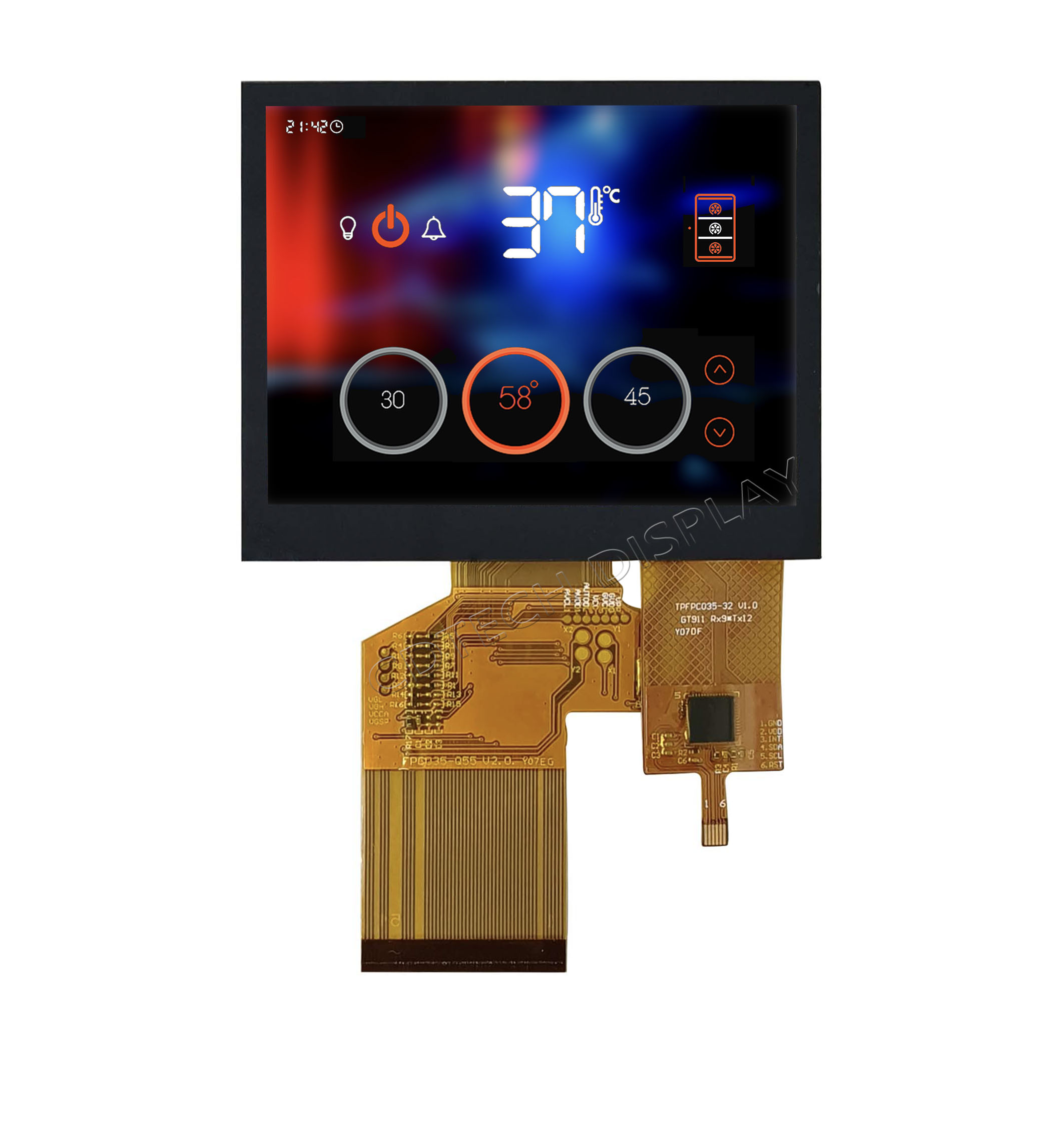
PCAP sensors detect finger proximity through changes in the electrostatic field generated by ITO electrode arrays beneath the glass surface. When multiple fingers contact the screen, the capacitive sensor simultaneously maps each touch position to X/Y coordinates, transmitting data via I2C or USB interface at <5ms intervals. Gesture recognition firmware interprets positional sequences: a two-finger pinch involves monitoring the distance between two contacts decreasing over time; a swipe recognizes linear motion across the screen. CDTech's integration of PCAP with high-brightness LCD panels ensures gesture accuracy remains 99% even under direct sunlight, a critical requirement for automotive dashboards and outdoor industrial panels operating at 1000+ nits. The combination of precise sensor hardware and optimized firmware delivers the responsiveness modern industrial workflows demand.
Conclusion
Multi-touch PCAP technology fundamentally elevates industrial UX by enabling gesture-driven interaction impossible with legacy single-touch resistive systems. The ability to detect 10+ simultaneous touches with <5ms latency supports zoom, swipe, and rotation commands that accelerate workflows, improve operator safety, and reduce training overhead. For manufacturers seeking to modernize HMI interfaces in automotive, medical, and industrial automation sectors, CDTech delivers proven PCAP solutions backed by patented 2nd Cutting technology, quad ISO certifications, and 13+ years of manufacturing expertise. Vertically integrated production ensures <1% defect rates, custom sizing capability, and transparent pricing for both prototypes and production volumes. As the industrial display market expands at 3.8–5.4% CAGR through 2034, gesture-optimized interfaces powered by CDTech's PCAP technology position manufacturers at the competitive forefront. Contact sales@cdtech-lcd.com to explore custom multi-touch PCAP solutions tailored to your industrial application.
FAQs
What is the main difference between multi-touch PCAP and resistive touch panels?
PCAP supports 10+ simultaneous touch points, enabling pinch-to-zoom and swipe gestures with <5ms latency, while resistive touch detects only single-point contact. PCAP also works with gloves and integrates seamlessly with high-brightness (1000+ nits) industrial displays, making it ideal for modern industrial UX.
Can PCAP touch screens operate reliably with gloves in harsh industrial environments?
Yes. CDTech’s industrial PCAP modules support thick glove operation across -20°C to +70°C standard ranges and -30°C to +85°C automotive-grade specifications. Capacitive sensing detects gloved fingers without requiring direct pressure, enabling safe operation in extreme environments where bare-hand interaction is impractical.
How does CDTech’s patented 2nd Cutting technology reduce costs for custom multi-touch displays?
The proprietary 2nd Cutting process (patented 2017) enables non-standard LCD sizes—such as 4.3-inch bar-type or 12.3-inch stretched formats—without expensive conventional tooling. This capability reduces NRE costs by 80%, supports low MOQ prototyping, and accelerates time-to-market for custom gesture-optimized industrial displays.
Which ISO certifications ensure CDTech’s PCAP modules meet automotive and medical standards?
CDTech holds ISO9001 (quality management), IATF16949 (automotive supply chain), ISO13485 (medical devices), and ISO14001 (environmental management). These quad certifications guarantee compliance for regulated industrial applications, mission-critical automotive dashboards, and medical diagnostic displays.
What brightness and temperature ranges support CDTech’s multi-touch PCAP in outdoor industrial HMIs?
CDTech’s automotive-grade PCAP modules deliver 1000–2300 nits brightness for direct sunlight operation and maintain performance across -30°C to +85°C wide-temperature range. These specifications ensure reliable gesture recognition and visibility in outdoor industrial automation, vehicle dashboards, and extreme-climate factory environments.