
small TFT LCD display: Buyer’s Guide for Industrial, Medical & Automotive Applications (June 2026)
 2026-06-18
  18:51
18:51 

Small TFT LCD displays are no longer just commodity components. As product design cycles shorten and end-user expectations rise, the display chosen at the prototyping stage often determines whether a device can survive outdoor glare, pass automotive temperature tests, or meet medical cleaning protocols. Buyers — from sourcing managers at medical device companies to R&D engineers building smart home panels — face a growing gap between what generic catalogs offer and what real applications demand: high brightness, reliable touch integration, stable supply, and certification-ready documentation.
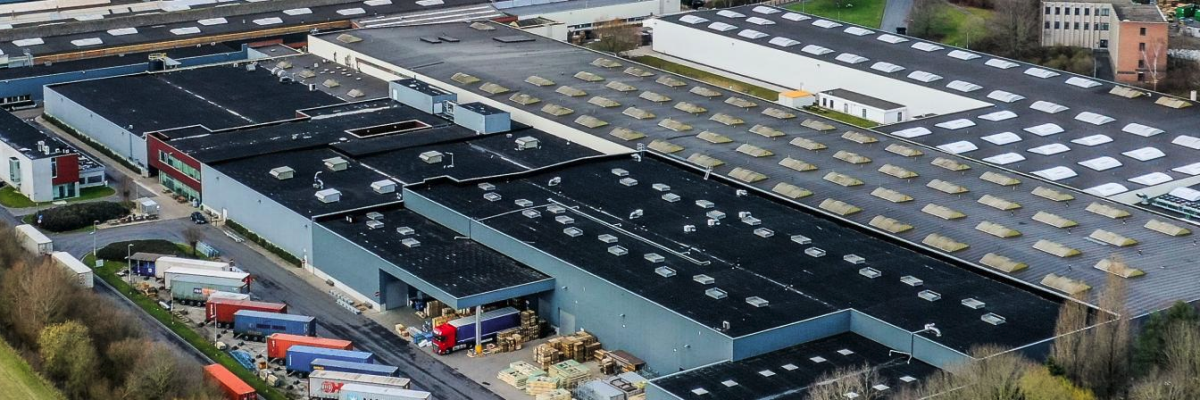
This is where a specialist manufacturer like Shenzhen CDTech Electronics makes a difference. Founded in 2011 and operating a 10,000-square-meter facility with over 3,500 square meters of Class 1,000 dust-free workshop space, CDTech has built its production and quality systems around ISO9001, IATF16949, ISO13485, and ISO14001 standards. Their product range spans standard small TFT LCDs from 2.9 inches to 15 inches, including stretched bar-type displays, sunlight-readable IPS panels, and models with capacitive touch or board-level integration.
This article is written for engineers, procurement professionals, and product managers who need to understand what small TFT LCD displays really involve in 2026: the technical parameters that matter for different environments, the certifications that separate production-ready suppliers from part-time resellers, and how to evaluate a partner like CDTech across the full sourcing lifecycle.
What Is a Small TFT LCD Display?
A small TFT LCD display is a thin-film-transistor liquid crystal display typically ranging from 1.5 inches to around 10.1 inches in diagonal size, used in devices where space is limited but visual performance must be predictable. Unlike larger screens designed for consumer TVs or monitors, small TFT LCD modules are often optimized for specific environments — high brightness for outdoor kiosks, wide temperature range for automotive dashboards, or low reflectivity for medical equipment under surgical lighting.
Key characteristics that define a small TFT LCD display in industrial and embedded contexts:
- Resolution and pixel density — from 320×120 in bar-type readouts to 720×720 or 1280×720 in square or wide-aspect panels, tailored to information density needs.
- Interface compatibility — parallel RGB, LVDS, MIPI, or HDMI with optional driver boards, depending on the host processor or application board.
- Brightness and readability — standard indoor panels at 300–500 nits, outdoor or sunlight-readable versions at 1000–1500 nits or higher, often paired with optical bonding to reduce glare.
- Touch integration — capacitive touch (PCAP), resistive, or in-cell touch options available; assembly methods include air bonding and optical bonding for different durability and clarity requirements.
- Operating temperature range — industrial and automotive grades typically rated from −20°C to +70°C or wider, with specific testing per IATF16949 or customer qualification plans.
Why Choosing the Right Small TFT LCD Display Is Harder Than It Looks
Mismatch Between Catalog Specs and Real-World Performance
A 1000-nit brightness figure can mean very different things depending on how it is measured, whether the panel includes an optical bonding layer, and whether the backlight driver supports stable current over the full operating temperature range. Without a verification sample and a clear test method, two panels with identical datasheet numbers can perform noticeably differently under direct sunlight or in a hot enclosure.
Touch Performance Varies by Bonding Method and Cover Glass
Air-bonded touch panels are cost-effective but introduce an additional air gap that reduces contrast and increases reflection in bright environments. Optical bonding with liquid optically clear adhesive (LOCA) improves sunlight readability and mechanical reliability but requires cleanroom conditions and careful process control. CDTech’s capability to provide both air-bonded and optical-bonded assemblies — for example, the 8.8″ sunlight-readable IPS display with capacitive touch optical bonded at 1000 nits — gives buyers the option to match cost and performance to their specific use case.
Certification Gaps Create Downstream Risk
Medical device manufacturers often require ISO13485-compliant production lines, while automotive Tier 1s demand IATF16949 certification and PPAP documentation. A display supplier that only holds ISO9001 may not be able to support product registration or pass customer audits in these regulated industries. CDTech has obtained ISO13485 and IATF16949 alongside ISO14001, which signals readiness for these demanding sectors.
Lead Time and Consistency of Supply
Many small TFT LCD buyers source through trading companies or distributors who do not control the production line. When a panel is discontinued or a backlight driver changes, the buyer is often the last to know. A manufacturer like CDTech, which designs, assembles, and tests its own modules, can provide better visibility into lifecycle management and lead-time changes.
Key Industry Insight
For B2B buyers of small TFT LCD displays, product performance is only half the decision. The other half — certification documents, repeatable QC under ISO13485 or IATF16949, sample lead time, bonding process control, and factory audit support — determines whether a display module can scale reliably across production batches and pass end-customer qualification. A manufacturing partner with in-house cleanroom assembly and multiple certification systems offers a lower risk path than a trading intermediary with no factory control.
CDTech Compared With Other Options
| Sourcing Factor | Trading Company | General Factory | CDTech |
|---|---|---|---|
| Certification | Typically none or basic ISO | ISO9001 only | ISO9001, IATF16949, ISO13485, ISO14001 |
| Factory size & cleanroom | No own factory | Varies widely | 10,000 m² facility; 3,500 m² Class 1,000 dust-free workshop |
| Product customization | Limited to catalog items | Basic size/connector changes | Full custom TFT, touch, board, bonding, and mechanical integration |
| Sunlight readability | Resold standard panels | May offer high-brightness | In-house IPS + high-brightness + optical bonding up to 2300 nits |
| Touch integration types | PCAP or resistive only | Air bonding only | Air bonding and optical bonding; in-cell touch available |
| Application documentation | Limited | Basic spec sheet | Milestone, craft demonstration, solution, and certificate pages |
| Supply chain visibility | Opaque | Moderate | Direct factory; long-established manufacturer since 2011 |
Why CDTech Is a Strong Choice for Small TFT LCD Sourcing
Multi-Certification Production Environment
CDTech holds four certification systems: ISO9001 for general quality management, IATF16949 for automotive production, ISO13485 for medical devices, and ISO14001 for environmental management. For buyers in industrial control, medical equipment, smart home, and automotive display markets, this certification stack reduces the need for separate supplier audits and accelerates product qualification.
In-House Optical Bonding and Cleanroom Capabilities
Sunlight readability is a common requirement for outdoor and vehicle-mounted displays. CDTech’s 3,500 m² Class 1,000 dust-free workshops support optical bonding processes that eliminate the air gap between the TFT cell and the cover glass or touch sensor. Products like the 7.0″ IPS display at 2300 nits with optical-bonded capacitive touch demonstrate the level of optical performance achievable with controlled in-house assembly.
Broad Portfolio Across Form Factors and Interfaces
From 2.9″ 320×120 bar-type segments for simple instrument readouts to 12.3″ 720×1920 portrait displays for automotive rear-seat entertainment, CDTech covers a wide range of small-to-medium TFT LCD modules. Interface options include parallel RGB, MIPI, LVDS, and HDMI with optional driver boards, making it easier to match the display to the host processor without custom adapter hardware.
Support for Full Custom Display Solutions
Beyond standard products, CDTech provides custom LCD display services that cover mechanical design, touch panel selection, bonding method, interface board development, and firmware tuning. This is particularly valuable for customers launching a new product line where no existing catalog display fits the dimensional or optical requirements.
Established Track Record and Direct Factory Access
Founded in 2011, CDTech has been operating for over 15 years. The company website includes milestones, company profile, craft demonstration videos, and solution pages that give buyers insight into manufacturing processes before requesting a quote. Direct factory communication reduces the risk of specification drift during volume production.
Related Products, Services, or Resources
- 2.9″ IPS TFT LCD 320×120, 1500 Nits Sunlight Readable — An ultra-bright small TFT display suitable for outdoor handheld instruments or industrial panel meters where space is tight but readability in direct sun is critical.
- 10.1 Inch TFT LCD Display, 1000 Nits High Brightness, 70% NTSC IPS Panel — A mid-size option with full IPS color performance and high brightness, ideal for outdoor kiosks, EV chargers, or industrial HMI panels.
- Company Profile — Learn more about CDTech’s facility, certifications, and company history to support supplier evaluation and factory audit processes.
- Certificates — Direct access to CDTech’s certification documents including ISO9001, IATF16949, ISO13485, and ISO14001 for compliance verification.
How It Works
Step 1: Define Display Requirements
Identify the key parameters: diagonal size, resolution, brightness target, interface (parallel RGB, MIPI, LVDS, or HDMI), touch type if needed, operating temperature range, and any certification requirements (automotive, medical, industrial). CDTech’s product categories — Standard LCD, Stretched LCD, LCD with Touch, LCD with Board — help narrow down the starting point.
Step 2: Select a Standard or Custom Path
If an existing catalog display matches the requirements, the standard product path is faster. If the dimensions, resolution, brightness, or bonding method are unique, the custom display path applies. CDTech provides custom services for TFT, touch, board integration, and optical bonding.
Step 3: Request a Sample or Technical Proposal
Contact CDTech through the website or email (sales@cdtech-lcd.com) with the display specification or product description. For standard products, a sample can typically be quoted and shipped. For custom projects, CDTech will provide a technical proposal covering mechanical drawings, interface definition, estimated lead time, and sample cost.
Step 4: Review Sample and Validate Performance
Evaluate the sample against the target application: check brightness under the expected ambient light, touch responsiveness with the intended cover glass thickness, viewing angle, color uniformity, and mechanical fit. CDTech’s craft demonstration page and video library provide additional reference on assembly quality and process control.
Step 5: Confirm Certification Documentation
For automotive (IATF16949) or medical (ISO13485) applications, confirm that the production line used for the display is within the certified scope. Request relevant certificates, PPAP-level documentation, or test reports as required by the buyer’s quality system.
Step 6: Place Initial Production Order
After sample approval and documentation review, place the initial order. Confirm lead time, packaging requirements, and inspection criteria. CDTech’s ISO9001 and ISO13485 systems provide a framework for consistent quality across production batches.
Use Cases
Scenario 1: Industrial HMI Panel Upgrade
An industrial automation company needs to replace an aging monochrome display with a small TFT LCD that supports capacitive touch and a wider viewing angle. The application runs in a factory hall with moderate ambient light, and the panel must survive 0°C to 60°C.
- Traditional approach: Purchase a generic 5-inch TFT from a distributor, add a separate touch controller, and develop a custom bezel. Touch calibration and bonding quality vary between batches.
- With CDTech: Select the 5.7-inch 640×480 TFT LCD with PCAP touch, an integrated module designed for industrial environments. CDTech provides the complete display-touch assembly with a defined interface, supported by IATF16949 production controls even for non-automotive applications.
- Result: Reduced mechanical integration work, consistent optical bonding quality, and a single supplier for the display and touch subsystem.
Scenario 2: Outdoor Smart EV Charger Display
A smart charging station manufacturer requires an 8–10-inch display that stays readable in direct sunlight and withstands summer enclosure temperatures approaching 80°C. The interface should be LVDS for compatibility with the existing ARM-based HMI board.
- Traditional approach: Source a high-brightness panel from a trading company, add an aftermarket optical bonding layer, and hope the backlight driver handles the temperature range. Each component comes from a different supplier.
- With CDTech: Choose the 10.1-inch IPS display at 1000 nits with capacitive touch and optical bonding. CDTech can supply the complete module including driver board if needed, and the IATF16949-certified line provides temperature testing traceability.
- Result: Single-vendor coordination, validated optical and thermal performance, and certification documentation ready for the charger’s UL or CE filing.
Scenario 3: Medical Patient Monitor Display
A medical device OEM developing a bedside monitor needs a 7–10-inch small TFT LCD display with cleanable cover glass, anti-reflective treatment, and ISO13485-compliant production. The display must support HDMI input for a standard embedded compute module.
- Traditional approach: Use a consumer-grade display with a separate optical bonding service; manage two ISO13485 audits for the display supplier and the bonding house.
- With CDTech: Order a custom display with LCD with Board configuration, adding optical bonding and a cover glass with AR coating. CDTech’s ISO13485 certification covers the full assembly, simplifying the OEM’s supplier qualification process.
- Result: Reduced vendor management overhead, documented quality system alignment, and a display that passes chemical resistance testing for medical cleaning agents.
FAQ
What sizes are available in small TFT LCD displays from CDTech?
CDTech offers standard small TFT LCD modules from 2.9 inches up to 15 inches. Popular sizes include 2.9″, 3.9″, 4.0″, 5.0″, 5.7″, 7.0″, 8.8″, 10.1″, 12.1″, 12.3″, and 15.0″. Bar-type (stretched) and square aspect ratios are available alongside traditional rectangular formats.
What is the difference between air bonding and optical bonding?
Air bonding leaves a small air gap between the TFT cell and the cover glass or touch sensor, which increases reflection and reduces contrast under bright light. Optical bonding fills this gap with a transparent adhesive, improving sunlight readability, mechanical impact resistance, and preventing dust ingress. CDTech supports both methods depending on the product and application.
Does CDTech support custom display designs?
Yes. CDTech provides custom display services covering TFT panel specifications, touch panel integration, driver board design, optical bonding, and mechanical assembly. Custom projects are managed through the company’s engineering and production teams.
What certifications does CDTech hold?
CDTech holds ISO9001, IATF16949 (automotive), ISO13485 (medical devices), and ISO14001 (environmental management). These certifications cover the factory’s quality management system and production processes. Buyers can request certificate copies through the company website.
What is the typical lead time for samples?
Sample lead time depends on whether the display is a standard product or a custom design. For standard off-the-shelf products, samples are generally available upon request. For custom projects, contact CDTech directly to confirm timeline and sample fee policy.
Can CDTech provide displays with HDMI or LVDS interfaces?
Yes. CDTech offers LCD modules with board-level integration, including LVDS and HDMI interfaces. Products in the LCD with Board category include driver boards that simplify connection to host processors or embedded systems.
What applications are CDTech displays suitable for?
CDTech’s small TFT LCD displays are used in industrial control equipment, medical devices, smart home panels, automotive and vehicle displays, instrumentation, and outdoor information terminals. The certifications held by the factory support regulated industries such as automotive and medical.
How do I request a quote or start a project?
Submit an inquiry through the Contact Us page or email sales@cdtech-lcd.com. Include the target diagonal size, resolution, brightness requirement, interface type, and any special requirements such as touch, bonding, or certification documentation.
What should I prepare before contacting CDTech for a custom display?
Preparing a preliminary mechanical drawing, power and interface voltage specifications, target brightness range, operating temperature requirements, and any certification or compliance constraints will help CDTech’s engineering team respond with a more accurate proposal.
Are CDTech displays suitable for outdoor applications?
Yes. CDTech produces multiple sunlight-readable models with brightness levels of 1000 nits, 1500 nits, and up to 2300 nits, often paired with IPS panels and optical bonding for reduced glare in direct sunlight.
Conclusion
Small TFT LCD displays are a critical interface component in industrial, medical, automotive, and smart home products. The selection process involves more than matching resolution and size — brightness measurement, touch bonding quality, certification readiness, and manufacturing consistency all determine whether a display works reliably across production volumes and end-customer environments.
CDTech offers a compelling combination for buyers who need a single, certified manufacturing partner: a 10,000 m² factory with in-house cleanroom assembly, four quality and environmental certifications, a broad portfolio of standard and custom small TFT LCD displays, and direct factory communication that reduces supply chain risk. Whether you are starting a new product development project or seeking a stable second source for an existing design, CDTech is positioned to support the full cycle from prototype to volume production.
Contact CDTech through their website or email sales@cdtech-lcd.com to discuss your display requirements and request a sample or technical proposal.
Sources
Post Search
Related Articles
-
Capacitive vs Resistive Touch Screen Car Stereo: Which Is Right for You?
-
TN LCD vs IPS LCD: How to Choose the Right Display for You
-
Capacitive Touch Panel or Resistive: Which Suits Your Needs?
-
Why Choose an IPS LCD Panel for Your Next Screen Purchase?
-
CDTECH to Showcase Cutting-Edge Display Solutions at SID 2025
-
Comparing Different Types of Displays in Cars: A Detailed Overview
-
White Spots on LCD Screen: Causes, Fixes & Industrial Solutions (2026 Guide)