

Micro LCD vs TFT LCD: Technology Comparison, Performance Differences and Industrial Applications
 2026-11-27
 10:00


The term micro lcd panel can refer to a miniature liquid-crystal display used in an optical system or simply a small LCD module designed for direct viewing. However, Micro LCD, Microdisplay and TFT LCD are not mutually exclusive technology categories. A microdisplay is a broader class of miniature displays, while TFT describes an active-matrix driving technology that can be used in both conventional LCD panels and certain liquid-crystal microdisplays. Understanding these distinctions is essential before comparing optical performance, power consumption and industrial applications.
How Are Micro LCD, Microdisplay and TFT LCD Related?
Microdisplay refers to a broad category of miniature, high-pixel-density displays commonly used in near-eye devices, electronic viewfinders and projection systems. This category includes transmissive LCD microdisplays, reflective Liquid Crystal on Silicon (LCoS), OLED microdisplays and Micro-LED microdisplays. Micro LCD is a less standardized term that may describe a miniature liquid-crystal display or simply a compact LCD panel, depending on the product context.
TFT LCD, by contrast, refers to liquid-crystal displays driven by thin-film transistor active matrices. TFT technology is widely used in conventional direct-view LCD modules and can also be found in certain transmissive LCD microdisplays. Therefore, the terms Micro LCD and TFT LCD can overlap rather than represent two completely separate technologies.
When is a micro LCD panel actually a microdisplay?
A Micro LCD qualifies as a liquid-crystal microdisplay when it is designed as a miniature image engine for optical viewing, rather than simply being a small screen. Transmissive LCD microdisplays modulate light passing through the liquid-crystal layer, while reflective LCoS microdisplays control light reflected from a silicon backplane. Both can be used in magnified or projected imaging systems. A compact TFT LCD intended for direct viewing should not automatically be classified as a microdisplay based on its screen size alone.
How should an engineer define micro LCD panel technology?
First draw the path from panel to eye. Then attach the target image size, matrix, luminance, contrast, power budget, interface, temperature and mount to that path. The resulting brief describes an architecture instead of relying on the word “micro.”
What are the Micro LCD vs TFT LCD Differences?
The key differences depend on the display architecture and intended viewing method rather than screen size alone. For engineering evaluation, it is useful to compare an LCD microdisplay integrated into an optical system with a conventional direct-view TFT LCD module. Although these categories can overlap in driving technology, their optical requirements, image delivery, power budgets and mechanical integration can differ substantially.
| Comparison Factor | LCD Microdisplay with Optics | Conventional TFT LCD |
| Display architecture | Miniature transmissive LCD or reflective LCoS | Direct-view LCD with TFT active-matrix driving |
| Viewing method | Magnified or projected through optical components | Viewed directly from the screen surface |
| Pixel density | Often requires very high pixel density | Determined by screen size and resolution |
| Field of view | Determined by optical design and magnification | Depends on screen dimensions and viewing distance |
| Brightness | Final image affected by optical transmission losses | Affected by backlight output and surface reflections |
| Optical performance | Requires evaluation of focus, distortion, contrast and uniformity | Emphasizes readability, viewing angle and cover reflections |
| Power consumption | Includes illumination, display drive and optical-engine electronics | Includes backlight, LCD drive and optional touch electronics |
| Typical applications | Viewfinders, near-eye displays and projection systems | Industrial HMIs, control panels and portable instruments |
Where does microdisplay vs TFT LCD change the image path?
With a microdisplay, a lens, combiner, magnifier or projection element may sit between panel and eye. A conventional TFT usually sends the image straight through a cover or touch stack. That extra optical path changes focus, eye relief, brightness efficiency, depth and alignment work. The useful comparison is therefore system against system, not one bare panel against another.
What changes in mechanics and service access?
Both categories can need a controller and FPC, but connector, timing and mechanical envelope remain architecture-specific. An embedded TFT module often has a clear front surface and mounting drawing. A microdisplay assembly may reserve space for optical alignment and service adjustment. Cable routing and heat paths change with that choice.
Which performance questions matter in a micro LCD comparison?
A strong number can still belong to the wrong architecture. Put the content and the viewing geometry on the table before ranking performance.
How should resolution and pixel density be evaluated?
For an LCD microdisplay, resolution should be evaluated together with the field of view and the optical system. Pixels per degree (PPD) is a useful metric for estimating angular image resolution. For example, a display with 1,280 horizontal pixels covering a 40-degree horizontal field of view provides approximately 32 PPD. If the same pixel count is distributed across 80 degrees, the angular resolution decreases to approximately 16 PPD.
However, perceived sharpness also depends on lens quality, optical distortion, focus and pixel structure. A conventional direct-view TFT LCD is typically evaluated using physical pixel density, viewing distance and the readability of text and graphics under real operating conditions.
How Do Field of View and Optical Efficiency Affect Performance?
Field of view (FOV) describes the angular extent of the image visible through an optical system. For an LCD microdisplay, FOV depends on the display dimensions, lens characteristics and overall optical design rather than panel size alone. A wider FOV can improve the viewing experience, but it may reduce angular pixel density if the display resolution remains unchanged. Eye relief, eyebox dimensions and image clarity across the viewing area should also be evaluated.
Optical efficiency is another critical consideration. Light passing through polarizers, lenses, combiners or other optical components experiences transmission losses. Transmissive LCD microdisplays require suitable illumination, while reflective LCoS systems also depend on illumination and polarization management. Engineers should evaluate the brightness and contrast of the final delivered image instead of relying only on the display panel’s specifications.
Can the same brightness or temperature number be compared directly?
Not without the test conditions. A microdisplay path can lose light through its optics and may concentrate heat in a small space. A direct-view TFT meets ambient reflection and backlight heat at the front surface. In either architecture, keep the temperature rating with the controller, illumination, adhesive and touch layer that were actually tested.
How Does Power Consumption Compare Between Micro LCD and TFT LCD?
Power consumption should be evaluated at the complete system level rather than based on panel dimensions alone. A liquid-crystal microdisplay may require an illumination source, display driver, controller and additional optical-engine electronics. Optical losses can increase the illumination power needed to achieve the required image brightness.
A conventional TFT LCD typically consumes power through its LED backlight, display driver and optional touch controller. Its total power consumption varies with screen size, brightness settings, resolution and operating conditions. Neither architecture can be assumed to consume less power without comparing specific products under equivalent brightness and application requirements.
For battery-powered or compact industrial equipment, engineers should also consider thermal management, dimming strategies and operating duty cycles when comparing display solutions.
Where do Micro LCD Panel Applications and compact TFT modules fit?
The application should follow the viewing geometry and packaging, not the word “micro.” Common uses for compact direct-view modules include industrial instrument displays, control panels and portable devices.
Which applications may justify a microdisplay architecture?
Near-eye information, optical instruments and highly constrained viewing assemblies may justify an optical microdisplay investigation. Define optical engine, image path, eye position, focus, alignment tolerance and host electronics first. Without those details, micro LCD panel applications remain a market label.
When does a compact TFT LCD keep the design simpler?
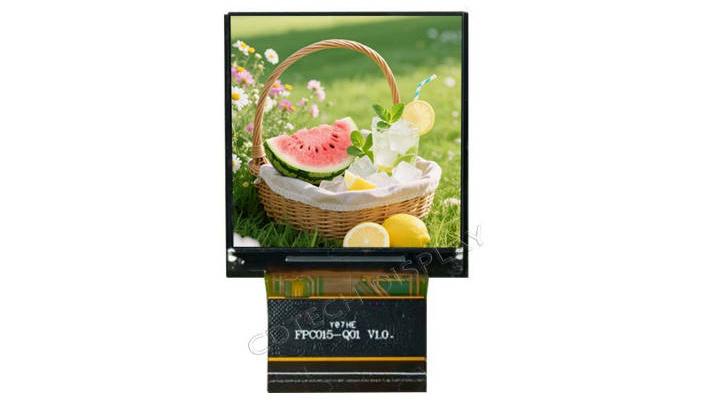
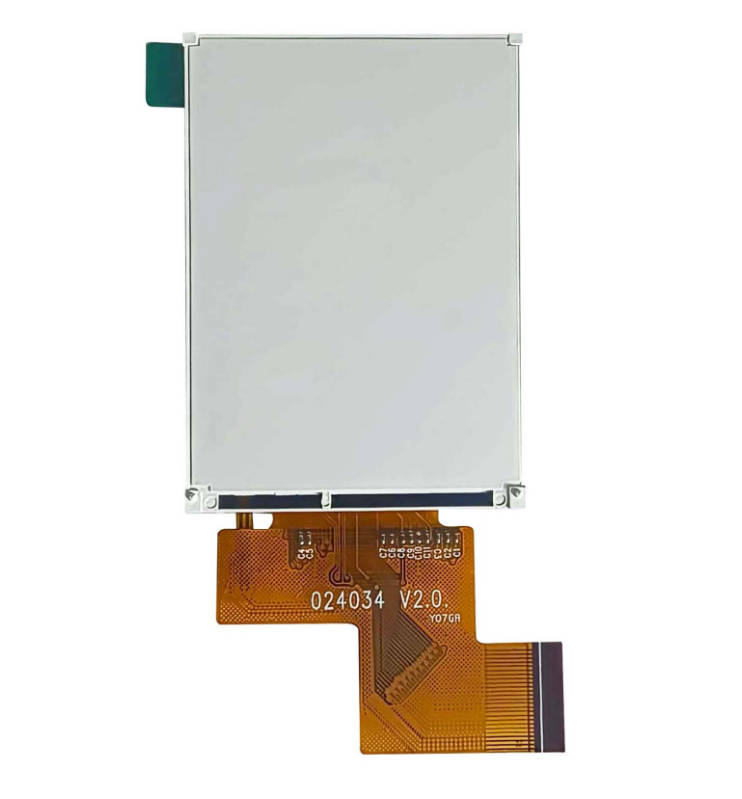
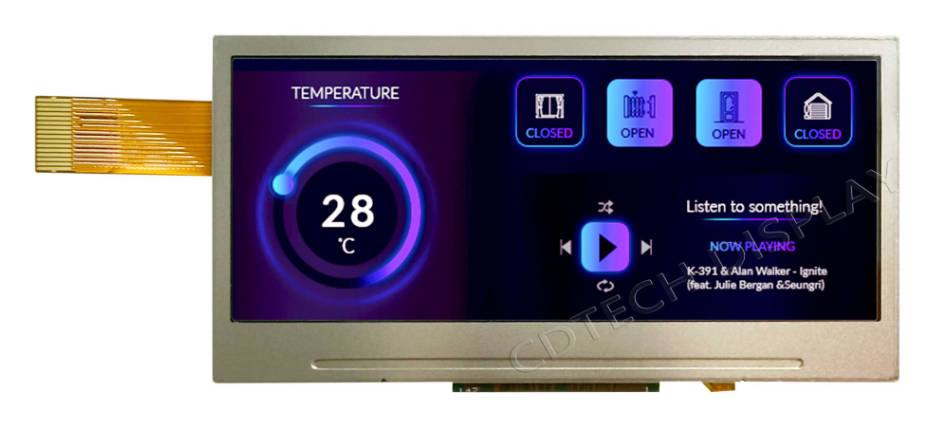
If the user looks directly at the screen, a compact TFT can provide a defined front face, backlight, touch option and embedded interface without an optical engine. Small bar and standard LCD records show several ways to engineer compact size. They remain conventional TFT examples; none should be presented as proof of a microdisplay product.
How can CDTech define a compact TFT requirement?
At CDTech, we have verified conventional TFT LCD records and module-level engineering fields, but no verified Micro LCD, Micro-OLED or Micro-LED model is claimed here. The useful first step is to clarify architecture, then compare a compact TFT route with the host and enclosure.
What can our records support?
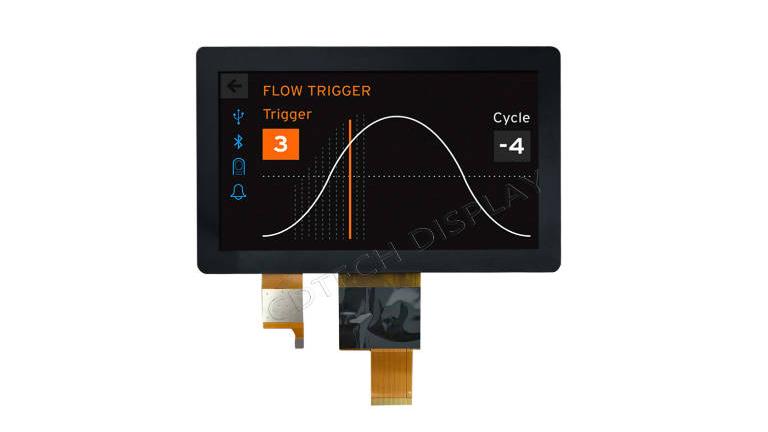
Our records include compact bar-type LCD examples and 7-inch TFT modules with documented resolution, interface, backlight, touch and temperature fields. These records support a direct-view TFT feasibility discussion. They cannot be presented as microdisplay products or used to infer optical performance for an unverified micro lcd panel design.
What drawing should an OEM provide first?
Send us the viewing geometry and optical path first, followed by target image size, active area, matrix, luminance, interface, power budget, temperature, mounting and touch. We can compare the direct-view fields with compact module records and mark the points that still need engineering or external verification.
Service can break a tie that a specification table cannot. An optical assembly may need an alignment procedure; a direct-view module may need a larger front opening but offer easier cleaning. Put the adjustment method, tolerance and replacement path beside the optical drawing before procurement chooses the architecture. If a standard module won’t fit, note which dimensions, interfaces or touch features would need to change for a custom TFT LCD.
FAQ
Q: Are micro LCD vs TFT LCD differences only about screen size?
A: No. Optical path, viewing geometry, controller, mechanics, thermal design and service access can all change.
Q: Is a microdisplay vs TFT LCD comparison valid without an optical drawing?
A: Not reliably. Viewing geometry explains how the image reaches the user, so brightness, focus, eye position and enclosure depth cannot be compared fairly without it.
Q: Is a verified micro lcd panel available from CDTech?
A: No verified microdisplay model is claimed here. We can review a compact direct-view TFT requirement, while a true microdisplay request needs architecture-specific confirmation.
Q: Is Micro LCD the same as Microdisplay?
A: Not exactly. Microdisplay is a broader category that includes liquid-crystal microdisplays, OLED microdisplays, Micro-LED microdisplays and other technologies. Micro LCD may refer to one type of miniature liquid-crystal display, but the term alone does not confirm that a product is designed for optical viewing.
Q: Does a Micro LCD always consume less power than a conventional TFT LCD?
A: No. Power consumption depends on the complete display system, including illumination, drivers, controllers and optical losses. A smaller display panel does not necessarily result in lower total system power consumption.
Post Search
Related Articles
-
7-Inch TFT Screen Benefits: Industrial Applications and Design Advantages
-
Vertical and Horizontal Lines on TFT LCD Displays: Causes and Engineering Failure Analysis
-
1280×720 TFT LCD Display: HD Resolution Features, Interfaces and Industrial Applications
-
4K TFT LCD Display: Features, Interfaces and Industrial Applications
-
What Is I2C Protocol? Working Principles and Applications in TFT LCD Touch Modules