7-Inch Capacitive Touch Panel Precision: Assessing Its Impact on User Interaction
 2026-09-04
  10:00
10:00 

A 7-inch capacitive touch panel is not judged by diagonal size alone. Precision depends on how reliably the sensor locates a finger, how consistently the controller reports coordinates, how the cover glass and bonding affect the signal, and how the complete assembly behaves in its target environment. For an OEM, a 7-inch capacitive touch panel must be evaluated as a system that includes the sensor, controller, interface, FPC, cover lens, software, and enclosure. This guide explains the measurable factors behind capacitive touch panel technology, compares projective capacitive construction and interface choices, and shows how medical, automotive, and industrial requirements change the validation plan.
What Does Precision Mean in a 7-Inch Capacitive Touch Panel?
Which Precision Factors Can Buyers Actually Test?
Accuracy requires solid proof through steady testing. It must be more than just a basic guarantee. Purchasers can verify location exactness in the middle and along the borders. They can also check consistency following multiple quick taps. Furthermore, users should monitor reaction delays. It is vital to watch for ignored inputs or incorrect activations. Evaluating motion tracking is equally useful. Buyers must also observe how quickly the system resets once a hand lifts off the screen. These evaluations need to happen again under actual working conditions. This means running trials with the final protective glass, thick gloves, or a digital pen. In addition, the checks should include standard washing routines, physical shaking, and different heat or cold levels.
A 7-inch capacitive touch panel project may be suitable for large controls and still fail if the active area, cover thickness, controller tuning, or host software is wrong. Precision is therefore a relationship between the touch stack and the user’s real action.
How Does Capacitive Touch Panel Technology Affect Accuracy?
Capacitive touch panel technology involves several key components. These elements include the sensor pattern, the controller, and the top cover glass. The system also relies on the specific bonding method, proper grounding, firmware, and signal filtering. Two screens might share the exact same outer shape. However, they can perform quite differently in practice. This variation happens if one unit features a thicker glass cover or a distinct bonding gap. Changes in the controller setup or a complex cable path will also alter the user experience. Surface treatments like anti-glare, anti-fingerprint, and anti-reflection coatings greatly enhance overall screen visibility. They make the display much easier to read under bright lights. Despite these helpful visual upgrades, the entire touch stack still requires thorough electrical and mechanical testing.
Bonding also matters. Air, OCA, and LOCA arrangements create different optical and mechanical conditions. The correct choice depends on the enclosure surface, repair strategy, reflection target, moisture exposure, and production process. A buyer should request the relevant drawing and sample rather than infer precision from the word capacitive.
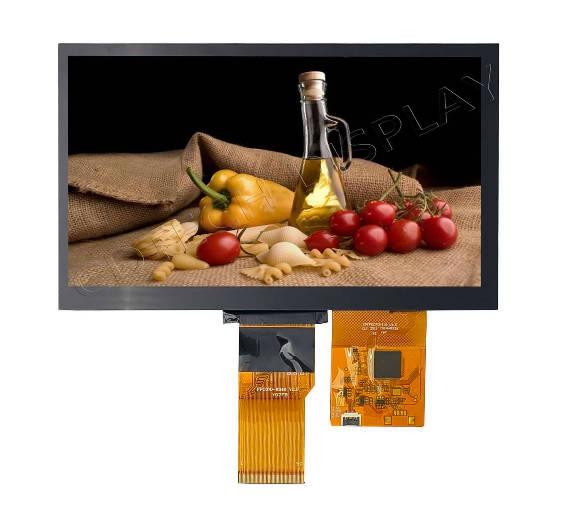
How Do Construction and Interface Choices Change Touch Precision?
What Should a Projective Capacitive Touch Panel Specification Include?
A projective capacitive touch panel specification should identify the sensor structure, active area, outline, cover-glass material and thickness, surface treatment, bonding method, controller, touch-point target, interface, FPC, connector, operating temperature, and storage conditions. It should also state whether the panel must support gloves, a passive or active pen, wet operation, or touch through a specified cover.
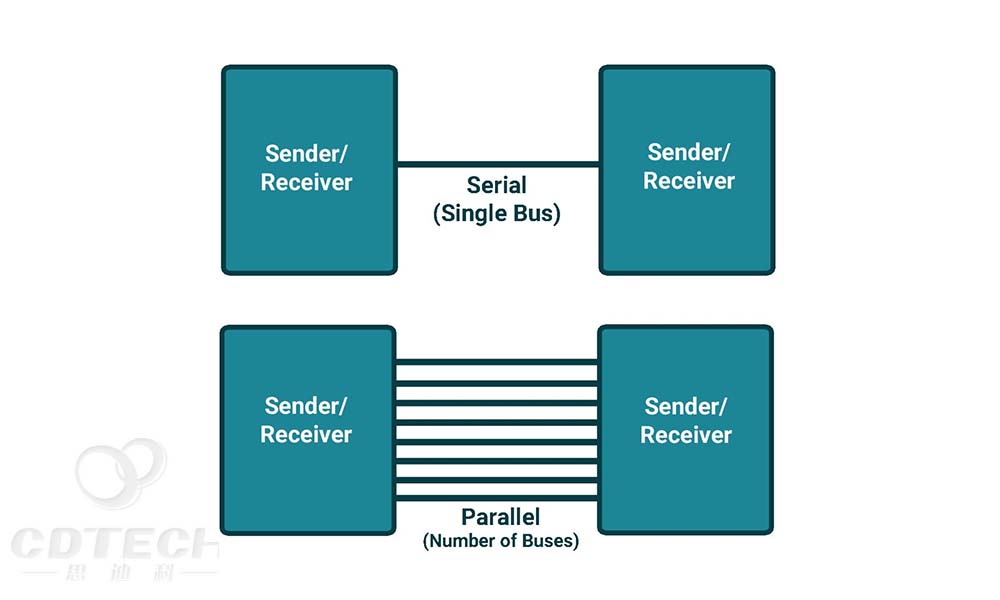
The controller and interface are part of precision. A panel may use I2C or USB for touch while the LCD uses RGB, LVDS, HDMI, or another display path. The specification should identify the voltage, interrupt behavior, driver responsibility, cable length, and EMI or ESD conditions. These fields let an OEM compare like with like instead of comparing a bare sensor with a complete touch display.
Does the Touch Interface Matter as Much as the Sensor?
Yes. The touch interface carries the controller’s coordinate data to the host, so pin assignment, cable routing, grounding, firmware, and driver behavior can affect perceived accuracy. A capacitive touch panel manufacturer may offer USB or IIC options, but the host still needs a compatible software and electrical design. A longer FPC, an unshielded cable, or an enclosure that presses the edge of the sensor can create intermittent behavior even when the sensor itself is sound.
For an OEM capacitive touch panel, the review should cover the host board, connector retention, reset timing, calibration process, touch report rate, error handling, and sample acceptance criteria. The interface is not an afterthought; it is part of the complete interaction path.
How Should Medical and Automotive Buyers Qualify a 7-Inch Panel?
What Makes a Medical Capacitive Touch Panel Precise in Practice?
A medical capacitive touch panel may need reliable operation with gloves, controlled cleaning, a defined cover surface, and a user interface that avoids ambiguous taps. The validation plan should test the actual glove material, cleaning agent, cover thickness, stylus requirement, brightness, and enclosure. It should also examine false touches and recovery after moisture or repeated cleaning.
These requirements do not create an automatic medical certification. They define project conditions that must be verified for the intended device. A panel that responds well to a bare finger in a laboratory may need different controller tuning, cover glass, or grounding when operators use gloves and clean the surface frequently.
How Is an Automotive Capacitive Touch Panel Validated?
An automotive capacitive touch panel must be reviewed against vibration, temperature, sunlight, electromagnetic interference, electrostatic discharge, cable movement, and the intended user posture. Automotive projects may also need waterproof touch, glove operation, anti-glare treatment, anti-fingerprint treatment, and a cover lens that remains stable through the enclosure process.
The validation should use the target host and mechanical package. A seven-inch panel can be accurate on a bench and less predictable after installation near switching power, motors, heaters, or a metal bezel. EMI, EMC, and ESD requirements should be documented at the project level rather than inferred from the panel size.
How Can CDTech Support a Precision-Focused Capacitive Touch Panel Project?
Which Verified CDTech 7-Inch Module Can Start Precision Testing?
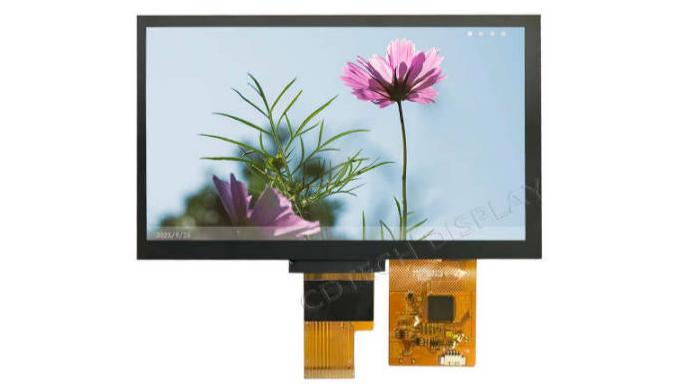
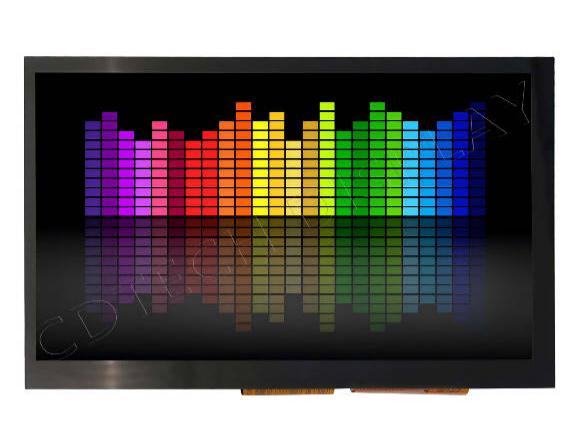
We can use the documented S070BWS59HD-DC35 as a starting reference for a 7-inch capacitive touch panel evaluation. The record identifies a 7-inch IPS display with 1024×600 resolution, HDMI for the LCD path, USB for the capacitive touch panel, 400-nit luminance, and an operating range of -20°C to +70°C. These facts describe that model only; they do not establish a universal precision score or a portfolio-wide certification.
The module gives an OEM a concrete assembly to inspect. For a 7-inch capacitive touch panel, the evaluation can cover the image path, USB touch enumeration, controller behavior, cover-glass interaction, cable routing, edge response, and environmental conditions. A second record, S070BWS45HD-DC35, provides another 7-inch configuration with capacitive USB touch and an LVDS LCD path, which can help a buyer compare host architectures.
What Should an OEM Request from a Capacitive Touch Panel Factory?
When comparing a capacitive touch panel factory or capacitive touch panel manufacturer, an OEM should request drawings, active area, cover-glass details, bonding method, controller, interface, FPC, connector, touch-point target, glove or stylus conditions, environmental limits, EMI/ESD expectations, sample reports, revision control, and change-notification practice. These inputs distinguish a standard part from custom capacitive touch panel work.
With our products, CDTech can review whether the project needs a standard module or custom capacitive touch panels with different cover, FPC, bonding, waterproof, glove-touch, or controller requirements. We keep the recommendation tied to the drawings and samples.
FAQ
Q: Is a 7-inch capacitive touch panel accurate enough for industrial controls?
A: It can be, but accuracy depends on the controller, cover glass, bonding, interface, enclosure, software, and environment. Test the actual touch locations, edges, gloves or stylus, temperature, vibration, and cleaning conditions before approval.
Q: What is the difference between a standard panel and an OEM capacitive touch panel?
A: A standard panel follows an existing drawing and configuration. An OEM capacitive touch panel may require changes to active area, cover glass, FPC, connector, bonding, controller, interface, or environmental requirements, followed by sample validation.
Q: Can a medical capacitive touch panel also be used in automotive equipment?
A: Not automatically. Medical and automotive projects may share glove or cleaning needs, but automotive equipment adds its own vibration, EMI/EMC/ESD, temperature, sunlight, and enclosure requirements. Validate each application separately.